

AI Reveals Management Blind Spots Leaders Can’t Ignore
Most executives believe they understand what's happening in their organizations. They review dashboards, attend quarterly reviews, and monitor KPIs. Yet when AI reveals management blind spots through pattern recognition and data analysis, the disconnect between perception and reality becomes undeniable. The technology exposes gaps in visibility that cost organizations millions in lost productivity, compliance failures, and strategic missteps. Leaders who ignore these revelations face consequences that extend far beyond missed quarterly targets.
The Shadow AI Crisis Executives Didn't See Coming
A 2026 study found that organizations lack visibility into employees’ use of AI tools, creating data governance nightmares and security vulnerabilities. This represents one of the most dangerous ways AI reveals management blind spots. Employees across departments now use ChatGPT, Claude, and dozens of specialized AI tools without IT oversight or approval.
The financial implications are severe. When teams bypass approved systems, they:
- Upload proprietary data to external platforms without encryption
- Create duplicate workflows that conflict with official processes
- Generate inconsistent outputs that undermine brand standards
- Expose the organization to regulatory violations in healthcare, finance, and government sectors
What the Data Actually Shows
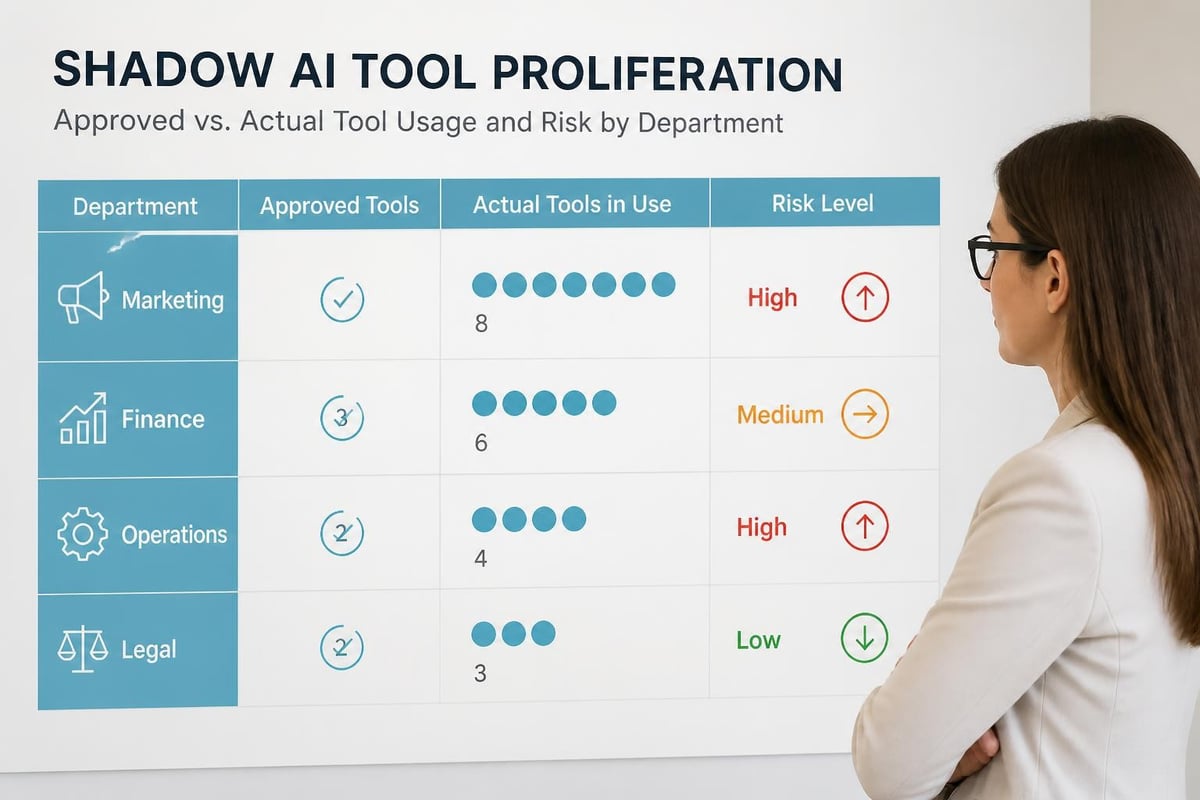
In a recent Fortune 500 audit, we discovered 47 different AI tools operating across a single division. Leadership had approved three. The remaining 44 operated as shadow AI, invisible to executives who believed they had comprehensive oversight.
The breakdown revealed critical patterns:
| Department | Approved Tools | Actual Tools | Risk Level |
|---|---|---|---|
| Marketing | 2 | 12 | High |
| Finance | 1 | 8 | Critical |
| Operations | 1 | 15 | High |
| Legal | 0 | 6 | Critical |
Legal teams using unapproved AI for contract analysis created the highest compliance risk. Finance teams uploading sensitive data to consumer-grade tools exposed the organization to potential data breaches.
The Domain Expertise Gap AI Exposes
When AI implementations expose executive blind spots, the root cause often traces to leaders lacking domain expertise in areas they're attempting to transform. This manifests most clearly when executives champion AI initiatives without understanding the operational realities their teams face daily.
One pharmaceutical company invested $8.3 million in an AI-driven drug discovery platform. The CEO championed the technology based on vendor presentations and competitive pressure. Eighteen months later, researchers abandoned the system. The AI couldn't account for variables the executive team never discussed in planning sessions.
The Diagnosis Behind Failed Initiatives
Three factors explain why AI reveals management blind spots in technology adoption:
- Executives evaluate AI based on theoretical capabilities, not practical workflow integration
- Leaders skip the stakeholder interviews that would reveal implementation barriers
- Organizations lack feedback mechanisms that surface problems before they become crises
The pharmaceutical case illustrates all three. Leadership never consulted the research scientists who would use the platform. They assumed vendor demonstrations represented real-world performance. By the time problems surfaced, the organization had committed resources that couldn't be reallocated.
This pattern repeats across industries. A manufacturing firm deployed AI-powered quality control without involving floor supervisors. A financial services company launched an AI customer service system that contradicted existing policies. A government agency implemented predictive analytics that violated data handling protocols their own compliance team had established.
Data Quality Blindness Costs $13 Million
The most expensive way AI reveals management blind spots involves data integrity failures. Research shows that undetected AI data errors can lead to $13 million losses in a single quarter. Yet executives routinely approve AI projects without auditing the data those systems will process.
Common data quality issues that executives miss:
- Duplicate records that skew pattern recognition
- Outdated information that generates irrelevant recommendations
- Inconsistent formats that prevent accurate analysis
- Biased training data that perpetuates problematic decisions
A Framework for Data Governance Reality Checks
Organizations need structured approaches to identify data quality issues before they sabotage AI initiatives. We developed a diagnostic framework after witnessing repeated failures across client engagements.
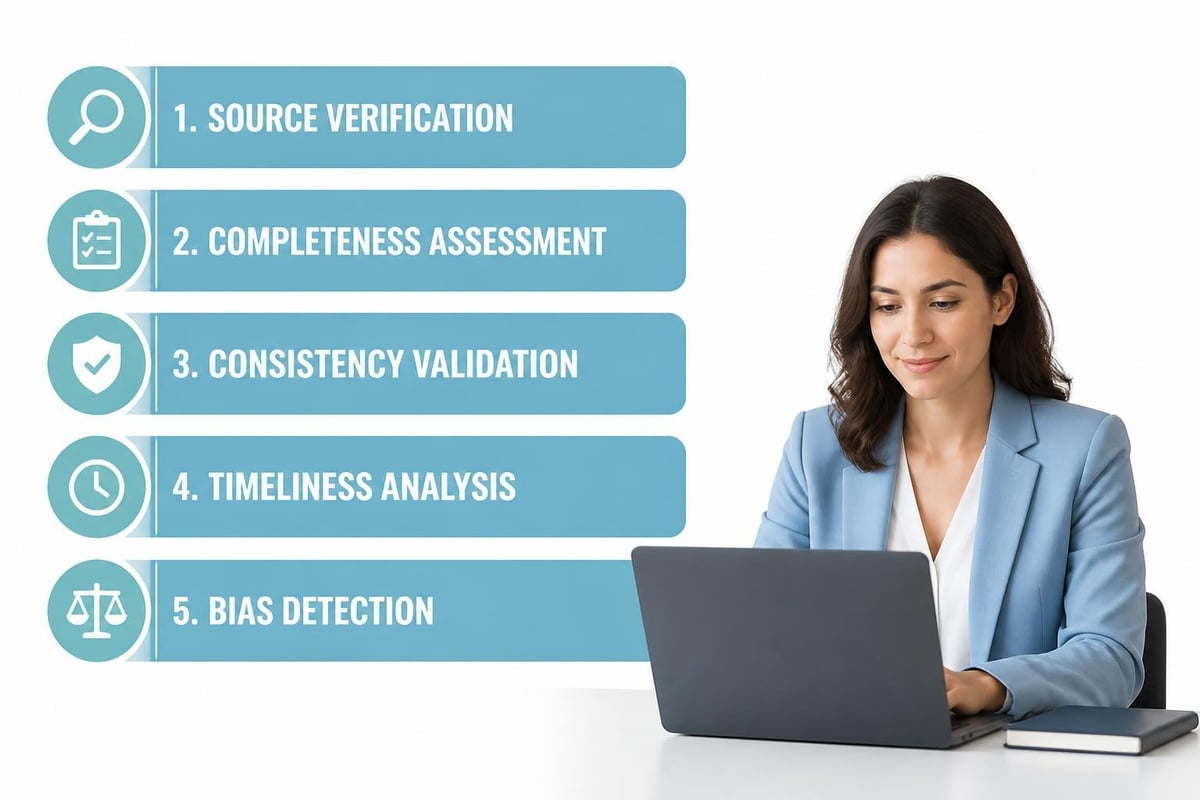
The five-layer audit process:
- Source Verification: Confirm where data originates and whether those sources remain reliable
- Completeness Assessment: Measure missing fields, abandoned records, and coverage gaps
- Consistency Validation: Test whether the same information produces identical results across systems
- Timeliness Analysis: Determine data freshness and update frequency
- Bias Detection: Identify patterns that reflect historical discrimination or systemic inequities
One healthcare organization using this framework discovered that 34% of patient records contained outdated contact information. Their AI-powered appointment reminder system operated on faulty data for nine months before leadership realized why no-show rates hadn't improved despite the technology investment.
The diagnosis revealed a deeper problem. Multiple departments managed patient data independently, creating conflicts the AI couldn't resolve. Leadership had assumed data quality was an IT problem. The reality involved organizational silos, competing priorities, and absent accountability that AI simply amplified.
Embedded AI Creates Invisible Governance Gaps
The latest challenge involves embedded AI within enterprise platforms creating governance blind spots. Executives approve Microsoft 365, Salesforce, or SAP deployments without realizing those platforms now include AI capabilities that operate without explicit oversight.
This creates accountability gaps leadership rarely anticipates. When AI-powered features make decisions, who bears responsibility for outcomes? The platform vendor? The department that configured the settings? The executive who approved the contract?
The Compliance Implications Nobody Discussed
A government agency discovered this problem when citizens complained about inconsistent service decisions. Investigation revealed that embedded AI in their case management system was making eligibility determinations based on patterns the compliance team had never reviewed.
The problem wasn't malicious. The AI operated exactly as designed. But nobody had evaluated whether its decision-making criteria aligned with regulatory requirements, let alone ethical standards the agency espoused publicly.
Questions executives should ask but rarely do:
- What AI capabilities exist in the platforms we already use?
- Who configured those AI features and what criteria guide their operation?
- Do those criteria align with our compliance obligations and organizational values?
- What appeal or override processes exist when AI makes questionable decisions?
- How do we audit AI-driven outcomes for bias, accuracy, and appropriateness?
Leadership teams that can't answer these questions operate with dangerous blind spots. The technology isn't waiting for permission. It's already shaping decisions, customer interactions, and resource allocation.
Strategic Misalignment That AI Data Exposes
Perhaps the most valuable way AI reveals management blind spots involves exposing disconnects between stated strategy and actual execution. When AI leadership blind spots quietly derail strategic impact, the underlying cause typically involves leaders who don't monitor whether their organizations actually do what they say.
A retail company proclaimed customer experience as their competitive advantage. Analysis of their customer service data revealed average response times exceeding industry norms by 40%. Leadership believed they excelled because nobody had presented contradictory evidence. AI pattern recognition made the gap impossible to ignore.
The Methodology for Strategic Reality Testing
Organizations need systematic approaches to verify strategic alignment. Our framework combines quantitative data analysis with qualitative stakeholder feedback to identify gaps between aspiration and execution.
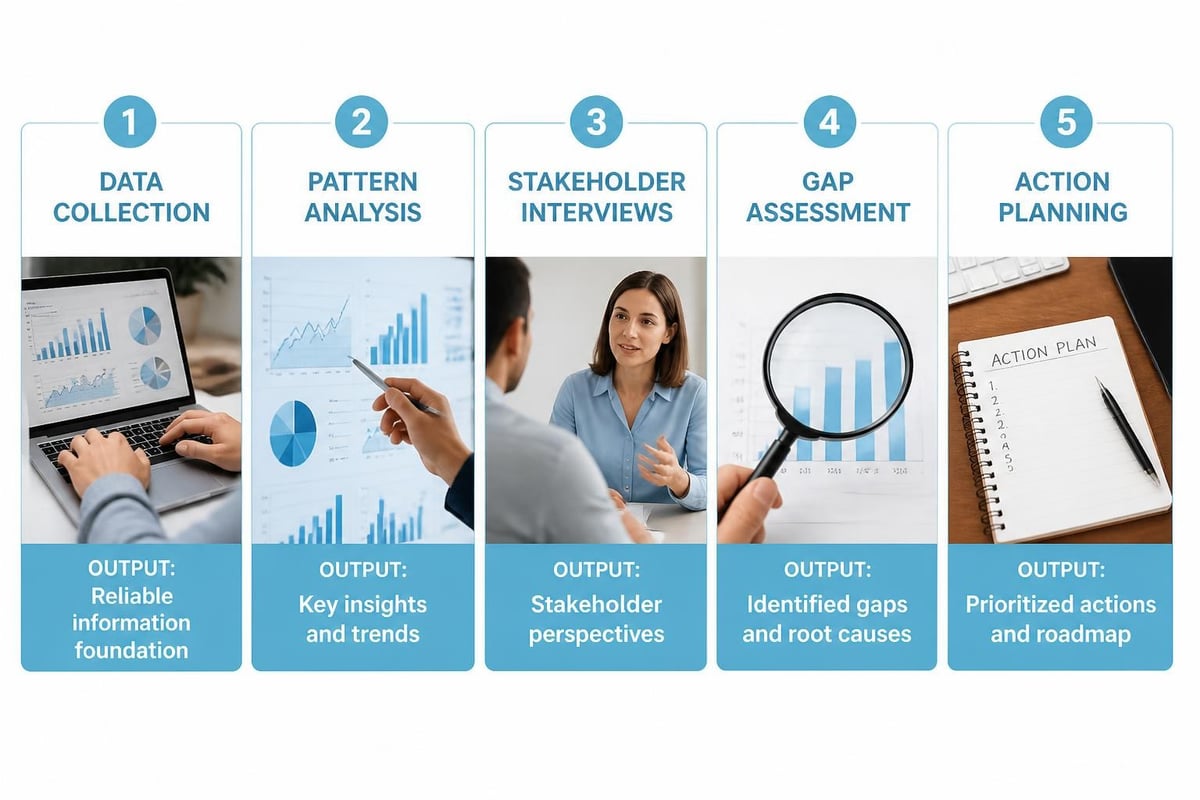
The diagnostic process:
| Phase | Activities | Output |
|---|---|---|
| Data Collection | Gather operational metrics, customer feedback, employee surveys | Baseline reality |
| Pattern Analysis | Use AI to identify trends leadership might miss | Hidden insights |
| Stakeholder Interviews | Validate findings with frontline employees | Context and nuance |
| Gap Assessment | Compare stated strategy to measured performance | Priority interventions |
| Action Planning | Develop targeted fixes with accountability measures | Roadmap for alignment |
This approach revealed critical insights for a professional services firm. Leadership emphasized innovation and agility in every client presentation. Employee survey data showed that risk aversion and bureaucratic approval processes actually defined the culture. The firm won business based on promises their internal systems couldn't deliver.
AI made this contradiction visible through sentiment analysis of internal communications, project timeline data, and client satisfaction scores. The patterns told a story leadership couldn't dismiss as anecdotal complaints or isolated incidents.
The Trust Deficit AI Reveals in Leadership Communication
When AI reveals management blind spots in communication effectiveness, the findings often shock executives who believe they maintain open dialogue with their organizations. Natural language processing applied to employee feedback reveals sentiment patterns leadership typically misses in filtered quarterly surveys.
One technology company discovered that while 87% of employees rated leadership "favorably" on annual surveys, AI analysis of internal communications showed widespread frustration with decision-making transparency. The disconnect stemmed from carefully worded survey questions that encouraged positive responses while actual sentiment told a different story.
What Unfiltered Feedback Actually Shows
Organizations that analyze unstructured feedback through AI tools discover patterns that traditional methods miss:
- Repeated phrases that signal systemic problems rather than individual complaints
- Timing patterns that correlate negative sentiment with specific leadership actions
- Department-level variations that indicate localized management issues
- Topic clusters that reveal priorities misaligned with official messaging
A financial services firm used this approach to understand why their diversity initiatives weren't producing results despite significant investment. AI analysis revealed that while leadership celebrated progress, employees from underrepresented groups consistently mentioned feeling excluded from informal networks that drive advancement opportunities.
The pattern appeared in Slack conversations, email communications, and anonymous feedback submitted through multiple channels. Traditional analysis had missed it because nobody explicitly mentioned diversity programs. The language centered on access, opportunity, and relationships.
Building Systematic Detection Before Problems Escalate
The most successful organizations don't wait for crises to identify blind spots. They build systematic detection mechanisms that surface problems while solutions remain manageable. This requires moving beyond reactive leadership to proactive monitoring across multiple organizational dimensions.
Critical monitoring categories:
- Operational Performance: Are processes delivering promised results?
- Employee Engagement: Do teams believe leadership understands their challenges?
- Customer Experience: Does actual service match brand promises?
- Risk Exposure: What vulnerabilities exist that leadership hasn't addressed?
- Strategic Alignment: Do daily decisions advance stated priorities?
Organizations pursuing the challenges outlined in what Fortune 500 leaders are facing need structured approaches to identify gaps before they become liabilities.
The Early Warning System Framework
We developed this framework after observing how AI reveals management blind spots across client engagements. The methodology combines automated monitoring with human judgment to filter signal from noise.
Implementation steps:
- Define Critical Indicators: Identify metrics that signal problems in each monitoring category
- Set Baseline Expectations: Establish what normal performance looks like across indicators
- Configure Automated Alerts: Use AI to flag deviations that warrant leadership attention
- Assign Investigation Owners: Designate who investigates each alert category
- Create Response Protocols: Define what actions each type of finding triggers
- Review Pattern Trends: Conduct monthly analysis of alert patterns to identify systemic issues
One manufacturing company using this system detected quality control problems three weeks before they would have affected customer shipments. The AI flagged unusual variance in production data that human supervisors had rationalized as normal variation. Investigation revealed calibration drift in measurement equipment that would have caused significant customer complaints if left unaddressed.
The financial impact was substantial. Preventing the quality issue saved approximately $2.7 million in potential recalls, customer remediation, and brand damage. More importantly, it revealed a blind spot in maintenance protocols that leadership believed were comprehensive.
The Leadership Development Implications
When AI reveals management blind spots at scale, organizations face uncomfortable questions about leadership capabilities. If executives can't see these problems without technological assistance, what does that say about their judgment, awareness, and strategic thinking?
The answer isn't that leaders are incompetent. It's that organizational complexity has exceeded human cognitive capacity in many domains. No executive can personally monitor every process, relationship, and decision point in a modern enterprise.
The shift required involves:
- Accepting that AI augments rather than replaces leadership judgment
- Building comfort with data that contradicts leadership intuition
- Creating cultures where psychological safety in the workplace enables honest feedback
- Developing analytical skills that complement traditional leadership strengths
Organizations investing in leadership development increasingly incorporate AI literacy and data interpretation into their programs. Leaders who can't work effectively with AI-generated insights will struggle to compete in environments where their peers use those tools to make faster, more accurate decisions.
Common Mistakes Leaders Make With AI Insights
Research on AI leadership blind spots reveals ten common mistakes that undermine strategic impact. The most damaging involves dismissing AI findings that contradict leadership assumptions rather than investigating why the disconnect exists.
One CEO rejected AI analysis showing that their star performer was creating team dysfunction because the individual consistently exceeded sales targets. Six months later, the team lost three high performers who cited toxic behavior in exit interviews. The AI had detected patterns in communication data that leadership couldn't see because they focused exclusively on sales results.
This illustrates why AI reveals management blind spots most effectively when leaders approach findings with curiosity rather than defensiveness. The technology identifies patterns. Leaders must determine what those patterns mean and what actions they warrant.
FAQ About AI and Management Blind Spots
How does AI identify management blind spots that humans miss?
AI processes volumes of data across multiple sources simultaneously, detecting patterns that exceed human cognitive capacity. It identifies correlations between seemingly unrelated factors, tracks changes over time that occur too gradually for human observers to notice, and analyzes unstructured data like communications and feedback at scale. This reveals disconnects between leadership assumptions and operational reality.
What types of management blind spots does AI most commonly reveal?
AI most frequently exposes gaps in data governance, shadow technology adoption, strategic misalignment between stated priorities and actual execution, employee sentiment that contradicts official surveys, and operational inefficiencies that accumulate gradually. It also identifies bias in decision-making, compliance vulnerabilities, and customer experience problems that traditional monitoring methods miss.
Can organizations identify these blind spots without AI technology?
Organizations can identify some blind spots through comprehensive audits, stakeholder interviews, and systematic feedback mechanisms. However, the scale and complexity of modern enterprises make purely human detection increasingly difficult. AI provides speed, consistency, and pattern recognition capabilities that augment human judgment rather than replacing it. The most effective approach combines both.
What should executives do when AI reveals uncomfortable truths about their organizations?
Leaders should investigate findings rather than dismissing them, especially when data contradicts leadership assumptions. Effective responses involve validating AI insights through stakeholder conversations, determining root causes behind identified patterns, developing targeted interventions with clear accountability, and creating monitoring systems to track whether changes produce desired outcomes. Defensive reactions typically allow problems to escalate.
How can leadership teams build AI literacy to work effectively with these insights?
Building AI literacy requires education on how AI technologies work, hands-on experience interpreting AI-generated insights, partnerships with data scientists who can translate findings into business context, and practice making decisions that incorporate both data and human judgment. Organizations should invest in executive coaching that addresses analytical skill development alongside traditional leadership capabilities.
AI reveals management blind spots that executives can no longer afford to ignore, from shadow technology adoption to strategic misalignment and data governance failures. Organizations that build systematic detection mechanisms gain competitive advantages through faster problem identification and more accurate decision-making. The Noomii Leadership Coaching program helps executives develop the analytical skills, self-awareness, and strategic judgment needed to work effectively with AI insights while building cultures where data-driven feedback strengthens rather than threatens leadership credibility.



Leave a Reply
Want to join the discussion?Feel free to contribute!