

AI Made Me Feel Productive Not Effective: The Illusion
The phrase "ai made me feel productive not effective" captures a phenomenon spreading across corporate America in 2026. Leaders and managers generate more content, answer more emails, and complete more tasks than ever before, yet business outcomes remain flat or declining. This disconnect reveals a critical misunderstanding about what AI tools actually deliver and what organizations genuinely need from their people.
The Productivity Theater That AI Enables
AI tools excel at creating the appearance of progress. You draft responses faster, summarize meetings instantly, and produce polished reports in minutes. The dopamine hit from clearing your inbox or finishing three decks before lunch feels like winning.
But volume is not victory.
When Harvard Business Review examined how metrics shape behavior, they found AI naturally optimizes whatever gets measured. If you measure emails sent, meetings summarized, or documents created, AI will flood you with all three. Meanwhile, the strategic work that drives actual business results gets crowded out by the very tools meant to create time for it.
The Evidence From Developer Teams
A randomized controlled trial on AI assistance for software developers provided hard data on this disconnect. Developers using AI coding assistants wrote code 55% faster. Impressive productivity gain, right?
Not quite. The same study found:
- Code quality declined when measured against production standards
- Technical debt increased as developers skipped architectural thinking
- Long-term maintenance costs rose despite short-term speed gains
- Junior developers became dependent on suggestions they didn't fully understand
Speed without comprehension creates the illusion that ai made me feel productive not effective. The output looked identical, but the thinking behind it deteriorated.

What Gets Lost When AI Does the Work
Executive coaching and leadership development reveal what disappears when AI handles cognitive tasks. Managers who rely on AI to draft performance feedback, structure one-on-ones, or prepare coaching conversations miss the diagnostic thinking that makes those activities valuable.
Real coaching effectiveness comes from:
- Pattern recognition across team behaviors and business cycles
- Reading emotional cues that signal deeper organizational issues
- Asking questions that surface problems people haven't articulated
- Building trust through authentic, unscripted dialogue
When Noomii’s business coaches work with mid-market teams, they see this firsthand. A manager using AI to generate a leadership development plan completes the task in 10 minutes. A manager who diagnoses root causes, connects outcomes to business KPIs, and designs interventions tied to actual team dynamics invests three hours but creates lasting change.
The first manager feels productive. The second is effective.
The Burnout Paradox
Recent reporting on AI and worker burnout uncovered a troubling pattern. Employees adopt AI tools to manage overwhelming workloads, and the tools do reduce time per task. But instead of creating breathing room, organizations simply assign more work to fill the time AI saves.
The cycle accelerates. Workers process more volume, feel busier than ever, yet report higher stress and lower sense of accomplishment. When ai made me feel productive not effective becomes your daily reality, burnout follows inevitably.
| Metric | AI-Assisted | Human-Driven | Gap |
|---|---|---|---|
| Tasks completed per day | 47 | 23 | +104% |
| Strategic decisions made | 1.2 | 2.1 | -43% |
| Employee engagement score | 5.8/10 | 7.2/10 | -19% |
| Retention rate (12 months) | 71% | 84% | -13 points |
This table reflects patterns from team coaching engagements across Fortune 500 corporate coaching programs in 2026. Volume climbs while outcomes erode.
Building Human-Centered AI Adoption
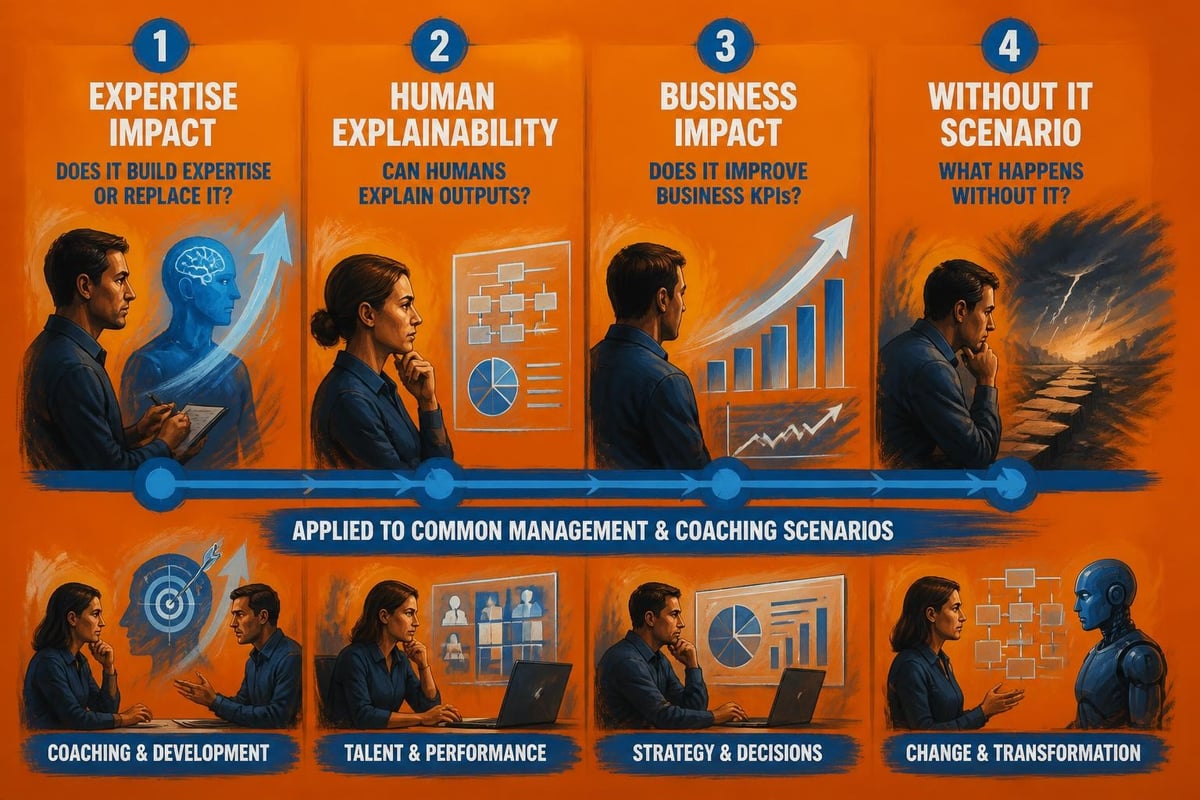
The NIST Human-Centered AI framework offers a more disciplined approach. Instead of deploying AI wherever speed gains appear possible, organizations should evaluate tools based on how they affect human judgment, learning, and decision quality over time.
Evaluation criteria for effectiveness, not just productivity:
- Does the tool enhance human expertise or replace the need to develop it?
- Can users explain the reasoning behind AI-generated outputs?
- Does adoption improve business outcomes tied to revenue, retention, or strategic goals?
- What happens to team capability if the tool becomes unavailable?
When leadership development programs incorporate AI tools, these questions separate genuine leverage from productivity theater. A sales manager using AI to analyze pipeline data and identify coaching opportunities for specific reps creates effectiveness. A manager who copies AI-generated performance reviews without customization creates busy work.
The Manager Training Gap
Most organizations roll out AI tools without training managers to evaluate effectiveness versus activity. They celebrate productivity gains in isolation, then wonder why engagement scores drop and turnover rises despite all the "efficiency."
Manager training that addresses this gap focuses on:
- Outcome mapping: Connect daily activities to quarterly business results
- Diagnostic coaching: Teach managers to identify root causes, not just symptoms
- Quality checks: Build review processes that catch AI-generated work lacking strategic thinking
- Reflection time: Schedule protected hours for thinking that can't be outsourced to algorithms
These aren't theoretical concerns. Across team coaching engagements with 25-to-500-employee companies, the pattern repeats: teams that adopt AI without effectiveness frameworks see initial productivity spikes followed by declining results within 90 days.
Measuring What Actually Matters
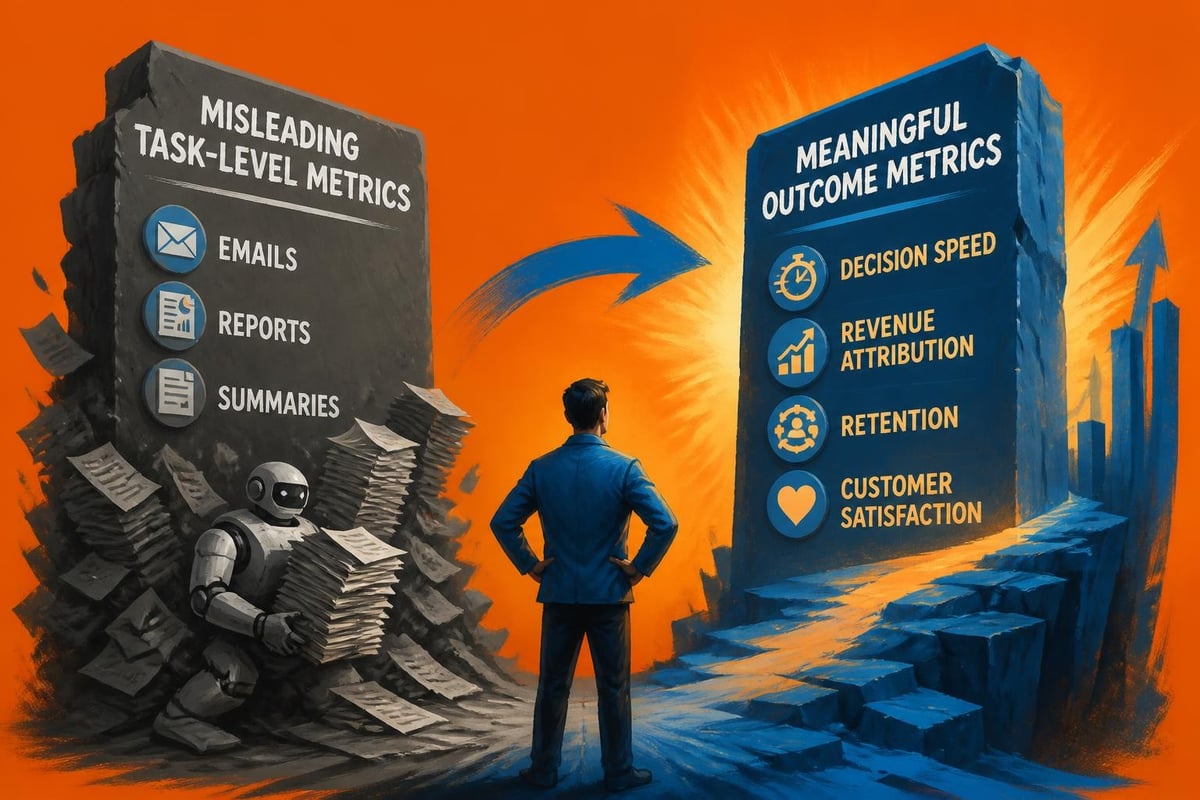
The NIST AI Use Taxonomy distinguishes between task-level performance and outcome-focused evaluation. This matters enormously for leaders who realize ai made me feel productive not effective but struggle to articulate why.
Task-level metrics that mislead:
- Emails answered per hour
- Reports generated per week
- Meeting summaries completed
- Content pieces published
Outcome metrics that reveal effectiveness:
- Decision cycle time from problem identification to action
- Revenue growth attributed to specific strategic initiatives
- Employee retention and engagement trends
- Customer satisfaction changes tied to process improvements
Organizations serious about effectiveness build scorecards that track both. When productivity metrics rise but outcomes stagnate, you've identified AI tools creating theater instead of value.
The Executive Coaching Perspective
When working with executives on operating cadence and KPI scorecards, experienced coaches see this pattern constantly. A VP celebrates a 40% increase in strategic projects initiated. Sounds impressive until you discover only 12% reached completion, and just 3% delivered measurable business impact.
The AI tools helped the VP feel productive by making it easier to start projects, draft charters, and assign teams. But effectiveness requires different capabilities: prioritization discipline, resource allocation wisdom, and the courage to kill initiatives that aren't working.
Executive coaches who work on accountability and execution help leaders distinguish between these modes. They coach in live meetings, challenge weak reasoning in real time, and tie progress to results that matter to the board. That's effectiveness work AI can't replicate.
Practical Steps to Break the Illusion
If you recognize that ai made me feel productive not effective in your own work or across your leadership team, concrete actions can restore the balance:
Audit your AI usage weekly:
- List every AI tool you used
- Document what you produced
- Connect outputs to business outcomes
- Identify gaps between activity and impact
Redesign your calendar:
- Block thinking time where AI isn't allowed
- Schedule strategic conversations without agenda templates
- Protect space for diagnosis before jumping to solutions
- Review effectiveness metrics, not just task completion
Coach your managers differently:
- Shift from "did you finish it?" to "what decision did it enable?"
- Ask managers to explain the thinking behind AI-assisted work
- Reward outcome improvements, not volume increases
- Build accountability around business results, not task velocity
Organizations that implement these practices see different patterns emerge. Productivity gains from AI stabilize at sustainable levels. More importantly, effectiveness metrics begin climbing as leaders reclaim time for the judgment, creativity, and relationship work that drives actual results.
When ai made me feel productive not effective becomes your reality, you need coaches who focus on outcomes, not credentials. Noomii Corporate Coaching works month to month with mid-market companies to build accountable leaders who deliver measurable business results, coaching live in your meetings and tying progress to clear KPIs that separate activity from impact.
Frequently Asked Questions
How do I know if AI is making me productive or effective?
Track business outcomes alongside task completion. If you're finishing more work but revenue, retention, team performance, or strategic progress isn't improving proportionally, you're experiencing productivity without effectiveness. Map your AI-assisted activities to quarterly business results to identify the gap.
What metrics should I use to measure effectiveness instead of productivity?
Focus on decision cycle time, revenue attribution to specific initiatives, employee engagement and retention trends, customer satisfaction changes, and strategic goal completion rates. These outcome metrics reveal whether your work creates business impact, while task metrics like emails sent or reports generated only measure volume.
Can AI tools ever improve effectiveness, or do they only boost productivity?
AI tools improve effectiveness when they enhance human judgment rather than replace it. Examples include data analysis that surfaces patterns for strategic decisions, scenario modeling that tests hypotheses before execution, and information synthesis that accelerates learning. The key is whether the tool builds your capability or substitutes for developing it.
Why does AI-assisted work feel so satisfying if it's not effective?
AI delivers immediate completion signals that trigger dopamine responses. Finishing an email, generating a report, or clearing a task list creates a sense of progress regardless of business impact. This neurological reward makes productivity theater psychologically compelling even when effectiveness suffers.
How should managers evaluate team members using AI tools?
Evaluate outcomes, not output volume. Ask team members to explain the reasoning behind AI-assisted work, assess whether their judgment and expertise are growing, and measure business results tied to their initiatives. Rising task completion alongside declining decision quality or strategic impact indicates ineffective AI usage.
What training do managers need to use AI effectively?
Managers need training in outcome mapping (connecting tasks to business results), diagnostic thinking (identifying root causes), quality evaluation (assessing AI-generated work), and reflection practices (protected time for strategic thinking). Without these skills, managers default to optimizing task velocity at the expense of effectiveness.
How long does it take to see the effectiveness gap after adopting AI tools?
Most organizations see initial productivity gains within two weeks, followed by an effectiveness gap emerging at 60-90 days. Early wins mask declining strategic thinking, relationship quality, and outcome delivery until the delayed effects become visible in quarterly business metrics.
Should companies restrict AI tool usage to prevent effectiveness problems?
Restriction isn't the answer. Instead, build evaluation frameworks that assess tools based on human-centered criteria: Do they build expertise or replace it? Can users explain outputs? Do business outcomes improve? What happens without the tool? These questions guide adoption decisions better than blanket policies.
What's the biggest mistake leaders make when deploying AI across their teams?
Measuring productivity gains without tracking effectiveness outcomes. Leaders celebrate speed improvements and volume increases while ignoring whether strategic decisions improve, team capability grows, or business results strengthen. This creates organizational momentum toward activity that doesn't matter.



Leave a Reply
Want to join the discussion?Feel free to contribute!