
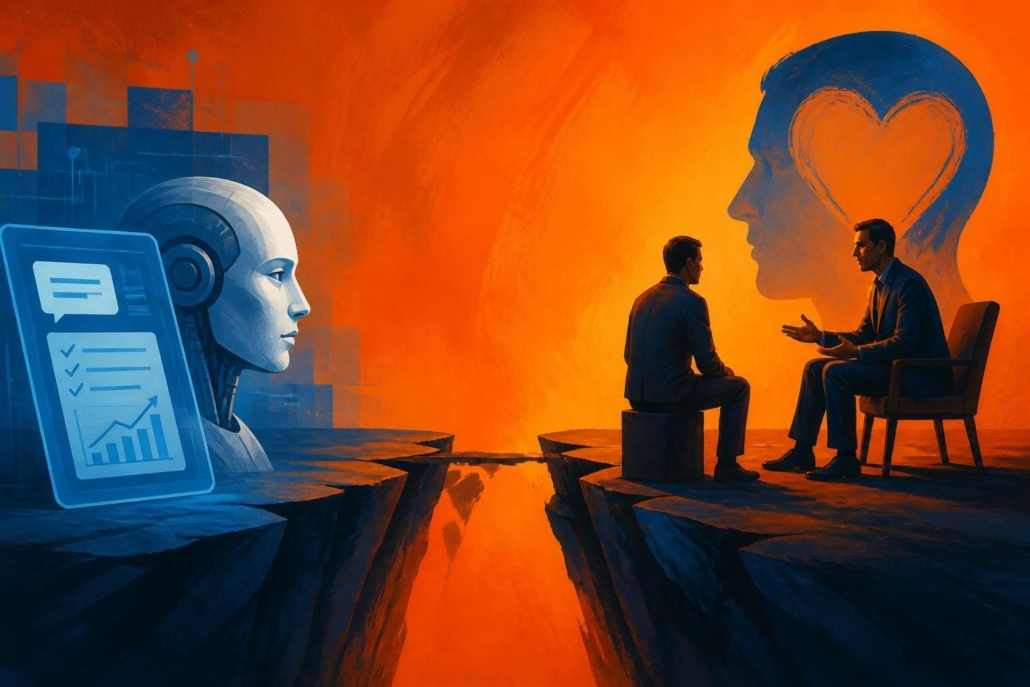
AI Could Not Hold Me Accountable: Why Humans Still Matter
A mid-market VP told me last month she tried three AI coaching apps in six weeks. Smart interfaces. Thoughtful prompts. Progress tracking dashboards. Then she admitted: "AI could not hold me accountable." The tools reminded her. They measured activity. They even offered gentle nudges. But when she skipped the hard conversation with her underperforming director, no algorithm called her out. When she delayed the strategic decision her team needed, no chatbot told her the cost. The technology tracked compliance, not consequence.
This pattern repeats across hundreds of leadership conversations in 2026. Organizations chase efficiency through AI-augmented coaching. Leaders download apps promising accountability at scale. Yet the fundamental mechanism of accountability remains deeply human: judgment, consequence, and relational trust.
Why Accountability Requires Human Judgment
Accountability is not task completion. It's answerability for outcomes to someone who matters.
Research on accountability frameworks defines it as a relationship between an agent and a forum where the agent explains conduct, the forum questions and judges, and consequences follow. AI systems cannot occupy the forum role. They lack authority, social standing, and the capacity to impose meaningful consequences.
Three elements expose the gap:
- Contextual judgment: A human coach recognizes when your "strategic planning session" is actually conflict avoidance. AI sees calendar compliance.
- Social consequence: Missing a commitment to your coach carries reputational weight. Ignoring an app notification carries none.
- Adaptive challenge: Effective accountability shifts as you grow. AI follows programmed logic; coaches adjust based on what you're avoiding.
When executives work with experienced business coaches, they report accountability as the top value driver, not because coaches nag harder, but because they see patterns, name what's being avoided, and tie action to business consequence.
The Measurement Trap
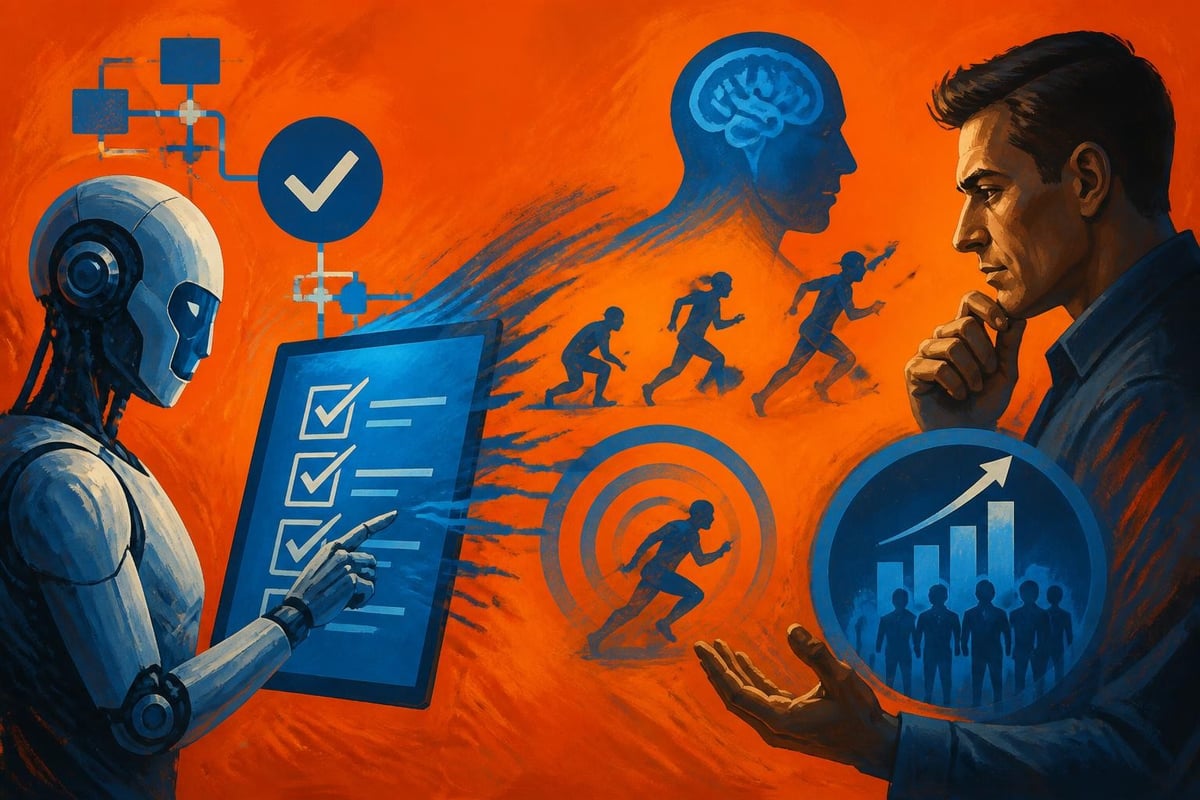
AI coaching platforms excel at quantification. Steps logged. Meetings attended. Feedback requests sent. This creates the illusion of accountability through visibility.
The problem: visibility is not accountability. One Fortune 500 division tracked manager one-on-ones religiously through their AI-augmented platform. Compliance hit 94%. Employee engagement dropped. Why? Managers held the meetings but avoided difficult performance conversations. The AI measured activity; no one measured courage.
| What AI Measures | What Accountability Requires |
|---|---|
| Meeting frequency | Conversation quality |
| Action item completion | Decision courage |
| Survey responses | Behavior change |
| Goal documentation | Strategic tradeoffs |
| Time logged | Impact delivered |
Real accountability in leadership development demands someone who knows when you're gaming the metrics, when you're choosing comfort over growth, and when your reported progress hides strategic drift.
The Consequence Gap AI Cannot Bridge
"AI could not hold me accountable" reflects a truth regulators increasingly recognize. European AI Act provisions emphasize human oversight precisely because algorithms cannot bear responsibility for consequential decisions. The same logic applies in coaching.
Accountability works through three mechanisms AI fundamentally lacks:
- Reputational consequence: Your standing with someone you respect
- Relational reciprocity: Mutual investment in your success
- Authority to escalate: Ability to involve stakeholders when you stall
When a seasoned executive coach tells you, "Your delay on this succession decision is costing the organization momentum, and I'm concerned you're protecting your comfort over the business need," that carries weight. An AI prompt saying "Reminder: succession planning overdue" does not.
What Organizations Miss About AI Coaching Tools
The technology has real value. AI can surface patterns in 360 feedback, suggest reflection prompts, track developmental goals, and scale access to coaching frameworks. U.S. federal guidance on AI governance and NIST’s AI risk management framework both emphasize human-AI teaming, not replacement.
Smart applications of AI in coaching contexts:
- Pre-session data synthesis and pattern identification
- Behavioral trend analysis across teams
- Automated scheduling and progress documentation
- Personalized content delivery between coaching sessions
- Baseline assessment and longitudinal tracking
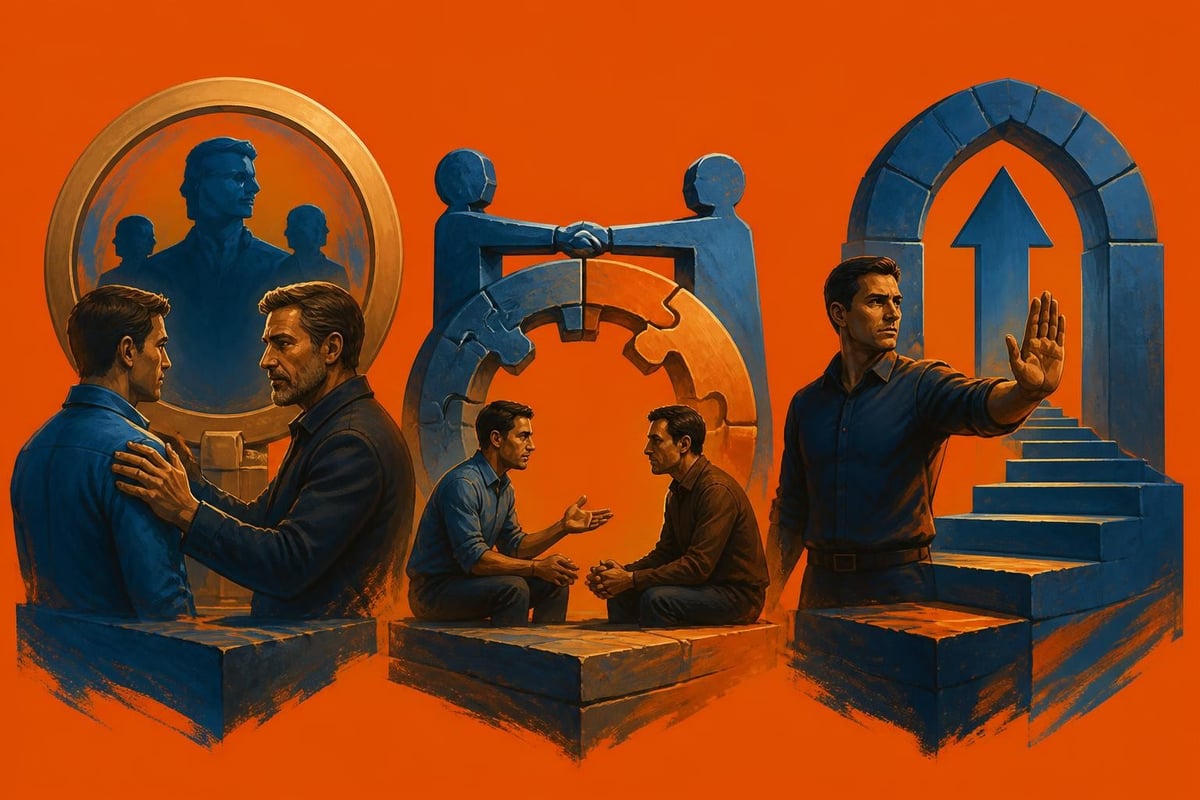
The mistake is expecting these tools to replace the accountability mechanism itself. One effective model: AI augments human coaching. The technology handles information processing; the coach provides judgment, challenge, and consequence.
The Trust Equation in Accountability
A 2026 case study from a 180-employee SaaS company illustrates the difference. They rolled out an AI accountability platform for their leadership team. Adoption was high initially, then dropped to 31% by month four. Exit interviews revealed the same phrase repeatedly: AI could not hold me accountable.
When they brought in experienced coaches who combined technology for tracking with human sessions for judgment, engagement climbed to 89% and held. The difference? Leaders trusted the coach to see what they were avoiding, challenge their excuses, and care enough to push back.
Trust in accountability relationships requires:
- Competence: The coach has solved problems you face
- Credibility: Their judgment is earned through experience
- Care: They're invested in your success, not just compliance
- Courage: They'll name what's being avoided
AI can demonstrate none of these. It processes inputs and generates outputs. It cannot assess whether your rationale for delaying a difficult decision is strategic or self-protective. That requires human expertise.
Documentation Versus Diagnosis
UK guidance on AI assurance highlights a principle applicable beyond regulation: assurance requires independent judgment, not just automated documentation. The same applies in leadership accountability.
Leaders often confuse tracking with development. "I documented my growth goals in the app" is not the same as "I'm confronting the leadership gap holding my team back." One is administrative; the other requires someone who can diagnose the real blocker.
Experienced coaches recognize common avoidance patterns:
- Over-planning instead of deciding
- Data-gathering instead of confronting
- Consensus-seeking instead of leading
- Process improvement instead of people decisions
No algorithm calls these out because they look productive. They are productive, just not on the problem that matters. This is where ai could not hold me accountable becomes most visible.

Building Accountable Leaders in 2026
The question is not AI versus human coaching. It's how to combine tools with judgment effectively. Partnership on AI research on assurance ecosystems emphasizes transparency and appropriate human oversight, principles that transfer directly to coaching contexts.
Practical framework for accountability at scale:
- Use AI for data, tracking, and pattern visibility
- Reserve judgment, challenge, and consequence for human coaches
- Tie accountability to business KPIs, not activity metrics
- Create escalation paths when leaders stall on critical decisions
- Measure behavior change and team outcomes, not completion rates
Organizations that combine technology-enabled visibility with human accountability coaching report faster leadership development, clearer execution on priorities, and higher retention of key talent. The technology makes coaching more efficient; the human relationship makes it effective.
The VP who started this article eventually found a coach who combined an AI dashboard for her 360 feedback trends with monthly sessions focused on the decisions she was avoiding. Six months later, she'd restructured her team, addressed two long-stalled performance issues, and built a clearer operating cadence. The AI provided visibility; the coach provided accountability.
When selecting coaches or coaching platforms, ask: Who holds consequence when I avoid the hard stuff? If the answer is an algorithm, you're buying a productivity tool, not accountability. For leadership development that moves business metrics, you need someone who can see what you're avoiding, challenge your excuses, and stay with you until you act. That requires human judgment, relational trust, and the courage to name what's at stake. AI could not hold me accountable, and it still can't in 2026.
AI tools extend the reach of coaching, but genuine accountability remains a human relationship built on judgment, consequence, and trust. When mid-market companies need leadership development that delivers measurable business results, not just tracked activity, they work with coaches who combine technology for visibility with human expertise for accountability. Noomii connects you with experienced coaches who coach live in your meetings, tie progress to clear KPIs, and work month-to-month so you stay because results are visible, not contracts.
Frequently Asked Questions
Can AI coaching tools replace human accountability coaches?
No. AI tools excel at tracking, reminders, and pattern identification, but accountability requires human judgment, social consequence, and the ability to challenge avoidance. AI could not hold me accountable because it cannot assess context, impose reputational consequence, or adapt challenge based on what you're protecting.
What makes human accountability different from AI tracking?
Human accountability involves contextual judgment about what you're avoiding, relational consequences that matter to you, and adaptive challenge that shifts as you grow. AI tracking measures compliance with predefined metrics but cannot recognize when you're gaming the system or choosing comfort over growth.
How should organizations use AI in leadership coaching?
Use AI for data synthesis, progress documentation, pattern visibility, and scheduling. Reserve judgment, challenge, and accountability for experienced human coaches. The most effective model combines AI-enabled visibility with human sessions focused on decisions being avoided and consequences of delay.
Why do leaders say AI could not hold them accountable?
Because accountability requires someone who can see through your excuses, challenge your avoidance, and tie your actions to business consequences. AI can remind you of commitments but cannot judge whether your rationale for delay is strategic or self-protective, and it carries no social weight when you ignore it.
What should I look for in an accountability coach?
Competence solving problems you face, credibility earned through experience, genuine care about your success, and courage to name what you're avoiding. Ask how they handle leaders who stall on difficult decisions and whether they tie coaching to business KPIs or just activity completion.
Can AI improve coaching outcomes?
Yes, when used appropriately. AI can provide coaches with better data, identify behavioral patterns, track developmental goals, and extend coaching reach between sessions. But the accountability mechanism itself, the relationship where consequences matter, must remain human.
What's the biggest mistake companies make with AI coaching tools?
Expecting compliance tracking to substitute for developmental challenge. High completion rates on AI prompts often mask strategic avoidance. Leaders attend meetings but avoid difficult conversations, complete action items but delay hard decisions, and report progress while protecting comfort.
How do I measure real accountability versus activity tracking?
Measure behavior change and business outcomes, not task completion. Ask: Are difficult conversations happening? Are decisions getting made? Is team performance improving? Are retention and engagement rising? If activity metrics are high but business results lag, you have compliance, not accountability.
What role will AI play in coaching by 2027?
AI will increasingly handle information processing, pattern recognition, and personalized content delivery. But as regulations like the European AI Act emphasize, consequential decisions require human oversight. The same principle applies in coaching: AI augments, humans hold accountability.



Leave a Reply
Want to join the discussion?Feel free to contribute!