

Life Coach Cost: What to Expect Per Session in 2026
Life coaching rates vary widely, and premium specialists often charge well above the typical range. The 2025 ICF Global Coaching Study reports an average fee of $234 for a one-hour session worldwide, according to Psychology.com, though that figure covers coaching across niches and countries, not life coaches alone.
That gap between $75 and $250 is where most buyers get stuck. The price rarely tells you whether the coaching works. What it does tell you is how the coach built their business, and that matters less to you than the questions in this article.
How Much Do Life Coaches Charge on Average?
Rates depend heavily on niche and market. A 2025 survey of board-certified health coaches found a $100 median hourly private-practice rate, with most rates between $75 and $150 and some as high as $600, per Psychology.com.
Here is what that looks like across a typical engagement:
| Engagement | At $100/hour | At $234/hour |
|---|---|---|
| 4 weekly sessions | $400 | about $936 |
| 12 sessions | about $1,200 | about $2,800 |
Treat these as a range, not a quote. Individual coaches set their own fees, and plenty of capable coaches sit well below or above the averages.
What Drives the Price of a Life Coach?
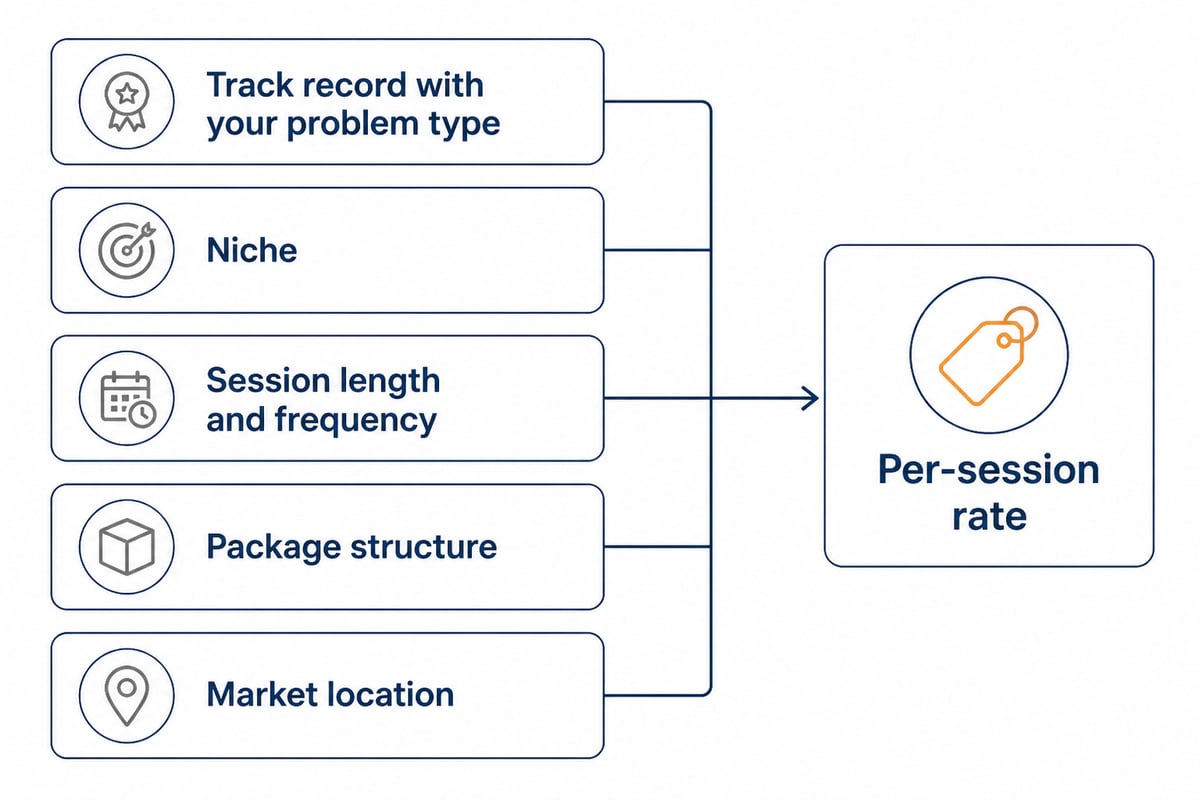
Five factors explain nearly every difference in rates, and credentials are not the biggest one.
- Track record with your type of problem. A coach who has repeatedly moved clients through career changes or divorce recovery charges more than a generalist, and often deserves it.
- Niche. Career, relationship, and health coaching each carry their own price norms.
- Session length and frequency. A 45-minute call every two weeks costs less per month than weekly 90-minute sessions.
- Packages. Many coaches discount when you prepay for a block of sessions.
- Market. Coaches in large metro areas price higher, though remote coaching has flattened this considerably.
One pattern worth flagging: certification worship can inflate fees without improving results. A coach with a weekend credential and a polished funnel can charge more than a seasoned practitioner with a long record of client outcomes. Ask what changed for their last five clients, not which acronym follows their name.
Session Rates Versus Packages and Programs
A life coaching program can cost anywhere from a few hundred dollars to several thousand, depending on session count and how much support happens between calls. Packages bring the per-session price down but raise your commitment.
Common structures include:
- Single sessions. Highest per-hour cost, lowest risk. Good for a first test.
- Monthly retainers. Two to four sessions plus email or message support, often several hundred dollars a month.
- Fixed-length programs. A set number of sessions for a defined goal, billed upfront or in installments.
- Group coaching. Typically a lower monthly cost, with less individual attention.
Avoid any plan that locks you into a long contract before you have had a single session. A good coach will let you start small and extend once the work proves itself.
Does Insurance Cover a Life Coach?
No, health insurance generally does not cover life coaching. The Cleveland Clinic notes that life coaches are not healthcare providers, and health insurance plans do not cover life coaching.
This is also the cleanest way to understand the cost difference with therapy. A 2024 analysis of nearly 105 million psychotherapy sessions found an average session cost of $139, according to Psychology.com, but that is a therapy comparison, not a coaching price, and therapy often has insurance support. If you are dealing with depression, trauma, or a mental health condition, a licensed therapist is the right call, not a coach.
Can ChatGPT Be My Life Coach?
An AI chatbot can handle low-stakes structure, such as brainstorming goals, drafting a weekly plan, or rehearsing a hard conversation. It cannot notice that you changed the subject when a topic got uncomfortable, hold you to a commitment, or adjust to your tone across months.
Here is how the two compare in practice:
- Cost: AI is nearly free; a human coach typically charges a meaningful fee per session.
- Accountability: AI forgets you unless you remind it; a coach tracks your follow-through.
- Pattern recognition: A human spots the avoidance behind your stated goal.
- Best use: Use AI between sessions to prepare, not as a substitute for the relationship.
The honest answer is that many people do well pairing the two. You pay a human for judgment and accountability and use software for the drafting.

A Case Study: When Cheaper Cost More
Problem: A mid-career professional wanted to change industries and hired a low-priced coach found through social media, booking twelve sessions.
Diagnosis: After three months she had a vision board and no applications sent. The coach worked on mindset only and never set measurable actions.
Solution: She switched to a higher-priced coach who asked for weekly deliverables: two networking conversations and one application.
Result: Within eight weeks she had four interviews.
Lesson: Price per hour is the wrong unit. Measure cost per outcome, and ask any coach what you will be doing between sessions.
A Simple Test for Whether a Life Coach Cost Is Fair
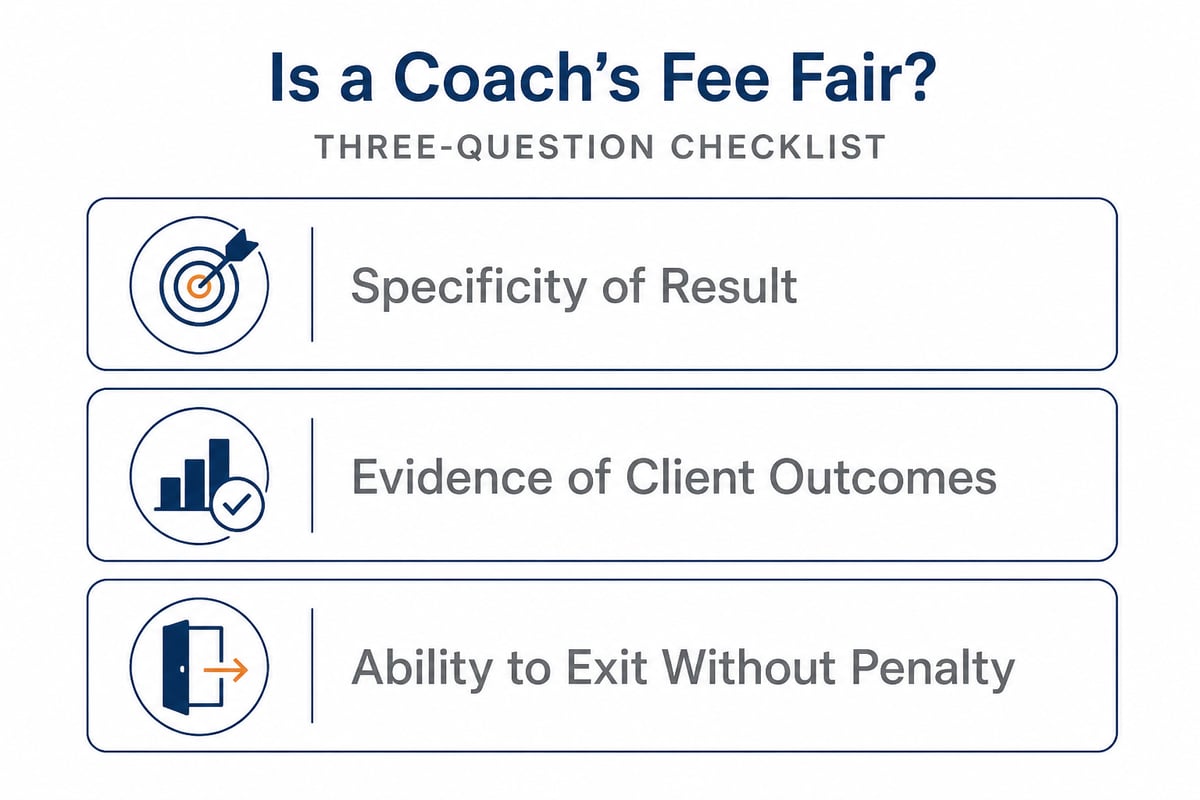
Use the three-question value check before paying anyone:
- Specificity: Can they describe the exact result they help clients reach, in one sentence?
- Evidence: Can they share client outcomes or references, with permission?
- Exit: Can you stop after a few sessions without a penalty?
If a coach fails two of the three, the fee is too high at any price. Each coach should also offer a free consultation, which is the cheapest way to run this test.
How to Find a Coach Within Your Budget
Start by deciding your ceiling per month, not per session, then work backward. Divide that monthly budget by each coach's per-session rate to see how many sessions you can afford.
Directories help because they let you compare coaches side by side. On Noomii, searching and matching is free for clients, matches are based on your goals, personality, and budget, and you get up to five coach recommendations. Every coach is a real, independent professional, and most offer a free consultation. If you want one-on-one work focused on the future rather than healing the past, start with life coaching.
Location barely limits you. Remote coaching is available, so you can browse coaches in places like California or Toronto without relocating. If you are still weighing what a coach actually does versus other helpers, this overview of a life coach’s role is a useful primer. Coaches who want to understand how directory listings work can check the coach FAQ.
FAQ
What is the 70/30 rule in coaching?
The 70/30 rule is a conversation guideline: the client should speak roughly 70 percent of the time and the coach 30 percent. It keeps the session focused on your thinking rather than the coach's advice. If a coach talks most of the hour, that is a red flag.
How long should I stay with a life coach?
Most goal-driven engagements run three to six months. Longer relationships make sense only if you are still hitting new milestones. Re-evaluate every six to eight sessions.
Is a free consultation worth taking?
Yes. It costs nothing and shows you the coach's questioning style, pace, and fit. Book two or three before choosing.
Your next step is to write down one goal and a monthly budget, then book free consultations with two or three coaches and apply the three-question check from this article. When you are ready to compare real options, Noomii makes it easy to see up to five matched coaches based on your goals, personality, and budget, and you can browse life coaching before you commit to anything. Get your free match and speak with a coach this week.


Leave a Reply
Want to join the discussion?Feel free to contribute!