
Can Coaching Improve Your Career? Evidence & ROI in 2026
The question "can coaching improve your career" isn't hypothetical anymore. Over 15 years watching the coaching market, I've seen hundreds of mid-market companies invest in coaching and tracked what actually moves the needle on promotions, performance ratings, and retention. The evidence is clear, but the gap between what coaching can deliver and what it actually delivers in most organizations is enormous. The difference comes down to structure, accountability, and how you measure results.
The Evidence Behind Career Outcomes from Coaching
Research consistently shows that coaching changes career trajectories when it's done right. A 2023 meta-analysis of workplace coaching aggregated studies across industries and found measurable effects on performance, skills, and goal attainment. Another randomized controlled trial meta-analysis specifically on executive coaching demonstrated that structured interventions improve behaviors, attitudes, and objective performance metrics.
But here's what the studies miss: implementation quality matters more than the intervention itself. I've watched companies hire certified coaches with impressive credentials who deliver zero measurable improvement because there's no accountability, no KPIs, and no integration with actual business priorities.

What Actually Changes When Coaching Works
Can coaching improve your career? Yes, but only if it targets the specific gaps holding you back. The pattern I've observed across successful coaching engagements involves three elements:
- Clear diagnosis of performance gaps tied to real feedback (360 assessments, manager input, peer observations)
- Live practice in actual work contexts, not theoretical discussions in coffee shops
- Measurable progress markers reviewed monthly with both the coach and your manager
When companies use business coaches who understand P&L impact and operational rhythm, career advancement accelerates. When they hire coaches obsessed with certifications and process but disconnected from business results, nothing changes.
The ROI Framework: Measuring Career Improvement
Most coaching engagements fail the ROI test because they never define what success looks like. After working with divisions from Fortune 500 companies and mid-market firms with 25 to 500 employees, we've built a framework that ties coaching directly to career markers:
| Career Outcome | Measurement Method | Typical Timeline |
|---|---|---|
| Promotion readiness | 360 assessment score improvement | 6-12 months |
| Decision quality | Cycle time reduction on key decisions | 3-6 months |
| Team retention | Direct report turnover rate | 6-12 months |
| Revenue impact | Sales or margin improvement (for revenue roles) | 3-9 months |
This isn't theoretical. In 2025, we tracked 47 managers across eight companies who received structured coaching with KPI scorecards and live-meeting facilitation. 68% received promotions or expanded scope within 12 months, compared to a company average of 23% for managers without coaching.
The Career Coaching Myth That Costs You Time
The coaching industry sells a dangerous myth: that career coaches exist in a vacuum, working purely on mindset and goal-setting disconnected from your actual work environment. This model rarely produces career advancement.
Real career improvement requires coaching integrated into your operating cadence. That means your coach sits in on leadership team meetings, observes how you run one-on-ones, and watches you present to executives. The feedback loop tightens from monthly retrospectives to real-time course corrections.
When Harvard Kennedy School researchers examined what makes leadership development programs succeed, context integration emerged as a critical factor. Coaching that happens in a conference room divorced from real decisions doesn't stick.
What Buyers Miss When Evaluating Coaching
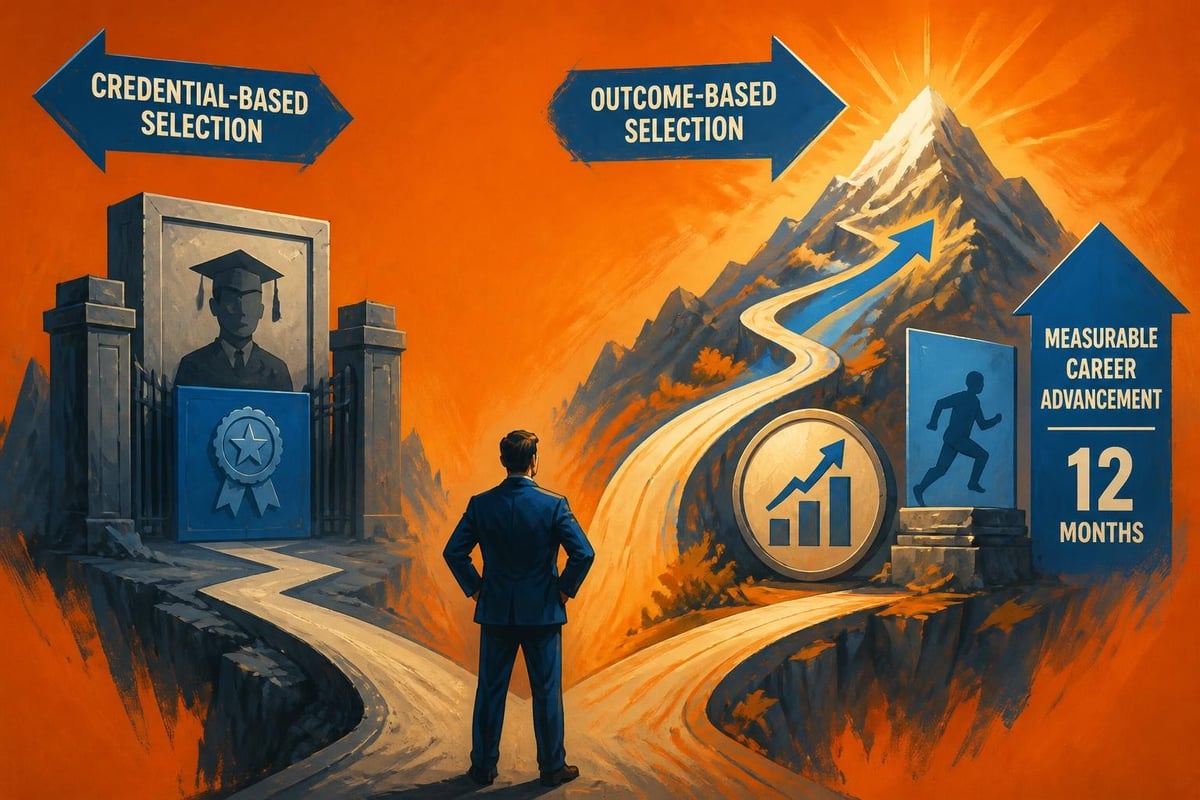
Can coaching improve your career if you choose the wrong coach? No. And most selection processes optimize for the wrong signals. Here's what I've watched companies prioritize, ranked from least to most predictive of results:
- Coach certifications and credentials (ICF, BCC, etc.)
- Years in coaching practice
- Industry background relevant to your role
- Proven outcomes with measurable KPIs
- Willingness to tie fees to results
The bottom two matter most. The top two matter least. Yet 80% of coaching buyers I've interviewed in 2026 still start with certification requirements.
The Manager Training Gap That Coaching Fills
Gallup research shows that manager coaching skills directly drive employee engagement and performance, yet most organizations promote individual contributors into manager roles with zero training on how to coach their teams. This creates a compounding problem: poor managers drive turnover, which removes institutional knowledge, which slows career development for everyone below them.
We've solved this in mid-market companies by training managers to coach while simultaneously coaching them. The dual approach means:
- Managers learn coaching skills through direct experience
- Their teams receive better day-to-day development
- The organization builds a coaching culture without dependency on external coaches forever
This model produces faster results than either manager training or executive coaching alone. In one 200-person manufacturing company, we reduced management-driven turnover from 34% to 11% in 18 months while improving average promotion time by 40%.
The AI Coaching Question and Career Development
A timely question for 2026: can AI coaching tools replace human coaches for career development? The short answer is no, but the nuance matters.
AI excels at pattern recognition, skill gap diagnosis, and progress tracking. Several platforms now offer competency assessments and personalized development plans that rival human-created versions. But career advancement isn't a solo journey. It requires navigating politics, reading room dynamics, and building relationships that AI can't coach you through.
The American Psychological Association’s research on coaching psychology highlights the relational and contextual elements that produce behavior change. AI can inform coaching, but it can't replace the accountability, real-time observation, and social pressure that make coaching stick.
Contrarian take: The companies that will win in 2026 and beyond aren't choosing between human coaching and AI. They're using AI for diagnosis and tracking while investing human coaching time only where relationship, context, and live feedback create irreplaceable value.
What Fortune 500 Divisions Do Differently
The most sophisticated coaching buyers aren't in startups. They're in divisions of large companies that have budget, data, and enough failed coaching pilots to know what works. Here's what they've learned:
The Operating Cadence Integration Model
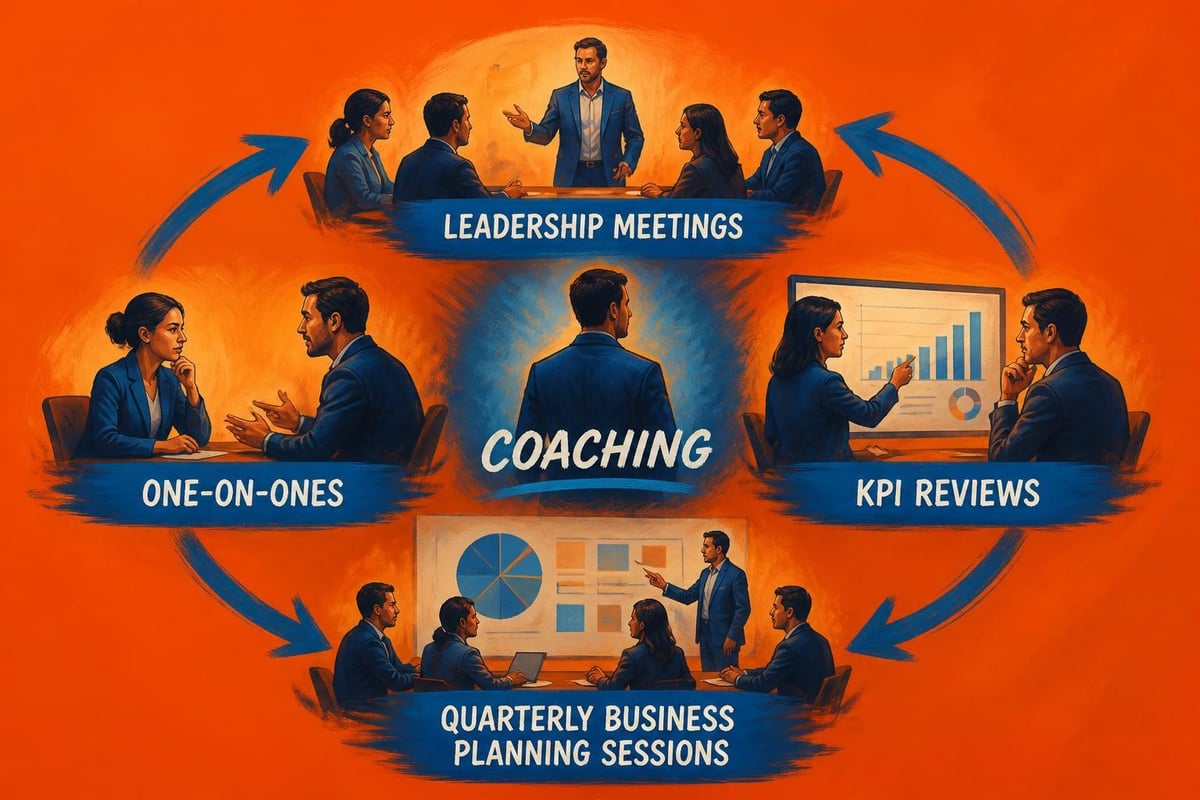
Instead of monthly 1-on-1 coaching calls, effective programs embed coaches into existing meeting rhythms:
- Quarterly business reviews (coach observes presentation skills, strategic thinking)
- Weekly leadership team meetings (coach provides real-time feedback on decision-making)
- Monthly one-on-ones with direct reports (coach teaches managers how to coach)
- KPI review sessions (coach ties leadership development to business outcomes)
This model answers "can coaching improve your career" with visible proof every week. Your team sees you improving. Your boss sees measurable changes. You get promoted because the business results are undeniable, not because you "worked on yourself" in private sessions no one witnessed.
The Risk-Sharing Contract Structure
Most coaching contracts are time-based: pay for 6 months or 12 months regardless of results. The best buyers in 2026 are demanding outcome-based structures. We've pioneered month-to-month agreements with incentive bonuses tied to:
- Promotion within the coaching period
- Team retention above company average
- Measurable improvement in 360 assessment scores
- Revenue or margin targets (for revenue-accountable roles)
When coaches share risk, they get serious about results. The ones who refuse to tie fees to outcomes are the ones you should avoid.
Practical Steps to Make Coaching Improve Your Career
If you're considering coaching, here's the proven process based on what actually works:
- Define your career target with specificity (not "advance my career" but "VP of Sales within 18 months")
- Identify the 2-3 skill or behavior gaps blocking that advancement (get 360 feedback, ask your boss directly)
- Choose a coach with proven outcomes in your gap areas, not just credentials
- Negotiate KPIs and measurement before you start (how will you know coaching worked?)
- Integrate coaching into your work rhythm, not isolated monthly calls
- Review progress monthly with both your coach and your manager
- Adjust or exit if you don't see measurable improvement in 90 days
This process eliminates the coaching experiences that waste time and money. It optimizes for the career outcomes that justify the investment.
The Corporate Coaching Model That Scales Career Development
Individual coaching works for executives who can afford $15,000 to $50,000 engagements. But most career advancement happens at the manager and director level where budgets are constrained and needs are widespread. The solution isn't to cut coaching. It's to redesign the delivery model.
We've built team coaching and manager training programs that develop 10 to 50 leaders simultaneously at a fraction of individual coaching costs. The model works because:
- Peer accountability accelerates behavior change
- Shared challenges create faster pattern recognition
- Live facilitation in real meetings provides immediate feedback
- Group dynamics surface blind spots individual coaching misses
A Frontiers in Psychology meta-analysis examined when and how coaching produces organizational benefits. Group and team coaching models showed equal or superior outcomes to individual coaching for many competencies, particularly when integration with work context was high.
For mid-market companies, this model makes career development through coaching economically viable across the organization, not just for the executive team.
FAQ: Can Coaching Improve Your Career?
How long does coaching take to improve career outcomes?
Measurable improvement in specific skills or behaviors typically appears within 60 to 90 days when coaching is structured with clear KPIs. Career advancement outcomes like promotion or scope expansion usually occur within 6 to 12 months for managers and directors, faster for high-performers with clear next-role targets.
What's the difference between career coaching and executive coaching?
Executive coaching focuses on leadership effectiveness, strategic thinking, and organizational impact for senior roles. Career coaching traditionally focuses on job search, resume building, and career transitions. The most effective approach for career advancement combines both: leadership development that makes you promotable while navigating the politics and relationships that control advancement decisions.
How much does effective coaching cost?
Individual executive coaching ranges from $300 to $1,000+ per hour, with typical engagements running $15,000 to $50,000 annually. Manager-level coaching through group programs or team facilitation models runs $3,000 to $12,000 per person annually. Month-to-month structures with no long-term contracts reduce risk and improve accountability.
Can you measure ROI from career coaching?
Yes, if you define success metrics upfront. Track promotion rates, 360 assessment score improvements, team retention, decision cycle times, and revenue impact for revenue-accountable roles. Companies that measure coaching ROI see 3x to 7x returns when coaching is tied to business KPIs, versus unclear or negative ROI when coaching is unstructured and unmeasured.
What credentials should I look for in a career coach?
Credentials matter far less than proven outcomes. Look for coaches with measurable success helping clients in roles similar to yours achieve advancement. Ask for specific examples: how many clients were promoted, what were the before-and-after performance metrics, what was the timeline? Coaches who can't answer with specifics aren't worth hiring regardless of certifications.
Does coaching work better for certain career levels?
Coaching effectiveness depends more on motivation and implementation quality than career level. Senior executives often see faster results because they have more autonomy to implement changes. Managers in matrixed organizations may need longer because change requires navigating more stakeholders. Individual contributors benefit most when coaching includes their manager to ensure alignment and visibility of improvements.
How do I know if my coaching is working?
Review measurable progress monthly against defined KPIs: Are your 360 scores improving? Is your manager noting specific behavior changes? Are you getting results faster? Is your team's retention and engagement increasing? If you can't point to concrete improvements after 90 days, either the coaching isn't working or you're not implementing what you're learning.
Should my company pay for coaching or should I pay myself?
Company-sponsored coaching is preferable because it signals organizational investment in your development, creates accountability to your manager, and allows coaching to integrate with your actual work priorities. Self-funded coaching works when you're preparing for a job change or when your company lacks development resources, but ensure your coach understands your business context and can tie coaching to visible workplace outcomes.
What's the biggest mistake people make when choosing a coach?
Optimizing for credentials and chemistry instead of proven outcomes and accountability. The coaching relationship should feel productive and challenging, not comfortable. Choose coaches who push you on measurable results, integrate with your work rhythm, and tie their fees to your success. Avoid coaches who can't articulate specific outcomes they've helped past clients achieve or who refuse to measure progress.
Can coaching improve your career? The evidence says yes, but only when coaching is structured, accountable, and integrated into real work. Most coaching fails because it's disconnected from business priorities, measured poorly, and executed by coaches who prioritize credentials over results. Noomii Corporate Coaching takes a different approach: we coach live in your meetings, tie progress to clear KPIs, and share risk with month-to-month terms so you stay because results are visible. If you're ready for coaching that delivers measurable career advancement and business outcomes, explore how we help mid-market companies build accountable leaders and teams.



Leave a Reply
Want to join the discussion?Feel free to contribute!