
How to Choose a Trustworthy Coach (2026 Guide)
The coaching industry grew 33% between 2020 and 2024, yet trust remains the largest barrier to purchase. Buyers face credential inflation, vague promises, and coaches who prioritize certification letters over client results. Learning how to choose a trustworthy coach requires shifting from passive credential worship to active evaluation of experience, outcomes, and accountability. The signals that separate effective practitioners from those who coach as a side hustle or credential collection exercise are visible once you know where to look.
Start with Evidence of Experience, Not Credential Count
Trustworthy coaches demonstrate firsthand expertise through case studies, client outcomes, and documented results. They describe specific problems they've solved, how they diagnosed root causes, the solutions they implemented, and the measurable changes that followed.
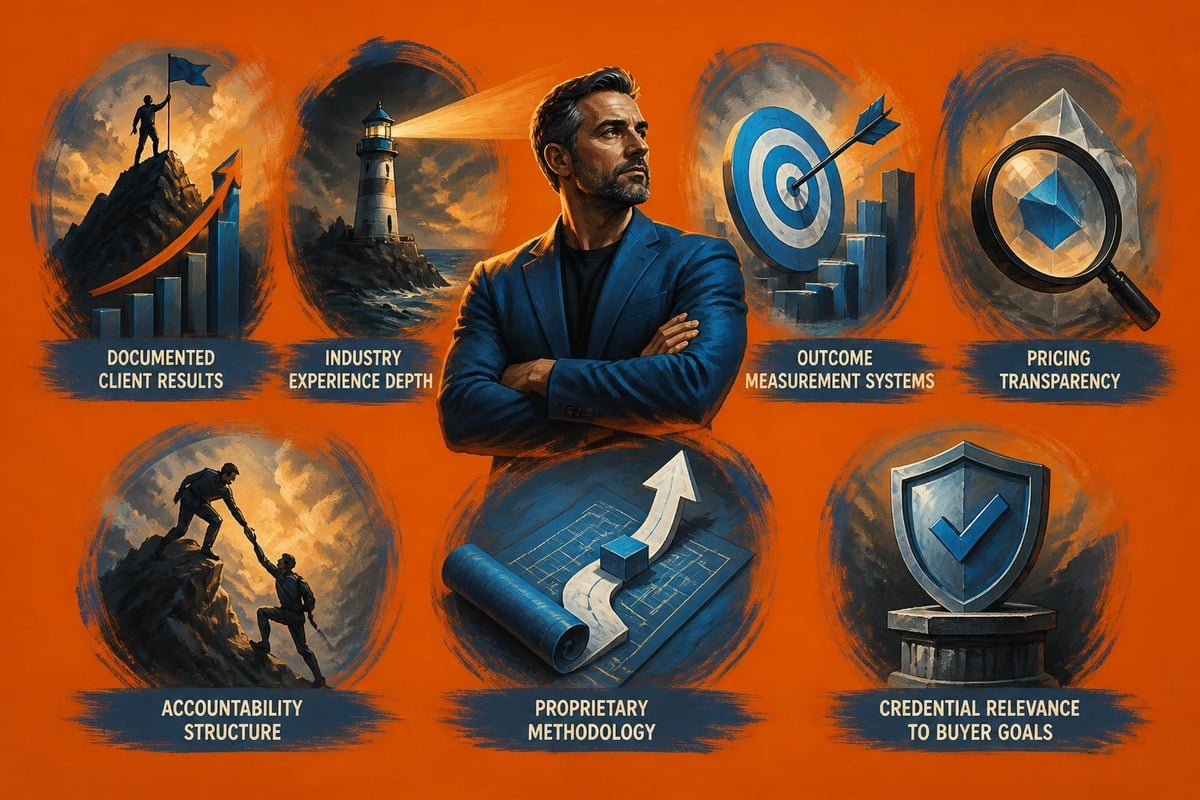
Red flags appear when coaches lead with certifications instead of client transformations. A coach with six credentials but zero stories of manager retention improvements, sales turnarounds, or team performance gains is selling inputs, not outcomes. The Association of Coaching offers practical guidance on evaluating qualifications, but experienced buyers prioritize proof of impact over alphabet soup after a name.
Ask These Questions During Discovery Calls
- What specific business results have your clients achieved in the past 12 months?
- Can you share a case where coaching didn't work and what you learned?
- How do you measure progress beyond self-reported satisfaction?
- What industries or roles do you have direct experience leading or managing?
Coaches who stumble on these questions lack the depth required for complex organizational challenges. Those with genuine expertise provide specific examples, quantified outcomes, and honest assessments of fit. When exploring leadership coaching resources, prioritize providers who publish detailed case studies showing problem diagnosis, intervention design, and business impact.
Demand Outcome Measurement and Shared Risk
The shift from activity-based coaching to results-based engagements exposes who delivers value versus who runs out the clock. Trustworthy coaches propose clear KPIs, accountability checkpoints, and progress tracking tied to your business priorities.
| Trustworthy Approach | Warning Signs |
|---|---|
| Monthly KPI reviews tied to business metrics | "Trust the process" without measurement |
| Month-to-month terms with performance gates | 12-month contracts paid upfront |
| Shared-risk pricing linked to outcomes | Flat fees regardless of results |
| Transparent pricing with scope documentation | Vague "investment" language |
| Willingness to coach live in meetings | Only one-on-one sessions off-site |
The most confident coaches align their compensation with your results. They propose incentive structures, outcome-based milestones, or flexible terms that let you exit if progress stalls. This mirrors executive coaching cost structures that prioritize buyer protection over consultant revenue.
Real Accountability Looks Like This
In 2025, a mid-market manufacturing client needed faster decision-making and clearer ownership. The coach implemented weekly KPI scorecards, facilitated live leadership meetings, and tied engagement continuation to measurable reductions in decision lag time. Within 90 days, the team cut major decisions from 14 days average to 6 days, documented through meeting timestamps and project tracking.
That's measurable impact. Contrast this with coaches who cite "improved leadership presence" or "enhanced communication" without evidence. Understanding how to choose a trustworthy coach means rejecting vague promises and demanding quantified business outcomes.
Verify Professional Boundaries and Ethical Standards
Coaching operates in a largely unregulated space, making ethical standards and professional boundaries critical trust signals. Trustworthy coaches know when to refer clients to licensed therapists, maintain strict confidentiality, and operate within defined scope.
The American Psychological Association’s ethical guidelines provide important context on professional boundaries and when coaching crosses into clinical territory requiring licensed mental health care. Coaches who blur these lines or claim therapeutic expertise without licensure pose serious risks.
Ask about supervision, continuing education, and how they handle situations outside their expertise. Coaches aligned with professional associations often maintain peer supervision arrangements and participate in ongoing training, even if credentials aren't their primary selling point.

Evaluate Pricing Transparency and Contract Terms
Pricing opacity correlates strongly with trustworthiness problems. Coaches who hide fees behind "discovery calls" or refuse to provide written proposals fear comparison and lack confidence in their value proposition.
Trustworthy Pricing Practices Include
- Written proposals with scope definition detailing deliverables, timeline, and expectations
- Clear hourly or project rates published or provided upon request
- Month-to-month options instead of mandatory long-term commitments
- Refund or exit policies stated upfront in writing
- Payment terms aligned with milestone delivery, not front-loaded
The AICPA coaching procurement toolkit offers practical questions for assessing pricing structure, supervision processes, and evaluation frameworks when hiring coaches for organizational needs.
Month-to-month terms signal coach confidence. They're betting their results will retain you, not contract penalties. Long-term agreements often protect coaches from their own ineffectiveness, locking buyers into relationships that stopped delivering value months earlier.
Look for Proprietary Methods Backed by Repeated Success
Trustworthy coaches develop systematic approaches refined through repeated client engagements. These aren't generic frameworks borrowed from books but proprietary methods born from solving specific problems across multiple clients.
Examples of substantive methodology:
- Custom 360 assessment frameworks tied to role-specific competencies
- Operating cadence systems that structure meetings, reporting, and accountability
- KPI scorecard templates adapted to industry benchmarks and company stage
- Sales coaching processes with stage-specific conversion metrics
- Manager training curricula built from common failure patterns in specific industries
Generic "goal-setting" or "values clarification" processes copied from certification programs signal inexperience. Coaches who've solved problems hundreds of times build repeatable systems that accelerate results.
Check for Industry and Functional Expertise Depth
How to choose a trustworthy coach becomes easier when you match their background to your challenges. A coach who spent 15 years in sales leadership brings different value than one who earned credentials straight from corporate HR or transitioned from unrelated fields.
Direct experience matters for complex organizational coaching:
- Former executives understand board dynamics, investor pressure, and strategic trade-offs
- Ex-sales leaders know pipeline management, forecasting, and team motivation beyond theory
- Operations veterans recognize process bottlenecks, capacity constraints, and execution gaps
- Functional experts speak the language of your department's daily reality
Browse leadership coaches with relevant backgrounds and assess whether their career history aligns with your organization's challenges. Coaches who've held P&L responsibility, managed teams through growth, or navigated layoffs offer insights certification courses cannot teach.

Test Response to Difficult Questions
Trustworthy coaches welcome scrutiny and provide direct answers to challenging questions. They acknowledge limitations, describe situations where they're not the right fit, and refer clients to better-matched providers when appropriate.
Questions That Reveal Character
- "What types of clients do you turn away and why?"
- "Describe a coaching engagement that failed and what you learned."
- "How do you handle situations where a client isn't making progress?"
- "What happens if we're not seeing results after 60 days?"
- "Can you provide three client references I can contact?"
Evasive responses, defensiveness, or pivots to credential recitation signal trouble. Experienced practitioners answer directly, share lessons from failures, and demonstrate comfort with accountability.
When you know how to choose a trustworthy coach, you'll notice those who've earned trust through results welcome verification. You can verify credentialed coaches through ICF’s directory when credentials matter to your procurement process, but remember credentials verify training completion, not trustworthiness or results delivery.
Frequently Asked Questions
What's more important: coaching credentials or business experience?
Business experience and documented client results matter more for organizational coaching. Credentials verify training completion but don't predict trustworthiness, outcome delivery, or expertise in your industry. Prioritize coaches who've held roles similar to those they coach and can demonstrate measurable improvements across multiple clients.
How can I verify a coach's claimed results?
Request specific case studies with problem statements, interventions, measurable outcomes, and client references you can contact. Trustworthy coaches provide detailed examples including metrics, timelines, and lessons learned. Vague success stories without quantification or verifiable details suggest exaggeration or lack of systematic tracking.
Should I expect month-to-month terms or annual contracts?
Month-to-month terms signal coach confidence in delivering visible results that retain clients voluntarily. Long-term contracts protect coaches from poor performance and limit your flexibility to exit if progress stalls. Avoid coaches who require upfront payment for 6-12 months without performance gates or refund provisions.
What red flags indicate a coach might not be trustworthy?
Major red flags include refusing to provide written proposals with clear pricing, inability to describe specific client outcomes, leading with credentials over results, requiring long-term contracts upfront, vague measurement approaches, and defensive responses to accountability questions. Trustworthy coaches welcome scrutiny and provide transparent, detailed answers.
How do I know if a coach has relevant industry expertise?
Review their career history for direct experience in roles, industries, or functions matching your challenges. Former executives, sales leaders, or operations managers who transitioned to coaching bring firsthand knowledge that credential-only coaches lack. Ask about specific situations they've navigated personally, not just clients they've coached.
What questions should I ask during initial coach conversations?
Ask about specific client results achieved in the past 12 months, measurement approaches, pricing and terms, methodology frameworks, situations where they're not the right fit, failed engagements and lessons learned, and references you can contact. Their directness, specificity, and comfort with accountability reveal trustworthiness better than marketing materials.
How important are coaching certifications when choosing a coach?
Certifications verify training completion but don't guarantee trustworthiness, expertise, or results. For organizational coaching, prioritize business experience, documented outcomes, industry knowledge, and systematic methodology over certification count. Some excellent coaches hold credentials; many effective practitioners built expertise through decades of leadership roles without formal coaching certification.
What should be included in a coaching proposal or agreement?
Trustworthy proposals include clear scope definition, specific deliverables and timeline, pricing with payment terms, measurement and accountability approach, meeting frequency and format, confidentiality provisions, exit terms or refund policy, and expected outcomes tied to business metrics. Vague proposals lacking specificity suggest unclear value delivery.
How can I tell if a coach will deliver measurable business results?
Evaluate their outcome measurement systems, KPI tracking approaches, willingness to tie compensation to results, case studies showing quantified improvements, and comfort with performance-based terms. Coaches who propose shared-risk structures, monthly metric reviews, and transparent progress tracking demonstrate confidence in delivering visible business impact versus activity completion.
Choosing a trustworthy coach requires evaluating experience evidence, outcome measurement, pricing transparency, and accountability structure over credential collection. When you need practical corporate coaching that delivers measurable business results through executive coaching, leadership development, and team performance improvement, Noomii connects mid-market companies with coaches who share risk through month-to-month terms and tie progress to clear KPIs, so you stay because results are visible, not because contracts lock you in.


Leave a Reply
Want to join the discussion?Feel free to contribute!