

AI Gave Answers But Not Results: Why Coaching Fails
Corporate leaders discovered a harsh truth in 2025 and 2026: AI gave answers but not results when it came to coaching their managers and teams. The technology could surface leadership frameworks, suggest communication scripts, and generate development plans in seconds. Yet engagement scores stagnated, turnover persisted, and quarterly goals kept slipping. The gap between information and transformation proved wider than anyone predicted. Unlike technical domains where correct answers drive immediate value, leadership development requires behavioral change, accountability loops, and someone willing to challenge executives in the moment decisions happen.
The Hallucination Problem Meets Leadership Reality
AI systems face a documented challenge called hallucination, where models generate confident but incorrect information. Google Research’s systematization of LLM hallucinations reveals how these failures occur across taxonomy categories. For coaching, the issue runs deeper than factual errors.
An AI might suggest a perfectly reasonable conflict-resolution framework. But it can't observe that your VP avoids difficult conversations, delivers feedback only in annual reviews, or undermines team psychological safety through passive-aggressive emails. The answer looks helpful. The result never materializes because diagnosis missed the actual problem.
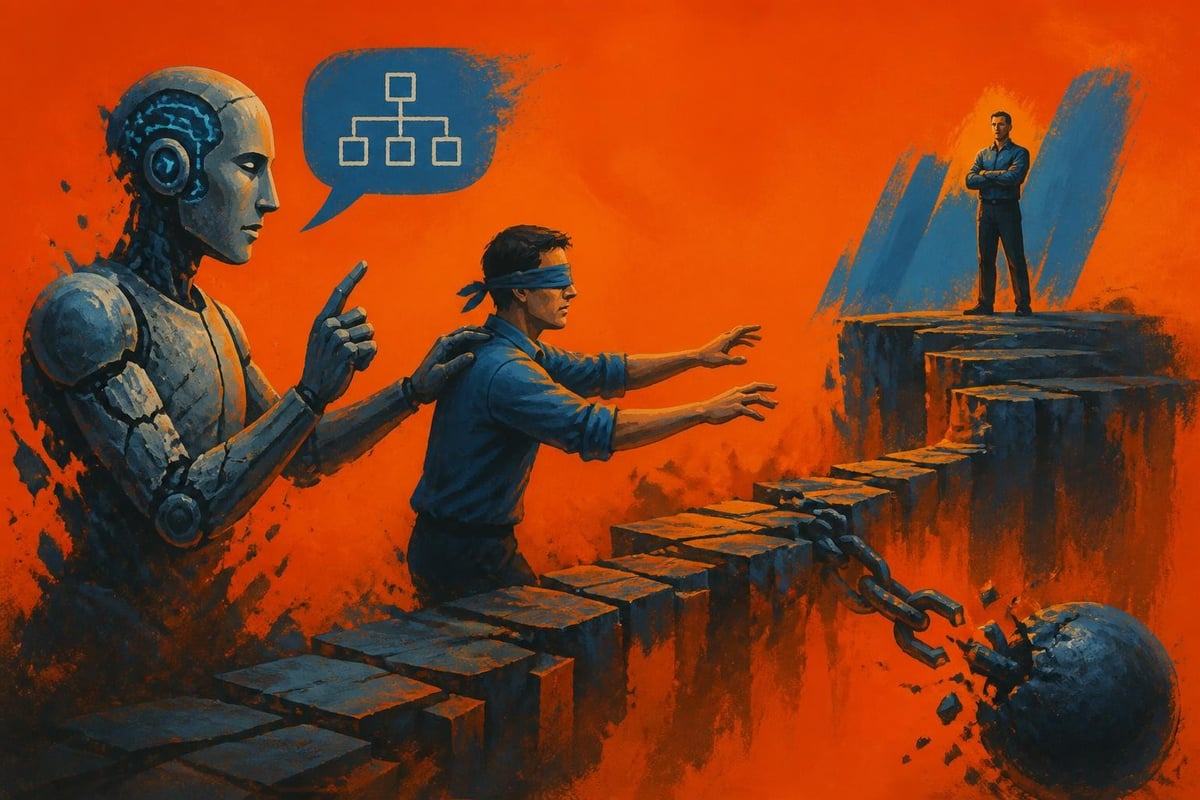
Information Abundance, Execution Poverty
Mid-market companies now swim in leadership content. AI tools generate onboarding plans, one-on-one templates, and performance frameworks on demand. Yet the world changes fast but people transform slowly, and no amount of information accelerates that transformation without structured accountability.
Why ai gave answers but not results in leadership contexts:
- AI lacks real-time observation of meetings, decisions, and team dynamics
- Recommendations ignore organizational politics, legacy conflicts, and unspoken norms
- No follow-through mechanism ensures managers implement suggested changes
- Generic advice doesn't account for specific business KPIs or strategic priorities
- Behavioral change requires uncomfortable conversations AI can't facilitate
Leaders who relied on AI coaching platforms in 2025 reported initial enthusiasm followed by stagnation. The insights made intellectual sense. The behavioral shifts never happened because nobody held feet to the fire.
The Diagnosis Gap: Where AI Falls Short
Effective coaching begins with accurate diagnosis, not rapid answers. When a sales team misses targets three quarters running, AI might suggest revised compensation structures, additional training, or clearer goal-setting. All reasonable answers. None address the core issue if the real problem involves a VP who micromanages, kills deal creativity, and punishes risk-taking.
| AI Coaching Approach | Human Coach Approach | Business Outcome |
|---|---|---|
| Generate feedback templates | Observe actual feedback delivery, diagnose avoidance patterns | Managers start giving timely, specific feedback |
| Suggest delegation frameworks | Watch leader hoard decisions, identify trust issues | Faster decisions, empowered team |
| Provide conflict scripts | Sit in tense meetings, call out passive-aggressive behavior | Cleaner communication, reduced drama |
| Recommend KPI dashboards | Build scorecards tied to strategic priorities, coach usage weekly | Accountability increases, execution improves |
Companies seeking executive coaching that delivers measurable results need coaches who diagnose root causes, not systems that pattern-match symptoms to generic solutions.
The Verification Workflow Problem
Clinicians face similar challenges with LLMs, where hallucinated medical advice can cause serious harm. They've developed verification workflows: cross-reference multiple sources, validate against established protocols, confirm with experienced practitioners. Leadership development lacks comparable safeguards when AI provides coaching guidance.
A manager receives AI-generated advice to "empower the team through increased autonomy." Sounds great. But if that manager leads a group fresh out of school who need structure, clear expectations, and frequent check-ins, autonomy creates chaos. The answer was plausible. The result damages both performance and retention.
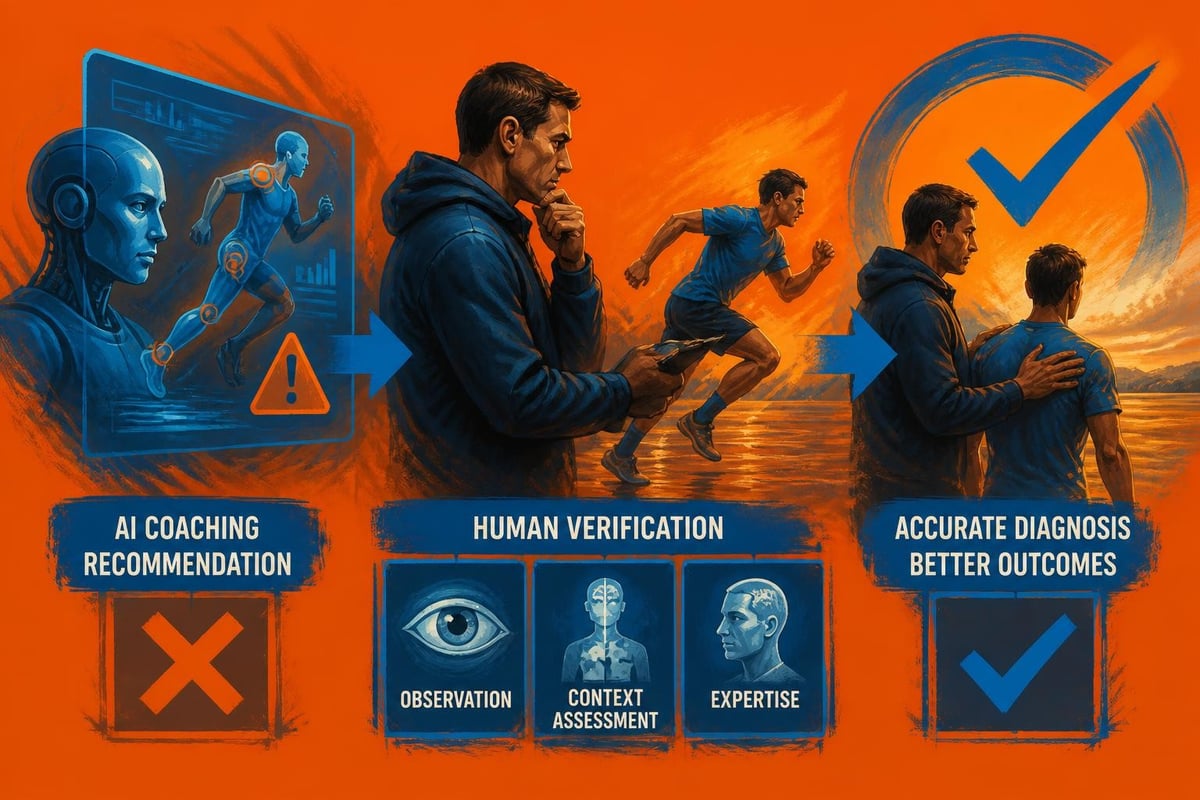
When Answers Actually Produce Results
Not all AI coaching applications fail. Specific, narrow use cases generate value when combined with human expertise and accountability structures.
Successful AI coaching applications observed in 2026:
- Pre-session preparation: AI summarizes 360 feedback, meeting transcripts, or performance data so coaches enter conversations informed
- Skill practice: Managers rehearse difficult conversations with AI, then debrief with human coaches on what worked
- Template generation: AI creates first-draft agendas, development plans, or presentation outlines that coaches customize
- Pattern recognition: AI flags communication trends across email and Slack that coaches investigate further
- Knowledge retrieval: Retrieval-augmented generation approaches ground answers in company-specific playbooks and past successful interventions
The pattern? AI gave answers but not results when used alone. When integrated as a tool supporting human coaches who observe, diagnose, challenge, and hold accountable, it accelerates specific workflow steps.
The Accountability Loop That AI Cannot Close
Leadership development requires three elements AI cannot provide: observation of actual behavior in context, real-time challenge when leaders avoid difficult actions, and sustained accountability until new habits form.
Consider manager training programs. AI can deliver content modules, quiz comprehension, even simulate coaching conversations. But it can't sit in your managers' one-on-ones, notice when they revert to telling instead of asking, and intervene in the moment with "You just gave her the answer. Try again and coach her to solve it herself."
The Mitigation Methods That Miss the Point
Research into hallucination mitigation techniques focuses on improving factual accuracy through better prompting, retrieval systems, model training, and evaluation frameworks. These advances help AI provide better answers.
They don't solve the coaching problem. Even perfectly accurate leadership advice fails without implementation, practice, feedback loops, and accountability. The issue isn't wrong answers. It's that correct answers alone don't change behavior in complex organizational systems with entrenched patterns, competing incentives, and human resistance to discomfort.
Understanding how much executive coaching actually costs reveals why some companies chase AI alternatives. Monthly retainers for experienced coaches feel expensive until you measure the cost of continued poor execution, manager turnover, and missed strategic goals.
Building Results-Driven Coaching Systems
Companies that got value from coaching in 2025 and 2026 built systems around outcomes, not answers. They tracked specific KPIs before and after interventions. They required coaches to attend leadership meetings, observe decision-making, and provide in-the-moment feedback. They tied coaching engagements to clear business objectives with measurable milestones.
Framework for results-driven coaching:
- Diagnosis phase: Coach observes meetings, reviews data, interviews stakeholders before recommending interventions
- Clear KPIs: Define 3-5 measurable outcomes (decision velocity, retention, pipeline conversion, etc.)
- Live coaching: Coach participates in actual meetings and decision forums, not just debrief sessions
- Weekly accountability: Short check-ins on commitments, obstacles, and progress against metrics
- Monthly reviews: Validate KPI movement, adjust approach, celebrate visible wins
This framework works whether you're seeking leadership coaching in Rochester or building enterprise programs across divisions. The critical element isn't location or scale but tying coaching to observable, measurable business results.

The Month-to-Month Advantage
Long coaching contracts made sense when development focused on abstract competencies and self-reported growth. Results-based coaching demands different terms. If engagement doesn't improve retention, accelerate decisions, or drive pipeline growth within 90 days, why continue?
Month-to-month engagements with aligned incentives create healthy pressure. Coaches must demonstrate value quickly. Companies can pivot or exit without contractual penalties. Both parties stay focused on outcomes, not activity metrics like "coaching hours delivered" or "assessments completed."
The Trustworthiness Question
Springer Nature’s review on trustworthy LLMs addresses debiasing and de-hallucinating methods. The research trends toward more reliable systems over time. But trustworthiness in coaching extends beyond factual accuracy to contextual judgment, political navigation, and knowing when to push versus when to step back.
An AI lacks the experience to recognize when an executive's resistance to feedback stems from past trauma, organizational PTSD from a failed merger, or legitimate concern about board dynamics. Human coaches with decades of pattern recognition across companies, industries, and leadership transitions bring judgment that can't be automated in 2026.
Companies working with business coaches for small businesses or scaling mid-market operations need coaches who've seen similar growth patterns, know which frameworks actually work at different stages, and can differentiate normal growing pains from serious dysfunction.
FAQ
Why does AI coaching fail to produce business results?
AI provides information and frameworks but cannot observe actual behavior, diagnose organizational dynamics, hold leaders accountable in real-time, or navigate the complex human resistance that blocks implementation of even excellent advice.
What's the difference between AI coaching answers and human coaching results?
Answers represent information delivery. Results require accurate diagnosis through observation, customized interventions based on specific context, accountability loops that persist until behavior changes, and real-time challenges when leaders avoid difficult actions.
Can AI tools support effective coaching programs?
Yes, when used appropriately. AI excels at preparation (summarizing data), practice (conversation simulation), template generation, and pattern recognition. Value emerges when AI supports human coaches who provide observation, diagnosis, challenge, and accountability, not when AI replaces them.
How do you measure coaching results versus coaching activity?
Track business KPIs (retention rates, decision velocity, pipeline conversion, engagement scores, promotion readiness) before and during coaching, not activity metrics (hours delivered, modules completed). Results-based coaching ties interventions to measurable outcomes within 60-90 days.
What makes diagnosis more important than recommendations in coaching?
Wrong diagnosis leads to implementing solutions that don't address root causes. A team missing deadlines might need clearer priorities, a different leader, reduced meeting load, or conflict resolution, each requiring different interventions. Generic recommendations applied to misdiagnosed problems waste time and resources.
Why don't leadership frameworks from AI translate to behavioral change?
Knowing what to do differs fundamentally from actually doing it under pressure, with competing priorities, political risks, and ingrained habits. Behavioral change requires practice, feedback, accountability, and someone willing to call out when leaders revert to old patterns despite knowing better.
How quickly should coaching produce measurable results?
Initial indicators (faster decisions, cleaner communication in meetings, reduced conflict) should appear within 30-45 days. Measurable KPI movement (retention improvement, engagement scores, pipeline acceleration) typically requires 60-90 days of consistent implementation and accountability.
What role does accountability play in coaching outcomes?
Accountability closes the gap between knowing and doing. Weekly check-ins on commitments, consequences for inaction, and someone willing to challenge leaders when they avoid difficult conversations or decisions transform intellectual understanding into behavioral change and business results.
Should companies use month-to-month coaching terms or long contracts?
Month-to-month terms with aligned incentives keep both parties focused on results. If coaching doesn't demonstrate measurable value within 90 days, either the approach needs adjustment or the engagement should end. Long contracts create complacency and activity-based metrics instead of outcome focus.
AI gave answers but not results because leadership development demands more than information delivery. When you need coaching that drives measurable business outcomes through observation, diagnosis, real-time accountability, and KPI-focused interventions, Noomii connects mid-market companies with experienced coaches who work month-to-month, tie engagements to clear metrics, and share risk through aligned incentives. Results become visible within 90 days, or you move on without contractual penalties.



Leave a Reply
Want to join the discussion?Feel free to contribute!