
AI Coaching Struggled With Complex Decisions (2026)
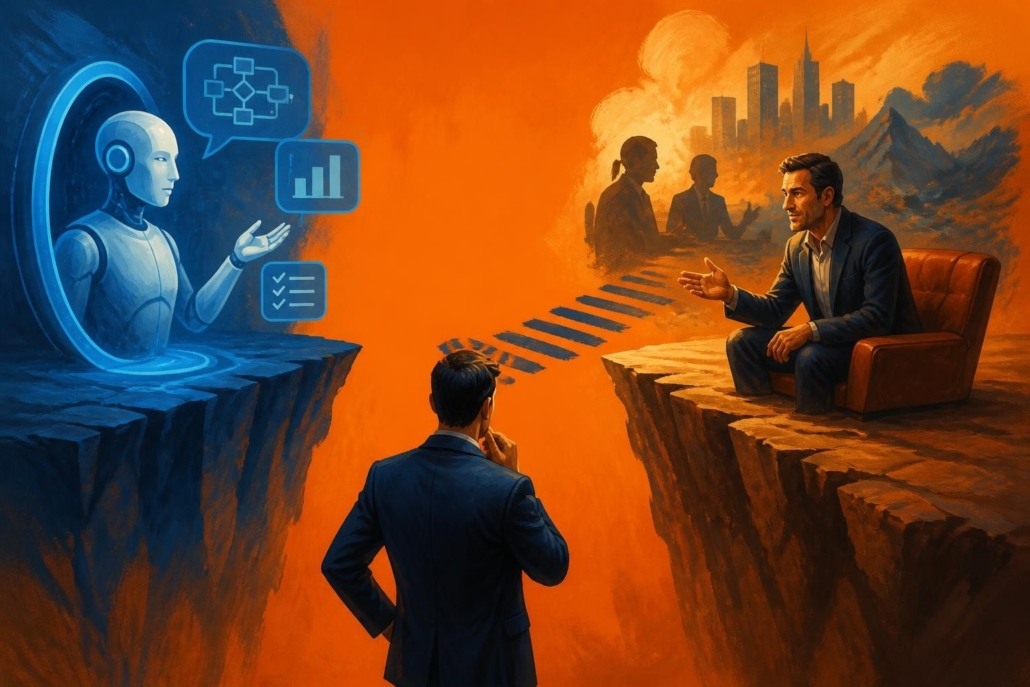
The market for AI coaching tools exploded between 2023 and 2026, with venture capital pouring billions into platforms promising scalable, always-on leadership development. But a pattern emerged that should concern every HR leader and executive: AI coaching struggled with complex decisions when the stakes were real, the context mattered, and outcomes needed to tie back to business results. While chatbots handled surface-level questions well, they broke down exactly where coaching creates the most value: helping leaders navigate ambiguity, make trade-offs, and execute under pressure.
Why Pattern Recognition Fails When Decisions Get Hard
AI models excel at identifying patterns in training data, but leadership decisions rarely follow predictable patterns. A recent survey analyzing reasoning failures in large language models found that these systems struggle with multi-step reasoning, contextual judgment, and situations requiring trade-off analysis. When a VP needs to decide whether to replace an underperforming director who has strong relationships across the organization, an AI tool can list pros and cons. What it cannot do is weigh the specific political dynamics, assess the leader's coachability, or help the VP own the decision with conviction.
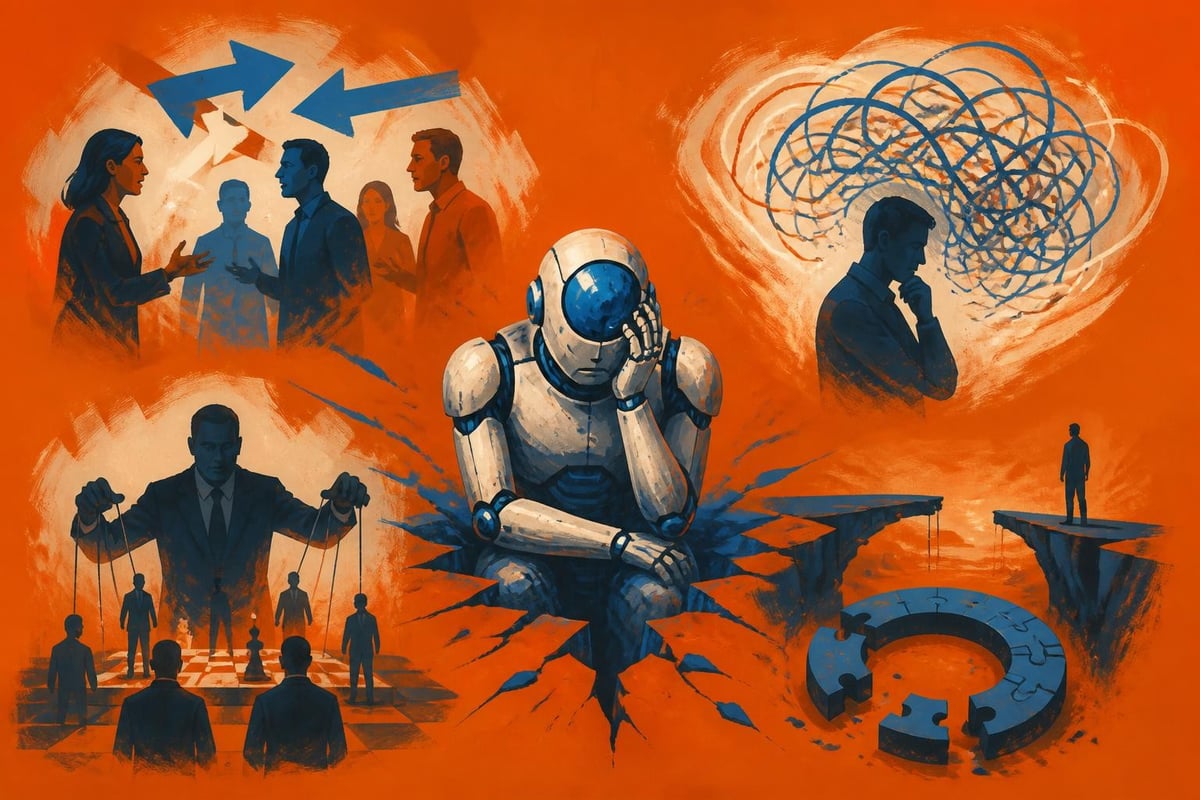
Here's what breaks down in AI coaching for complex scenarios:
- No ability to read body language, tone shifts, or emotional signals during high-stakes conversations
- Pattern matching that ignores unique organizational culture and power dynamics
- Generic advice that sounds plausible but fails when applied to specific business contexts
- Zero accountability for outcomes or follow-through on commitments
The Depth Gap in Real Coaching Situations
A peer-reviewed study on how professional coaches experience AI adoption documented what they called the "depth gap." AI tools provided quick responses and frameworks, but coaches reported that clients using these tools arrived at sessions with surface answers that hadn't been tested against reality. The real work-helping leaders confront what they were avoiding, challenge their assumptions, and commit to difficult actions-happened only when a human coach applied pressure, asked the follow-up question, and held them accountable.
This matches what we see across leadership coaching engagements: executives don't struggle because they lack information. They struggle because making the right call requires integrating messy human factors, accepting trade-offs, and taking ownership when the path forward isn't clear.
Where AI Coaching Struggled With Complex Decisions Most Visibly
Mid-market companies discovered the limitations quickly. A software company with 150 employees rolled out an AI coaching platform in early 2025, expecting it to help managers navigate difficult conversations. Within three months, they pulled it. The tool gave managers scripts for performance discussions but couldn't help them adapt when employees pushed back, got emotional, or raised valid objections. Managers reported feeling more confused, not less, because the AI couldn't factor in six months of team history, individual circumstances, or the company's current financial pressure.
| Decision Type | AI Performance | Human Coach Performance |
|---|---|---|
| Prioritizing conflicting initiatives | Lists criteria, can't weigh context | Diagnoses real constraints, tests priorities against capacity |
| Restructuring underperforming team | Suggests org chart options | Assesses talent, politics, timing, communication strategy |
| Managing up with difficult executive | Provides communication templates | Coaches specific dynamics, power assessment, tone calibration |
| Deciding to fire or coach struggling leader | Offers decision framework | Holds client accountable for honest assessment and timely action |
The Evaluation Problem Nobody Solved
A scoping review of LLM-based systems for health coaching highlighted a critical issue: researchers lack good methods to evaluate whether AI recommendations actually lead to better outcomes in complex, personalized situations. The same problem plagued business coaching. Platforms tracked engagement metrics and satisfaction scores, but couldn't measure whether leaders made faster decisions, executed more cleanly, or built stronger teams-the outcomes that matter for executive coaching ROI.
When ai coaching struggled with complex decisions, vendors pivoted to claiming their tools "augmented" human coaches rather than replaced them. That's closer to reality, but it exposed the original promise as oversold.
What Complex Decisions Actually Require
Microsoft Research explored cognitive support for complex decision-making and found that people need different kinds of help at different stages: structured exploration early, devil's advocate challenges during analysis, and accountability support during commitment. AI tools could provide the first two with prompting, but the third-accountability-required a relationship with stakes.
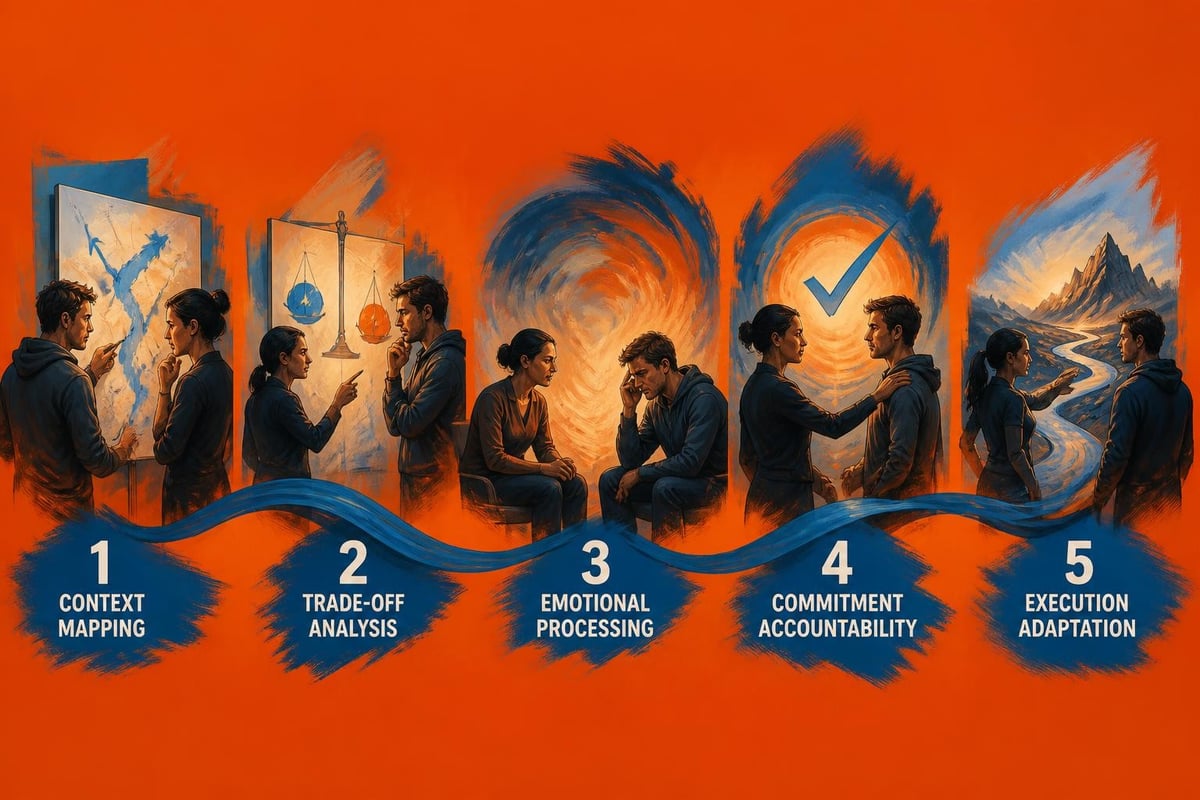
Complex leadership decisions demand:
- Context integration: Understanding how this decision fits into the leader's history, the organization's current state, and upcoming changes
- Trade-off analysis: Accepting that every choice closes doors and identifying which trade-offs are acceptable
- Emotional regulation: Managing the anxiety, frustration, or fear that delays action
- Commitment under uncertainty: Deciding and acting even when information is incomplete
- Adaptive execution: Adjusting as reality provides feedback and new constraints emerge
These aren't skills AI lacks temporarily. They're capabilities that require presence, relationship, and skin in the game. A data-driven survey of LLM limitations from 2022 to 2024 showed persistent problems with reasoning, hallucinations, and generalization-the exact areas where coaching creates value.
The Business Impact of the Wrong Coaching Approach
A manufacturing company with 300 employees spent eighteen months using an AI coaching platform for their management team. Engagement scores looked good. Managers logged hours in the system. But when the CEO reviewed actual performance, nothing had changed. Decisions still took too long. Cross-functional conflicts remained unresolved. Underperformers were still being managed around rather than addressed.
The CEO brought in human coaches who joined leadership meetings, observed real dynamics, and coached live on actual decisions. Within ninety days, they saw movement: two restructures that had been delayed for months, three difficult terminations handled cleanly, and a pricing strategy clarified after six months of paralysis. The difference wasn't better advice. It was someone in the room who could diagnose what was actually blocking progress and hold leaders accountable for action.
Why Month-to-Month Beats Long Contracts
When AI coaching struggled with complex decisions, companies found themselves locked into annual contracts for tools that didn't deliver. The shift toward month-to-month terms reflects a broader market correction: organizations want to pay for results, not potential. If coaching isn't producing faster decisions, stronger execution, and visible outcomes within sixty to ninety days, leaders need the flexibility to change course.
This is why corporate coaching approaches are moving away from credential worship and toward evidence of impact. Certifications don't predict whether a coach can diagnose political dynamics, challenge a CFO's assumptions, or help a VP commit to a difficult restructure. Experience doing that work does.
The Pattern Forward: Hybrid Is Marketing, Human Is Reality
Some vendors now claim "hybrid" models solve the AI coaching limitations. In practice, this usually means an AI tool with occasional human check-ins-a downgrade from real coaching dressed up as innovation. The companies getting results in 2026 took a different path: they hired experienced coaches who use AI for research, preparation, and follow-up documentation, but who show up live for the work that matters.
What effective coaching looks like when decisions are complex:
- Coach observes team meetings, sees actual dynamics rather than self-reported summaries
- Real-time intervention when leaders avoid difficult topics or delay necessary decisions
- Direct challenge to assumptions, excuses, and analysis paralysis
- Accountability tied to specific KPIs and business outcomes, not vague development goals
- Monthly review of what changed, what's still stuck, and why
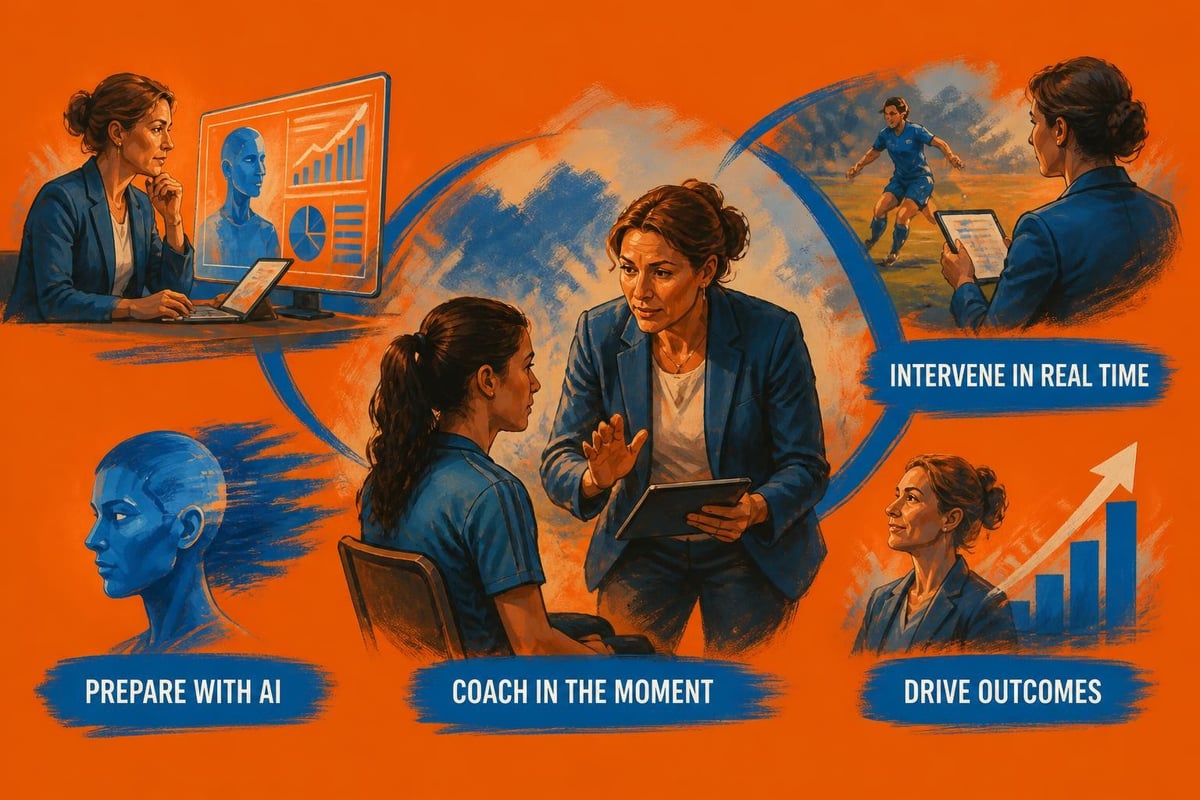
The coaches who thrive aren't fighting AI. They're using it as infrastructure while focusing their human capital where it creates the most value: in the messy, high-stakes moments when leaders need to make calls that don't have clear right answers. Those situations aren't disappearing. If anything, they're increasing as business complexity grows.
FAQ
Why did AI coaching struggle with complex leadership decisions?
AI models lack the contextual judgment, emotional intelligence, and accountability relationships required for decisions involving politics, trade-offs, and ambiguity. They provide generic frameworks but can't diagnose what's actually blocking progress or hold leaders accountable for difficult actions.
Can AI coaching tools help with any leadership development needs?
Yes, AI tools handle structured learning, skill practice, and information retrieval effectively. They work well for onboarding, frameworks, and repetitive scenarios. They break down when decisions require integrating unique context, managing stakeholder dynamics, or committing under uncertainty.
What's the main difference between AI and human coaches for executives?
Human coaches observe real situations, read unspoken dynamics, challenge assumptions in real time, and maintain accountability relationships with stakes. AI provides information and frameworks but can't diagnose political blockers, manage emotional resistance, or adapt to how leaders actually respond under pressure.
How do I know if my coaching approach is working for complex decisions?
Track decision velocity, execution quality, and conflict resolution. Are tough calls happening faster? Are initiatives being completed rather than discussed? Are underperformers being addressed rather than managed around? If not, your coaching isn't reaching the real work.
What should companies look for when hiring leadership coaches?
Evidence of results in similar situations, not credentials or AI tools. Ask for specific examples of how they've helped leaders navigate restructures, difficult terminations, strategic trade-offs, and cross-functional conflicts. Verify they'll coach live in your meetings, not just in private sessions.
Why do many companies waste money on coaching that doesn't deliver?
They buy based on credentials, platform features, or vendor reputation rather than insisting on evidence of outcomes. They accept vague development goals instead of tying coaching to business KPIs. They don't require coaches to observe real work and intervene on actual decisions.
What types of decisions are most likely to expose AI coaching limitations?
Decisions involving politics, stakeholder conflicts, emotional dynamics, timing judgment, and situations where the right answer isn't clear but action is necessary. Basically, the decisions that matter most to business performance.
How quickly should I see results from executive coaching?
Sixty to ninety days for visible changes in decision-making, communication, and execution. If coaching isn't producing faster decisions, clearer priorities, or resolution of stuck situations within that window, it's not working.
Is hybrid AI-plus-human coaching the future of leadership development?
Only if "hybrid" means human coaches using AI for prep and documentation while doing the real work live. Most "hybrid" models are AI tools with minimal human involvement-a cost-cutting measure marketed as innovation. Results come from experienced coaches, not from platforms.
Complex decisions expose the limits of pattern-matching tools and reveal where human expertise remains irreplaceable. If you need coaching that delivers faster decisions, stronger execution, and measurable business outcomes rather than engagement metrics and credential theatre, explore how Noomii connects mid-market companies with coaches who coach live in your meetings and tie progress to clear KPIs. Month-to-month terms mean you stay because results are visible, not because a contract forces it.



Leave a Reply
Want to join the discussion?Feel free to contribute!