
The Next Generation of Coaching: What’s Changing Fast
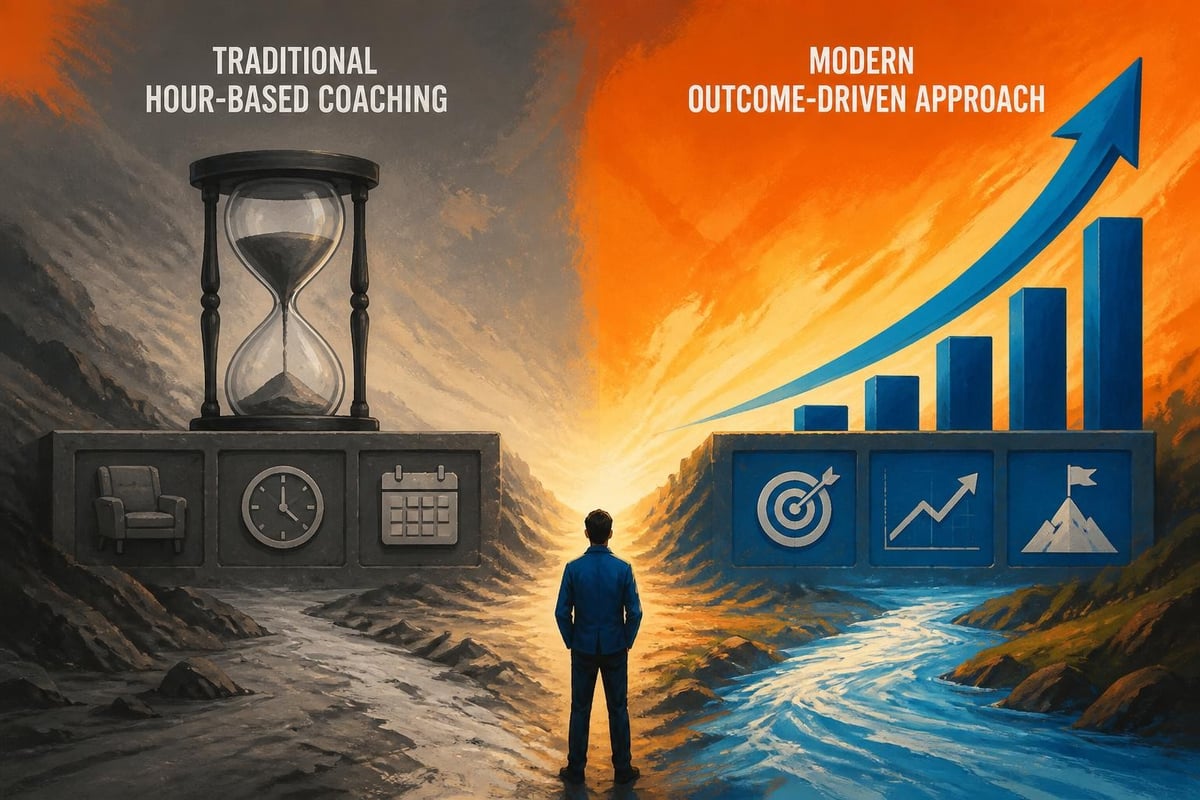
The coaching industry is splitting into two camps: those still selling hours and credentials, and those selling measurable outcomes. The next generation of coaching isn't about more certifications or longer client rosters. It's about faster results, clearer accountability, and technology that amplifies human judgment rather than replacing it. Mid-market companies are tired of coaches who sit on the sideline offering theory. They want practitioners who roll up their sleeves, coach live in meetings, and tie progress to business KPIs.
What Defines the Next Generation of Coaching
The next generation of coaching operates on three core principles: outcomes over activity, technology as an accelerant, and accountability tied to business results. Traditional coaching measured hours logged and sessions completed. Modern coaching measures decision velocity, retention rates, pipeline growth, and engagement scores.
Key characteristics include:
- Month-to-month engagements instead of locked-in annual contracts
- Live coaching inside actual business meetings, not isolated sessions
- KPI scorecards that show progress weekly, not quarterly
- AI-assisted preparation and follow-up that frees coaches for high-value work
- Aligned incentives where coaches share risk and reward
This shift reflects broader changes in how companies buy professional services. According to coaching industry growth trends, digital transformation and outcome measurement have accelerated dramatically since 2024. Buyers now expect transparency, flexibility, and proof.
The Technology Integration That Actually Works
Technology in coaching splits into two categories: tools that replace human judgment and tools that enhance it. The next generation of coaching uses AI for preparation, pattern recognition, and administrative work, but keeps humans in the driver's seat for insight, challenge, and accountability.
AI adoption in coaching practices shows 42% of coaches now use AI tools, but most apply them poorly. They automate the wrong tasks. Effective coaches use AI to analyze 360 feedback faster, spot communication patterns in team meetings, and prepare more relevant questions. They don't use it to deliver canned advice or replace live coaching conversations.
The best application we've observed: AI transcribes leadership team meetings, flags decision bottlenecks and conflict patterns, then the coach uses that intelligence to facilitate better conversations the following week. The technology does the grunt work. The coach delivers the breakthrough.
| Weak AI Use | Strong AI Use |
|---|---|
| Automated coaching chatbots | Meeting transcription and pattern analysis |
| Generic email follow-ups | Personalized prep based on prior sessions |
| Credential verification | KPI dashboard automation |
| Template-based advice | 360 feedback synthesis and themes |
Why Credentials Matter Less Than You've Been Told
The credential inflation problem has reached absurd levels. We've reviewed hundreds of coaching engagements where heavily certified coaches delivered no measurable results while experienced operators with zero certifications drove immediate performance improvement. The next generation of coaching prioritizes demonstrated expertise over alphabet soup after your name.
This doesn't mean education is worthless. It means the market overvalues credentials and undervalues track record. A coach who has built teams, led divisions, or navigated real business complexity brings more to executive coaching than someone who completed 500 hours of supervised practice coaching other aspiring coaches.
What buyers should evaluate instead:
- Specific outcomes the coach has delivered in similar contexts
- Whether they've operated in roles similar to clients they coach
- How they measure progress and tie coaching to business results
- Their willingness to work month-to-month and demonstrate value
- Whether they coach live in actual business settings or just in private sessions
The structural trends reshaping coaching economics confirm this shift. Buyers increasingly filter for niche expertise and proven results rather than generic certifications. Just as fitness coaching has evolved to emphasize custom programs and measurable physical transformation over generic plans, business coaching is moving toward tailored, outcome-driven engagement.

The Group and Team Coaching Advantage
Individual executive coaching still has its place, but the next generation of coaching delivers more impact through team and group formats. Why? Because business problems rarely live in individual heads. They live in communication breakdowns, unclear priorities, misaligned incentives, and weak accountability systems.
We've run team coaching engagements where the executive's behavior changed faster because peers held them accountable in real time. Group formats also improve economics for both buyer and coach, making high-quality coaching accessible to manager layers that never got it before.
Team coaching delivers:
- Shared language and frameworks across leadership groups
- Real-time accountability among peers, not just coach-to-client
- Faster culture shifts because multiple leaders align simultaneously
- Lower per-person cost, making coaching viable for broader populations
Companies exploring leadership development increasingly choose blended models: some individual coaching for C-suite, mostly team coaching for director and manager levels, and group programs for emerging leaders. This matches investment to impact and ensures coaching doesn't become an executive perk disconnected from broader culture.
The ROI Conversation Coaching Has Avoided Too Long
Most coaching engagements can't tell you the ROI because they don't measure it. The next generation of coaching tracks clear metrics from day one: decision velocity, retention of key people, sales pipeline growth, meeting effectiveness, and employee engagement scores.
This requires different intake work. Instead of asking what the executive wants to work on, ask what business outcomes would prove the coaching worked. Then reverse-engineer behaviors, systems, and practices that drive those outcomes. Coach to those. Measure those.
| Business Outcome | Coaching Focus | Measurement |
|---|---|---|
| Faster decisions | Clarify decision rights, run cleaner meetings | Days to close key decisions |
| Higher retention | Improve 1-on-1s, increase feedback frequency | Voluntary turnover in coached teams |
| Revenue growth | Pipeline discipline, client relationship rigor | Sales per rep, client retention rate |
| Better execution | Operating cadence, KPI scorecards | % of quarterly goals hit on time |
This approach mirrors trends across professional services. Clients buy outcomes, not hours. They expect transparency, measurement, and flexibility. Psychological safety and performance research shows coaching works best when tied to clear team outcomes, not vague personal development goals.
What Companies Miss When Evaluating Coaches
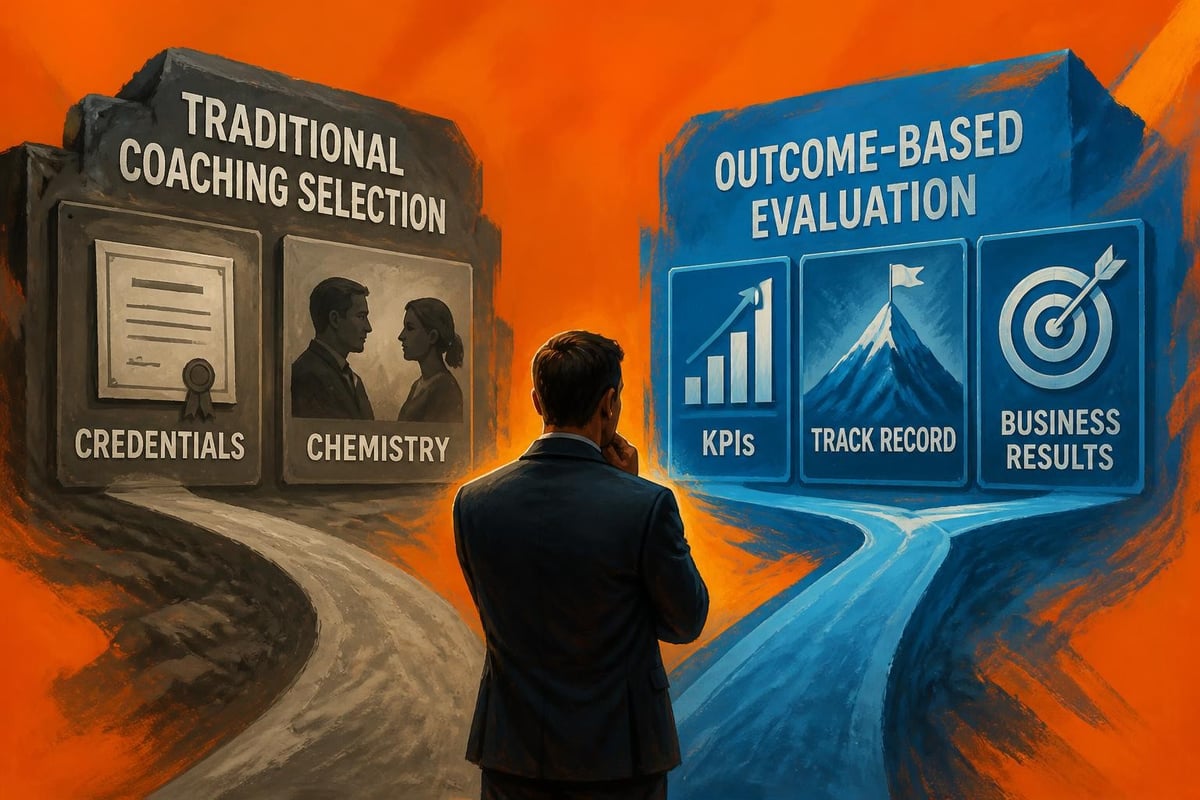
Buyer behavior in coaching remains surprisingly unsophisticated. Companies still hire based on chemistry, credentials, and referrals without asking for evidence of results. The next generation of coaching requires smarter buying.
Red flags that signal old-model coaching:
- Reluctance to tie coaching to measurable business outcomes
- Insistence on long contracts (6, 12, or 24 months minimum)
- Focus on coach credentials rather than client results
- Sessions conducted only in private, never live in business settings
- No follow-up between sessions or accountability tracking
Green flags that signal outcome-focused coaching:
- Month-to-month terms with mutual accountability
- Willingness to coach live in leadership team meetings
- Clear KPIs and scorecards tracking progress
- Case studies showing specific results with prior clients
- Aligned incentives where coach shares risk and reward
Finding the right leadership coach means filtering for practitioners who operate this way. The credential doesn't predict performance. The model does.
The Hybrid Human-AI Model That's Emerging
AI won't replace good coaches, but coaches who use AI well will replace those who don't. The next generation of coaching integrates technology strategically: AI handles data synthesis, pattern recognition, scheduling, and follow-up tracking. Humans handle insight, challenge, accountability, and relationship.
Emerging coaching technologies include AI-driven feedback systems and digital analytics that help coaches spot trends faster. The best coaches we've worked with use these tools to prepare better questions, notice communication patterns earlier, and track progress more rigorously.
One example: AI analyzes recorded team meetings for decision-making patterns, conflict avoidance, and participation imbalances. The coach reviews the analysis, identifies two or three leverage points, then facilitates a live conversation that addresses those patterns directly. The AI creates efficiency. The coach creates the breakthrough.
FAQ
What makes the next generation of coaching different from traditional coaching?
The next generation of coaching focuses on measurable business outcomes, uses technology to enhance human insight, operates on flexible month-to-month terms, and often coaches live inside actual business meetings rather than isolated sessions.
Do coaches still need certifications in 2026?
Certifications can demonstrate commitment to learning, but they don't predict coaching effectiveness. Buyers should prioritize track record, demonstrated results in similar contexts, and willingness to tie coaching to measurable business outcomes over credentials alone.
How is AI being used in coaching today?
Effective coaches use AI for meeting transcription, pattern analysis, 360 feedback synthesis, and administrative tasks. AI handles data processing and pattern recognition while humans provide insight, challenge, accountability, and relationship-building.
What ROI should companies expect from coaching?
ROI varies by context, but measurable outcomes include faster decision-making, reduced voluntary turnover among coached teams, improved sales performance, higher employee engagement scores, and better execution against quarterly goals.
Why is team coaching growing faster than individual coaching?
Team coaching addresses systemic issues, creates shared language and accountability among peers, costs less per person, and often drives culture change faster than individual executive coaching alone.
What questions should companies ask when evaluating coaches?
Ask for specific outcomes the coach has delivered, how they measure progress, whether they'll work month-to-month, if they coach live in business settings, and what business metrics they tie coaching to.
How long should a coaching engagement last?
The next generation of coaching favors month-to-month engagements with clear KPIs. Length depends on outcomes achieved, not predetermined contracts. Most effective engagements run 3 to 9 months with ongoing flexibility.
Can coaching work for managers and directors, not just executives?
Yes. Group and team coaching models make high-quality coaching economically viable for broader leadership populations. Manager training and team facilitation often deliver higher organizational ROI than executive-only coaching.
What's the biggest mistake companies make when buying coaching?
Focusing on coach credentials and chemistry while ignoring track record, results measurement, engagement flexibility, and whether the coach will tie their work to clear business outcomes.
The next generation of coaching separates those delivering real business results from those selling time and credentials. If you're ready for practical coaching that drives measurable outcomes, faster decisions, and cleaner execution, Noomii delivers month-to-month engagements tied to clear KPIs, live coaching in your actual meetings, and aligned incentives where results speak louder than promises.



Leave a Reply
Want to join the discussion?Feel free to contribute!