
Corporate Coaching Existed Before ICF: The Real History
The International Coaching Federation launched in 1995, but corporate coaching existed before ICF as a formalized organization. Businesses were already developing leaders, improving performance, and solving organizational challenges through structured coaching decades earlier. Understanding this history matters because the coaching industry often confuses certification recency with coaching legitimacy, when the truth is that corporate coaching existed before ICF and delivered measurable business results without credential worship or standardized competency frameworks.
The Timeline Nobody Talks About
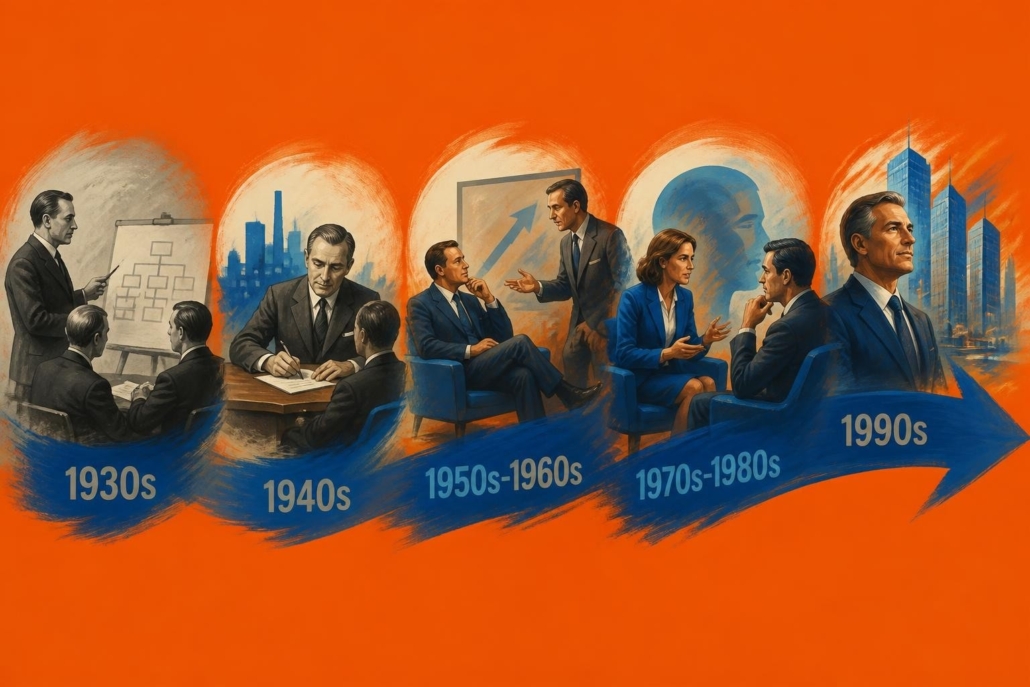
Corporate coaching roots stretch back to the 1930s and 1940s when management consulting firms began offering executive development services. McKinsey, Booz Allen, and similar firms coached senior leaders on strategy execution, decision making, and organizational effectiveness long before coaching became a distinct profession.
By the 1970s and 1980s, sports psychology principles migrated into business. Timothy Gallwey's The Inner Game of Tennis (1974) influenced how executives thought about performance, focus, and mental barriers. Companies hired consultants who worked one-on-one with leaders, though they called it consulting, advising, or mentoring rather than coaching.
Key milestones before 1995:
- 1930s-1950s: Management consulting firms offer executive counseling and development
- 1970s: Sports psychology concepts enter corporate settings
- 1980s: Leadership development programs include one-on-one executive work
- Early 1990s: The evolution of coaching accelerates with practitioners defining standards

The term "executive coaching" gained traction in the late 1980s and early 1990s as practitioners distinguished their work from therapy, consulting, and training. Corporate coaching existed before ICF certification programs, and many of those early practitioners delivered exceptional outcomes without formal credentials because they brought deep business expertise, pattern recognition from working across industries, and accountability frameworks tied to results.
What Early Corporate Coaching Actually Looked Like
Unlike today's certification-driven model, early corporate coaching focused on solving specific business problems. A coach might work with a VP struggling to scale operations, a sales leader missing targets, or a founder navigating growth transitions. The engagement started with diagnosis, progressed through practical interventions, and measured success by business outcomes.
| Early Corporate Coaching (Pre-1995) | Post-ICF Model (1995-Present) |
|---|---|
| Business results and KPI accountability | Competency frameworks and coaching presence |
| Hired for industry expertise and track record | Hired for credentials and hours logged |
| Month-to-month based on value delivery | Long contracts with standardized processes |
| Integrated into strategy execution | Often separated from day-to-day operations |
This isn't nostalgia. It's pattern recognition. Companies that succeeded with early coaching did so because coaches understood business fundamentals, worked embedded in real challenges, and stayed accountable to measurable progress. Certification came later and brought standardization, but also credential worship that sometimes prioritizes process over outcomes.
When Certification Became the Industry Focus
The ICF formed in 1995 to professionalize coaching and establish ethical standards. By 1999, corporate America’s interest in coaching had grown significantly, reflecting broader adoption. Over the next two decades, certification programs proliferated, competency models standardized, and the industry shifted toward credentialing as proof of quality.
What changed after formalization:
- Standardized training programs replaced apprenticeship and business experience
- Credential verification became gatekeeping for corporate buyers
- Coaching definitions emphasized specific methodologies and distinctions
- Industry organizations positioned certification as essential rather than optional
This shift brought benefits including ethical guidelines, common language, and quality baselines. But it also created problems. Corporate coaching existed before ICF with a results-first mentality. Post-certification, the industry sometimes values credentials over outcomes, theory over application, and coaching purity over business impact.
The Credential Trap in 2026
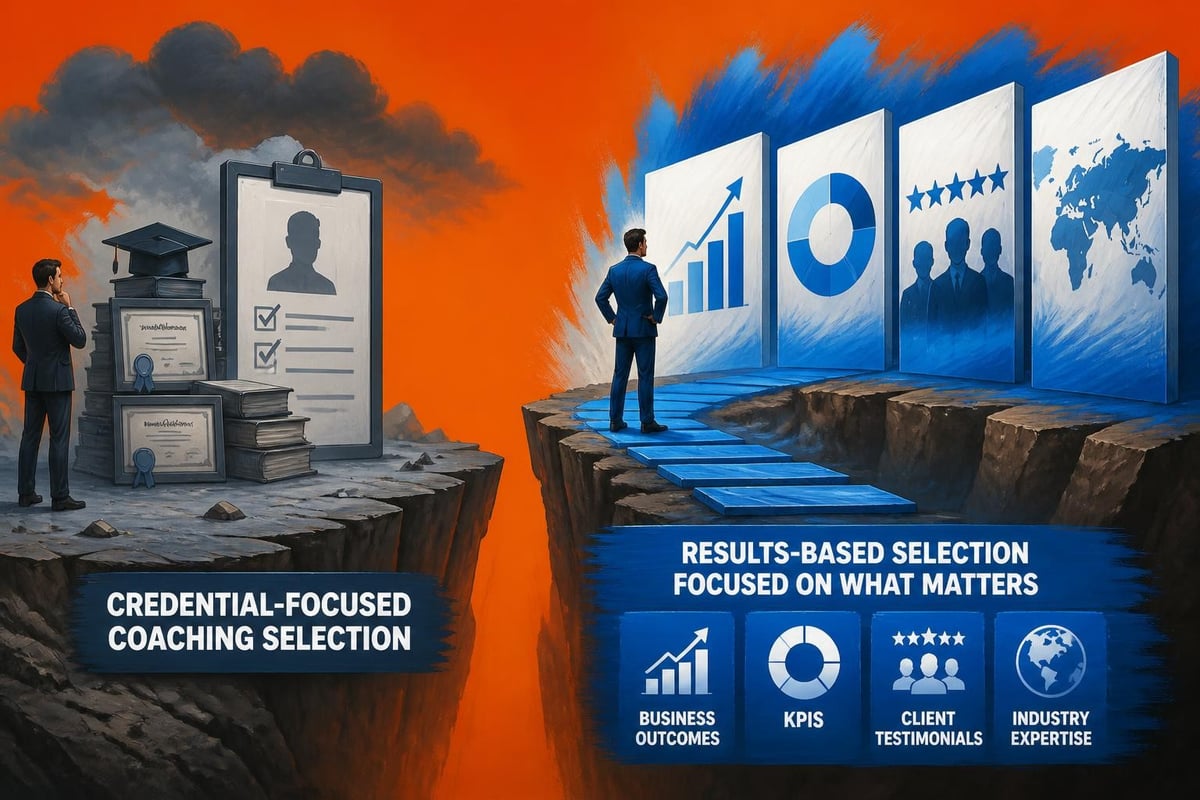
Today's corporate buyers often default to credential checking rather than outcome verification. HR departments request ICF-certified coaches without asking about industry experience, past client results, or approach to accountability. This mirrors what happens in leadership coaching searches where certification filters precede competence evaluation.
Red flags in credential-first hiring:
- RFPs requiring specific credential levels but not outcome examples
- Job postings emphasizing hours coached over measurable client results
- Buyers unable to articulate what coaching competencies solve their specific business problems
- Contracts that don't tie coach compensation to progress on defined KPIs
The irony? Corporate coaching existed before ICF proving its value through business results, not credential counts. Many exceptional coaches today hold certifications and deliver results, but the credential itself doesn't cause the outcome. Experience, business acumen, pattern recognition, and accountability discipline drive results.
What Buyers Miss About Coaching History
Understanding that corporate coaching existed before ICF helps buyers make smarter hiring decisions. The best early coaches succeeded because they brought deep expertise in business challenges, worked embedded in actual operations, and stayed accountable to measurable outcomes. These same principles separate effective coaching from expensive conversations in 2026.
When evaluating coaches today, ask questions early practitioners would have answered easily:
- What specific business problems have you solved in similar contexts?
- How do you tie coaching progress to KPIs and financial outcomes?
- What's your track record with companies in our industry or stage?
- How quickly can you start delivering measurable value?
Executive coaches who can answer these questions with specifics, case studies, and outcome data often deliver better results than those leading with credentials. This doesn't dismiss certification value, but it reframes it as one signal among many rather than the primary qualification.
Case Study: Results Before Credentials
A mid-market software company with 180 employees faced execution breakdown in 2025. Priorities changed weekly, managers avoided difficult conversations, and the leadership team operated without clear KPIs. They initially sought ICF Master Certified Coaches (MCC) based on HR recommendations.
Problem: Leadership team of eight couldn't align on quarterly priorities or hold direct reports accountable.
Diagnosis: Missing operating cadence, unclear decision rights, and no consequences for missed commitments.
Solution: Coach worked embedded in weekly leadership meetings for 90 days, established KPI scorecards, coached managers live during difficult conversations, and tied progress to specific metrics (decision cycle time, meeting effectiveness, employee engagement scores).
Result: Decision cycle time dropped from 3.2 weeks to 1.1 weeks, manager retention improved 23%, and revenue per employee increased 18% over six months.
Lesson: The coach who delivered these results had 20 years of operating experience, no ICF credential, and a month-to-month contract. Corporate coaching existed before ICF with this accountability model, and it still works better than theory-heavy approaches that don't integrate into daily operations.
Where AI and Modern Tools Fit
The coaching industry faces disruption from AI tools, platforms, and alternative development approaches. Understanding that corporate coaching existed before ICF helps contextualize this moment. Coaching isn't sacred because of certifications or methodologies. It's valuable when it solves business problems faster and better than alternatives.
Coaching landscape in 2026:
- AI coaching tools handle routine development conversations and skill practice
- Platforms connect coaches with specific expertise to buyers more efficiently
- Hybrid models combine AI assistance with human insight for cost-effective development
- Results-oriented buyers increasingly bypass credential filters for outcome verification
Coaches who succeed in this environment bring what AI can't replicate: deep pattern recognition from working across industries, real-time coaching in high-stakes situations, accountability for business outcomes, and expertise in specific challenges. These were the same advantages early corporate coaches brought before credentialing standardized the field.
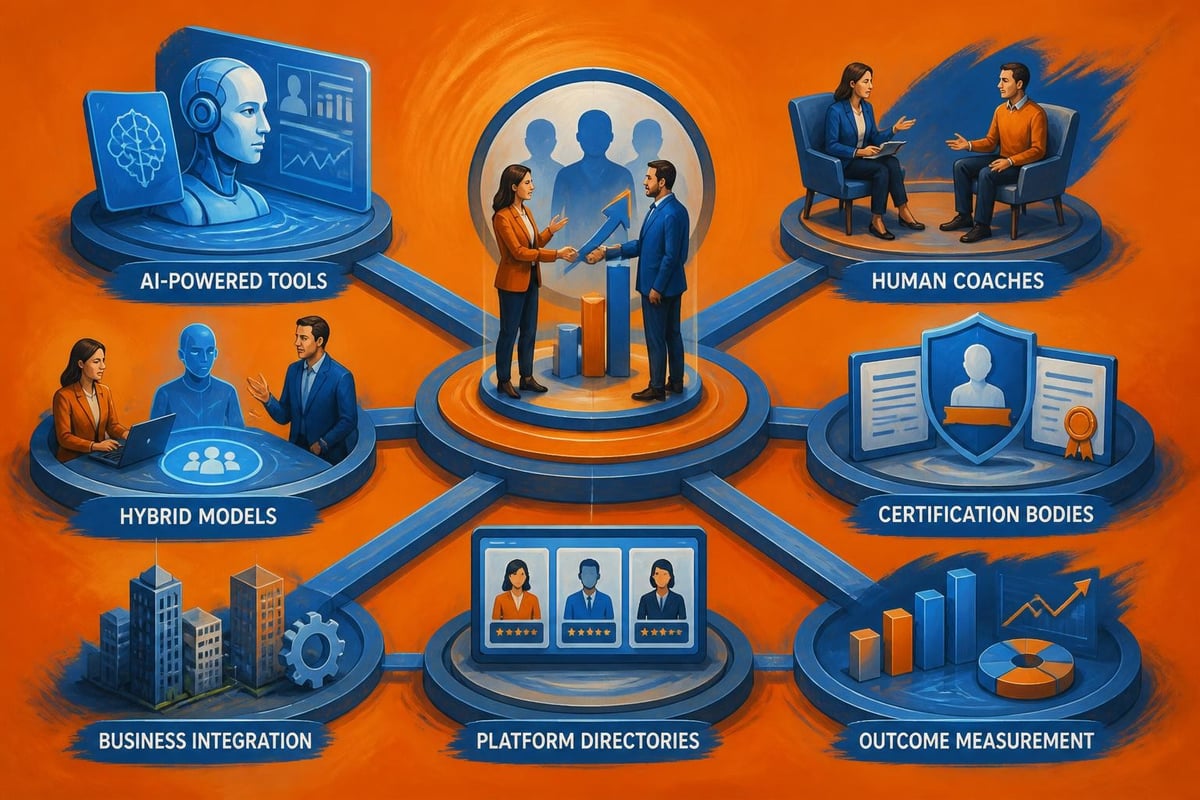
Just as corporate coaching existed before ICF and proved value through results, effective coaching in 2026 proves value through measurable business impact. Whether that comes from certified coaches, experienced practitioners, or hybrid AI-human models matters less than the outcomes delivered.
Practical Implications for Modern Buyers
If you're hiring corporate coaching in 2026, apply lessons from before the credential era:
-
Start with business problems, not coach qualifications. Define the specific challenges you need solved before filtering by credentials.
-
Require outcome examples. Ask for case studies with measurable results in contexts similar to yours.
-
Test integration capability. The best coaches work embedded in your operations, not on the sidelines theorizing about leadership.
-
Demand accountability. Month-to-month terms, shared risk models, and KPI-tied progress indicate confidence in outcomes.
-
Value experience appropriately. Years working in your industry or solving similar challenges often predicts success better than credential levels.
This approach works whether you're exploring executive coaching, building psychological safety, or developing specific leadership capabilities. Corporate coaching existed before ICF using these principles, and they remain the foundation of effective development work today.
The future belongs to coaches who combine whatever credentials serve them with deep business expertise, proven results, and accountability to outcomes. The past teaches that coaching worked before formalization and will work after the current credential model evolves. What matters is solving real business problems with measurable impact.
FAQ
Q: When did corporate coaching actually start?
A: Corporate coaching existed before ICF formed in 1995, with roots in management consulting and executive development from the 1930s-1950s. The practice evolved through sports psychology influence in the 1970s and distinct executive coaching work in the 1980s-1990s.
Q: Is ICF certification necessary for effective corporate coaching?
A: No. Corporate coaching existed before ICF and delivered results without certification. While credentials provide standardization and ethical frameworks, effective coaching depends more on business expertise, industry experience, and outcome accountability than credential levels.
Q: What did early corporate coaches focus on?
A: Early corporate coaches focused on solving specific business problems, improving leadership effectiveness, and driving measurable outcomes. They worked embedded in operations, stayed accountable to KPIs, and were hired for track records rather than credentials.
Q: Why do companies still emphasize ICF credentials?
A: Many HR departments use credentials as a convenient screening mechanism, but this often prioritizes process over outcomes. Corporate coaching existed before ICF proving value through results, and smart buyers increasingly evaluate coaches on business impact rather than certification alone.
Q: How has coaching changed since the pre-ICF era?
A: Coaching has gained standardization, ethical frameworks, and common language but sometimes lost its results-first mentality. The shift toward credential worship can prioritize theory over application and coaching purity over business integration.
Q: What should I ask when hiring a corporate coach?
A: Ask for specific case studies with measurable outcomes, industry experience, approach to KPI accountability, and integration into daily operations. These questions matter more than credential verification for predicting coaching effectiveness.
Q: Can coaches without ICF certification be effective?
A: Yes. Many exceptional coaches bring deep business expertise, industry knowledge, and proven results without ICF credentials. Corporate coaching existed before ICF and continues to succeed based on outcomes rather than certification status.
Q: How do AI tools change corporate coaching?
A: AI tools handle routine development work while human coaches focus on complex challenges requiring pattern recognition, real-time intervention, and accountability for business outcomes. The best approaches often combine both, similar to how early coaching combined expertise with practical application.
Q: What makes coaching accountability different from consulting?
A: Effective coaching maintains accountability to measurable KPIs and business outcomes while building internal capability. Corporate coaching existed before ICF with this distinction, focusing on developing leaders who could sustain improvements rather than just providing expert advice.
Corporate coaching existed before ICF and succeeded by solving real business problems with measurable outcomes, a principle that remains the foundation of effective development work today. If you need practical corporate coaching that delivers results through embedded work, live meeting facilitation, and KPI accountability, Noomii helps mid-market companies build accountable leaders and teams on month-to-month terms tied to visible progress.



Leave a Reply
Want to join the discussion?Feel free to contribute!