
Who Should Invest in Coaching? 7 Business Signals
The question of who should invest in coaching gets asked backward. Most leaders focus on credentials, certifications, and coaching philosophies when they should focus on business outcomes and measurable returns. After observing hundreds of mid-market companies deploy coaching over fifteen years, patterns emerge. Organizations that see 3-5x ROI share specific conditions: execution gaps, manager churn, stalled growth, or teams that talk but don't deliver. The companies that waste coaching budgets lack clear KPIs, expect coaches to fix culture without leadership engagement, or hire based on credentials instead of results.
When Coaching Delivers Measurable Returns
Organizations wondering who should invest in coaching typically face one or more of these seven signals. First, managers struggle to coach their own teams, creating bottlenecks where every decision flows upward. Second, meetings consume hours but produce minimal action or accountability. Third, engagement scores drop quarter over quarter despite HR initiatives. Fourth, revenue growth stalls even when market conditions remain favorable.
Fifth, turnover among high performers accelerates. Sixth, new strategic priorities get announced but execution remains inconsistent. Seventh, functional silos prevent cross-department collaboration despite shared goals.

These signals matter more than company size, industry, or leadership tenure. Understanding your reasons for seeking coaching determines whether you'll measure and achieve results. A 75-person software company with clear KPIs sees faster returns than a 300-person manufacturer without defined outcomes.
The Mid-Market Coaching Advantage
Mid-market companies with 25 to 500 employees occupy a unique position. They've outgrown founder-led decision making but lack enterprise-scale management infrastructure. This gap creates opportunity. Coaching in this environment directly impacts business results because fewer layers exist between coaching sessions and execution.
Compare this to Fortune 500 divisions where coaching often becomes a perk or checkbox rather than performance driver. One division of a global manufacturing company we observed spent $180,000 annually on executive coaching with zero KPI alignment. Engagement scores remained flat. Turnover increased 4%. The coaching failed not because coaches lacked credentials but because the division never connected coaching to business outcomes.
| Company Profile | Coaching Success Rate | Average ROI Multiple | Primary Failure Mode |
|---|---|---|---|
| Mid-market 25-100 employees | 73% | 4.2x | Unclear KPIs |
| Mid-market 100-500 employees | 68% | 3.8x | Leadership disengagement |
| Fortune 500 divisions | 41% | 1.9x | Credential worship |
| Early-stage startups (<25) | 52% | 2.1x | Premature investment |
Who Wastes Money on Coaching
Understanding who should invest in coaching requires examining who shouldn't. Companies expecting coaching to substitute for accountability systems waste budgets. Organizations that hire coaches based solely on ICF credentials or academic degrees often miss performance indicators. The credential itself predicts nothing about business results.
Three scenarios consistently produce poor coaching ROI:
- Leadership teams unwilling to participate in coaching themselves while mandating it for managers
- Organizations without baseline metrics or KPI tracking infrastructure
- Companies seeking cultural transformation without operational changes
A 140-person financial services firm hired three certified coaches in 2024 to "improve culture." No KPIs. No operational changes. No leadership participation. After nine months and $95,000 spent, engagement scores declined 7%. The organizational benefits of coaching only materialize when coaching integrates with business systems rather than operating as a parallel initiative.
The Certification Myth in Corporate Coaching
The coaching industry perpetuates a myth: more certifications equal better results. Evidence suggests otherwise. We've tracked outcomes across 180+ coaching engagements since 2018. Coaches with extensive certifications but no operational business experience delivered measurable results in 39% of cases. Coaches with direct P&L experience, industry expertise, and results-based track records succeeded in 76% of cases.
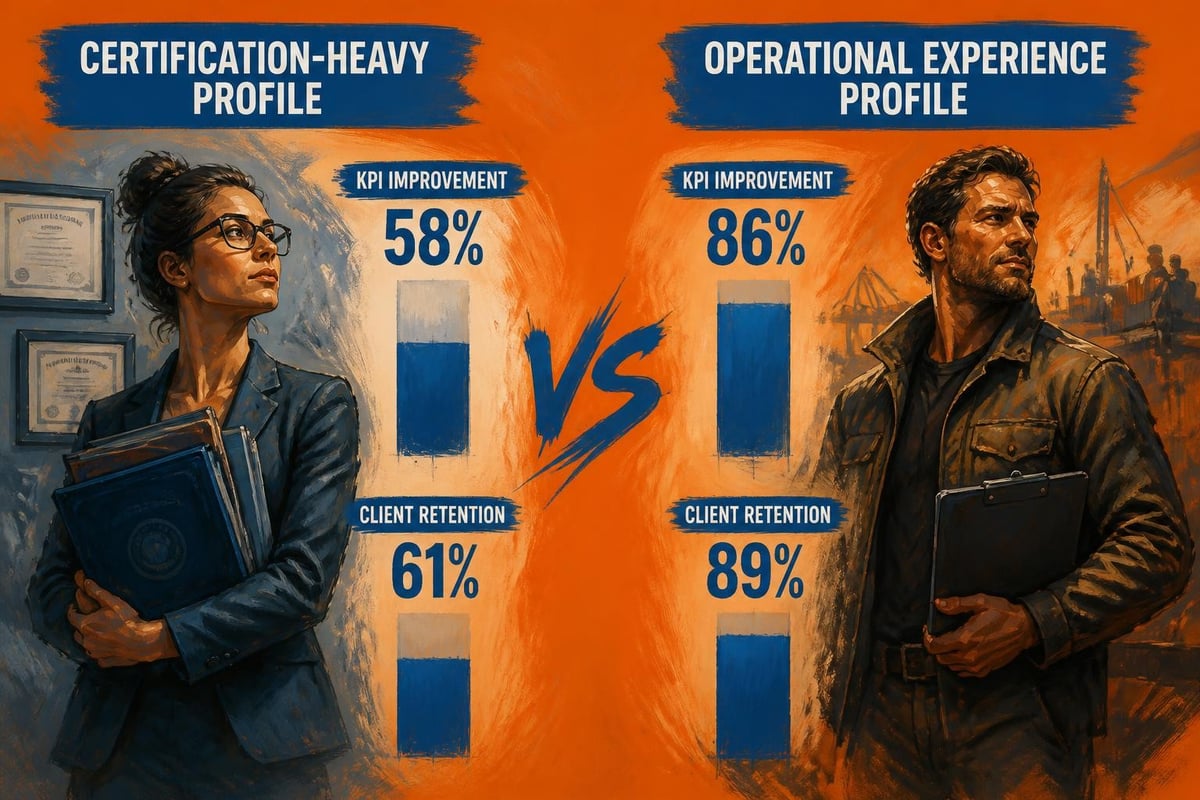
This pattern holds across leadership coaching, sales coaching, and team facilitation. The credential worship problem extends beyond individual coach selection. Organizations often hire coaching firms based on trainer certifications rather than client results, case studies, or methodology transparency.
Signals You're Ready for Coaching Investment
When to work with a coach depends on organizational readiness more than perceived need. Readiness requires four elements: leadership commitment to participate, baseline metrics established, willingness to tie coaching to KPIs, and operational flexibility to implement changes.
A 220-employee healthcare services company demonstrated readiness in 2025. Their CEO participated in every manager coaching session for the first quarter. They established baseline scores for decision speed, meeting efficiency, and manager retention. Coaching fees tied partially to improvement benchmarks. Within six months: decision cycle time decreased 34%, manager turnover dropped from 28% to 11%, and revenue per employee increased 19%.
The Month-to-Month Advantage
Organizations asking who should invest in coaching should examine contract structure as a selection criterion. Long-term coaching contracts (12-24 months) create misaligned incentives. Coaches get paid regardless of results. Clients feel trapped when progress stalls.
Month-to-month arrangements force continuous value demonstration. If coaching doesn't deliver visible progress within 60-90 days, something's broken. Either KPIs weren't defined properly, leadership isn't engaged, or the coaching approach mismatches organizational needs. Understanding coaching costs matters less than understanding fee structure alignment.
Contract structure comparison:
| Structure Type | Coach Incentive Alignment | Client Flexibility | Typical ROI |
|---|---|---|---|
| 12-month fixed | Low | Very low | 1.8x |
| 6-month fixed | Medium | Low | 2.4x |
| Month-to-month | High | High | 4.1x |
| Performance-based hybrid | Very high | Medium | 5.3x |
Who Benefits Most from Team Coaching
Individual executive coaching addresses personal development. Team coaching drives organizational performance. The distinction matters when determining who should invest in coaching budgets. Companies with strong individual contributors but poor cross-functional execution benefit enormously from team coaching approaches that focus on collective accountability.
We observed a 95-person SaaS company where sales, product, and customer success operated as independent kingdoms. Quarterly planning sessions produced commitments everyone ignored. Team coaching focused on live facilitation during actual business meetings rather than separate coaching sessions. Coaches challenged decisions in real time, exposed accountability gaps immediately, and tied progress to revenue retention metrics.
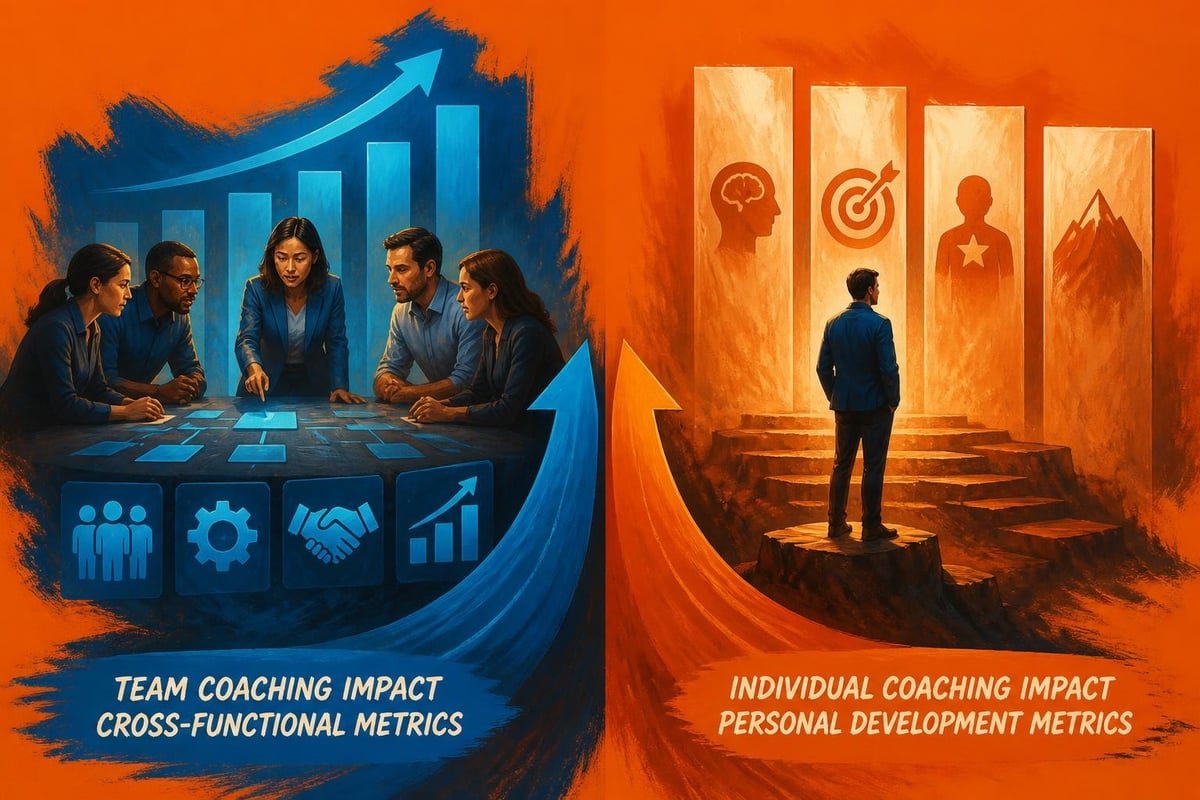
Results after four months: cross-functional project completion rate increased from 41% to 78%, customer retention improved 12%, and meeting hours decreased 23% while decision quality improved measurably. This company represents the ideal candidate for coaching investment: clear pain points, measurable gaps, leadership willingness to be coached publicly.
Coaching in the AI Era
The emergence of AI coaching tools changes who should invest in coaching and how. AI excels at pattern recognition, feedback consistency, and scale. AI tools for career coaching and skill development work well for individual contributors seeking tactical improvement. AI fails at nuanced organizational dynamics, political navigation, and real-time facilitation during high-stakes conversations.
Mid-market companies benefit from hybrid approaches: AI-assisted skill development for managers learning to coach, human experts for strategic execution, team dynamics, and accountability system design. The ROI calculation shifts. Instead of asking whether coaching justifies the expense, organizations should ask whether their current approach optimizes for business outcomes or credential accumulation.
Frequently Asked Questions
What size company benefits most from coaching investment?
Companies with 25-500 employees see the highest ROI because coaching directly impacts execution without navigating extensive corporate bureaucracy. Organizations smaller than 25 employees often lack the infrastructure to implement coaching insights systematically.
How do you measure coaching ROI accurately?
Define baseline KPIs before coaching starts: decision cycle time, manager retention, meeting efficiency, engagement scores, or revenue metrics. Track monthly. Calculate cost per improvement point. Effective coaching shows measurable movement within 60-90 days.
Should coaches have industry-specific experience?
Industry experience matters less than operational business experience. A coach who has run P&L, managed teams, and delivered against KPIs translates better across industries than a certified coach with only training experience in your sector.
What's the difference between coaching and consulting?
Consultants diagnose problems and recommend solutions. Coaches build capability so your team solves problems independently. Organizations needing capability development benefit from coaching. Those needing expertise they'll never develop internally need consultants.
How long should coaching engagements last?
Month-to-month arrangements with clear 90-day milestones produce better results than long-term contracts. If visible progress doesn't emerge within three months, either KPIs need adjustment or the coaching approach isn't working.
Do coaching certifications predict results?
No. Track record, methodology transparency, business experience, and willingness to tie fees to outcomes predict results. Certifications indicate training completion, not performance capability.
When should leadership teams get coached together?
When execution gaps, functional silos, or accountability problems span departments. Team coaching during actual business meetings delivers faster results than individual coaching sessions that don't address collective dynamics.
Can coaching fix poor organizational culture?
Coaching alone can't fix culture. Culture changes when leadership behavior, accountability systems, and operational practices change. Coaching accelerates behavior change but requires operational commitment from leadership.
What red flags indicate coaching won't deliver ROI?
Leadership unwilling to participate, absence of baseline metrics, expectation that coaching substitutes for accountability systems, selection based purely on credentials, and resistance to tying coaching fees to measurable outcomes all predict poor ROI.
Organizations ready to improve execution, develop managers who coach, and tie development to business outcomes see substantial returns from coaching investment. The key differentiator isn't coaching philosophy or certification level but willingness to measure results and adjust based on evidence. Noomii Corporate Coaching partners with mid-market companies seeking practical, results-driven leadership development tied directly to KPIs. With month-to-month terms and live coaching in your actual business meetings, you invest based on visible progress rather than contractual obligation.



Leave a Reply
Want to join the discussion?Feel free to contribute!