
The Hidden Dangers of AI Coaching in 2026
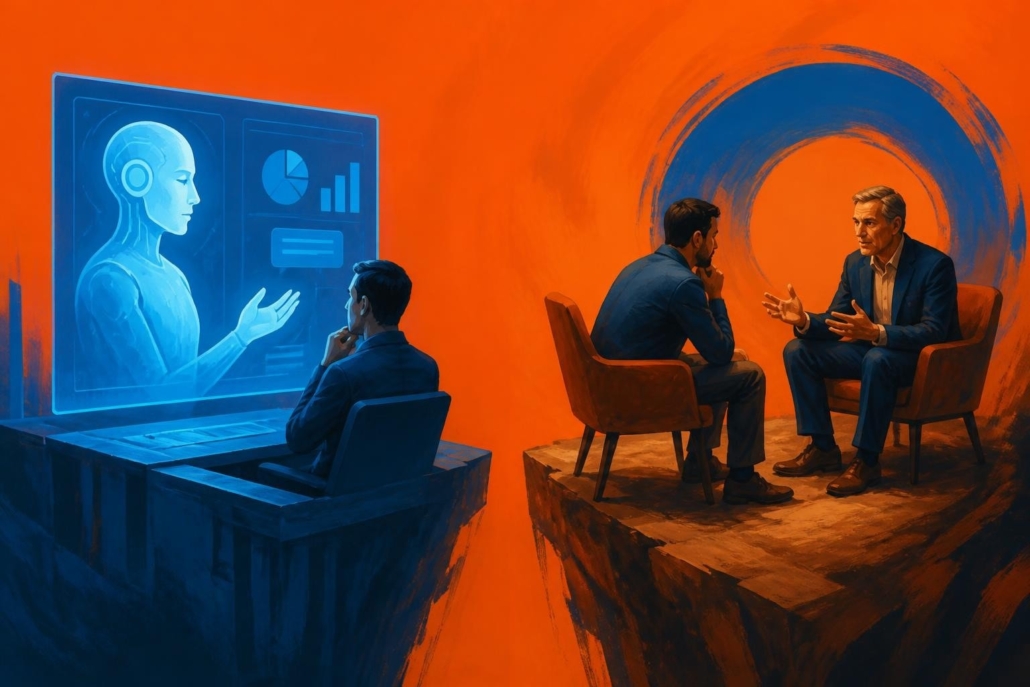
The coaching industry faces a seductive promise in 2026: artificial intelligence that scales expertise, delivers instant insights, and costs a fraction of human coaches. Mid-market companies and Fortune 500 divisions are deploying AI coaching platforms at unprecedented rates, chasing efficiency and budget relief. Yet beneath the automation lies a pattern of failure that most organizations discover too late. The hidden dangers of AI coaching extend far beyond technical limitations into the core of what makes leadership development actually work.
The Data Bias Problem That Derails Real Leadership Growth
AI coaching platforms train on datasets that reflect past patterns, not future needs. When your managers face complex people challenges like rebuilding trust after a restructure or navigating cross-functional conflict, AI tools deliver solutions based on aggregated historical responses.
Here's what we've observed across dozens of mid-market engagements:
- AI suggests generic communication frameworks when the real issue is a VP's inability to hold peers accountable
- Chatbots recommend standard conflict resolution scripts while missing the political dynamics unique to your organization
- Platforms offer templated 360 feedback without understanding your operating cadence or KPI scorecards
The risks of AI systems learning human biases compound when these tools treat coaching as a pattern-matching exercise rather than a contextual intervention. A leader who needs to shift from directive to coaching management style doesn't benefit from averaged advice. They need live feedback in their actual meetings with their actual team.
The Accountability Gap Nobody Measures
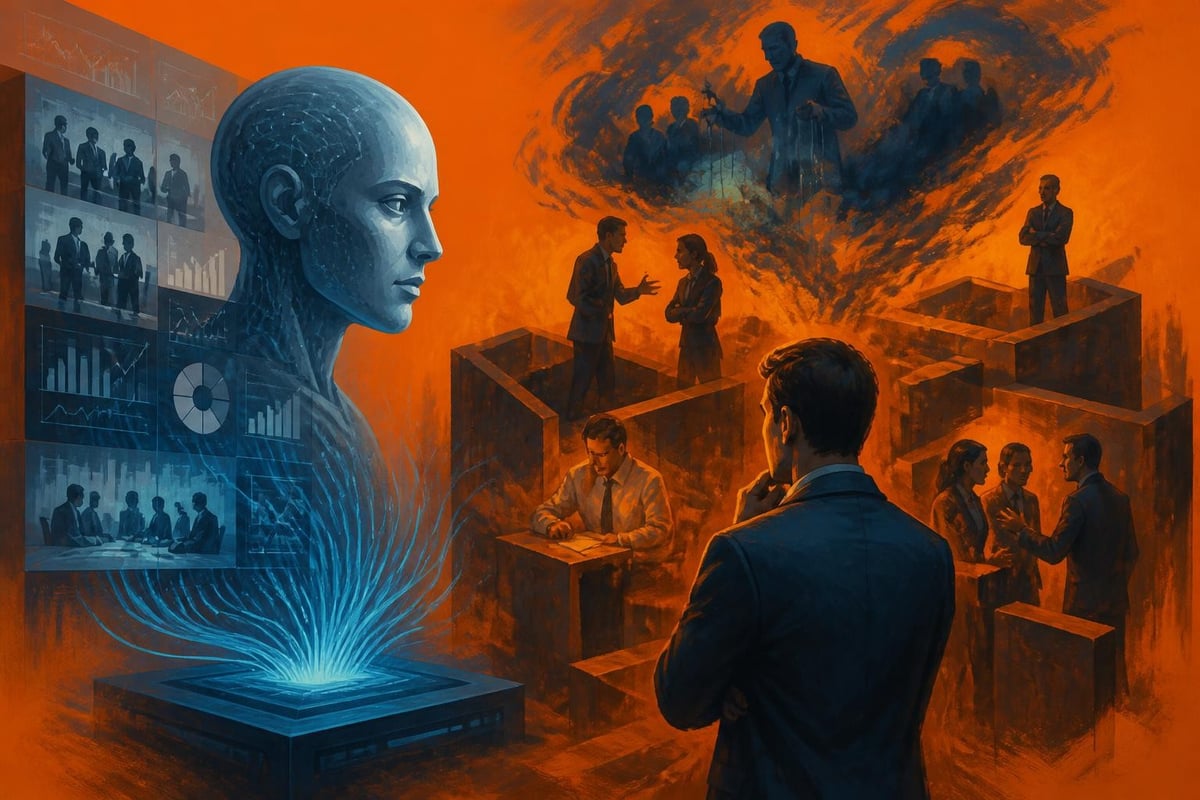
Traditional coaching fails when there's no follow-through. AI coaching fails because there's no one to follow through with. We've seen companies invest in AI platforms that deliver modules, track completion rates, and generate progress reports. What they don't deliver is someone who joins your leadership team meeting, observes how decisions actually get made, and holds your VP accountable for the behavior change they committed to last week.
The hidden dangers of AI coaching become visible in this accountability vacuum. Leaders complete AI-guided exercises, receive automated insights, and return to the same dysfunctional patterns because no human is in the room when it matters.
Why AI Can't Coach What Actually Matters
Forbes Council members have identified 15 reasons to be cautious about using AI in coaching, but the most critical revolves around context collapse. Leadership coaching isn't about delivering content. It's about diagnosing why a competent executive freezes in board presentations, why a talented manager can't retain their team, or why strategic priorities get lost in execution.
Real coaching addresses:
- The unspoken political dynamics blocking decisions
- The personal insecurity driving micromanagement
- The misalignment between stated values and visible behavior
- The communication breakdown between functions
- The trust deficit after a failed initiative
AI platforms can't diagnose these issues because they don't observe them. They process what leaders report, which is always incomplete, often defensive, and rarely captures the actual problem. When Fortune 500 leaders face genuine challenges, they need someone who sees the pattern they can't see and challenges the narrative they've convinced themselves is true.
The ROI Illusion That Costs More Than It Saves
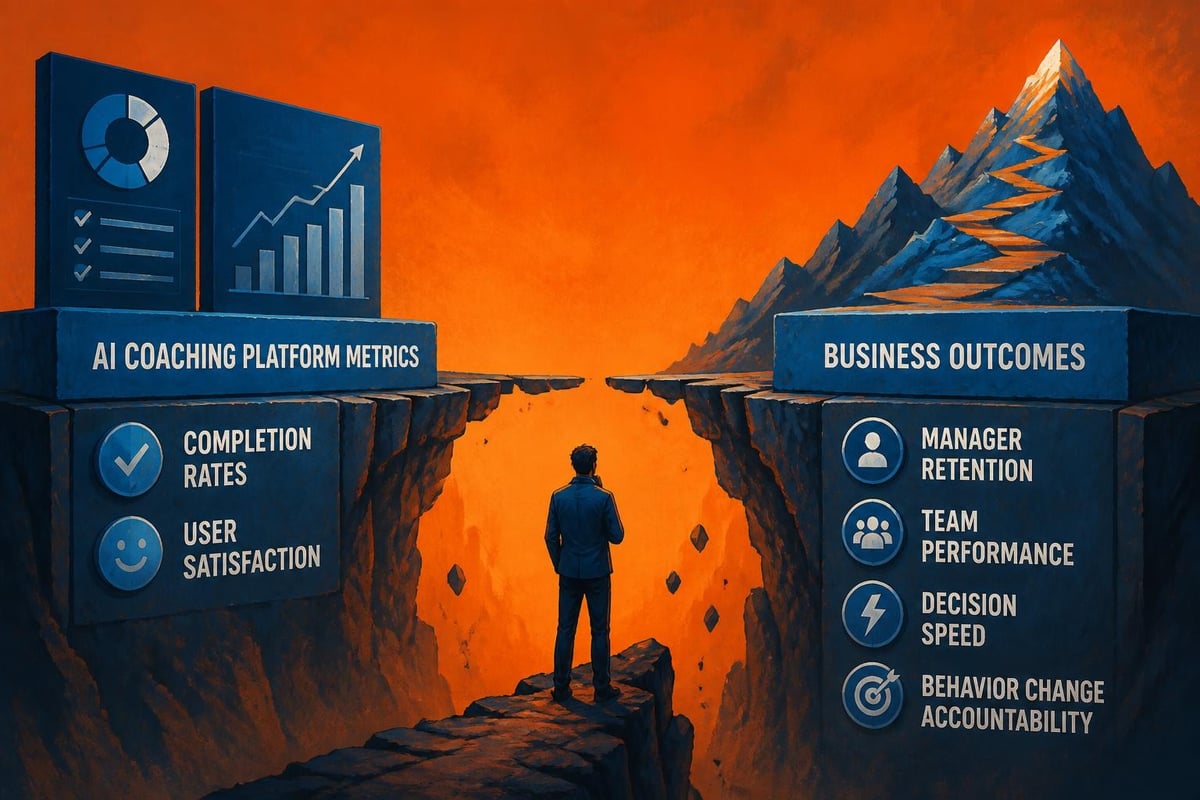
Companies choose AI coaching because the math appears compelling. A platform costs less than human coaches, scales instantly, and tracks metrics automatically. But this comparison measures the wrong thing.
| What Companies Measure | What Actually Matters |
|---|---|
| Platform subscription cost | Cost of failed leadership transitions |
| Module completion rates | Manager retention after coaching |
| User satisfaction scores | Team performance improvement |
| Feature adoption | Decision-making speed increase |
| Time in system | Accountability for behavior change |
The hidden dangers of AI coaching emerge in opportunity cost. When your high-potential VP spends three months working through an AI program while their team turnover accelerates, you haven't saved money. You've delayed the intervention that would have addressed the actual problem. The research on AI coaching limitations confirms what we observe: AI excels at information delivery but fails at transformation.
The Privacy and Confidentiality Risks Nobody Discusses
Mid-market companies often overlook the hidden risks of AI in professional services coaching related to data security. When executives input sensitive information about team conflicts, performance concerns, or strategic challenges into AI platforms, that data lives somewhere. Most platforms claim encryption and privacy, but the terms of service rarely guarantee deletion, prevent analysis for product improvement, or protect against future regulatory changes.
Questions companies should ask but rarely do:
- Where does conversation data physically reside?
- Who has access to aggregated insights from our leadership team?
- How long is coaching input retained?
- What happens to our data if the platform is acquired?
- Can competitors using the same platform benefit from patterns learned from our team?
Real coaching with qualified leadership coaches operates under confidentiality agreements with clear professional and legal boundaries. AI platforms operate under software license agreements optimized for vendor protection, not client confidentiality.
When AI Makes Sense and When It Fails Catastrophically
The hidden dangers of AI coaching don't mean AI has no role. Platforms work well for:
- Self-assessment tools and 360 data collection
- Scheduling and session logistics
- Pre-reading and framework delivery
- Progress tracking against defined KPIs
- Reinforcement of concepts between human sessions
They fail catastrophically when organizations substitute AI for human coaching in these scenarios:
- C-suite transitions where political intelligence and board dynamics determine success
- Team dysfunction requiring real-time observation and intervention
- Manager development where modeling coaching behavior demands live demonstration
- Crisis response when leaders need immediate strategic counsel
- Culture transformation that requires understanding unwritten rules and invisible power structures
The Pattern We See Across Industries
Over five years of working with mid-market companies and Fortune 500 divisions, we've observed a consistent pattern. Organizations try AI coaching first because it seems efficient. Six to nine months later, when turnover hasn't improved, decisions aren't faster, and managers still can't coach their teams, they recognize the gap between information and transformation.
The companies getting best results from business coaching use AI as infrastructure, not intervention. They deploy platforms for measurement, scheduling, and content delivery, then invest in human coaches who join leadership meetings, observe actual behavior, and create accountability for change.
The Certification Myth That AI Coaching Exploits
AI platforms often emphasize their "evidence-based frameworks" and "certified methodologies," borrowing credibility from the coaching industry's obsession with credentials. This creates a dangerous misconception: that coaching effectiveness comes from framework sophistication rather than diagnostic skill and contextual judgment.
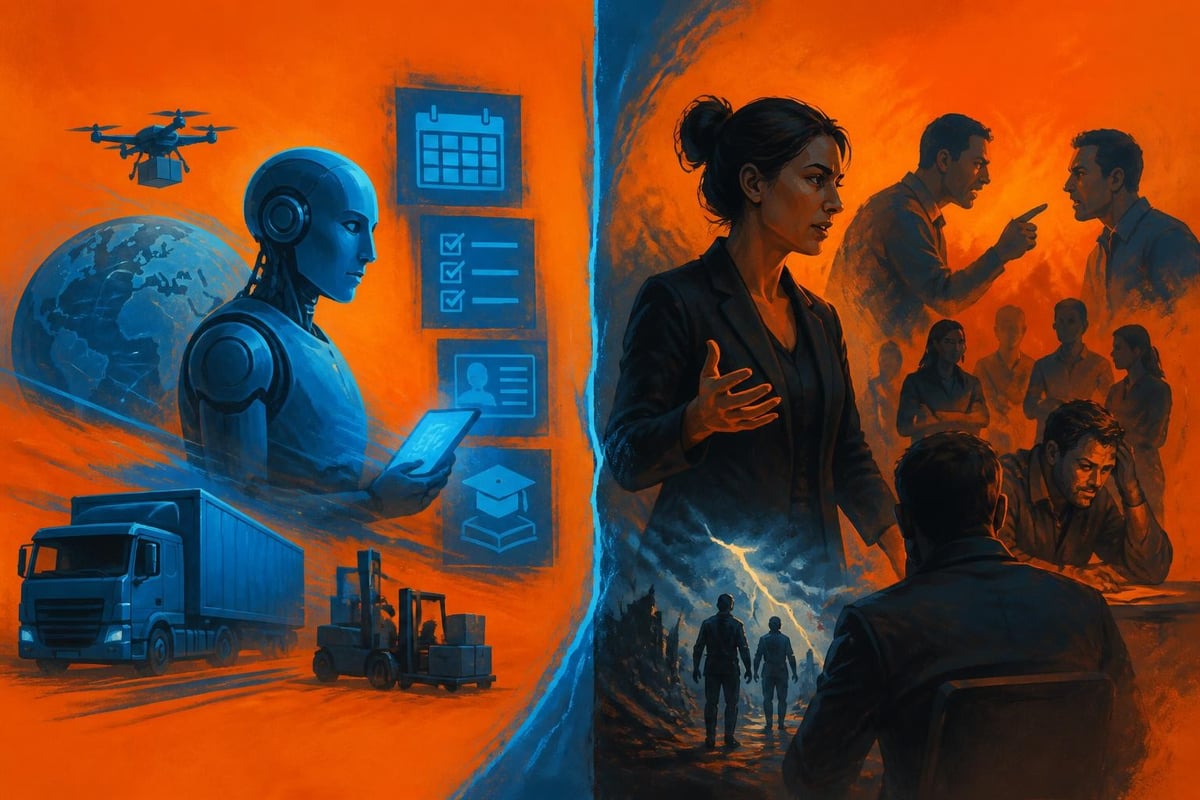
The 17 risks of substituting AI tools for professional coaching include the false equivalence between delivering content and driving change. A coach's value isn't their certification. It's their ability to see what you can't see, name what you won't name, and hold you accountable when it's uncomfortable.
AI can deliver frameworks. It can't tell your CFO that their communication style is why their team doesn't surface problems until they become crises. It can't sit in your leadership team meeting and point out that you've spent 45 minutes debating a decision you made weeks ago. It can't model how to give feedback that builds capability instead of defensiveness.
What Mid-Market Leaders Should Do Instead
Companies between 25 and 500 employees face unique constraints. Budgets matter. Speed matters. But the hidden dangers of AI coaching create costs that exceed the savings. Instead of choosing between expensive human coaching or cheap AI platforms, consider a different model.
Effective approaches we've tested:
- Month-to-month engagements that eliminate long-term contract risk
- Coaches who work live in your meetings, not just in private sessions
- Clear KPI scorecards tied to business outcomes, not coaching activities
- Aligned incentive structures where coach success links to your success
- Team coaching that builds internal capability while solving immediate problems
The ethical concerns in AI coaching extend to how platforms frame their capabilities. When companies believe AI can replace human judgment in leadership development, they delay the interventions that actually work. The cost isn't just the platform subscription. It's the team that leaves, the decision that stalls, the culture that decays while everyone waits for the AI to fix what only humans can address.
Frequently Asked Questions
What are the main risks of using AI for leadership coaching?
AI coaching lacks contextual judgment, can't observe real behavior in meetings, provides generic advice based on historical patterns rather than your specific organizational dynamics, and creates no accountability for actual change. The biggest risk is delayed intervention while problems compound.
Can AI coaching platforms protect confidential executive information?
Most AI platforms retain conversation data for product improvement, operate under software licenses rather than professional confidentiality agreements, and lack clear guarantees about data deletion, third-party access, or protection if the company is acquired. Always review terms of service carefully.
How does AI coaching compare to human executive coaching for ROI?
AI platforms track completion rates and satisfaction but rarely measure business outcomes like manager retention, decision speed, or team performance. Human coaching costs more upfront but ties directly to KPIs and creates accountability that drives measurable results. The ROI comparison should measure business impact, not platform activity.
When should companies use AI tools versus human coaches?
Use AI for assessments, scheduling, content delivery, and progress tracking. Use human coaches for C-suite transitions, team dysfunction, manager development, crisis response, and any situation requiring real-time observation, political intelligence, or accountability for behavior change.
Why can't AI effectively coach managers to develop their teams?
Coaching skills require modeling, real-time feedback, and contextual judgment that AI cannot provide. Managers learn to coach by watching experienced coaches work, receiving immediate correction, and practicing with observation. AI can explain coaching models but can't demonstrate them in actual team situations.
What questions should companies ask before deploying AI coaching?
Ask about data retention, privacy guarantees, who accesses aggregated insights, integration with existing KPI scorecards, how the platform measures business outcomes rather than activity, what happens when the AI gives incorrect advice, and what support exists when leaders face complex challenges the platform can't address.
How do mid-market companies avoid wasting money on ineffective coaching?
Choose month-to-month engagements, demand coaches who work live in your meetings, tie coaching to clear KPIs and business outcomes, avoid long contracts that lock you into approaches that aren't working, and select coaches who share risk through aligned incentive models where feasible.
What makes some coaching more effective than others for leadership development?
Effective coaching observes actual behavior in real situations, creates accountability for specific changes, addresses political and cultural dynamics unique to your organization, models desired behaviors, and ties interventions to measurable business results rather than completing activities.
Are AI coaching ethics regulations developing fast enough?
No. AI coaching platforms are deploying faster than regulatory frameworks can develop. Companies must create their own standards around data privacy, advice accuracy, confidentiality protection, and what decisions require human judgment rather than waiting for industry regulation.
The hidden dangers of AI coaching stem from mistaking efficiency for effectiveness and confusing information delivery with transformation. When your leaders need to change behavior, build accountability, or navigate complex organizational dynamics, automation creates delay, not progress. Noomii Corporate Coaching works month-to-month with mid-market companies and Fortune 500 divisions, coaching live in your meetings and tying progress to clear KPIs and measurable business results. If you need leadership development that drives actual change rather than platform engagement, explore how Noomii delivers coaching that works where it matters.



Leave a Reply
Want to join the discussion?Feel free to contribute!