
Is Coaching a Scam? What Mid-Market Leaders Must Know
The question "is coaching a scam" lands in search bars thousands of times monthly, and for good reason. Mid-market leaders considering executive or leadership coaching face a market crowded with conflicting promises, credential confusion, and programs that rarely tie outcomes to business metrics. This article examines the actual risks, reveals what separates legitimate corporate coaching from opportunistic schemes, and shows how to evaluate providers based on results rather than marketing claims.
Where Coaching Scams Actually Exist
Not all coaching is a scam, but specific segments deserve heightened scrutiny. The Federal Trade Commission warns about business and coaching scams that promise unrealistic income or rapid transformation. These programs typically target individual entrepreneurs and small business owners rather than mid-market companies, but the warning signs apply universally.
Common red flags include:
- Guarantees of specific financial outcomes without assessing your situation
- Pressure to purchase certification courses or "proprietary" systems upfront
- Claims that credentials alone ensure coaching effectiveness
- Contracts locking you into long-term commitments with no performance metrics
- Resistance to sharing client results, case studies, or references
The Better Business Bureau identifies business promotion and coaching scams that exploit desperation. They promise growth through vague methods, delay accountability, and vanish when questioned about outcomes.

The Certification Myth That Costs Companies Money
One persistent industry myth equates credentials with coaching quality. Buyers often assume ICF, EMCC, or specialty certifications guarantee results. They don't. Certifications verify training completion and ethical standards, not coaching effectiveness or business acumen.
What certification actually tells you:
| What It Confirms | What It Doesn't Confirm |
|---|---|
| Completed training hours | Ability to drive business outcomes |
| Knows ethical guidelines | Experience in your industry |
| Passed competency assessment | Can tie coaching to KPIs |
| Maintains continuing education | Understands P&L, operations, or team dynamics |
The Global Code of Ethics for Coaches establishes professional standards across major organizations, which matters for ethical practice. But ethics and effectiveness are separate considerations. A coach can follow every ethical guideline while delivering zero measurable impact on your leadership team's performance.
This isn't an argument against certifications. It's recognition that companies waste budget when they screen coaches primarily on credentials rather than relevant experience, client outcomes, and ability to integrate with existing business operations.
What Legitimate Corporate Coaching Looks Like
The question "is coaching a scam" becomes irrelevant when you evaluate programs using outcome-based criteria. Legitimate providers demonstrate measurable impact, share detailed case studies, and align incentives with your success.
The Case Study Standard
Problem: A 180-employee manufacturing company promoted technical experts into management roles without leadership training. New managers avoided difficult conversations, delayed decisions, and micromanaged execution. Employee engagement scores dropped 23% year-over-year.
Diagnosis: Managers lacked frameworks for delegation, accountability structures, and feedback skills. The company offered no operating cadence connecting strategy to weekly execution.
Solution: Leadership coaching embedded in management team meetings for six months. Introduced weekly scorecard reviews, 1-on-1 coaching frameworks, and clear decision rights. Coaches attended planning sessions and guided real-time application.
Result: Engagement scores recovered 18 points within nine months. Decision cycle time decreased 40%. Manager retention improved from 71% to 89% annually.
Lesson: Coaching that occurs in actual work context, tied to specific KPIs, delivers measurable outcomes. Programs conducted separately from operations struggle to create lasting change.

How to Vet Coaching Programs Without Credential Worship
Mid-market buyers need practical evaluation frameworks. Forbes outlines strategies for avoiding online coaching scams that emphasize credibility assessment. Apply these principles to corporate programs.
Ask these five questions:
- What specific business outcomes have you driven for similar companies? Demand case studies with metrics, not testimonials.
- How do you tie coaching to our existing KPIs? Vague answers about "transformation" or "potential" signal disconnection from business reality.
- What's your contracting structure? Month-to-month terms with performance reviews demonstrate confidence. Long contracts with upfront payment concentrate risk on you.
- Will you coach in our actual meetings and operations? Theory taught separately from application rarely sticks.
- What happens if results don't materialize? Legitimate providers discuss accountability mechanisms, not just coaching hours delivered.
The ROI Conversation Most Providers Avoid
Few coaching programs proactively discuss return on investment. They focus on hours, sessions, and activities rather than outcomes. This avoidance isn't always intentional fraud, but it reveals a disconnect between coaching and business performance.
Calculate coaching ROI using these categories:
- Revenue impact: Faster sales cycles, improved retention, expanded accounts
- Cost reduction: Decreased turnover, fewer mis-hires, streamlined decision-making
- Productivity gains: Shorter meeting times, clearer priorities, improved delegation
- Risk mitigation: Better compliance, stronger communication, proactive problem-solving
A 250-employee company investing $75,000 in manager coaching that reduces annual turnover from 28% to 19% saves approximately $240,000 in replacement costs (assuming $30,000 average cost per departure). That's 3.2x ROI before counting productivity improvements.
The AI Coaching Disruption Buyers Should Watch
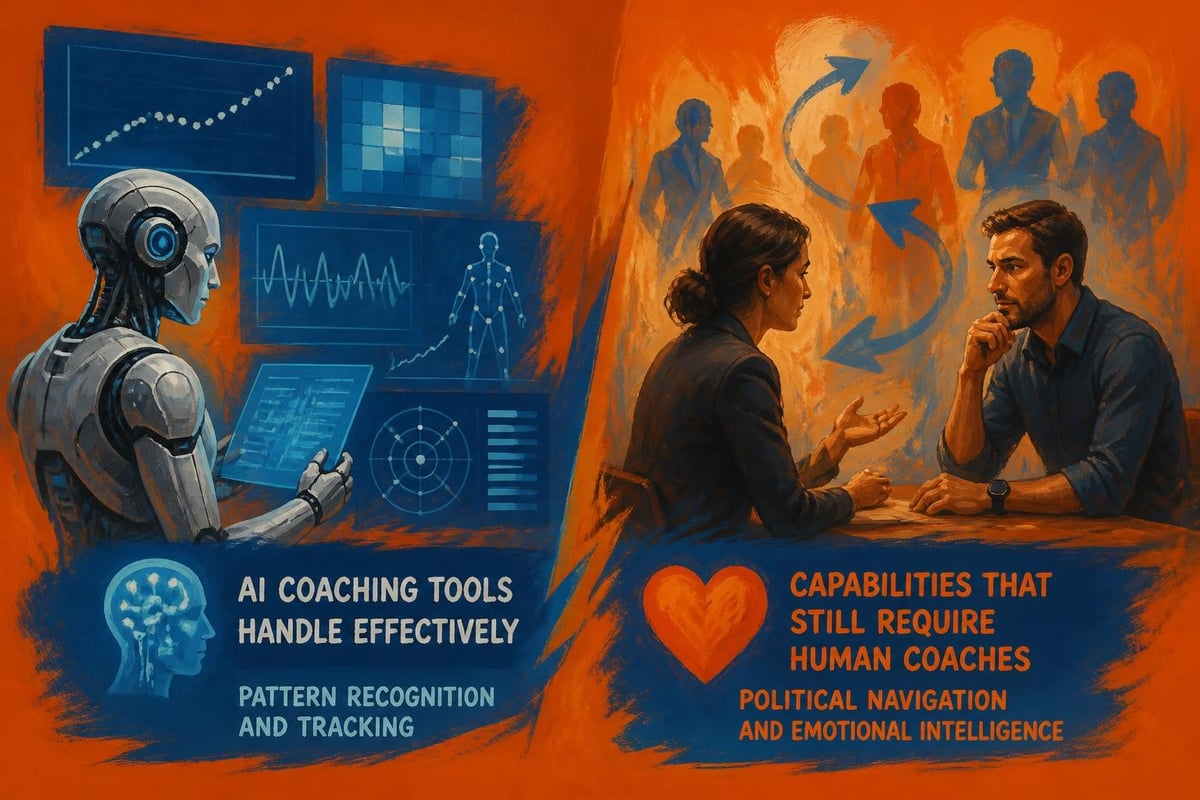
By 2026, AI coaching tools have commoditized basic feedback, skill development, and accountability tracking. This shift separates legitimate human coaching from programs that could be replaced by software.
What AI handles effectively:
- Consistent check-ins and progress tracking
- Pattern recognition across team data
- Structured frameworks and templates
- 24/7 availability for routine questions
What human coaches still own:
- Navigating political dynamics and unspoken tensions
- Reading room dynamics during difficult conversations
- Adapting approach based on emotional intelligence
- Integrating business strategy with team development
The challenges Fortune 500 leaders face require human judgment that AI can support but not replace. Companies asking "is coaching a scam" should instead ask whether their provider delivers value AI cannot.
Practical Protection Against Coaching Waste
Beyond avoiding outright scams, companies need frameworks to prevent budget waste on ineffective but well-intentioned programs.
Implementation checklist:
- Start with defined business problems, not coaching hours to fill
- Establish baseline metrics before any coaching begins
- Review progress monthly using agreed KPIs
- Integrate coaching into existing operations and meetings
- Maintain flexibility to adjust or exit based on results
- Document specific examples of behavior change and business impact
- Compare cost against measurable outcomes quarterly
The FTC advises skepticism toward promises of quick money in business coaching contexts. Apply similar skepticism to promises of rapid culture change or leadership transformation without clear implementation plans.
Frequently Asked Questions
Q: Is all coaching a scam?
A: No. Legitimate coaching exists, particularly in corporate contexts where programs tie to business metrics and demonstrate measurable outcomes. Scams exist primarily in segments promising unrealistic income or transformation without assessing individual situations.
Q: How can I tell if a coaching program is legitimate?
A: Look for detailed case studies with specific metrics, flexible contracting terms, willingness to integrate with your operations, and clear accountability mechanisms. Avoid programs focused primarily on credentials or requiring long-term commitments upfront.
Q: Do coaching certifications guarantee quality?
A: No. Certifications verify training completion and ethical standards, not effectiveness or business results. Evaluate coaches based on relevant experience, client outcomes, and industry knowledge alongside credentials.
Q: What ROI should I expect from corporate coaching?
A: ROI varies based on objectives, but legitimate programs should demonstrate measurable impact within 3-6 months through improved retention, faster decisions, stronger communication, or revenue growth. Calculate ROI using specific business metrics.
Q: Should I choose AI coaching tools or human coaches?
A: Use both strategically. AI handles routine tracking, feedback, and frameworks effectively. Human coaches navigate complex dynamics, emotional intelligence, and strategic integration that AI cannot manage.
Q: What red flags indicate a coaching scam?
A: Watch for guaranteed financial outcomes, pressure for upfront payment, resistance to sharing client results, credential obsession over experience, and long contracts without performance metrics.
Q: How long should corporate coaching contracts last?
A: Favor month-to-month terms or quarterly agreements with performance reviews. Long contracts without outcome tracking concentrate risk on buyers and suggest provider uncertainty about results.
Q: What questions should I ask potential coaching providers?
A: Request case studies with metrics, ask how they'll tie to your KPIs, understand their contracting structure, verify they'll coach in actual operations, and discuss what happens if results don't materialize.
Q: Can coaching work without being embedded in operations?
A: It's less effective. Coaching conducted separately from actual work context struggles to create lasting change. Programs integrated into meetings, planning sessions, and daily operations deliver better outcomes.
Coaching isn't inherently a scam, but buyers face real risks when evaluating programs based on credentials rather than outcomes. Focus on providers who demonstrate measurable impact, tie coaching to business KPIs, and align their incentives with your success. Noomii connects mid-market companies with coaches who work month-to-month, integrate into your operations, and share risk through performance-aligned terms. If you're ready to invest in leadership development that delivers visible results, start with proven coaches who demonstrate outcomes before asking for long-term commitments.



Leave a Reply
Want to join the discussion?Feel free to contribute!