

AI Coaching Is Changing Everything: What It Means Now
The coaching market is splitting into two worlds. One relies on technology to scale advice and feedback at low cost. The other delivers context-specific expertise through human judgment honed over years of working inside businesses. Both claim to develop leaders, but the mechanisms, outcomes, and business cases look nothing alike. Understanding where AI coaching works and where it collapses matters more in 2026 than ever before, because AI coaching is changing everything about who gets access, what they pay, and whether they actually improve.
Where AI Coaching Delivers Measurable Value
AI coaching platforms excel at narrow, repeatable skill development where feedback loops are fast and progress is observable. Public speaking practice, interview preparation, and sales call analysis fit this profile perfectly. Tools analyze word choice, pacing, filler words, and emotional tone, then serve personalized feedback within seconds.
Three use cases where AI coaching produces clear ROI:
- Speech and presentation coaching: Platforms like Yoodli provide immediate feedback on delivery mechanics, helping managers rehearse quarterly presentations without scheduling time with an executive coach.
- Behavioral self-awareness: AI tools flag patterns in communication style, meeting participation, and written tone that employees often miss without external observation.
- Goal tracking and accountability: AI-assisted goal setting creates structured check-ins and progress dashboards that keep development commitments visible between human coaching sessions.
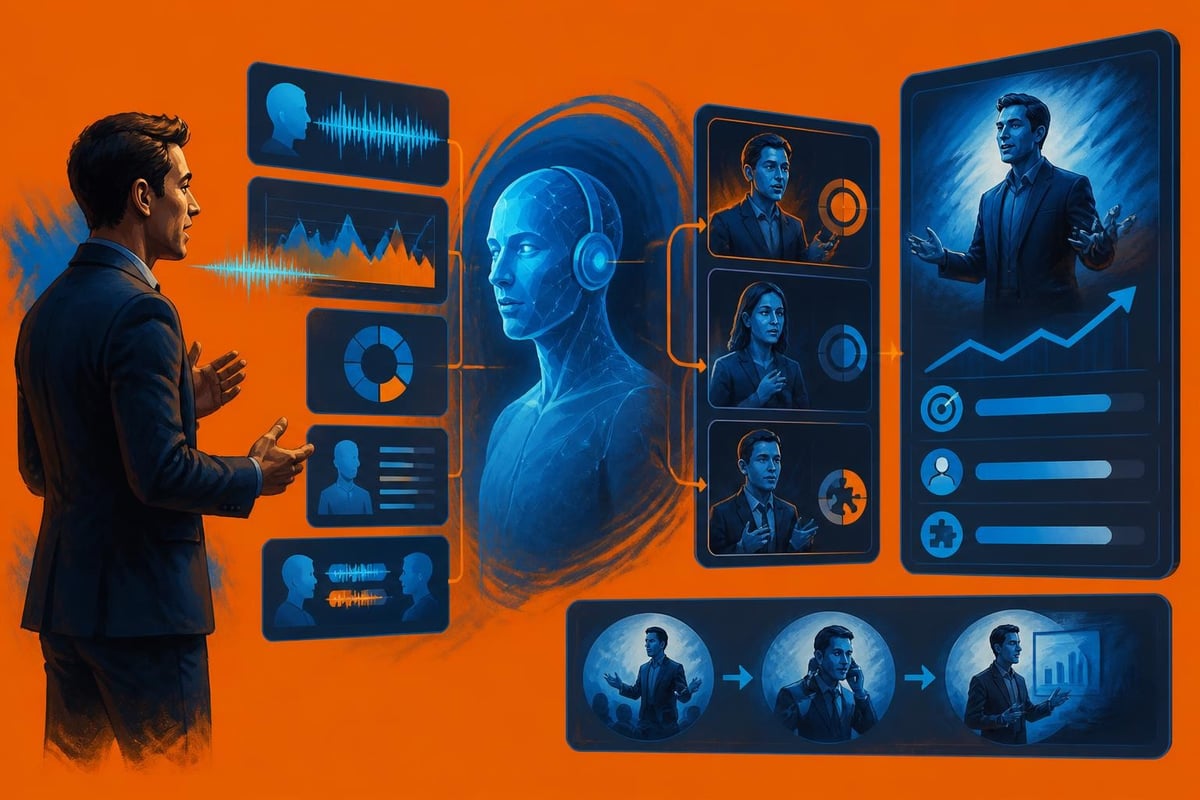
What separates useful AI coaching from hype is specificity. The technology works when the skill being developed has clear inputs, outputs, and observable improvement metrics. A manager practicing a difficult conversation with an AI coach can refine word choice and tone before the real interaction. That's useful. An AI chatbot claiming to develop strategic thinking or executive presence through conversation prompts? That's fiction.
The Practical Limits Every Buyer Should Understand
AI coaching fails when context, judgment, and organizational politics determine success. Leadership challenges rarely present themselves as clean problems with algorithmic solutions. A VP struggling to align two feuding department heads doesn't need speech pattern analysis. They need someone who has navigated similar power dynamics, understands the personalities involved, and can coach through the messy reality of corporate decision-making.
| AI Coaching Strengths | Human Coaching Strengths |
|---|---|
| 24/7 availability | Context-specific diagnosis |
| Scalable to hundreds of users | Organizational pattern recognition |
| Low cost per interaction | Judgment in ambiguous situations |
| Consistent feedback delivery | Relationship-based accountability |
| Data tracking across sessions | Real-time intervention in live meetings |
The scalability advantage of AI coaching is real, but it comes with a hidden cost: generic advice that doesn't account for company culture, industry dynamics, or the specific leadership gaps slowing execution. Mid-market companies trying to accelerate manager effectiveness discover this quickly. An AI tool might suggest better one-on-one meeting structure, but it can't observe the manager running those meetings poorly and intervene with specific corrections tied to team dynamics.
What Organizations Miss About AI Coaching Integration
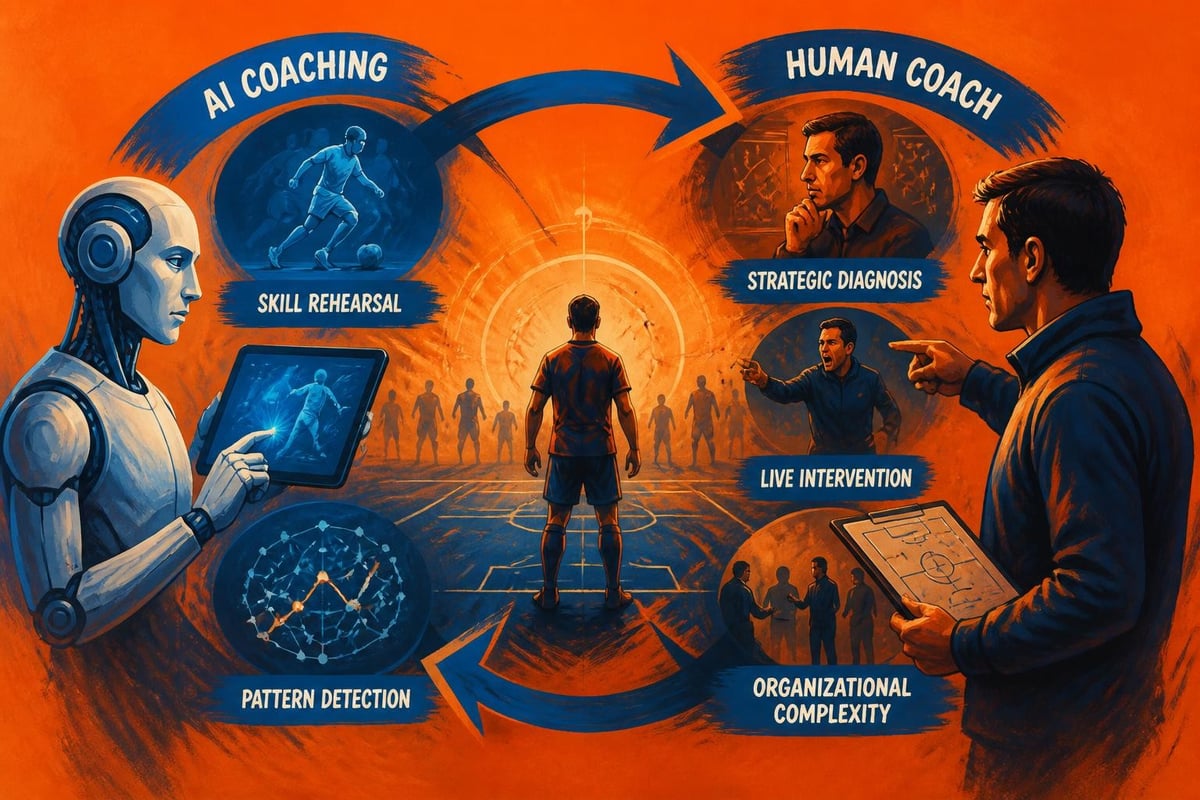
Most companies approach AI coaching as a replacement decision: human coaches cost too much, so we'll substitute technology. That framing guarantees disappointing results. Effective AI coaching augments human expertise by handling high-volume, low-complexity interactions while freeing skilled coaches to focus on strategic challenges where their experience matters most.
Here's a practical integration framework tested across Fortune 500 divisions facing leadership development gaps:
- Deploy AI for skill rehearsal and self-assessment: Let employees practice presentations, difficult conversations, and feedback delivery with AI tools that flag weaknesses.
- Reserve human coaches for diagnosis and strategic intervention: Use experienced coaches to identify root causes of performance gaps, navigate organizational complexity, and coach live in critical meetings.
- Create feedback loops between AI data and human coaching: Share AI-generated insights on communication patterns and goal progress with human coaches to inform session focus and accelerate breakthroughs.
- Tie both to business KPIs: Track whether leadership development (AI or human) correlates with faster decisions, improved retention, stronger pipeline execution, or other measurable outcomes.
This approach acknowledges that AI coaching is changing everything about delivery economics while preserving the irreplaceable value of human judgment where it matters most.
The Certification Myth in an AI-Augmented Market
The coaching industry's obsession with certifications becomes even more problematic when AI enters the picture. Credentialing bodies claim their training prepares coaches to integrate AI tools, but most certification programs remain stuck teaching theory disconnected from business results. A coach with 15 years of operational experience working inside companies will outperform a newly certified coach armed with AI tools every time, because coaching effectiveness depends on pattern recognition, judgment, and credibility that technology can't replicate.
Red flags when evaluating AI-augmented coaching programs:
- Marketing emphasizes AI features over coach expertise and client outcomes
- No clear connection between AI insights and measurable business results
- Coaches lack direct operational experience in your industry or business model
- AI tools are positioned as standalone solutions rather than diagnostic aids
- Pricing reflects technology access rather than coaching expertise and accountability
Smart buyers focus on outcomes, not tools. The question isn't whether a coaching program uses AI. The question is whether that program delivers faster decisions, stronger managers, improved retention, and cleaner execution. If the answer requires explaining the AI rather than showing the results, you're talking to the wrong provider.
What 2026 Evidence Reveals About AI Coaching Effectiveness
Recent research on AI coaching for skill development demonstrates accelerated learning in controlled environments where tasks are well-defined and progress is measurable. Public speaking improved 23% faster with AI feedback versus peer feedback alone. Interview performance increased when candidates rehearsed with AI tools that simulated common question patterns and flagged weak responses.
But here's what the studies don't show: improved strategic thinking, better stakeholder management, or stronger executive presence. Those capabilities develop through experience, feedback in high-stakes situations, and coaching that connects individual behavior to organizational outcomes. Understanding how to use AI tools effectively in business coaching requires separating legitimate productivity gains from inflated claims about leadership transformation.
The ROI Reality Check
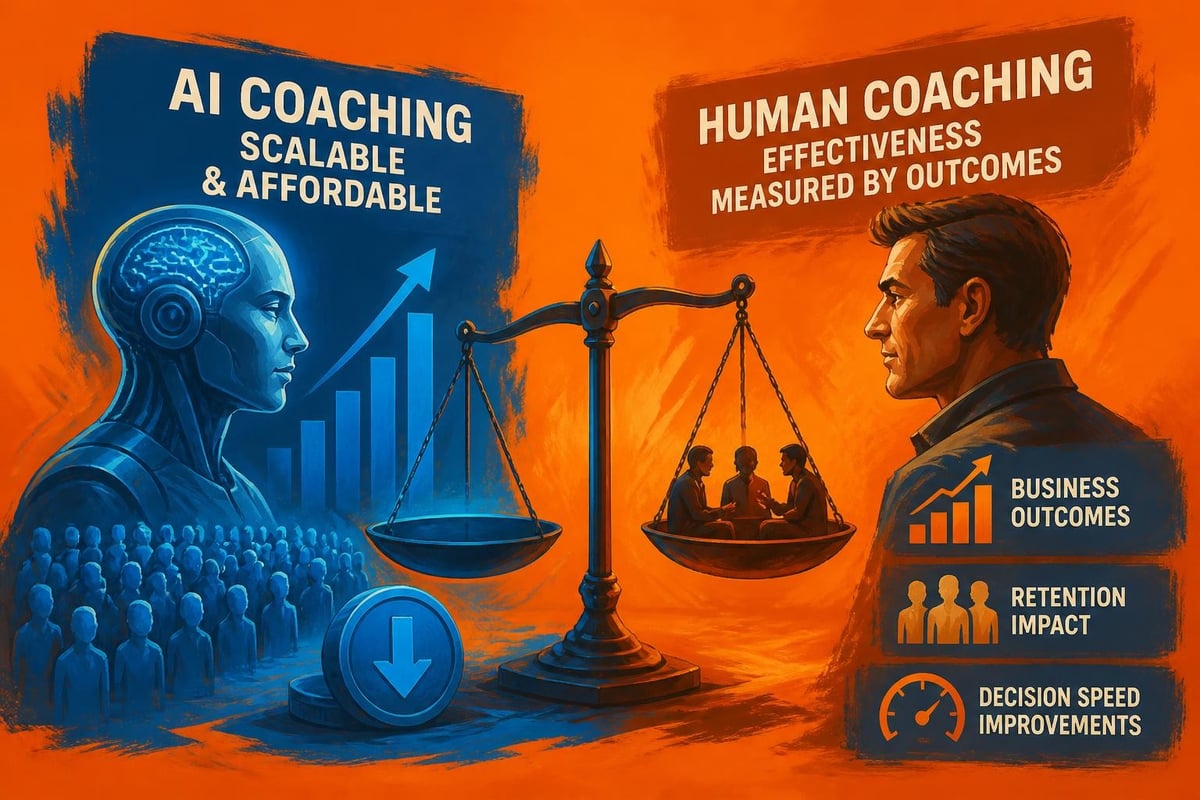
AI coaching platforms tout cost savings of 60-80% compared to human coaching. That math works when you're counting cost per user session. It collapses when you measure cost per measurable business outcome. A company that spends $50,000 on AI coaching that produces no change in manager effectiveness or team performance wasted $50,000. A company that spends $150,000 on skilled human coaching that accelerates decision-making, reduces turnover, and improves execution just bought a bargain.
| Metric | AI Coaching | Skilled Human Coaching |
|---|---|---|
| Cost per user per month | $20-$100 | $500-$2,000 |
| Scalability | 1,000+ users easily | 50-100 users per coach |
| Time to measurable impact | 3-6 months | 2-4 months |
| Complexity of problems addressed | Low to medium | Medium to high |
| Business outcome correlation | Weak to moderate | Strong when coach has expertise |
The practical lesson: use AI for what it does well (skill rehearsal, pattern detection, progress tracking), and use experienced human coaches for what they do well (diagnosis, strategic intervention, organizational navigation). Companies that try to save money by replacing human expertise with algorithms end up spending more to fix the problems AI coaching couldn't address.
The Trust Question That Determines AI Coaching Success
Employees share sensitive career concerns, performance anxiety, and relationship conflicts with human coaches because trust develops through confidentiality, judgment, and demonstrated competence. AI tools struggle here. Skepticism about data privacy, algorithm bias, and whether the technology actually understands their situation limits engagement quality.
A 2025 study tracking AI coaching adoption in 50 mid-market companies found that 67% of employees used the platforms sporadically after the first month, primarily for low-stakes skill practice. Only 18% used AI coaching for substantive leadership challenges. When asked why, most cited uncertainty about whether the AI could actually help with complex problems and discomfort sharing real issues with technology.
This pattern reveals an uncomfortable truth: ai coaching is changing everything about access and cost, but it's not changing what makes coaching effective. Results still depend on accurate diagnosis, relevant expertise, accountability that creates behavior change, and trust that enables honest conversation. Technology accelerates the mechanics while human judgment drives the outcomes.
AI coaching tools bring unprecedented scale and affordability to skill development, but they can't replace the pattern recognition, organizational savvy, and live intervention that drive measurable business results. Noomii Corporate Coaching combines the diagnostic power of AI insights with experienced coaches who work inside your meetings, connect development to KPIs, and deliver faster decisions, stronger managers, and cleaner execution. If you need practical leadership development tied to business outcomes, not just technology access, explore what Noomii delivers with month-to-month accountability and visible results.
Frequently Asked Questions
What is AI coaching and how does it differ from traditional coaching?
AI coaching uses algorithms and machine learning to provide automated feedback, goal tracking, and skill development exercises. Traditional coaching relies on human expertise, context-specific diagnosis, and relationship-based accountability. AI excels at scalable, repeatable tasks while human coaches handle complex organizational challenges requiring judgment and experience.
Can AI coaching replace human executive coaches?
No. AI coaching works for narrow skill development like presentation practice or communication pattern analysis, but it cannot navigate organizational politics, diagnose root causes of leadership failures, or intervene effectively in high-stakes business situations. The best approach combines AI tools for skill rehearsal with human coaches for strategic development.
How much does AI coaching cost compared to human coaching?
AI coaching platforms typically cost $20-$100 per user per month, while skilled human coaching ranges from $500-$2,000 per person monthly. However, cost per outcome matters more than cost per session. Ineffective AI coaching that produces no business results wastes money regardless of low subscription fees.
What skills can AI coaching effectively develop?
AI coaching works well for public speaking, interview preparation, sales call analysis, communication pattern awareness, and goal tracking. It struggles with strategic thinking, executive presence, stakeholder management, and leadership challenges involving organizational complexity or political dynamics.
How do companies measure AI coaching ROI?
Effective measurement tracks business outcomes like decision speed, manager effectiveness, employee retention, and execution quality rather than usage metrics or satisfaction scores. Companies should compare leadership development impact before and after implementation using clear KPIs tied to organizational priorities.
What are the privacy concerns with AI coaching platforms?
Employees worry about data security, who accesses their coaching conversations, whether AI insights affect performance reviews, and algorithm bias. Companies should verify data encryption, clarify ownership and access policies, and separate coaching data from HR systems to build trust and increase engagement.
Should mid-market companies invest in AI coaching tools?
Only if they integrate AI tools with human coaching expertise and tie both to measurable business outcomes. AI coaching as a standalone replacement for skilled coaches typically disappoints. Companies see better results when AI handles skill rehearsal while experienced coaches focus on strategic challenges and live intervention.
How quickly does AI coaching produce measurable results?
For narrow skills like presentation delivery or communication mechanics, users often see improvement within 3-6 months of consistent practice. For broader leadership development, AI coaching alone rarely produces significant business impact. Combining AI tools with skilled human coaching accelerates results to 2-4 months.
What qualifications should I look for in coaches who use AI tools?
Prioritize operational experience over certifications, evidence of business outcomes over technology features, and willingness to coach live in your environment over reliance on scheduled sessions. Coaches should use AI as a diagnostic aid while bringing deep expertise in your industry and business challenges.



Leave a Reply
Want to join the discussion?Feel free to contribute!