

Therapy Versus Coaching Explained: What Leaders Need
Most business leaders confuse therapy with coaching because both involve conversation, questions, and support. The difference matters because choosing wrong costs time, money, and results. After observing thousands of engagements across mid-market companies, the confusion typically stems from marketing blur and credential worship rather than actual practice differences. Understanding therapy versus coaching explained clearly helps leaders match the right intervention to the real problem.
Where Therapy and Coaching Diverge in Practice
Therapy addresses mental health conditions, emotional wounds, and psychological disorders. Licensed therapists diagnose and treat clinical issues like depression, anxiety, trauma, and relationship dysfunction. Therapy focuses on healing past wounds and processing emotional pain to restore baseline functioning.
Coaching builds skills, accelerates performance, and drives behavior change in functional individuals. Coaches work with clients who don't have mental health diagnoses but want better results, clearer direction, or stronger capabilities. The work looks forward, not backward.
Key operational differences:
- Therapy requires state licensure and clinical training
- Coaching has no universal regulatory body or required credentials
- Therapy can diagnose and treat mental illness
- Coaching cannot and should not attempt clinical work
- Therapy often explores childhood and past trauma
- Coaching focuses on current challenges and future goals
The simplest distinction: therapy fixes what's broken, coaching builds what's possible.

When Companies Need Therapy Versus Coaching
Many organizations send managers to coaching when therapy would serve better, or recommend therapy when coaching would produce faster results. The confusion wastes resources and delays improvement.
Clinical Indicators Requiring Therapy
Send someone to therapy when you observe:
- Persistent anxiety or depression affecting work quality
- Emotional outbursts disproportionate to circumstances
- Repeated interpersonal conflicts rooted in unresolved trauma
- Substance abuse or addiction interfering with performance
- Grief, loss, or life transitions causing clinical distress
Understanding when therapy fits versus coaching prevents mismatched interventions. Therapy provides the clinical treatment these situations demand.
Performance Gaps Suited for Coaching
Coaching fits when the challenge involves:
- Skill deficits like delegation, feedback delivery, or strategic thinking
- Performance plateaus where competent managers need next-level capabilities
- Transition challenges like new leadership roles or organizational changes
- Team dynamics requiring better communication and psychological safety practices
- Execution gaps between strategy and results
The person functions well but wants specific improvements. That's coaching territory.
| Situation | Right Intervention | Why |
|---|---|---|
| Manager struggles with unresolved anger from childhood | Therapy | Clinical issue requiring licensed treatment |
| Manager avoids difficult conversations | Coaching | Skill gap, not mental health condition |
| Executive experiencing panic attacks | Therapy | Diagnosable anxiety disorder |
| Executive needs stronger strategic planning skills | Coaching | Performance development opportunity |
| Team lead dealing with divorce-related depression | Therapy | Clinical depression requires treatment |
| Team lead wants to improve meeting facilitation | Coaching | Tactical skill improvement |
The Credential Trap Both Fields Face
Here's where therapy versus coaching explained gets murky. Both industries suffer from credential worship that misleads buyers.
In therapy: multiple letters after a name (LCSW, LMFT, PsyD, PhD) guarantee regulatory compliance but don't predict outcomes. A newly licensed therapist with minimal experience may hold the same credentials as someone with 20 years of proven results.
In coaching: the certification industry sells the myth that ICF credentials, training hours, or fancy program completion equals competence. It doesn't. Some of the best coaches have zero certifications. Some certified coaches produce mediocre results.
What actually predicts success in both fields:
- Years of relevant experience with similar challenges
- Track record of measurable client outcomes
- Specialized expertise in your specific situation
- Clear methodology and process
- Ability to articulate how they create change
The gap between certified coaches and client acquisition reveals how credentials alone don't build practices or deliver results.

How to Choose Between Therapy and Coaching for Your Team
Apply this diagnostic framework when deciding which intervention fits:
The Four-Question Filter
Question 1: Is there a diagnosable mental health condition present or suspected?
- Yes → Therapy
- No → Continue
Question 2: Does the challenge primarily involve processing past trauma or emotional wounds?
- Yes → Therapy
- No → Continue
Question 3: Is the person generally functional but wants specific performance improvements?
- Yes → Coaching
- No → Reassess for clinical needs
Question 4: Does the desired outcome involve measurable business results and behavior change?
- Yes → Coaching
- No → Clarify objectives first
This filter eliminates most confusion about therapy versus coaching explained in practical terms.
Red Flags That Coaching Won't Work
Don't hire a coach when you observe:
- Active substance abuse or addiction
- Suicidal ideation or severe depression
- Untreated PTSD or anxiety disorders
- Personality disorders affecting all relationships
- Need for psychiatric medication management
Coaching and therapy serve different purposes, and attempting to substitute one for the other delays the help someone actually needs.
What Effective Business Coaching Actually Delivers
In 2026, business coaching that drives results shares common characteristics that distinguish it from both therapy and certification-heavy coaching theater.
Effective business coaching includes:
- Live observation and feedback in actual work contexts
- Clear KPIs tied to coaching objectives
- Monthly or quarterly ROI tracking
- Manager development that improves team performance
- Integration with operating cadence and business systems
The best executive coaching approaches measure success by business outcomes, not session attendance or satisfaction scores.
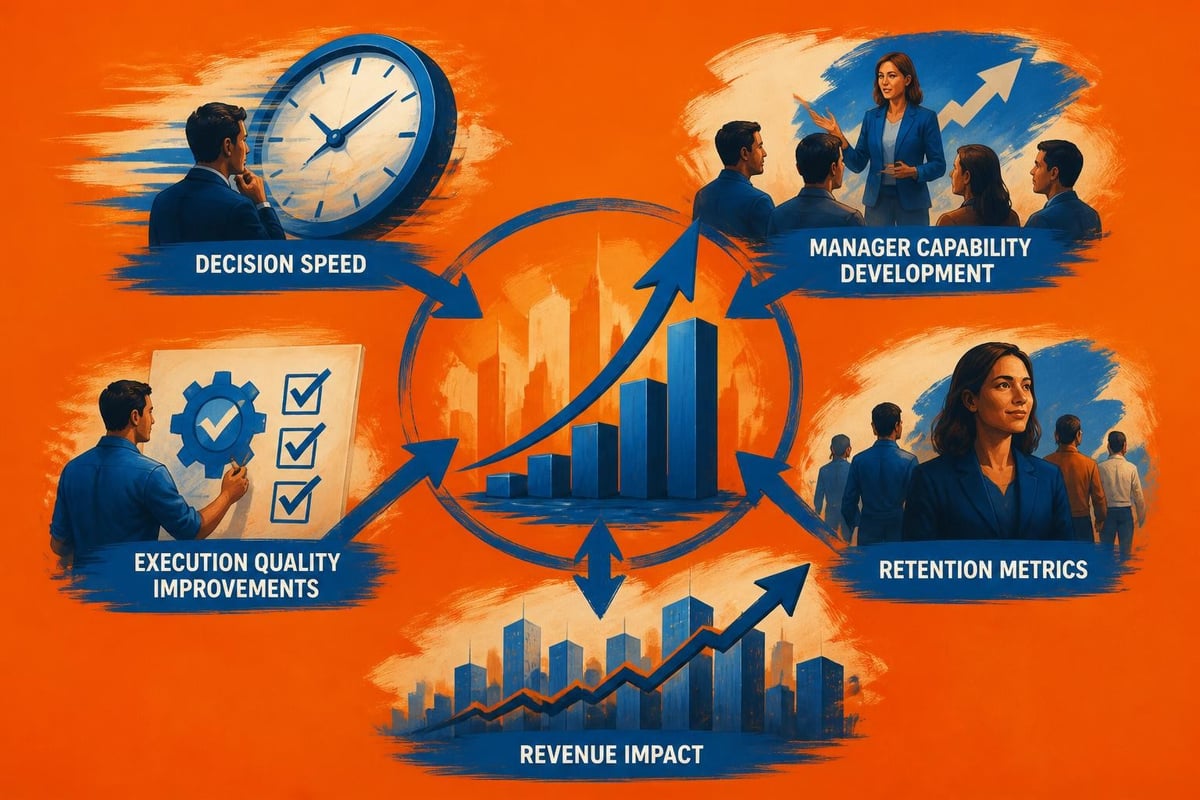
The ROI Framework for Corporate Coaching
| Metric Category | What to Measure | Why It Matters |
|---|---|---|
| Decision Speed | Days from identification to action | Faster decisions compound over time |
| Manager Capability | Direct reports' engagement scores | Managers who coach multiply impact |
| Execution Quality | Projects delivered on time/budget | Clean execution separates teams |
| Retention | Turnover in coached versus uncoached groups | Retention saves massive replacement costs |
| Revenue Impact | Pipeline or sales lift attributable to coaching | Ties investment directly to growth |
Unlike therapy, which appropriately focuses on individual well-being and clinical improvement, business coaching must deliver measurable organizational value.
The Hybrid Challenge: When Both Apply
Some situations require both therapy and coaching, either sequentially or simultaneously. A leader dealing with past trauma affecting current performance might need therapy to process wounds while coaching addresses skill gaps.
Sequential approach: Therapy first to stabilize mental health, then coaching to build capabilities.
Parallel approach: Therapy for clinical issues while coaching addresses discrete performance challenges unrelated to the clinical work.
The key is clear boundaries. Effective coaching and therapy recognize their lanes and refer appropriately when crossing into the other domain.
The Business Case for Clarity
Confusion about therapy versus coaching explained poorly costs companies money and delays results. When you send someone needing therapy to a coach, you waste coaching fees while the underlying clinical issue persists. When you send a high performer needing skill development to therapy, you medicalize a performance gap that coaching would address faster.
The clarity framework:
- Assess the actual need: clinical versus developmental
- Match the intervention: therapy for mental health, coaching for performance
- Verify the provider's expertise: experience and outcomes over credentials
- Measure the right metrics: clinical improvement for therapy, business results for coaching
- Adjust based on evidence: what's working and what's not
Mid-market companies with 25 to 500 employees benefit most from this clarity because every investment must produce visible returns. Understanding business coaching costs helps leaders allocate resources to the right intervention.
Frequently Asked Questions
What is the main difference between therapy and coaching?
Therapy treats mental health conditions and processes emotional wounds with licensed clinicians. Coaching builds skills and accelerates performance in functional individuals through forward-focused development work.
Can a coach help with anxiety or depression?
No. Coaches cannot and should not treat clinical anxiety or depression. These conditions require licensed therapy or psychiatric care. Coaches work with functional individuals on performance improvement, not clinical treatment.
Do I need a certified coach or can I hire based on experience?
Certifications don't predict outcomes. Hire based on relevant experience, proven results with similar challenges, clear methodology, and measurable track record. Many excellent coaches have no certifications. Some certified coaches deliver poor results.
When should a manager see a therapist versus a coach?
Send managers to therapy for diagnosable mental health conditions, unresolved trauma, or emotional distress affecting functioning. Choose coaching for skill gaps, performance plateaus, leadership development, or specific capability building in functional managers.
How do I measure ROI from business coaching?
Track decision speed, manager capability improvements, execution quality, retention rates, and revenue impact. Effective business coaching ties to clear KPIs and shows measurable organizational value, not just individual satisfaction.
Can therapy and coaching happen at the same time?
Yes, when clear boundaries exist. Therapy addresses clinical issues while coaching handles discrete performance challenges. The therapist and coach should know about each other and maintain separate focus areas.
What credentials should I look for in a therapist?
Look for state licensure appropriate to their discipline (LCSW, LMFT, PsyD, PhD, etc.) plus specialized experience with your specific challenge. Credentials ensure regulatory compliance. Experience and expertise predict outcomes.
How long does business coaching typically take to show results?
With clear KPIs and active implementation, initial results should appear within 30 to 60 days. Sustained improvement develops over 3 to 6 months. If you see no measurable change by 90 days, reassess the engagement.
Is online coaching as effective as in-person?
For business coaching focused on skills, strategy, and performance, online delivery works well when the coach provides live feedback in actual work contexts. Clinical therapy research shows mixed results for online versus in-person depending on the condition and client preferences.
Understanding the difference between therapy and coaching helps leaders match the right intervention to the actual need, saving time and resources while accelerating results. Whether your team needs clinical support or performance development, clarity on these distinctions drives better decisions. If you're looking for practical business coaching that delivers measurable results through executive coaching, leadership development, and team performance improvements, Noomii connects you with experienced coaches who focus on outcomes, not credentials, with month-to-month terms and clear ROI tracking.



Leave a Reply
Want to join the discussion?Feel free to contribute!