

Why People Return to Human Coaches in 2026
The coaching industry faces a curious paradox in 2026. Despite proliferating AI coaching tools, chatbots offering instant advice, and platforms promising automated accountability, mid-market companies consistently return to human coaches for their leadership development. The retention pattern reveals something the certification mills and technology vendors miss: coaching results depend less on credentials or algorithms than on how coaches diagnose real problems, adapt to shifting contexts, and tie progress to business outcomes.
The Diagnosis Gap AI Cannot Bridge
Why people return to human coaches starts with problem identification. Most leadership challenges arrive disguised as surface symptoms. A VP complains about team alignment when the actual issue involves unclear decision rights. A director requests communication training when the root cause stems from broken operating rhythms and absent KPIs.
Human coaches recognize these patterns through experience. They probe beneath initial requests, test hypotheses in live meetings, and adjust their diagnosis as new evidence emerges. AI coaching tools lack this diagnostic flexibility, relying instead on stated problems rather than discovered ones.

Real Problems Demand Context Shifting
Consider a 150-employee SaaS company where three department heads operate in silos. An AI tool might recommend collaboration workshops or personality assessments. A human coach sits in their leadership meetings, observes how decisions actually get made, identifies the missing operating cadence, and implements a weekly KPI scorecard that forces cross-functional visibility.
The difference shows up in retention rates. Companies return to coaches who solve actual problems, not those who deliver generic frameworks regardless of context. Leadership coaching that changes behavior requires reading the room, adjusting mid-session, and sometimes scrapping the planned agenda entirely.
The Accountability Architecture Humans Build
Accountability separates coaching theater from coaching results. Why people return to human coaches often traces to this single factor: someone who holds leaders to commitments when it gets uncomfortable.
AI tools can send reminders and track completion metrics. They cannot detect when a leader's commitment lacks genuine conviction. They miss the body language that signals avoidance. They fail to challenge leaders who game their own metrics or who confuse activity with progress.
| What AI Tracks | What Humans Notice |
|---|---|
| Task completion percentage | Quality of completed work |
| Meeting attendance | Engagement during meetings |
| Response time to prompts | Depth of reflection in responses |
| Self-reported progress | Evidence of behavioral change |
| Goal achievement claims | Business results tied to goals |
Human coaches build accountability through relationship tension. They earn the right to challenge by delivering results first, then use that credibility to push leaders beyond comfortable commitments. This dynamic explains why AI coaching cannot replace genuine coaching relationships.
The Retention Mechanism Nobody Discusses
Month-to-month coaching arrangements create natural retention tests. Leaders vote with renewal decisions based on whether coaching produces visible business impact. This simple mechanism filters out credential-heavy coaches who deliver impressive bios but minimal results.
The coaches who earn renewals share common patterns:
- They tie every coaching conversation to specific KPIs
- They coach live in leadership meetings, not just in private sessions
- They identify which behaviors to stop, not just new skills to add
- They link leadership development directly to team engagement and retention metrics
- They share risk through aligned incentive structures when possible
These retention drivers have nothing to do with certification hours or training pedigrees. They reflect what actually drives coaching effectiveness in corporate environments.
The Trust Equation Credentials Cannot Solve
The coaching industry's obsession with certifications assumes trust follows credentials. Real retention data suggests otherwise. Why people return to human coaches depends more on demonstrated competence than certificated competence.
Leaders trust coaches who have solved similar problems before. A coach who has built operating cadences across twenty mid-market companies brings pattern recognition that no certification program teaches. They spot the early warning signs when a leadership team's commitments will collapse. They know which frameworks work in 100-person companies versus 400-person divisions.
This expertise comes from repetition and failure, not coursework. The certification dependency myth persists because training programs need revenue, not because clients prioritize credentials over results.
Experience Signals Buyers Actually Use
When mid-market companies evaluate coaches in 2026, they ask different questions than certification bodies emphasize:
- How many companies of our size have you coached?
- What business results can you tie directly to your coaching?
- Can you coach our leaders in their actual work context, not just office conversations?
- How quickly will we see behavioral changes and business impact?
- What happens if we don't see results in the first 60 days?
These questions reveal what drives retention. Companies return to coaches who deliver measurable outcomes, adapt to their specific context, and share accountability for results. The credential question rarely surfaces except when HR departments need to check compliance boxes.
The Human Advantage in Disruption
Leadership challenges in 2026 arrive faster and more unpredictably than any AI model can anticipate. Market shifts, team conflicts, sudden growth constraints, and unexpected competitive threats demand real-time adaptation.
Human coaches pivot mid-engagement when circumstances change. They redesign interventions on the fly. They provide perspective during crisis moments that no algorithm anticipated. This flexibility explains why companies experiencing rapid change or uncertainty consistently choose human coaches over automated alternatives.
Why people return to human coaches ultimately reflects the nature of leadership development itself. Behavior change happens through relationship, challenge, and accountability that adapts to context. The coaches who earn renewals focus less on their training pedigrees and more on tying their work to clear business outcomes within tight timeframes.
The Results That Matter
Companies return to coaches who deliver:
- Faster decision velocity across leadership teams
- Managers who coach their direct reports effectively
- Stronger communication that reduces costly misalignment
- Higher engagement scores and reduced regrettable turnover
- Cleaner execution on strategic priorities with measurable progress
These outcomes require coaches who work inside the business, not on the sidelines. They demand practitioners who have built what their clients are trying to build. And they reflect why AI tools remain supplementary rather than primary in high-stakes leadership development.
Frequently Asked Questions
How long does it take to see results from human coaching?
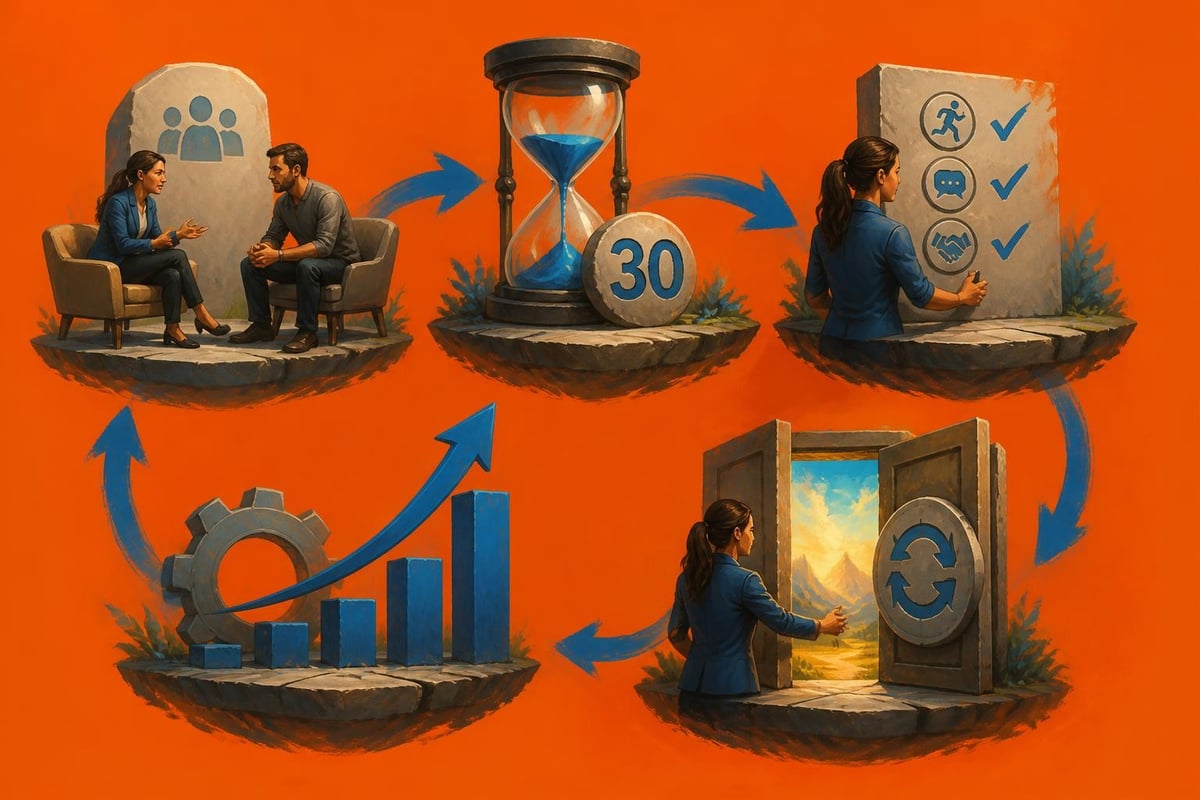
Effective coaching produces visible behavioral changes within 30 days and measurable business impact within 60 days. If you don't see progress that quickly, either the diagnosis is wrong or the coaching approach needs adjustment.
What makes human coaching more effective than AI tools?
Human coaches diagnose root problems versus surface symptoms, adapt interventions to changing contexts, build accountability through relationship tension, and tie coaching directly to business KPIs rather than generic development goals.
Why do companies choose month-to-month coaching over long contracts?
Month-to-month arrangements align incentives. Coaches earn renewals by delivering results, not by locking clients into commitments. This structure protects buyers and motivates coaches to focus on measurable outcomes.
How do you measure coaching ROI?
Tie coaching to specific business metrics: decision velocity, engagement scores, retention rates, revenue per employee, or priority completion rates. Effective coaches establish baseline measurements and track improvement against clear KPIs.
Can AI coaching replace human coaches for leadership development?
AI tools work well for knowledge transfer and reminder systems but fail at diagnosis, contextual adaptation, genuine accountability, and real-time crisis support. Leadership development requires all four capabilities.
What credentials should I look for in a business coach?
Prioritize demonstrated results over certifications. Ask about companies coached, specific outcomes delivered, industry experience, and willingness to tie compensation to measurable results. Credentials matter less than proven competence.
How often should coaching sessions happen?
Frequency depends on intensity needed. High-stakes leadership transitions might require weekly coaching plus live meeting facilitation. Stable development work might use biweekly sessions. Less than biweekly rarely produces sufficient momentum.
What's the difference between coaching and consulting?
Coaches build capability in your leaders to solve problems themselves. Consultants solve problems for you. The best coaching includes some consulting (showing how, not just asking questions) while maintaining focus on capability building.
Why do leaders stop working with coaches?
Leaders end coaching when they see no business impact, when coaches avoid difficult accountability conversations, when development stays theoretical rather than practical, or when coaches prioritize their methodologies over client results.
Human coaches retain clients by solving real business problems, not by showcasing credentials or delivering generic frameworks. The companies that see measurable results from coaching share a common pattern: they work with practitioners who coach live in their context, tie progress to clear KPIs, and share accountability for outcomes. Noomii helps mid-market companies find coaches who deliver this approach through month-to-month engagements focused on faster decisions, stronger leadership capability, and cleaner execution across priorities. If you want coaching that produces visible business results rather than development theater, start with coaches who share the risk and tie their work to your success metrics.



Leave a Reply
Want to join the discussion?Feel free to contribute!