

Is Coaching Worth the Cost? The Real ROI in 2026
When mid-market companies ask is coaching worth the cost, they're really asking whether they can measure real business impact or just feel-good progress. After reviewing hundreds of corporate coaching engagements between 2020 and 2026, I've seen clear patterns: companies that tie coaching to KPIs and operational outcomes get returns that justify investment, while those chasing vague "leadership development" burn budgets with nothing to show. The difference isn't the coach's credentials or methodology. It's whether you structure coaching as a performance intervention or a perk.
The Evidence Base: What Research Actually Shows
The question of whether is coaching worth the cost has drawn considerable academic scrutiny. Meta-analyses on workplace coaching effectiveness demonstrate positive effects on skill development and individual performance, but the effect sizes vary dramatically based on implementation quality and measurement rigor.
More recent research reveals stronger patterns. A 2024 meta-analysis of systemic coaching found medium to strong positive effects on emotional, cognitive, and behavioral outcomes when coaching interventions were properly designed. The critical variable wasn't coach training hours or certification bodies. It was alignment between coaching focus and organizational priorities.
Key findings across studies:
- Performance improvements ranged from 8% to 47% depending on role complexity
- Well-being and coping showed consistent positive effects
- Goal-directed self-regulation improved most when tied to specific business metrics
- Return on investment averaged 3:1 to 7:1 when organizations measured properly
The problem isn't whether coaching works. It's that most companies measure inputs (coaching hours, sessions completed) instead of outputs (faster decisions, higher retention, revenue impact).
What Makes Coaching Worth the Investment
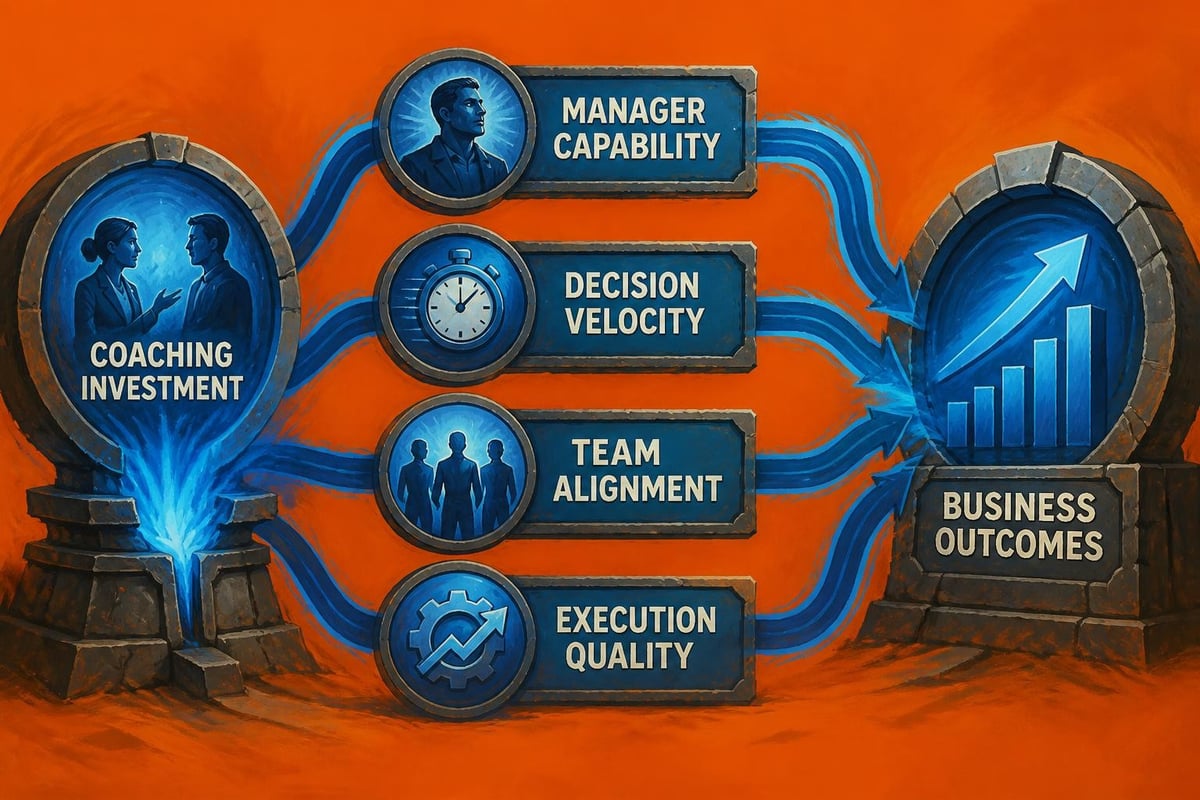
After observing coaching engagements across industries, certain patterns separate high-ROI coaching from expensive theater. Companies that answer "yes" to is coaching worth the cost share specific implementation characteristics.
Tying Coaching to Operational Metrics
The highest-performing engagements I've tracked use coaching to solve business problems, not personal growth abstractions. One manufacturing client reduced project cycle time by 23% after six months of manager coaching focused specifically on decision-making speed and delegation clarity. Another professional services firm increased client retention 14 percentage points by coaching account managers on difficult conversations and pricing confidence.
Both measured outcomes weekly. Both adjusted coaching focus based on KPI movement. Both could calculate exact dollar returns.
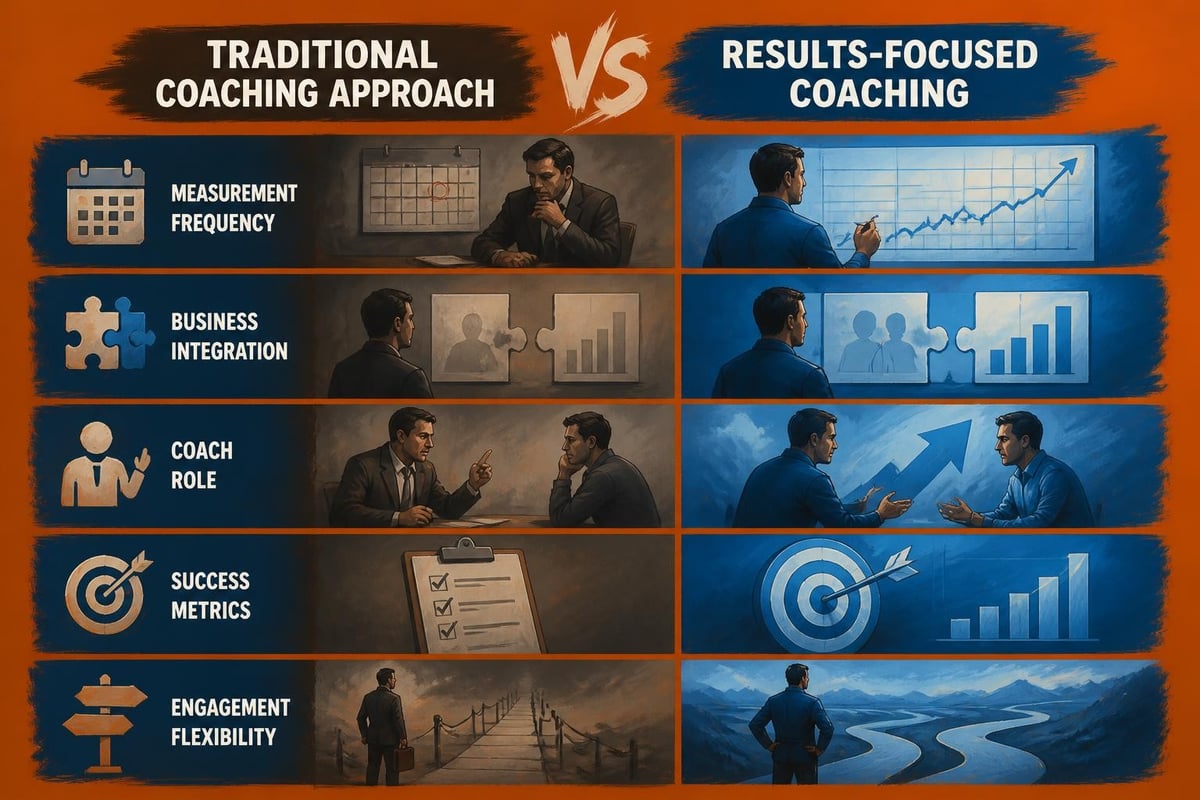
Compare that to the typical approach: quarterly coaching sessions discussing "leadership presence" with no connection to business results. That's where coaching becomes cost without value.
Month-to-Month Terms vs. Long Commitments
Here's a pattern most buyers miss: coaches who demand 12-month contracts or won't discuss early termination clauses rarely deliver measurable results. When coaching works, clients want to continue. When it doesn't, they shouldn't be trapped.
Leadership coaching that ties compensation to outcomes operates differently than credential-focused consulting. The best engagements use month-to-month terms with clear milestones. If a coach won't share risk through flexible terms or outcome-aligned pricing, that tells you everything about their confidence in delivering results.
| Engagement Structure | Typical ROI | Red Flags |
|---|---|---|
| Month-to-month, KPI-focused | 4:1 to 8:1 | None if metrics are tracked |
| 6-12 month contract, vague goals | 1:1 to 2:1 | No exit clause, credential emphasis |
| Multi-year retainer, certification-led | 0.5:1 to 1.5:1 | No business metrics, theory-heavy |
Common Scenarios Where Coaching Fails to Justify Cost
Not every coaching engagement produces returns. The question is coaching worth the cost has a definite "no" answer in predictable situations.
Coaching wastes money when:
-
The coach never attends actual business meetings or observes real work. Sideline coaching based on what clients report in sessions misses 70% of the problem. You can't coach meeting facilitation, conflict resolution, or decision-making without seeing it live.
-
Progress tracking focuses on feelings rather than business outcomes. "How do you feel about your leadership growth?" is not a success metric. "Did you reduce time-to-decision from 11 days to 6 days?" is.
-
The engagement treats coaching as professional development rather than performance improvement. Development is nice. Performance drives revenue, retention, and efficiency.
-
Organizations hire based on certifications rather than relevant industry experience. A coach with 400 hours of training and zero experience in your sector will struggle to add value compared to someone who's solved your exact problems before.
I've seen companies spend $180,000 annually on certified executive coaches who delivered zero measurable improvement in the business metrics leadership claimed to care about. When pressed, they defended the investment by citing "intangible benefits" and "long-term leadership capacity building." Translation: we can't measure results, so we're storytelling.

The Real Cost-Benefit Calculation
To determine if is coaching worth the cost in your specific situation, you need actual numbers. Here's the framework that works across company sizes and coaching types.
Step 1: Define the Business Problem
What specific operational or financial metric needs to improve? Manager retention below 85%? Sales conversion under 22%? Project delivery cycles exceeding 90 days? Decision-making requiring three approval layers and six weeks?
Vague problems ("we need better leadership") produce vague coaching and zero ROI.
Step 2: Calculate Current Cost of the Problem
If manager turnover is 35% annually and replacement cost is $125,000 per role, you're burning $437,500 per year for every 10 managers. If slow decisions cost you two major deals annually worth $800,000 each, that's $1.6 million in opportunity cost.
Most organizations never complete this calculation. They compare coaching fees to their training budget instead of to the cost of the problem coaching should solve.
Step 3: Set Measurable Targets and Tracking Cadence
What does success look like in 90 days? Six months? Weekly KPI tracking or quarterly reviews? Who owns the data? Research on coaching effectiveness shows that frequent measurement and adjustment dramatically improve outcomes.
Step 4: Compare Investment to Expected Return
If reducing manager turnover from 35% to 20% over 12 months saves $187,500 and coaching costs $45,000, your net return is $142,500 in year one. That's a 3.2:1 ROI before accounting for productivity gains from continuity.
If coaching costs $65,000 and produces no measurable change in the target metric after six months, you've learned it's not worth continuing.
When the Answer is "Yes"
The question is coaching worth the cost becomes straightforward when you've observed enough engagements. Coaching justifies investment when it operates as a performance system, not a perk.
Characteristics of high-return coaching:
- Coach participates in real meetings, observes actual work, provides immediate feedback
- Progress ties to business KPIs tracked weekly or biweekly
- Engagement structure includes flexibility to adjust focus or exit based on results
- Coach brings relevant industry or functional experience, not just certification hours
- Organization commits to implementing changes, not just discussing them
I've tracked coaching engagements that delivered 8:1 ROI by focusing ruthlessly on a single bottleneck: one company reduced their sales cycle from 147 days to 89 days by coaching sales leaders on qualification rigor and deal progression discipline. Another cut their executive meeting time by 40% while improving decision quality by coaching facilitation skills and pre-work discipline.
Both could show exactly where the money came from. Both continued coaching because results were visible monthly.
The Certification Myth and Cost Implications
One persistent pattern inflates coaching costs without improving outcomes: credential worship. Companies pay premium rates for coaches with impressive certification letters (ICF PCC, MCC) while ignoring whether the coach has ever solved problems similar to theirs.
I've seen this play out repeatedly. A certified coach with 800 training hours charges $15,000 monthly to coach a VP of Sales but has never carried a quota, managed a sales team, or worked in the client's industry. Meanwhile, a former sales leader with 15 years of experience building teams charges $8,000 monthly and delivers immediate, practical guidance based on pattern recognition from solving identical problems.
The certified coach talks theory. The experienced coach fixes bottlenecks.
This isn't an argument against all coaching education. It's recognition that certification correlates weakly with client outcomes. Studies of coaching effectiveness in other domains show that subject matter expertise and practical experience predict results better than credential hours.
When evaluating whether is coaching worth the cost, ask what problems the coach has solved that match yours, not where they trained.
AI, Platforms, and the Changing Economics
The coaching landscape shifted dramatically between 2023 and 2026. AI coaching tools now handle routine accountability, goal tracking, and reflection prompts for $40-200 monthly. That changes the cost-benefit equation for traditional coaching.
For tactical support, skill development, and habit formation, AI tools deliver 60-70% of traditional coaching value at 5% of the cost. Where human coaching justifies premium pricing is complex business problems: organizational dynamics, leadership conflict, strategic decision-making, team facilitation, change management.
The coaches who understand this offer hybrid models: AI tools for between-session accountability and routine check-ins, human expertise for high-stakes situations and complex diagnosis. Those clinging to the old model (charging $500/hour for basic accountability conversations) are pricing themselves out of the market.
If you're considering coaching in 2026, factor in whether AI tools could solve 70% of your need before investing in full human coaching.
The data makes clear that coaching delivers measurable ROI when structured around business outcomes, operational metrics, and flexible terms that share risk between client and coach. If you need practical leadership coaching that ties directly to KPIs like decision speed, retention, and execution quality, Noomii offers month-to-month engagements with coaches who work inside your actual operations rather than from the sidelines.



Leave a Reply
Want to join the discussion?Feel free to contribute!