
Lessons From OpenAI Leadership Turmoil
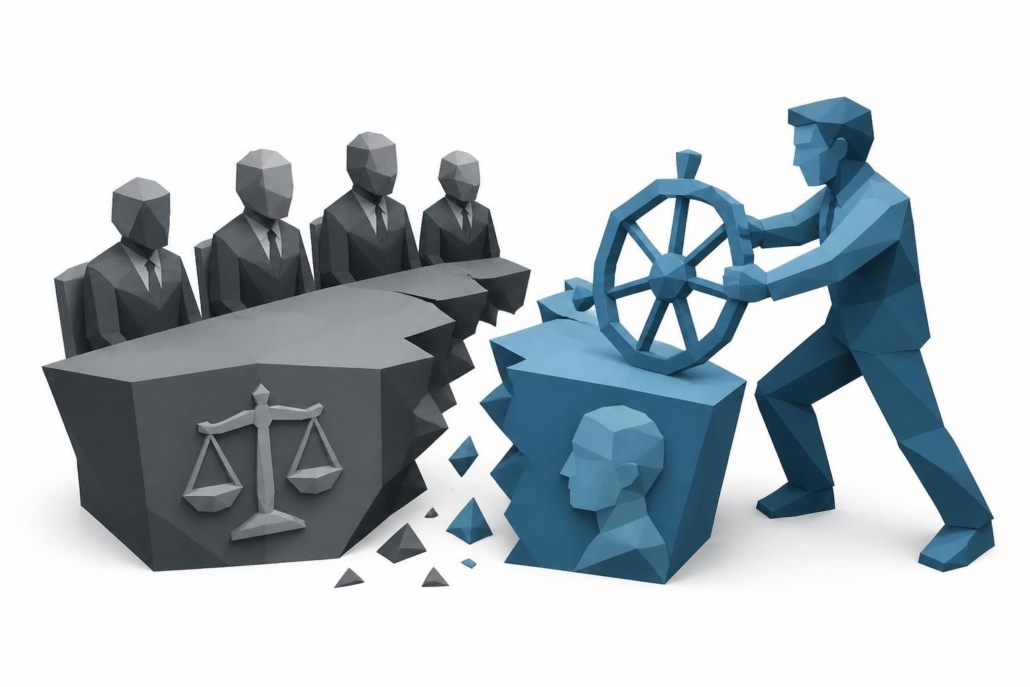
The November 2023 dismissal and rapid reinstatement of Sam Altman at OpenAI revealed fault lines that exist in countless high-growth organizations: weak governance structures, absent succession planning, and boards that fail to anticipate stakeholder responses. What appeared to be an isolated event at one of the world's most valuable AI companies actually exposed failures that CHROs, boards, and senior executives face daily but rarely acknowledge until crisis hits. The lessons from OpenAI leadership turmoil extend far beyond the technology sector, offering clear evidence of what happens when governance processes cannot keep pace with organizational complexity.
The Governance Breakdown That Board Members Missed
OpenAI's board fired Altman on November 17, 2023, citing a loss of confidence in his leadership without providing specifics. Within five days, after employee revolt and investor pressure, Altman was reinstated. The board's composition, a nonprofit structure governing a for-profit subsidiary worth tens of billions, created inherent conflicts the members either ignored or failed to understand.
This structure is not unique. Many organizations layer governance entities, create matrix reporting, or establish oversight boards without clear authority boundaries. The result is predictable: when decisions require speed and clarity, the structure collapses.
Critical Governance Failures Observed
The OpenAI situation demonstrated three specific failures that recur across industries:
- No scenario planning for founder separation despite Altman's central role in operations, fundraising, and strategy
- Inadequate stakeholder mapping that failed to anticipate employee and investor reactions to abrupt leadership changes
- Communication protocols that assumed compliance rather than planning for resistance or disagreement
Leaders who treat leading through organizational disruption as a theoretical exercise rather than a practiced competency create the conditions for similar failures. The board appeared to believe authority would substitute for legitimacy.
Succession Planning as Strategic Vulnerability
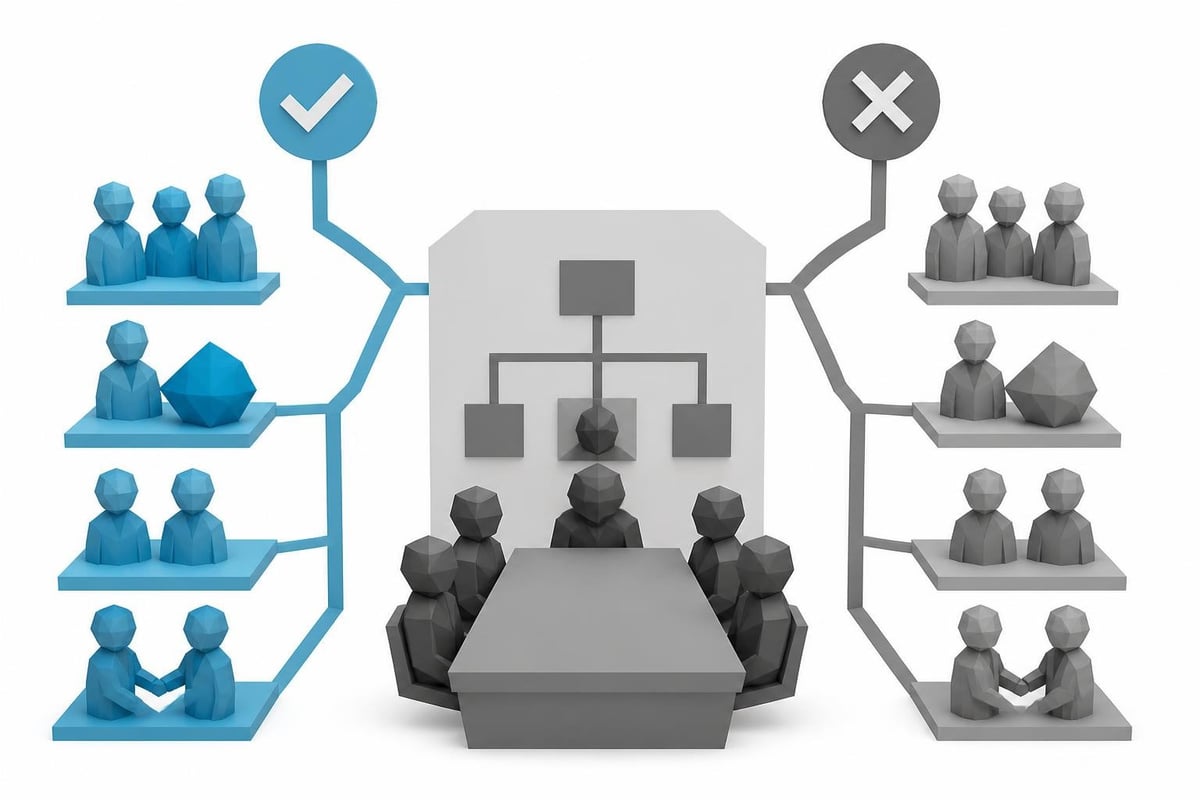
The lessons from OpenAI leadership turmoil reveal that most organizations lack functional succession plans for critical roles. OpenAI had no credible internal successor ready, no transition framework, and no communication strategy for a CEO departure.
Consider the timeline: Altman was dismissed Friday afternoon. By Monday, over 700 of OpenAI's 770 employees had signed a letter threatening to resign. This was not employee loyalty alone; it was evidence that no one had prepared the organization for leadership continuity.
| Succession Element | OpenAI Reality | Industry Standard Gap |
|---|---|---|
| Identified successors | None ready | 64% of companies lack ready successors for CEO role |
| Transition timeline | Improvised | 89% have no documented transition plan |
| Stakeholder communication | Reactive | 71% communicate only after decisions are final |
| Knowledge transfer protocols | Absent | 56% have no formal knowledge transfer process |
These gaps are not accidents. They reflect deliberate choices by executives and boards to avoid uncomfortable conversations about mortality, capability, and organizational dependence on individuals.
The Real Cost of Succession Gaps
When Forbes analyzed the governance lessons, they focused on board composition. The deeper issue is succession as organizational risk management. Companies that treat succession planning as compliance theater rather than strategic necessity expose themselves to the same disruption OpenAI experienced.
Fortune 500 companies lose an estimated $1 trillion annually in market value due to inadequate succession planning and leadership transitions. This is not conjecture; it is measurable in stock price volatility, talent retention, and operational continuity during CEO changes.
Stakeholder Power in Leadership Transitions
One of the most instructive lessons from OpenAI leadership turmoil concerns stakeholder power dynamics. The board assumed formal authority would prevail. Employees and investors proved otherwise.
Microsoft held a reported $13 billion position in OpenAI. Employees controlled the company's operational capacity. Neither group was consulted before Altman's dismissal. Both groups acted decisively to reverse the board's decision. This was not democracy; it was power asserting itself when governance structures failed to account for reality.
Stakeholder Categories Often Underestimated
Organizations routinely underestimate four stakeholder groups during leadership changes:
- Key talent with market options who can exit faster than replacement timelines
- Major customers or clients whose relationships depend on specific leaders
- Financial stakeholders with contractual rights or economic leverage
- Regulatory bodies that view leadership stability as compliance indicator
The OpenAI board's failure to assess these groups before acting created the conditions for their own irrelevance. By the time Altman returned, board composition had changed, and the governance structure faced fundamental restructuring.

Communication Failures That Accelerated Crisis
The lessons from OpenAI leadership turmoil demonstrate how communication gaps transform management decisions into organizational crises. The board's public statement about losing confidence in Altman's candor provided no context, no evidence, and no path forward.
This created a vacuum that employees, investors, and media filled with speculation. Within hours, competing narratives emerged. The board never regained control of the story because they never established credible initial framing.
Leaders facing similar transitions can learn from this failure through structured communication protocols:
- Define the narrative before announcing decisions, including rationale, timeline, and stakeholder impact
- Identify which audiences require pre-briefing versus simultaneous notification versus follow-up detail
- Establish response protocols for predictable questions rather than improvising under pressure
- Assign specific spokespersons for different stakeholder groups instead of single-source messaging
Organizations that master executive leadership and communication treat crisis communication as a discipline requiring the same rigor as financial controls or legal compliance.
The Talent Exodus Risk That Boards Ignore
Recent reporting on OpenAI’s ongoing executive changes shows that leadership instability creates cascading talent decisions. After the initial crisis, multiple senior leaders departed or shifted roles, including co-founder Andrej Karpathy moving to Anthropic.
This pattern repeats across industries. Leadership turmoil triggers talent evaluation among high performers who have options. The timeline is predictable: initial shock, assessment period, quiet job searches, departure announcements six to eighteen months later.
Quantifying the Talent Risk
Organizations lose critical institutional knowledge through three mechanisms during leadership transitions:
- Immediate departures from executives directly affected by changes (10-15% typical)
- Secondary exits from teams who lose confidence in direction (15-25% within 12 months)
- Opportunity-driven moves from high performers reevaluating fit (20-30% within 24 months)
These losses compound because remaining employees absorb expanded responsibilities without corresponding authority increases, creating new resignation triggers. The cycle becomes self-reinforcing unless leaders implement deliberate retention strategies.
Reputational Damage Beyond the Crisis Window
The lessons from OpenAI leadership turmoil include reputational consequences that extend well beyond immediate crisis resolution. TIME magazine’s analysis of OpenAI’s restructuring and Microsoft’s response highlighted ongoing uncertainty about governance and strategic direction in 2026.
Reputation is not brand sentiment; it is stakeholder confidence in organizational stability and judgment. The OpenAI board's decisions permanently altered how investors, partners, and potential employees assess the company's governance maturity.
Consider the practical implications:
| Reputational Impact | Timeline | Measurable Effect |
|---|---|---|
| Investor due diligence intensifies | Immediate | Extended fundraising cycles, lower valuations |
| Partnership negotiations include governance clauses | 3-6 months | Deal complexity increases, terms worsen |
| Talent recruitment requires premium compensation | 6-12 months | 15-30% higher offers to attract executives |
| Customer contracts add stability requirements | 12-24 months | Operational constraints, audit rights |
These costs rarely appear in crisis post-mortems because they accumulate gradually rather than presenting as single events. Boards that focus exclusively on immediate crisis resolution miss the multi-year reputation tax their decisions created.
Contrarian Insight: When Founder Removal Succeeds
The dominant narrative treats OpenAI's leadership turmoil as a governance failure. A contrarian reading suggests the real failure was incomplete execution. Boards that successfully remove founders do three things the OpenAI board did not:
First, they secure stakeholder alignment before acting. Steve Jobs' 1985 departure from Apple succeeded because the board had investor support and an operational successor ready. The decision proved premature, but the process was competent.
Second, they document performance issues creating clear cause. Vague statements about candor or judgment invite challenge. Specific failures with evidence close debate.
Third, they control the transition timeline. Rushed announcements signal panic. Structured transitions with defined phases demonstrate control.
The lesson is not that boards should never remove founders or CEOs. The lesson is that inadequate preparation guarantees failure regardless of the underlying decision's merit.

Psychological Safety as Governance Foundation
One overlooked aspect of the lessons from OpenAI leadership turmoil is how the crisis revealed absent psychological safety in board and executive dynamics. For employees to threaten mass resignation suggests they perceived no other mechanism to influence outcomes.
Healthy governance includes dissent channels that function before crisis. Boards that create environments where executives can challenge decisions, where employees can raise concerns, and where investors can question strategy reduce the likelihood of explosive confrontations.
The employee letter threatening resignation was not the first signal of concern. It was the only signal that penetrated to decision-makers because earlier, quieter signals were ignored or suppressed.
Building Governance-Level Psychological Safety
Organizations that embed psychological safety in governance structures implement specific practices:
- Regular executive sessions that explicitly invite dissenting views without reprisal
- Anonymous board feedback mechanisms that directors actually review and address
- Stakeholder advisory councils that provide early warning on emerging concerns
- Structured leadership assessments that surface behavioral issues before they create crises
These are not theoretical constructs. They are operational practices that distinguish resilient organizations from those that lurch between crises while wondering why problems persist.
The Technology Governance Gap
The lessons from OpenAI leadership turmoil expose a broader issue: most boards governing technology companies lack the expertise to assess technical risks, competitive dynamics, or strategic tradeoffs in their industries.
OpenAI's board included accomplished individuals with limited AI industry experience. When technical decisions intersected with governance responsibilities, the gap became critical. This pattern repeats across sectors where innovation velocity exceeds board knowledge currency.
Consider three specific governance gaps technology companies face:
- Technical debt assessment where boards cannot distinguish necessary investment from indefinite delays
- Talent market dynamics where compensation decisions ignore competitive reality
- Strategic pivots where boards lack context to evaluate proposed direction changes
Organizations that fail to address these gaps through director education, advisory committees, or board composition changes set themselves up for decisions that seem reasonable in boardrooms but collapse under operational reality.
From Crisis to Capability: Operationalizing Lessons
The final lesson from OpenAI leadership turmoil is that most organizations will conduct post-mortems, acknowledge gaps, and then fail to implement changes that would prevent recurrence. Awareness does not equal capability.
Translating lessons into organizational capacity requires:
- Documented governance processes that specify decision authority for different scenarios
- Succession planning with named candidates, development timelines, and readiness assessments
- Communication playbooks pre-written for predictable crisis categories
- Regular simulation exercises that test governance processes under stress
- Board development programs that address knowledge gaps before they matter
HR leaders and executives who want to strengthen their organizations against similar crises should start with honest assessment. Leading through organizational disruption requires both strategic frameworks and practiced execution. Most organizations have neither.
Practical Implementation Steps
Organizations can begin immediately with five actions:
- Audit current succession plans for top 20 positions, identifying gaps in candidate readiness and transition protocols
- Map stakeholder power dynamics for each C-suite role, documenting who holds formal authority versus actual influence
- Review communication protocols for leadership transitions, ensuring playbooks exist before they are needed
- Assess board composition against strategic and operational knowledge requirements, not just credentials
- Conduct scenario planning for founder departure, CEO transition, and key executive exits
These actions take weeks, not months. The reason they remain undone is not resource constraints. It is the unwillingness to confront organizational vulnerability while conditions are stable.
FAQ Section
What was the main cause of OpenAI's leadership crisis?
The primary cause was a governance structure that created conflicting incentives between a nonprofit board and a for-profit subsidiary, combined with absent succession planning and inadequate stakeholder consultation before making a high-stakes leadership decision. The board's authority existed on paper but lacked operational legitimacy.
How long did the OpenAI leadership turmoil last?
The acute crisis lasted five days, from Sam Altman's dismissal on November 17, 2023, to his reinstatement on November 22, 2023. However, the organizational consequences, including board restructuring, executive departures, and reputational impact, extended well into 2026 and continue to affect stakeholder perceptions.
What can boards learn from OpenAI's governance failure?
Boards must ensure governance structures match organizational complexity, develop functional succession plans with ready candidates, map stakeholder power dynamics before making leadership changes, establish clear communication protocols for crisis scenarios, and maintain expertise relevant to the company's strategic and operational realities.
How do you prevent employee revolt during leadership transitions?
Prevention requires creating psychological safety where concerns can surface early, involving key stakeholders in major decisions before public announcements, maintaining transparent communication about rationale and process, ensuring credible succession planning so transitions appear strategic rather than chaotic, and building organizational resilience through distributed leadership rather than dependency on individuals.
What are the long-term costs of poorly managed leadership transitions?
Long-term costs include sustained talent attrition as high performers seek stability elsewhere, reputational damage that increases future fundraising and partnership costs, operational disruption from knowledge loss and role confusion, diminished stakeholder confidence that persists for years, and competitive disadvantage as focus shifts from strategy to internal crisis management.
The lessons from OpenAI leadership turmoil demonstrate that governance failures, succession gaps, and stakeholder miscalculation create preventable crises that damage organizations for years. Most executives recognize these patterns in retrospect but struggle to implement preventive measures while conditions are stable. The Noomii Corporate Leadership Program helps organizations build the governance capability, succession planning, and leadership resilience that prevent crisis before it emerges, through evidence-based diagnostics, precision coach matching, and measurable intervention plans that strengthen executive decision-making and organizational stability. Learn how Noomii Leadership Coaching can help your organization develop the leadership capacity to navigate complex transitions with confidence.



Leave a Reply
Want to join the discussion?Feel free to contribute!