

Culture Problems Start at the Top: Why CEOs Own Failure
When a workplace culture deteriorates to the point of litigation, mass exodus, or public scandal, boards and senior leaders often point to middle management, HR deficiencies, or "bad apples" in the ranks. This deflection misses the central truth: culture problems start at the top. The behaviors, priorities, and blind spots of executives create the conditions that either enable high performance or guarantee institutional failure. Over the past decade working with government agencies and Fortune 500 companies, I've observed that cultural dysfunction is never a ground-level phenomenon. It's an executive export.
The Mechanisms of Cultural Contagion
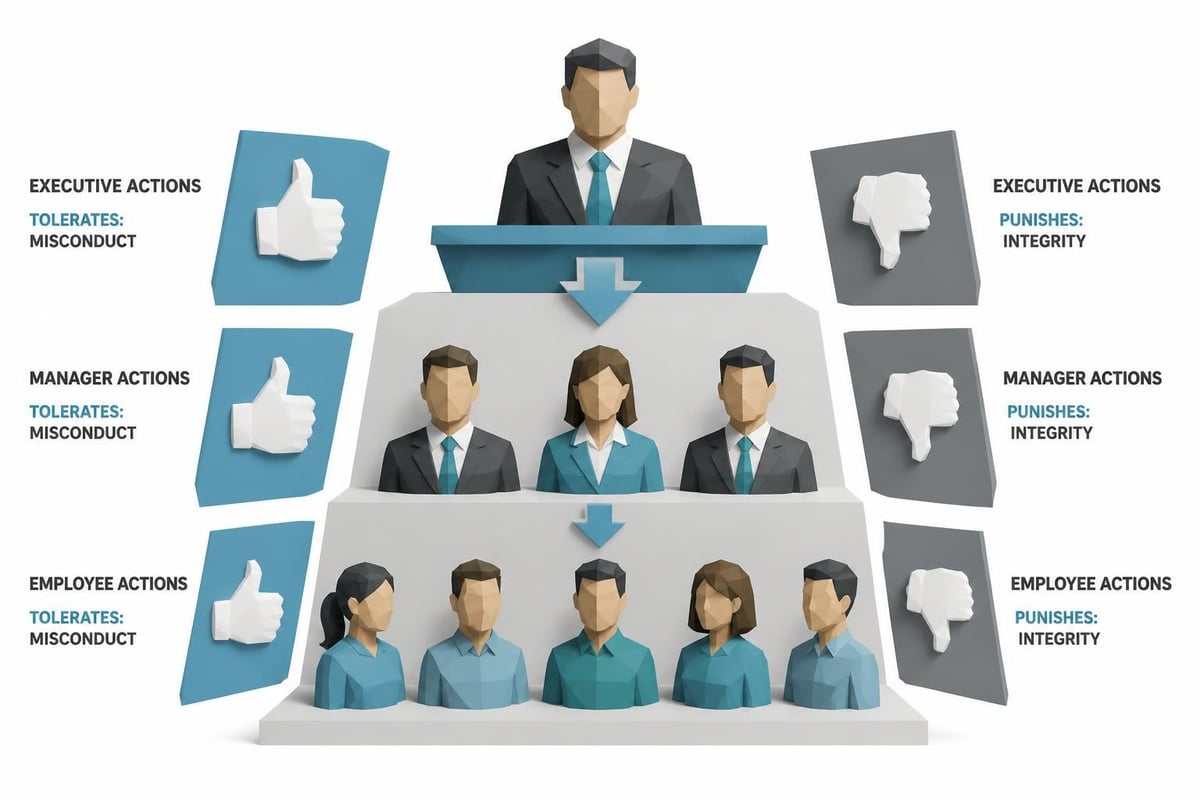
Leadership shapes organizational culture through three primary channels: what executives reward, what they tolerate, and what they ignore. Each mechanism operates continuously, whether leaders recognize it or not.
Reward Systems Reveal True Priorities
Compensation structures tell employees exactly what leadership values, regardless of stated values on website mission statements. When organizations claim to prioritize collaboration but exclusively reward individual contributors, they create internal competition that destroys team cohesion. When they espouse work-life balance but promote only those who answer emails at midnight, they signal that boundaries are career limiting.
I worked with a financial services firm in 2024 where the CEO publicly championed diversity initiatives while the executive compensation committee systematically awarded higher bonuses to leaders who maintained homogeneous teams. The message reached every level within two quarters: diversity was performance theater, not business strategy. Culture problems start at the top when reward systems contradict stated principles.
Research confirms this pattern. Leadership behaviors and communication directly impact the values and norms that employees observe and replicate throughout the organization.
Tolerance Defines Acceptable Behavior
What executives tolerate becomes the actual standard, not what policies prohibit. A vice president who consistently dismisses concerns about a high-performing but abusive director sends a clear message: results justify misconduct. An executive team that allows one member to interrupt colleagues, dismiss input, or take credit for others' work normalizes those behaviors across the organization.
In 2025, I observed a manufacturing company struggle with widespread bullying among supervisors. The root cause wasn't a supervision problem. The COO routinely berated direct reports in meetings, creating a template that cascaded through every management layer. Addressing toxic workplace behaviors requires addressing the source, not the symptoms.
| Leadership Behavior | Cultural Impact | Timeline |
|---|---|---|
| Tolerating misconduct from high performers | Signals results matter more than values | 3-6 months |
| Ignoring policy violations by executives | Establishes two-tier accountability system | 6-12 months |
| Rewarding those who mirror leadership flaws | Replicates dysfunction at every level | 12-24 months |
Strategic Silence Creates Cultural Voids
What leaders refuse to discuss becomes undiscussable throughout the organization. When executives avoid conversations about performance gaps, strategic misalignment, or ethical concerns, they train employees to do the same. This silence compounds over time, creating organizations where critical issues remain unaddressed until they reach crisis stage.
A healthcare organization I worked with in 2023 had executives who systematically avoided discussing physician retention problems despite losing 40% of their staff in 18 months. Department heads learned not to raise the issue. Managers stopped tracking it. By the time the board demanded answers, the organization had no diagnostic capability because leadership had signaled the topic was off limits. The connection between how leadership influences organizational culture and operational outcomes is direct and measurable.
The Diagnostic Framework Leadership Lacks
Most executives cannot accurately describe their organization's culture because they confuse aspiration with reality. They reference values statements, survey results, or anecdotal observations rather than systematic behavioral evidence. This diagnostic gap prevents effective intervention.
Three-Layer Cultural Assessment
Effective cultural diagnosis requires examining stated values, revealed priorities, and lived experience separately.
- Stated values: What leadership claims to prioritize in communications, policies, and strategic documents
- Revealed priorities: What behaviors actually get rewarded, promoted, or protected in practice
- Lived experience: What employees experience daily in meetings, decisions, and interpersonal dynamics
The gaps between these layers indicate where culture problems start at the top. When stated values and revealed priorities diverge significantly, employees experience cognitive dissonance that erodes trust and engagement. When lived experience contradicts both stated values and revealed priorities, the organization has a leadership credibility crisis.
I conducted a cultural audit for a government agency in 2024 where leadership stated transparency as a core value, but every strategic decision happened in closed sessions without explanation. Revealed priorities showed that information control was the actual operating principle. Employees reported feeling manipulated and disrespected. The problem wasn't communication skill deficiency. It was intentional opacity from the executive level.
Behavioral Pattern Analysis
- Track which behaviors get promoted versus which get punished
- Document whose input executives solicit versus whose they dismiss
- Identify which teams get resources versus which get neglected
- Observe which problems executives address quickly versus which they defer indefinitely
This analysis reveals the true cultural operating system regardless of what leadership says they value. Organizations serious about cultural health need evidence-based leadership diagnostics that measure actual behavioral patterns, not perception surveys.
The Institutional Failure Case Studies
Systematic reviews of institutional failures consistently identify cultural factors as primary causes, with leadership decisions creating the conditions that enabled catastrophic outcomes.
Case Study: Financial Services Fraud
Problem: A major bank faced $3 billion in fines for creating millions of fraudulent customer accounts between 2011 and 2016.
Diagnosis: Culture problems started at the top through aggressive sales quotas that executives knew were unattainable through legitimate means. Leadership tolerated questionable practices when they generated revenue, creating implicit permission for fraud.
Solution Attempted: The organization fired 5,300 employees, mostly branch-level staff, while executives initially remained in place.
Result: Public outrage, congressional testimony, ongoing reputation damage, and ultimate CEO resignation demonstrated that addressing symptoms while protecting the source doesn't work.
Lesson: Cultural dysfunction at scale requires executive-level intervention. Firing frontline employees for executing the behavior pattern leadership created and rewarded is institutional gaslighting, not accountability.
Case Study: Healthcare System Collapse
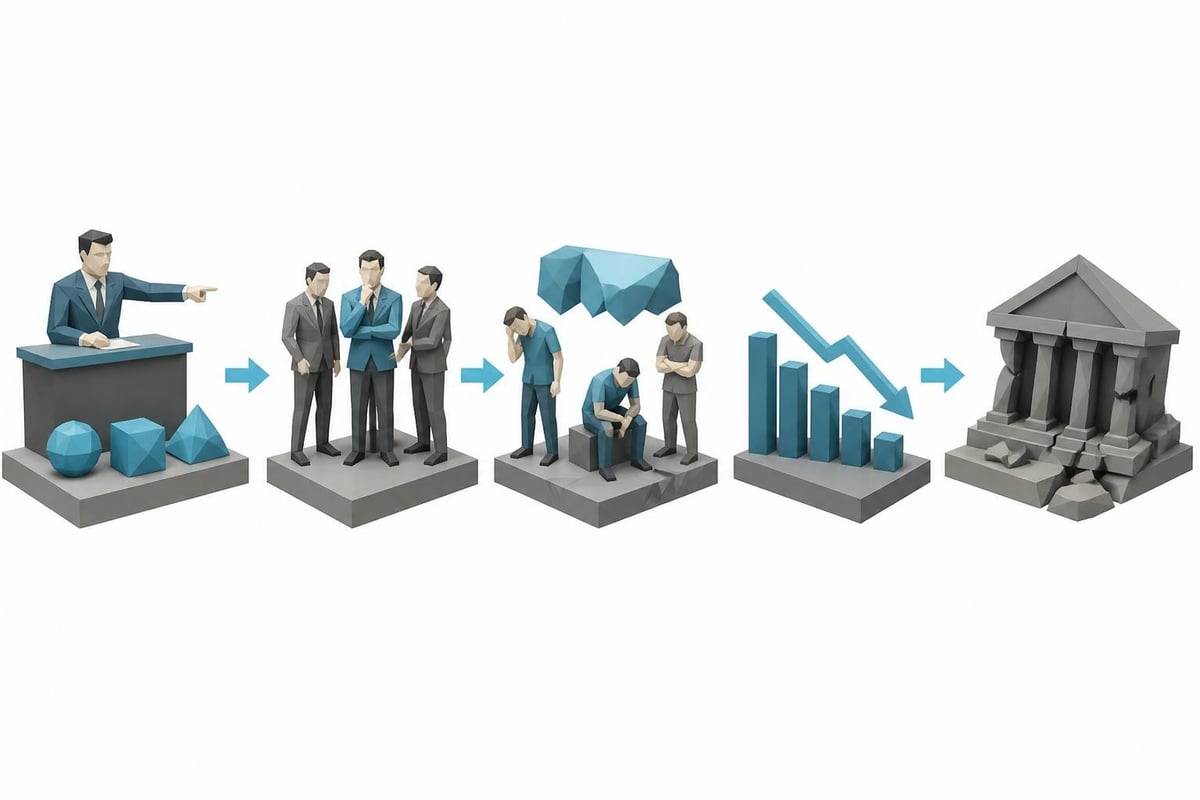
Problem: A hospital system experienced catastrophic patient safety failures, regulatory violations, and physician exodus in 2022-2023.
Diagnosis: The executive team prioritized cost reduction over clinical quality, systematically cutting staffing ratios despite warnings from medical staff. Leadership ignored compliance concerns when they conflicted with financial targets.
Solution Implemented: External consultants conducted a cultural assessment identifying executive decision-making as the primary risk factor. The board replaced the CEO and CFO, implemented clinical-first governance, and rebuilt trust through transparent communication.
Result: Within 18 months, safety incidents declined 60%, physician retention improved, and regulatory standing was restored.
Lesson: Acknowledging that culture problems start at the top enables real solutions. Pretending otherwise wastes time and increases damage.
What Boards Miss About Executive Accountability
Board members often fail to recognize cultural dysfunction because executives control the information they receive. This creates a dangerous feedback loop where leadership problems remain invisible until they become catastrophic.
The Information Control Problem
Executives curate board presentations to emphasize successes and minimize failures. This isn't necessarily malicious. It's structural. Leaders naturally want to show progress, frame challenges optimistically, and maintain confidence. But this curation prevents boards from accessing the unfiltered data needed to assess cultural health.
Effective boards implement independent cultural health metrics that executives don't control:
- Anonymous employee feedback channels that report directly to board committees
- Third-party cultural assessments conducted without executive involvement
- Exit interview analysis by external parties
- Direct board member engagement with employees at multiple levels
I've seen boards discover toxic leadership only after litigation forced document discovery. The warning signs existed for years, but executives successfully filtered them from board visibility. By the time boards intervened, damage was extensive and expensive.
Performance Metrics Lag Cultural Indicators
| Metric Type | Detection Timeline | Intervention Window |
|---|---|---|
| Cultural health indicators | Real-time to 3 months | Wide – early intervention possible |
| Engagement scores | 6-12 months | Moderate – intervention still effective |
| Retention rates | 12-18 months | Narrow – damage already significant |
| Legal/compliance issues | 24+ months | Minimal – public failure likely |
Organizations that wait for traditional performance metrics to signal cultural problems have already lost years of value. By the time engagement scores drop measurably, talented employees have been planning exits for months. By the time retention becomes visibly problematic, institutional knowledge is already depleted.
Research on how leadership practices influence organizational culture demonstrates that leadership behaviors establish behavioral norms that cascade throughout organizations faster than traditional metrics can detect.
The Intervention Framework That Works
Addressing culture problems that start at the top requires three elements: accurate diagnosis, executive-level accountability, and sustained behavioral change with measurement.
Diagnostic Precision Matters
Generic cultural assessments that measure "engagement" or "satisfaction" miss the behavioral specificity needed for intervention. Effective diagnosis identifies:
- Which specific executive behaviors create cultural problems
- How those behaviors cascade through organizational layers
- What measurable impacts result at team and individual levels
- Which intervention approaches will address root causes versus symptoms
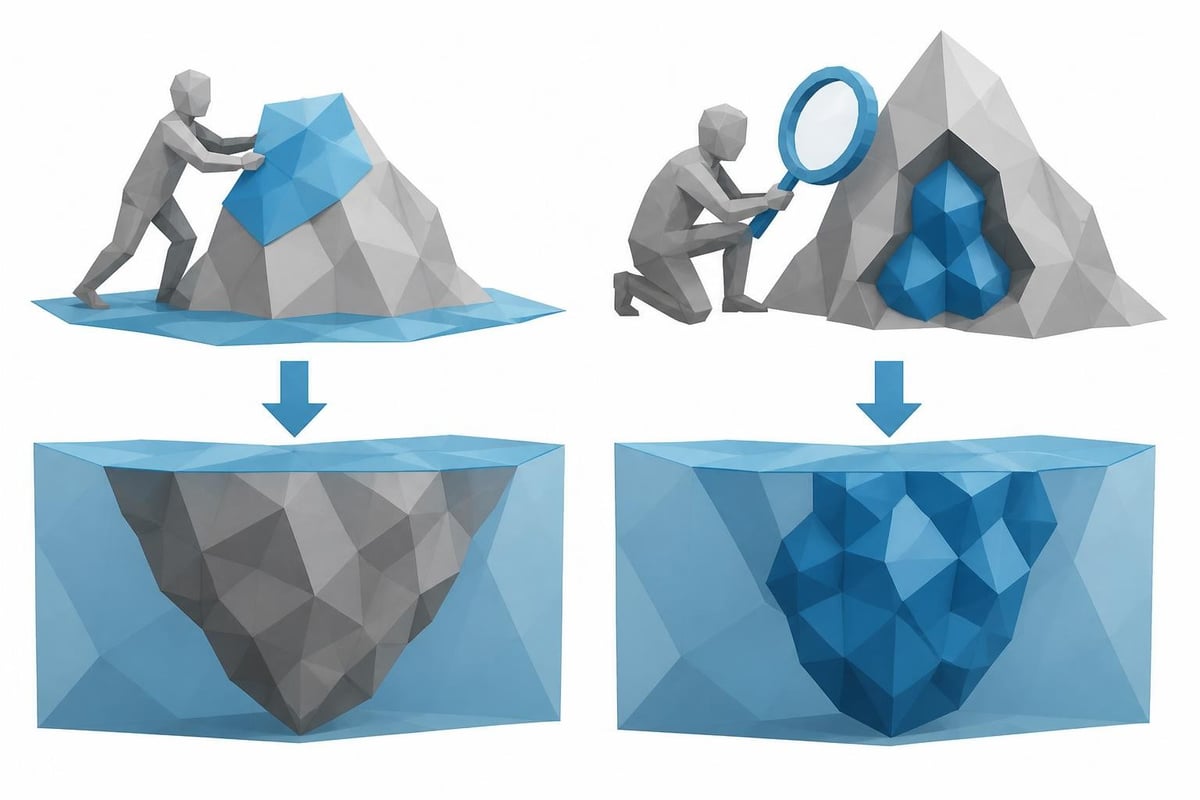
I worked with a technology company where cultural problems manifested as chronic project delays and inter-departmental conflict. Surface diagnosis suggested collaboration deficits. Deep diagnosis revealed that the CEO's practice of making unilateral strategic pivots without stakeholder input taught every leader to operate the same way. Teams couldn't collaborate because they had no shared understanding of priorities or authority. The solution wasn't collaboration training. It was changing executive decision-making processes.
Executive Accountability Is Non-Negotiable
Culture change without executive behavioral change is impossible. This is where most initiatives fail. Organizations invest in values workshops, communication training, and employee engagement programs while executives continue the exact behaviors that created cultural dysfunction.
Effective interventions establish clear behavioral expectations for executives with measurable accountability:
- Specific behaviors leaders will start, stop, or change
- Observable indicators that behavior change is occurring
- Feedback mechanisms that surface when leaders revert to old patterns
- Consequences when leaders fail to demonstrate sustained change
The resistance to executive-level accountability is predictable and revealing. Leaders who refuse behavior change while demanding it from others confirm that culture problems start at the top. Organizations that protect executives from accountability guarantee cultural dysfunction persists.
Sustained Change Requires Infrastructure
One-time interventions don't change organizational culture. Sustained improvement requires:
- Regular behavioral audits that assess whether leadership changes are maintained
- 360-degree feedback cycles that give executives unfiltered input on their impact
- Cultural health dashboards that track leading indicators, not lagging outcomes
- Board-level oversight that makes cultural health an ongoing governance priority
Organizations that treat culture change as a project rather than a system redesign inevitably revert to baseline within 18-24 months. The executive behaviors that created problems reassert themselves unless structural changes make old patterns impossible to sustain.
Building psychological safety at work requires consistent leadership modeling over extended periods, not episodic initiatives.
The Economic Consequences of Denial
Organizations that deny culture problems start at the top pay predictable costs that compound over time. These aren't soft or theoretical. They're measurable and substantial.
Talent Acquisition and Retention Costs
High-performing organizations retain talent through culture, not compensation alone. When culture deteriorates due to leadership dysfunction, organizations enter a doom loop:
- Top performers leave because toxic culture makes work unsustainable
- Replacements are harder to attract because reputation spreads
- Organizations overpay for talent to compensate for cultural deficits
- New hires leave faster because cultural problems remain unaddressed
- Institutional knowledge depletes while recruitment costs escalate
I tracked a professional services firm through this cycle from 2022-2025. Leadership turnover cost them 35% of annual revenue in recruitment, training, and lost productivity. The root cause was a managing partner whose aggressive communication style created constant anxiety. The firm spent millions on retention initiatives while protecting the executive creating the problem. Leadership failures driving turnover are expensive to ignore and expensive to fix after damage is done.
Operational Performance Degradation
Cultural dysfunction directly impacts operational outcomes:
- Decision quality declines when people fear speaking up
- Innovation stops when leaders punish failure
- Cross-functional collaboration fails when executives model siloed behavior
- Risk management deteriorates when messengers get shot
- Customer experience suffers when internal culture is toxic
Research on how corporate culture supports collaboration shows that cultural dynamics significantly influence organizational performance and resilience.
The Path Forward for Boards and CHROs
Addressing culture problems that start at the top requires courage, clarity, and commitment from those with governance authority and operational responsibility.
For Boards of Directors
Your primary cultural responsibility is ensuring executives model the behaviors the organization needs. This requires:
- Direct observation of leadership team dynamics, not just presentations
- Independent cultural health assessments without executive filtering
- Clear behavioral expectations in CEO evaluation criteria
- Willingness to act when executives create cultural liabilities
- Investment in leading through organizational disruption that inevitably accompanies leadership change
Boards that defer cultural oversight to executives guarantee blind spots in exactly the areas most critical to institutional health. Culture is a governance issue, not an operational detail.
For Chief Human Resources Officers
Your credibility depends on naming leadership as the source when culture problems start at the top. This is professionally risky and organizationally essential. Effective approaches include:
- Build the evidence base through systematic behavioral documentation before raising concerns
- Frame the issue in business terms (retention costs, performance impacts, legal exposure) not values language
- Present specific behavioral changes needed from executives, not generic recommendations
- Propose measurement systems that track whether leadership changes occur and sustain
- Escalate to board level when executive teams resist accountability for cultural dysfunction
CHROs who protect executives from cultural accountability become complicit in the dysfunction they're responsible for preventing. The professional risk of speaking truth is real. The organizational cost of silence is higher.
Frequently Asked Questions
How quickly do culture problems at the executive level spread through an organization?
Cultural contagion from leadership happens within 90-180 days for observable behavioral changes. Executives who model poor communication see similar patterns in their direct reports within one quarter. Those behaviors cascade to frontline teams within two quarters. Deep cultural shifts that affect decision-making, risk tolerance, and values alignment typically take 12-18 months to fully permeate an organization. This timeline means intervention windows are shorter than most leaders assume.
What distinguishes a cultural problem from a performance problem?
Performance problems are individual or team-specific, respond to capability-building interventions, and improve with targeted support. Cultural problems are systemic, recur across multiple teams or locations, persist despite individual coaching, and stem from organizational patterns rather than individual deficits. When you see the same dysfunction in different departments under different managers, you're observing culture. When problems improve temporarily but return after focused attention ends, the root cause is cultural rather than capability based.
Can middle management fix culture problems that originate at the executive level?
No. Middle managers can create positive micro-cultures within their teams, but they cannot fix systemic cultural dysfunction that leadership creates and maintains. Attempting to do so burns out your best managers and creates internal conflict between team culture and organizational culture. Middle managers can document problems, advocate for change, and protect their teams from some cultural toxicity, but lasting solutions require executive-level intervention. Asking middle management to fix leadership-created problems is unfair and ineffective.
How do you measure whether executive behavioral change is actually happening?
Effective measurement requires multiple data sources: 360-degree feedback from direct reports and peers, behavioral observation in meetings and decision processes, analysis of communication patterns and word choice, tracking of whose input gets incorporated versus ignored, and employee experience surveys that specifically ask about leadership behaviors. Measurement should happen monthly or quarterly, not annually, because behavioral change requires rapid feedback loops. Self-reported executive change is insufficient. Subordinate experience is the valid measure.
What should boards do when CEOs resist accountability for cultural dysfunction?
Board options depend on severity and CEO responsiveness. Initial approaches include requiring third-party cultural assessment, establishing behavioral expectations in performance evaluation, mandating executive coaching with specific behavioral targets, and implementing cultural health metrics in board dashboards. If CEOs actively resist accountability while cultural dysfunction continues, boards face a succession decision. CEOs who cannot or will not acknowledge their role in cultural problems cannot lead culture change. Board members who avoid this decision enable ongoing institutional damage.
Culture problems start at the top, which means solutions must start there too. Addressing leadership behaviors that create dysfunction requires diagnostic precision, sustained accountability, and measurement systems that track real behavioral change. Organizations ready to move from cultural diagnosis to intervention need partners who understand how executive patterns cascade through institutions and what it takes to create lasting change. Noomii Leadership Coaching delivers evidence-based leadership development that aligns executive behavior with organizational goals, providing the assessment rigor, coach expertise, and measurement frameworks that turn cultural liability into competitive advantage.



Leave a Reply
Want to join the discussion?Feel free to contribute!