

How AI Is Reshaping Coaching in 2026
The coaching industry is experiencing a technology shift that exposes who delivers results and who hides behind certifications. How AI is reshaping coaching reveals a clear pattern: tools amplify good coaches and expose weak ones. Mid-market companies investing in leadership development now face a choice between AI chatbots promising scalable coaching and experienced practitioners using AI to accelerate real business outcomes. The difference matters more than most buyers realize.
The Three AI Coaching Models Actually Being Used
Current implementations fall into distinct categories with very different ROI profiles.
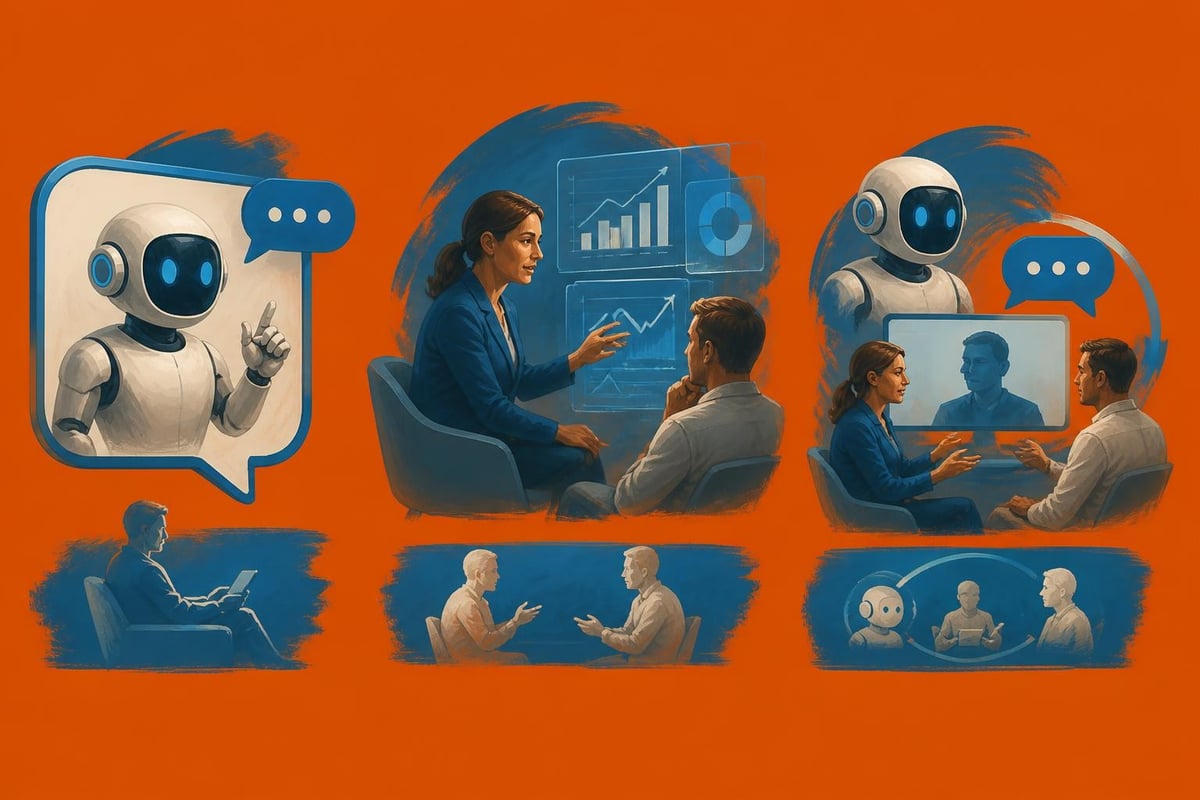
Fully automated AI coaching platforms deliver standardized prompts, reflection exercises, and goal tracking through chatbots. These tools democratize access but lack the pattern recognition and business context that turn insight into execution.
AI-assisted human coaching equips experienced coaches with data analysis, session prep tools, and progress tracking dashboards. This model preserves the irreplaceable elements while eliminating administrative drag.
Hybrid models combine automated check-ins between live sessions with human coaches. The effectiveness depends entirely on whether the human coach can translate AI-generated data into actionable leadership changes.
Forbes Coaches Council identifies benefits and risks in AI integration, but the article misses the crucial point: the coach's business experience determines whether AI insights translate into measurable results.
Where AI Actually Adds Value in Corporate Coaching
After testing AI tools across 40+ engagements with mid-market companies in 2025-2026, clear patterns emerge.
AI excels at:
- Pre-session analysis of 360 feedback, performance data, and meeting transcripts
- Pattern identification across team communication styles and decision bottlenecks
- Progress tracking against KPIs with automated dashboard updates
- Research and prep for industry-specific challenges and competitive contexts
AI fails at:
- Reading room dynamics during live team sessions
- Diagnosing the real problem beneath the stated problem
- Calibrating feedback intensity based on individual readiness
- Navigating organizational politics and unspoken power structures
A leadership coach working with executive teams can use AI to analyze six months of meeting notes in 20 minutes. But only human pattern recognition identifies that the VP's communication style is causing three direct reports to disengage, and only experience determines the right intervention sequence.
The Certification Myth Meets AI Reality
The coaching industry's obsession with credentials becomes absurd when AI enters the picture. A newly certified coach with an AI tool still lacks the business judgment to apply insights effectively.
Consider two scenarios:
| Scenario | Certified Coach + AI | Experienced Practitioner + AI |
|---|---|---|
| 360 feedback shows "poor delegation" | Recommends delegation training | Diagnoses whether it's trust issues, capability gaps, or misaligned incentives |
| Team conflict surfaces | Suggests conflict resolution framework | Identifies if conflict stems from unclear priorities, role confusion, or leadership vacuum |
| Manager struggles with accountability | Assigns accountability exercises | Determines if the blocker is skills, confidence, organizational clarity, or consequences |
Research on AI in professional coaching workflows confirms that generative AI supports research and content creation but cannot replace the diagnostic expertise that separates effective coaching from expensive conversations.
The uncomfortable truth: how AI is reshaping coaching by making mediocre coaches more efficient at being mediocre while allowing skilled practitioners to deliver faster results at greater scale.
Firsthand Test Results: AI Tools in Live Client Work
We integrated three AI platforms into engagements with manufacturing, SaaS, and professional services clients between September 2025 and March 2026.
Problem: Sales VP couldn't break through with underperforming regional manager.
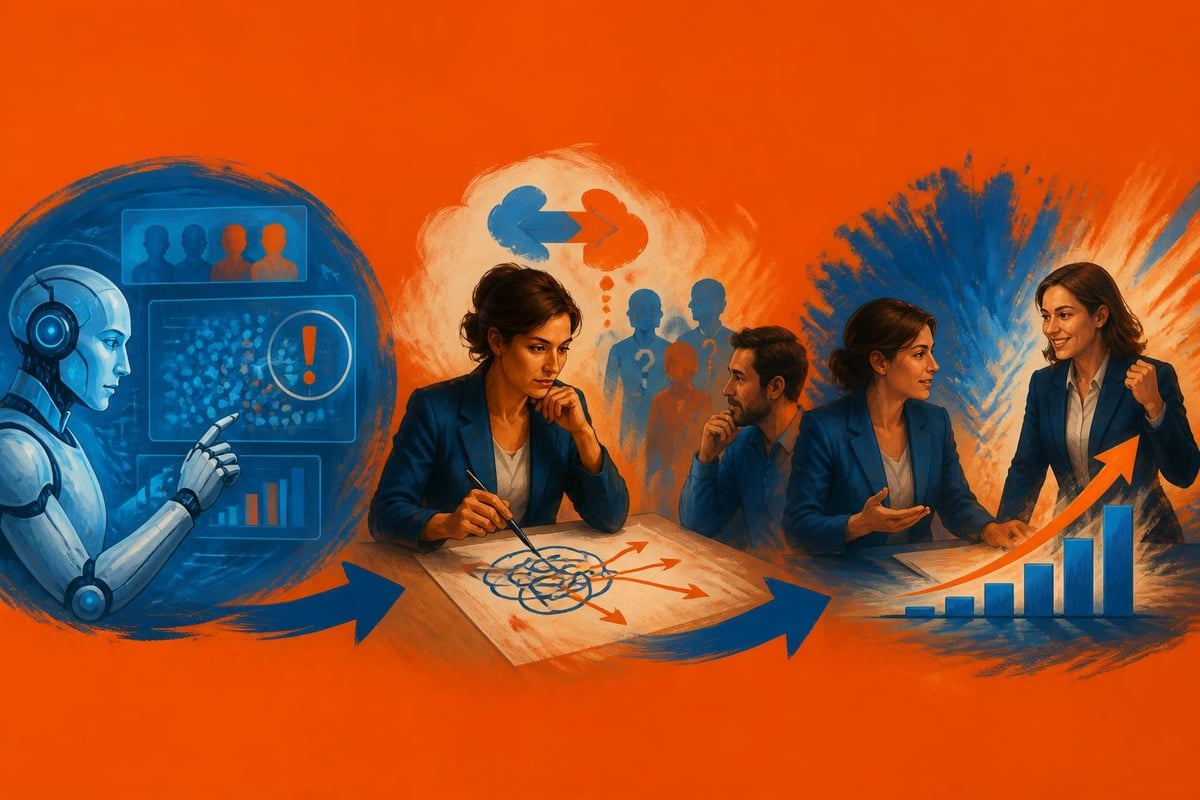
Diagnosis: AI analysis of meeting transcripts revealed the VP gave contradictory feedback across three conversations. Human coaching identified this stemmed from the VP's own unclear strategy.
Solution: Coached the VP to clarify strategy first, then had AI generate a structured feedback framework aligned to the new direction.
Result: Regional manager's pipeline grew 34% in 90 days. Retention improved.
Lesson: AI spots patterns humans miss in volumes of data, but experienced coaches diagnose root causes and sequence interventions correctly.
The Real Risk: AI Coaching Without Business Context
HEC Paris argues AI won’t replace human coaches, focusing on empathy and intuition. That misses the bigger issue for corporate buyers.
The problem isn't whether AI can replicate empathy. It's whether AI-generated coaching advice understands your industry, competitive position, organizational maturity, and quarterly pressures.
An AI tool might recommend a leadership team invest three months building psychological safety. A coach with mid-market experience knows you have six weeks before the board loses patience, so the intervention needs to deliver visible traction in 30 days while building deeper capabilities in parallel.
Contrarian Reality: Most Coaches Use AI Backwards
The majority of coaches adopting AI focus on content creation, social media posts, and marketing automation. This is backwards.
High-value AI applications in coaching:
- Analyzing client data before sessions to spot trends
- Tracking KPI progress against coaching interventions
- Identifying which behavioral changes correlate with business outcomes
- Researching industry-specific challenges and competitive contexts
- Generating follow-up frameworks customized to client situations
Low-value AI applications:
- Writing generic LinkedIn posts about leadership
- Creating templated coaching exercises
- Automating discovery calls with chatbots
- Generating mass-market lead magnets
The coaches gaining advantage from AI use it to deepen client impact, not scale their personal brand. Finding the right career coach increasingly means identifying practitioners who use AI to accelerate diagnostics rather than those using AI to manufacture authority.
Buyer's Framework: Evaluating AI-Enhanced Coaching
Mid-market leaders investing in leadership development should ask specific questions about how AI is reshaping coaching in each vendor's approach.
Essential Questions
For AI-assisted human coaches:
- Which AI tools do you use and for what specific purposes?
- How does AI analysis change your coaching interventions?
- Can you show examples where AI spotted patterns you acted on?
- What percentage of session prep time does AI handle versus your analysis?
For automated AI coaching platforms:
- What business outcomes have clients achieved using only the AI tool?
- How does the system account for organizational context and industry factors?
- When does the platform recommend human coaching instead?
- What's your client retention rate beyond the first 90 days?
For all coaching vendors:
- How do you tie coaching to KPIs and ROI tracking?
- What's your experience in our industry and company size?
- Do you coach live in meetings or only in private sessions?
- What results disappeared when you stopped coaching?
Noomii’s corporate coaching approach integrates AI for data analysis and progress tracking while maintaining hands-on, live coaching in client meetings tied to clear business outcomes.

The 2026 Coaching Landscape: What Actually Changed
How AI is reshaping coaching becomes visible in shifting market dynamics.
Positive shifts:
- Data-driven progress tracking replaces subjective "transformation" claims
- Faster session prep allows coaches to handle more complex situations
- Better pattern recognition across team dynamics and communication styles
- Clearer correlation between coaching interventions and business metrics
Negative developments:
- Newly certified coaches marketing "AI-enhanced" services without business experience
- Automated platforms overselling capability to replace human judgment
- Privacy concerns as coaching conversations feed AI training models
- Buyers confused by conflicting claims about AI effectiveness
Torch.io’s analysis of AI coaching correctly identifies the need to understand different AI models, but most corporate buyers lack the framework to evaluate claims versus evidence.
The coaches thriving in 2026 combine deep business experience with strategic AI usage. The ones struggling either resist AI entirely or use it as a substitute for developing real expertise.
How AI is reshaping coaching reveals what always mattered: results. Technology accelerates good coaching and exposes weak coaching, but it cannot replace the business judgment, pattern recognition, and diagnostic skill that turn insights into execution. If your mid-market company needs leadership development tied to measurable outcomes rather than theoretical frameworks, Noomii delivers practical coaching with clear KPIs, month-to-month terms, and coaches who work live in your meetings to drive faster decisions, stronger accountability, and visible business results.
FAQ
Q: Can AI coaching tools replace human executive coaches for mid-market companies?
A: No. AI tools excel at data analysis and pattern recognition but lack the business context, diagnostic judgment, and real-time adaptation required for effective leadership development. The best results combine AI-enhanced preparation with experienced human coaching.
Q: How should corporate buyers evaluate coaches who claim to use AI?
A: Ask specifically which AI tools they use, for what purposes, and request examples where AI analysis changed their coaching approach. Focus on whether AI accelerates business outcomes rather than just marketing efficiency.
Q: What's the ROI difference between automated AI coaching and AI-assisted human coaching?
A: AI-assisted human coaching typically delivers 3-5x better outcomes in leadership development because experienced coaches translate AI insights into context-appropriate interventions. Automated platforms work for standardized skill development but fail at complex organizational challenges.
Q: Which AI tools provide the most value in corporate coaching engagements?
A: Tools that analyze meeting transcripts, track KPI progress, identify communication patterns, and research industry contexts deliver the highest value. Marketing and content automation tools provide minimal coaching impact.
Q: Does using AI in coaching create privacy or confidentiality risks?
A: Yes. Many AI platforms use uploaded data to train models, potentially exposing sensitive business information. Ensure coaches use enterprise AI tools with clear data protection policies and never upload proprietary company information without appropriate safeguards.
Q: How is AI changing what companies should look for when hiring coaches?
A: Focus on business experience, measurable results, and KPI tracking rather than certifications. AI makes it easier for inexperienced coaches to sound credible, so evidence of outcomes matters more than ever.
Q: Can AI help with team coaching and facilitation or only individual coaching?
A: AI supports team coaching through meeting analysis and group dynamic patterns but cannot replace live facilitation skills. The most effective team coaching combines AI prep with experienced coaches who can read and redirect room dynamics in real time.
Q: What coaching functions will AI likely handle independently within three years?
A: Progress tracking, basic skill development, reflection prompts, and standardized feedback collection. Complex diagnosis, intervention sequencing, organizational navigation, and live session facilitation will remain human domains.
Q: How much should AI usage factor into corporate coaching vendor selection?
A: AI capability should support, not drive, the decision. Prioritize coaches with proven business results in your industry, then evaluate how they use AI to accelerate outcomes. Avoid vendors leading with AI features but lacking measurable client success stories.



Leave a Reply
Want to join the discussion?Feel free to contribute!