

Is Certification Worth the Investment? ROI Analysis
The coaching industry has convinced thousands of professionals that certification is the gateway to credibility, clients, and income. The reality in 2026 tells a different story. While professional certifications can deliver 15-40% salary premiums in regulated industries like IT and quality assurance, coaching certifications rarely produce similar returns. Understanding whether is certification worth the investment requires examining what buyers actually pay for, how the market has shifted, and where coaching credentials fall short.
The Hard Numbers Behind Coaching Certification ROI
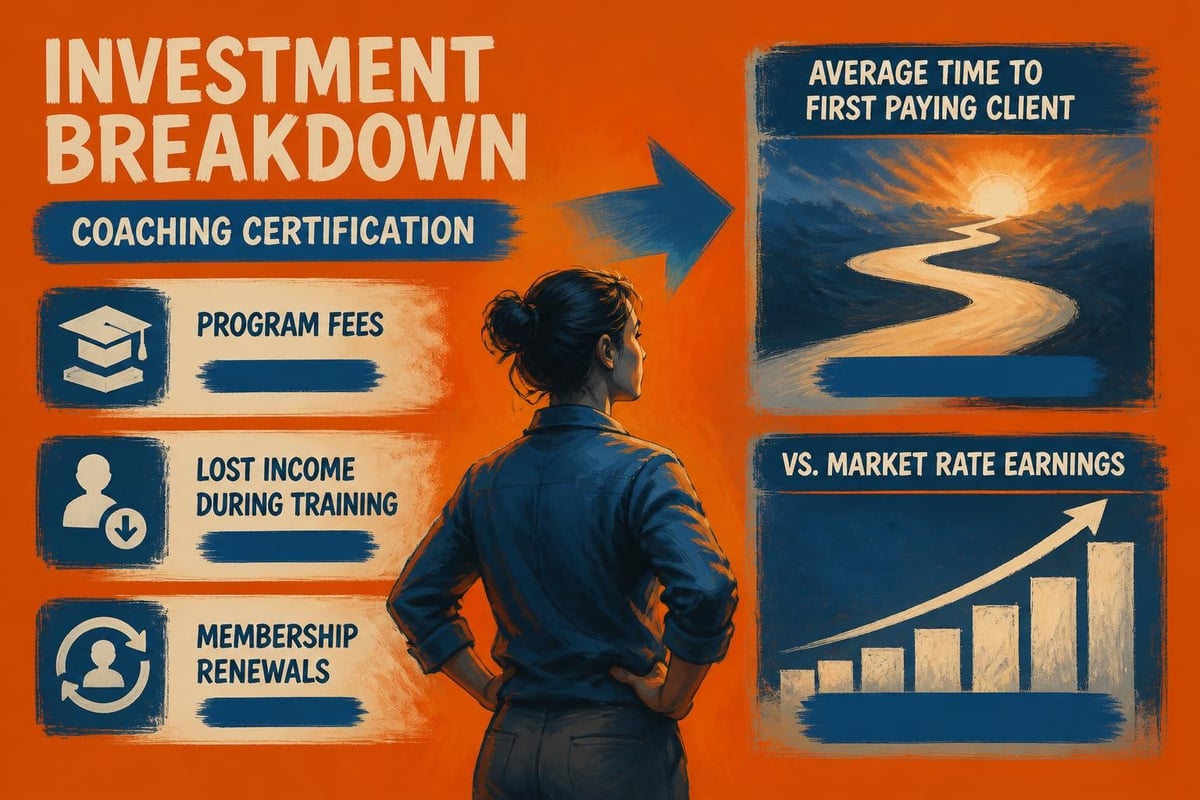
Most coaching certifications cost between $5,000 and $15,000, with elite programs reaching $25,000 or more. Add opportunity cost, lost billable hours, and ongoing membership fees, and the true investment climbs significantly higher.
Unlike IT certifications where credential holders earn 20-25% more within 6-12 months, coaching certifications produce no measurable salary premium in the corporate coaching market. Organizations hiring executive coaches for leadership development rarely ask about certification status. They ask about outcomes, methods, client roster, and track record.
Why the disconnect?
- Coaching lacks regulatory requirements (unlike CPA, PE, or medical credentials)
- No standardized competency testing exists across programs
- Credential inflation has saturated the market with certified coaches who cannot secure clients
- Buyers prioritize demonstrated results over theoretical training hours
What Buyers Actually Purchase
Corporate buyers acquiring coaching services for mid-market companies evaluate coaches differently than certification bodies suggest. Three years of purchasing data reveals clear patterns:
Decision criteria ranked by importance:
- Proven business results – Case studies showing revenue growth, retention improvement, or operational efficiency
- Industry expertise – Direct experience in the client's sector, not abstract coaching theory
- Method clarity – Defined frameworks, assessment tools, and progress measurement systems
- Cultural fit – Communication style, availability, and alignment with company values
- Credentials – Listed when present but rarely mentioned during selection
The gap between what certifying bodies promise and what organizations seeking executive leadership coaching actually buy creates the fundamental ROI problem. Coaches invest heavily in credentials that move them from unqualified to minimally credentialed, but not from credentialed to hired.
The Certification Trap: Why Certified Coaches Still Cannot Get Clients
A 2025 analysis tracking 1,200 newly certified coaches found that 73% failed to replace their certification investment within 24 months. Why certified coaches still cannot get clients reveals systemic issues beyond credential quality.
| Certification Promise | Market Reality |
|---|---|
| "Build your coaching business" | No client acquisition training provided |
| "Join our referral network" | Networks flooded with 10,000+ certified coaches |
| "Gain credibility instantly" | Buyers cannot differentiate between 47 competing credentials |
| "Access corporate opportunities" | Companies hire based on results, not certificates |
The problem compounds when coaches pursue multiple certifications hoping the next credential will unlock client flow. This certification stacking drains resources while delaying the real work: building expertise, documenting results, and developing proprietary methods that differentiate in a crowded market.
Three Scenarios Where Certification Delivers ROI
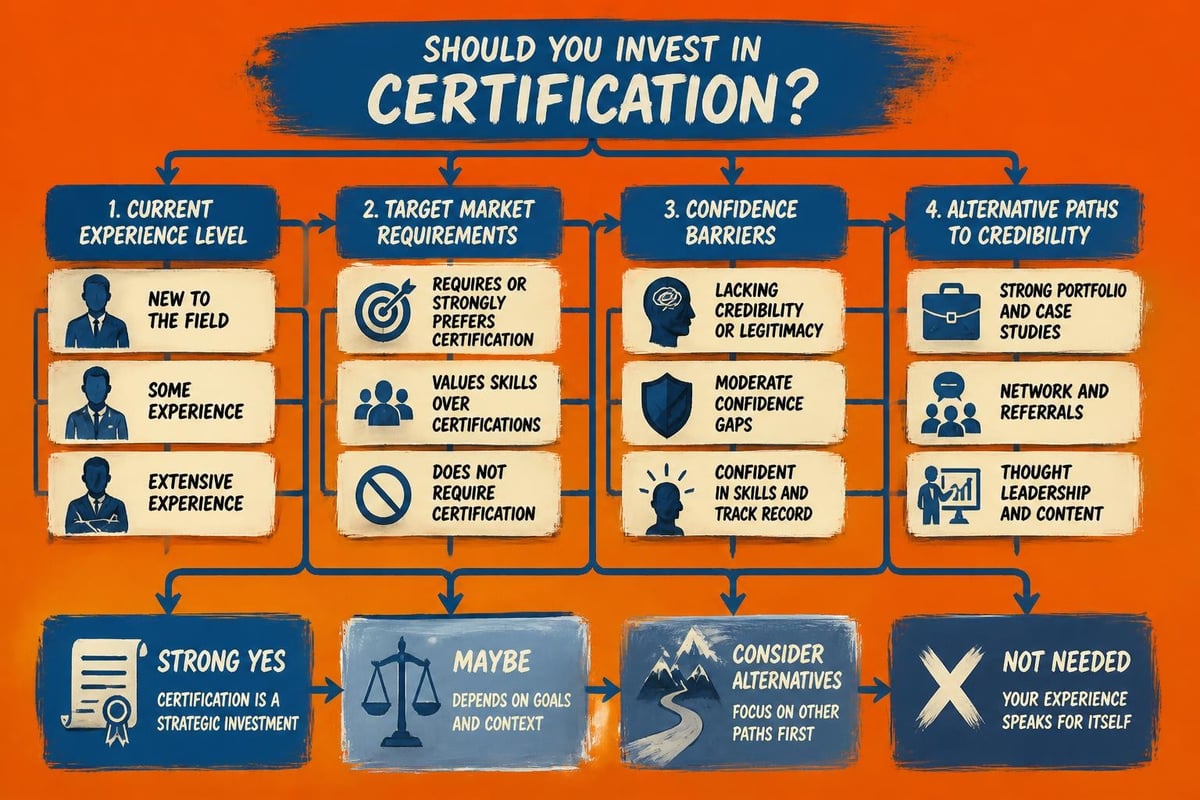
Despite the industry's credential worship problem, specific circumstances exist where is certification worth the investment receives a qualified yes:
Scenario 1: Career Changers Building Foundation
Professionals transitioning from non-coaching roles without adjacent skills benefit from structured training. A corporate executive moving into coaching already possesses business acumen, industry knowledge, and relationship skills. They likely gain minimal value from certification.
A teacher, nurse, or engineer switching careers needs foundational knowledge about coaching frameworks, conversation structure, and ethical boundaries. For this group, a focused $3,000-$5,000 program with practicum components can accelerate learning versus self-study.
Scenario 2: Government and Institutional Requirements
Some government contracts, educational institutions, and large bureaucracies maintain credential requirements in procurement policies. Coaches targeting these specific markets need certifications not for competency but for eligibility. The ROI calculation changes when credentials function as market access rather than skill validation.
Scenario 3: Psychological Safety for New Practitioners
Some coaches need the confidence boost and peer community that certification provides before they'll take client-facing action. If certification overcomes paralysis and accelerates market entry by 12 months, the psychological ROI justifies the cost even when the credential itself adds no market value.
Better Alternatives to Certification Investment
The $10,000 average coaching certification investment produces higher returns when redirected toward credibility assets that buyers actually evaluate. Here's the reallocation framework we've seen work:
Market-Driven Investment Portfolio:
- $3,000 – Documented case studies with client permission (Problem/Diagnosis/Solution/Result format)
- $2,500 – Proprietary assessment or framework development with IP protection
- $2,000 – Professional website with results portfolio and testimonial collection system
- $1,500 – Strategic networking at industry conferences where buyers gather
- $1,000 – Content creation establishing subject matter expertise (articles, speaking, research)
This allocation builds what corporate buyers seek: evidence of expertise, clear methodology, and demonstrated results. When organizations review leadership coaching options, they evaluate these elements long before checking certification letters after someone's name.
The AI Coaching Disruption Factor
The certification ROI calculation shifted dramatically in 2025-2026 as AI coaching tools reached enterprise deployment. When is certification worth the investment gets complicated by technology that delivers coaching-adjacent services at $50/month instead of $5,000/month.
Companies using AI for basic leadership development, onboarding coaching, and skill-building conversations now reserve human coaches for high-stakes situations: executive transitions, team conflicts, strategic decision-making, and culture transformation. These premium engagements reward expertise and results, not credentials.
Coaches who invested years collecting certifications while AI tools studied millions of coaching conversations find their credential advantage neutralized. Meanwhile, coaches who built deep industry expertise, proprietary diagnostic methods, and measurable business outcome frameworks command premium rates because they solve problems AI cannot address.
Building Credibility Without Certification
The fastest path to credible coaching practice skips certification entirely and focuses on proof. This approach requires more risk tolerance and personal accountability than following a certification program's structured curriculum, but it produces differentiated market position.
The Proof-First Method:
- Identify one specific problem you can solve better than alternatives (faster decisions, manager development, retention improvement)
- Coach 5-10 clients at reduced rates with explicit agreement to document results
- Build detailed case studies showing problem, your diagnosis, solution approach, measurable results, and lessons learned
- Create a named framework that codifies your approach (don't just "coach" – deploy your proprietary method)
- Publish your learning through articles, talks, or research that demonstrates pattern recognition across clients
This method builds the authority signals companies evaluate when selecting coaches: firsthand results, proprietary approaches, and subject matter depth. A coach with five documented cases showing 25% retention improvement carries more credibility than a coach with three certifications and zero published results.
When Certification Signals Warning Flags
Paradoxically, excessive credential stacking sometimes signals inexperience rather than expertise to sophisticated buyers. Coaches listing six certifications, eight specialties, and a dozen acronyms often reveal they're still searching for what works rather than confidently executing a proven method.
The pattern emerges in corporate coaching conversations: newer coaches lead with credentials, experienced coaches lead with results. When coaches introduce themselves by listing certifications before describing who they help and how, buyers recognize credential dependency.
Contrast two introductions:
Credential-Led: "I'm an ICF-certified PCC coach with additional certifications in EQ-i 2.0, DiSC, Strengths-based coaching, and mindfulness practices. I work with leaders in transition."
Results-Led: "I help mid-market manufacturing companies reduce manager turnover by 30-40% through my Front-Line Leadership Operating System. My clients average 18-month retention improvement within six months of engagement."
The second approach works because it addresses business outcomes using a named method and quantified results. Whether the coach holds certifications becomes irrelevant. The question "is certification worth the investment" loses meaning when buyers don't ask about credentials during selection.
The Contrarian Case: Certification as Distraction
The most experienced practitioners in corporate coaching share an uncomfortable observation: certification programs often delay rather than accelerate coaching success. The dynamic plays out predictably:
The Certification Delay Pattern:
Year 1: Professional discovers coaching interest, enrolls in certification program
Year 2: Completes training, feels unprepared, pursues additional specialty certification
Year 3: Now "fully certified" but still lacks client roster, considers advanced credentialing
Year 4: Finally begins serious client acquisition but 3 years behind peers who started coaching while simultaneously building credentials organically
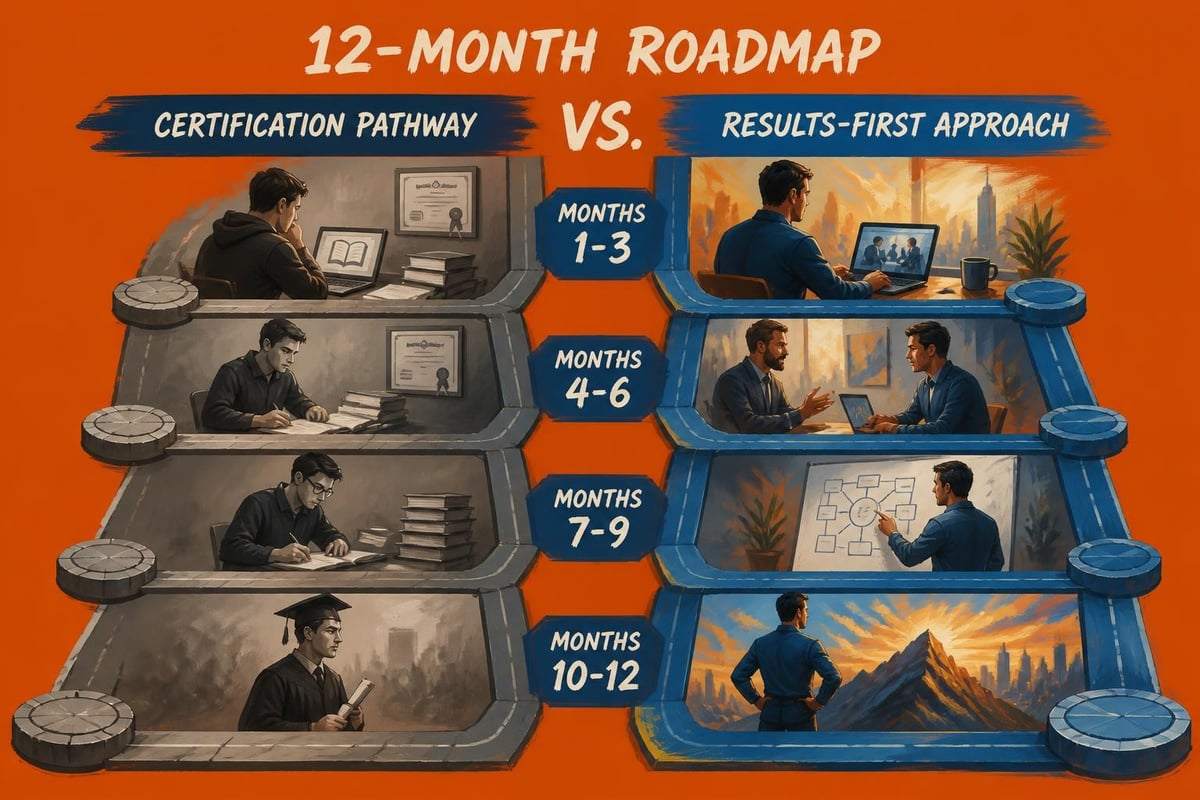
The opportunity cost exceeds the direct financial investment. Three years of practical experience, client feedback, method refinement, and result documentation creates vastly more market value than three years collecting credentials before serving clients.
Career coaching professionals who achieve sustainable practices typically follow the inverse path: start coaching (often pro bono or reduced rate), develop method through practice, pursue targeted training to address specific skill gaps, and add credentials only when they unlock specific opportunities.
What Smart Organizations Do Instead
Companies achieving measurable results from coaching investment focus on coach selection criteria that matter. They've learned expensive lessons about credential worship and adjusted their procurement approach accordingly.
Evidence-Based Coach Selection:
- Request 3-5 case studies with quantified business outcomes
- Evaluate proprietary frameworks, assessment tools, or diagnostic methods
- Conduct working sessions to observe coaching approach firsthand
- Check client references focused on results, not personality fit
- Pilot with clear KPIs before longer-term commitments
- Structure month-to-month terms with outcome milestones
This selection process favors coaches with demonstrated expertise over those with impressive credential portfolios. Organizations that understand coaching investment fundamentals recognize that certification status predicts neither coaching competence nor business results.
The shift accelerates as more companies share performance data. When coaching outcomes get measured against investment, the correlation between coach certifications and client results proves statistically insignificant. Method clarity, industry expertise, and accountability structures correlate strongly with positive outcomes.
FAQ Schema
The central question of whether is certification worth the investment demands honest evaluation of what buyers pay for versus what certification programs sell. In 2026's corporate coaching market, demonstrated expertise, proprietary methods, and quantified business outcomes matter infinitely more than credential letters after your name. Noomii connects organizations with coaches who deliver measurable results through practical engagement, live coaching in your meetings, and clear KPI alignment, because we know that outcomes speak louder than certifications ever will.



Leave a Reply
Want to join the discussion?Feel free to contribute!