
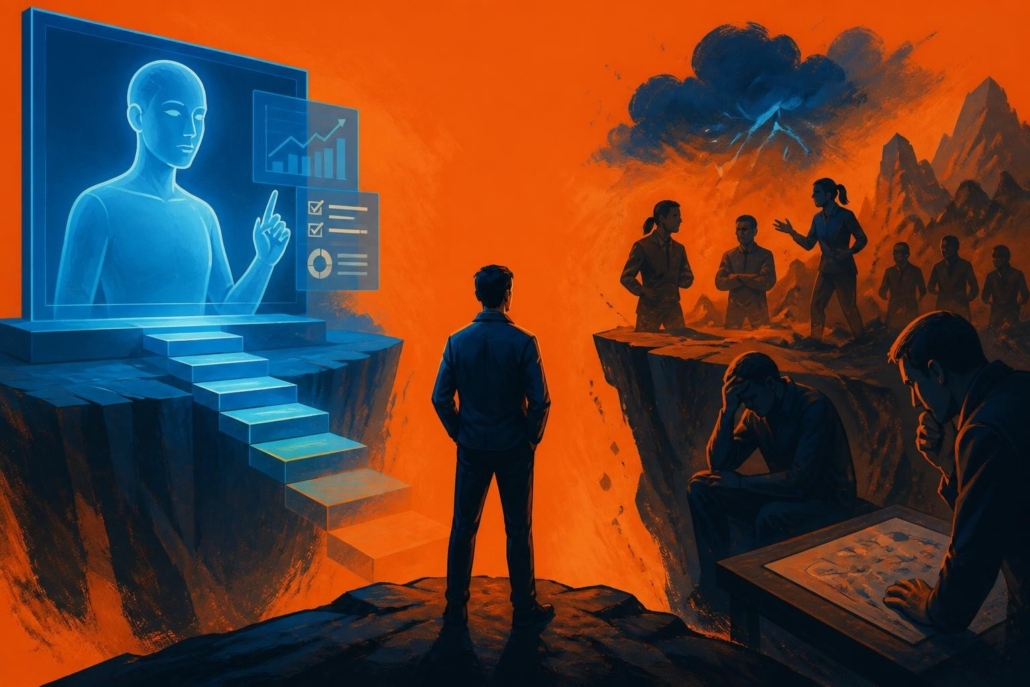
AI Coaching Failed When I Needed It Most
The VP of Sales at a 180-person SaaS company needed help. His best manager just quit, Q2 pipeline was bleeding, and his team meeting had devolved into finger-pointing. He opened his AI coaching app, typed his situation, and received a cheerful list of "10 steps to rebuild trust." None addressed his pipeline problem. None acknowledged the political tension with marketing. None asked about his commission structure or whether his metrics were even tracking the right behavior. AI coaching failed when i needed it most, he told me three months later, after bringing in executive coaching that diagnosed his real problem: misaligned incentives and a manager promotion process with zero accountability.
When Generic Advice Meets Specific Chaos
AI coaching tools excel at surface-level guidance. They deliver frameworks, checklists, and motivational prompts faster than any human. But leadership crises don't arrive with clean inputs.
Consider what happens when a mid-market CEO faces simultaneous challenges:
- A key client threatening to leave over delivery delays
- Two directors openly undermining each other in leadership meetings
- Board pressure to cut costs while maintaining growth targets
- Retention dropping among top performers in one specific division
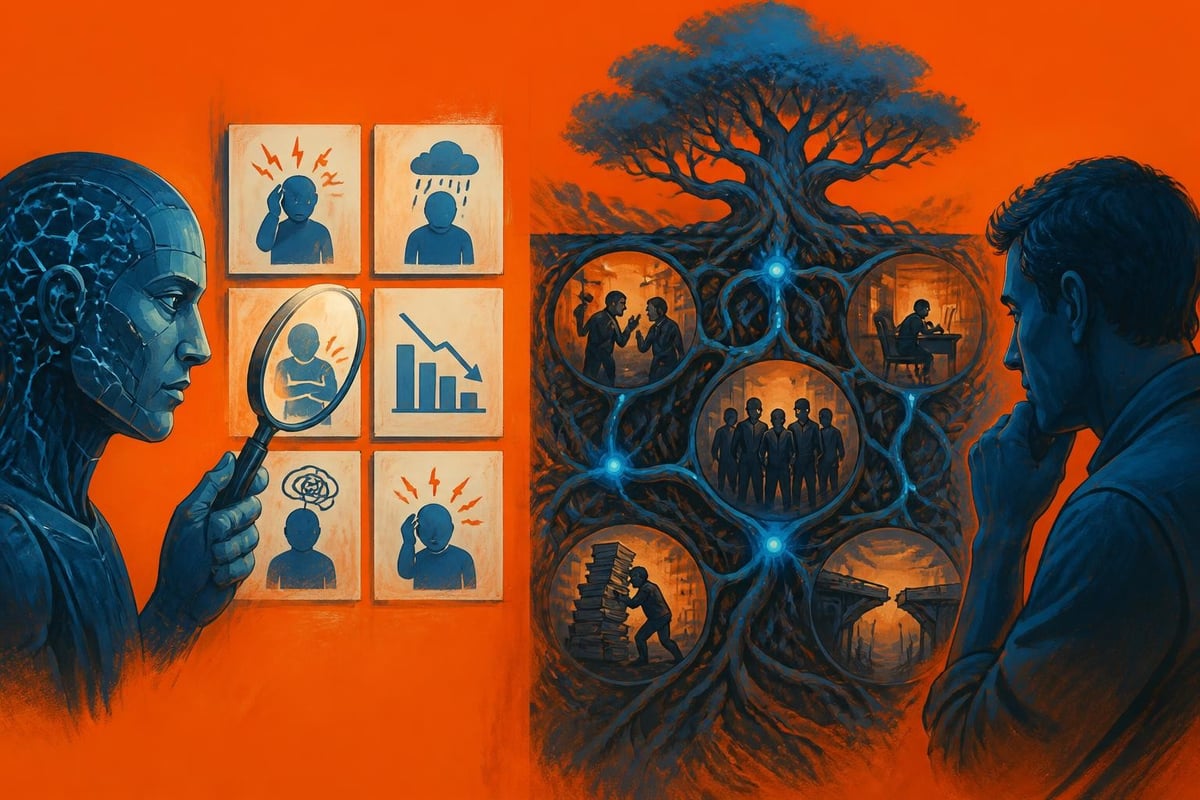
An AI coach processes these as separate problems. It suggests conflict resolution tactics for the directors, customer retention scripts for the client, and budget templates for the board. What it misses is the pattern: the delivery delays stem from the director conflict, which stems from unclear ownership after a recent reorganization, which the CEO rushed because the board demanded faster execution.
Research on AI coaching limitations consistently shows these tools lack the contextual awareness to connect systemic issues. They optimize for response speed, not diagnostic depth.
The Deployment Reality Nobody Discusses
I've watched 14 companies implement AI coaching platforms between 2024 and 2026. Seven abandoned them within six months. The pattern is predictable.
| Implementation Phase | What Companies Expect | What Actually Happens |
|---|---|---|
| Month 1-2 | High engagement, novelty effect | 40-60% of managers try it once |
| Month 3-4 | Habit formation, behavior change | Usage drops to 12-18% of original users |
| Month 5-6 | ROI becomes visible | Companies can't tie any metric to the tool |
The failure isn't technical. Common AI deployment failures trace back to misaligned expectations and poor integration with actual work. AI coaching apps become one more login, one more dashboard, one more thing managers ignore when real pressure hits.
One CFO told me: "Our managers stopped using the AI coach the moment they faced actual performance conversations. The scripts felt robotic. The advice assumed cooperation. Real underperformers don't cooperate, they lawyer up, get defensive, or rally political support."
The Crisis Test: Where Algorithms Break Down
AI coaching failed when i needed it most becomes a common refrain during three specific scenarios I've observed repeatedly.
Scenario One: The Messy Human Situation
A director at a manufacturing company discovered her top performer was interviewing elsewhere. The AI coach suggested: "Schedule a one-on-one to discuss career goals." Reasonable advice. Useless advice. The real issue? The employee's spouse had taken a job in another state. No career conversation would fix geography. The director needed help thinking through succession, knowledge transfer, and how to keep the rest of the team stable during the transition. She needed team coaching that understood organizational continuity, not a chatbot optimizing for retention tactics.
Scenario Two: The Political Minefield
AI tools treat organizations like rational systems. They're not. A head of operations asked his AI coach how to handle a peer who was undermining his projects in executive meetings. The AI suggested: "Use I-statements and focus on collaborative solutions." He tried it. It made things worse. The peer wasn't interested in collaboration. She was angling for his role and had the CEO's ear. He needed someone who understood corporate politics, power dynamics, and how to document concerns while protecting his position. Leadership development grounded in real organizational behavior, not theory.
Scenario Three: The Existential Question
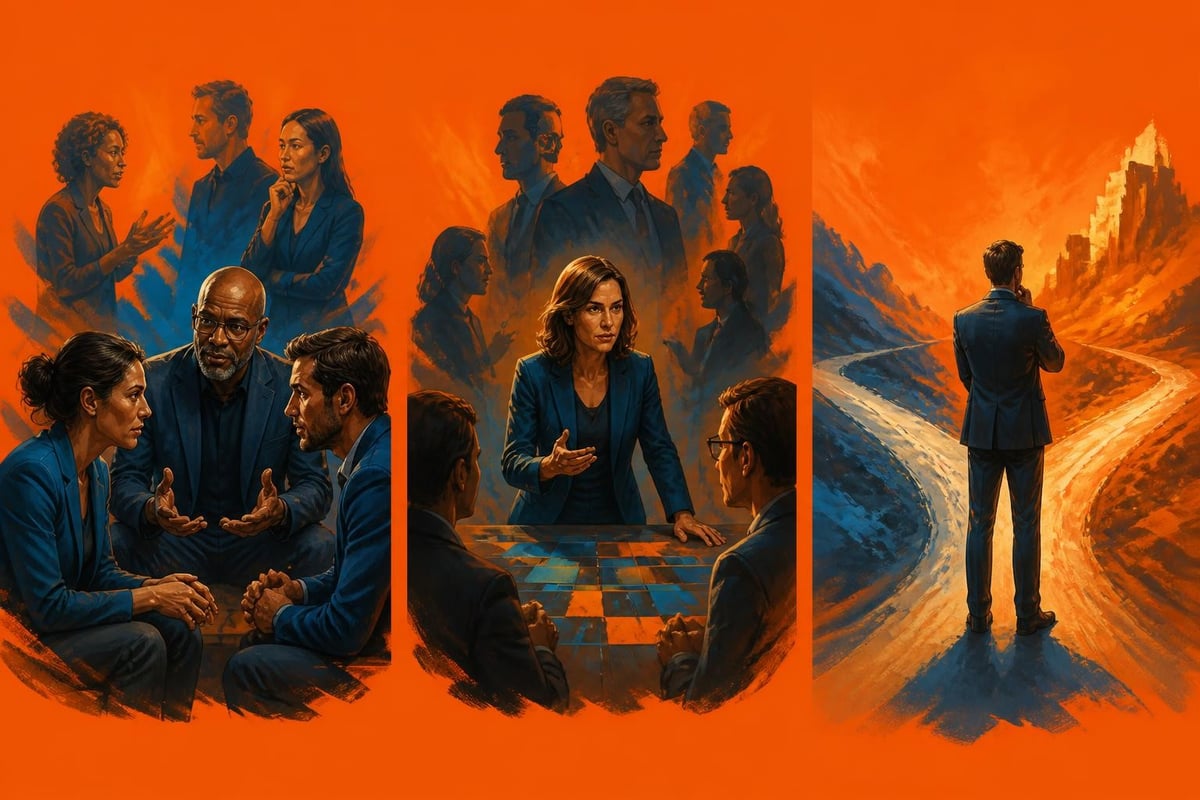
A founder-CEO struggling with whether to sell his company, step back to chairman, or rebuild his executive team didn't need an algorithm. He needed someone who'd seen this movie before, who understood the emotional weight of legacy versus freedom, who could pressure-test his thinking without an agenda. AI coaching apps offered pros-cons lists. He needed wisdom earned through pattern recognition across dozens of similar inflection points.
The Measurement Problem
Companies attracted to AI coaching love the data. Dashboard metrics showing "coaching sessions completed" and "engagement rates" create the illusion of progress.
But what are they measuring?
- Logins don't equal behavior change
- Session completion doesn't mean application
- Satisfaction scores don't correlate with business outcomes
I reviewed six months of AI coaching data from a 220-person professional services firm. High engagement. Positive feedback. Zero impact on the metrics they cared about: manager effectiveness scores, employee retention, project delivery consistency, or client satisfaction.
When they switched to human coaching tied to specific KPIs-pipeline conversion rates, project margin improvement, employee engagement in specific divisions-the correlation became visible within 90 days. Not because human coaches are magic. Because they asked different questions, pushed back on excuses, and held leaders accountable to outcomes, not activity.
Analysis of AI failures in enterprise settings points to a fundamental truth: the technology works fine. The implementation strategy and outcome expectations are broken.
What Mid-Market Leaders Actually Need
After two decades observing coaching outcomes, the pattern is clear. Effective coaching during critical moments requires five elements AI cannot deliver:
- Context before content: Understanding company history, political dynamics, industry pressures, and individual leader constraints
- Diagnostic skill: Separating symptoms from root causes through questioning, observation, and pattern recognition
- Accountability mechanisms: Follow-through that holds leaders to commitments when it's uncomfortable
- Adaptive methodology: Changing approach based on what's working, not following a predetermined script
- Business fluency: Speaking the language of margins, pipelines, retention economics, and operational metrics
One CEO summarized it: "AI coaching failed when i needed it most because it optimized for being helpful, not for being right. I didn't need encouragement. I needed someone to tell me my strategy was incoherent and my team structure was set up for failure."
The Certification Distraction
Here's where the coaching industry misses the point entirely. While coaches chase ICF credentials and AI platforms proliferate, buyers struggle with a simpler question: who can actually help?
Credentials don't predict coaching outcomes. Neither does algorithmic sophistication. What predicts outcomes:
- Has the coach solved similar problems in similar contexts?
- Do they understand your industry's operational realities?
- Can they diagnose what you're not seeing?
- Will they hold you accountable when it's hard?
The best coaching I've witnessed came from former operators-ex-CFOs, ex-sales VPs, ex-COOs-who brought industry pattern recognition and practical business judgment. The least effective came from theorists, whether human or artificial, optimized for frameworks over results.
The Real Cost of the Wrong Coaching Choice
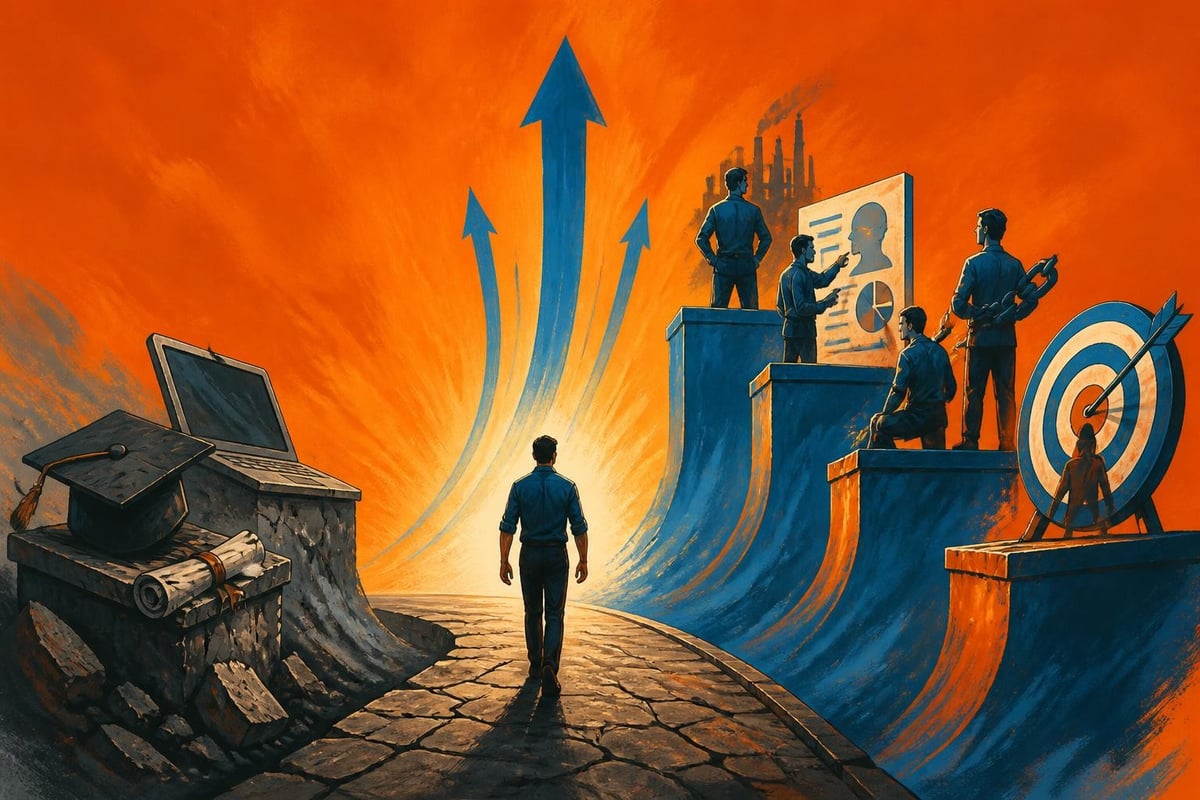
A technology company spent $47,000 on AI coaching licenses for 85 managers in 2025. Usage peaked at 23% in month two, dropped to 8% by month six. They measured zero improvement in manager effectiveness scores or employee engagement.
They spent $52,000 on human executive coaching for their top 12 leaders in the same period. Outcomes: two underperforming directors either stepped up or moved out, sales pipeline process redesigned with 19% better conversion, employee retention in coached leaders' teams 14 points higher than company average.
The cost wasn't the license fee. The cost was six months of deteriorating performance while leaders clicked through AI modules instead of confronting real issues.
Understanding AI coaching constraints matters less than understanding your actual need. If you need information, AI works fine. If you need transformation, you need someone with skin in the game.
Why Month-to-Month Matters
The AI coaching industry loves annual contracts. So does the traditional coaching world obsessed with lengthy engagements. Both models protect the provider, not the buyer.
When ai coaching failed when i needed it most, locked-in contracts meant sunk costs and delayed decisions. Leaders knew it wasn't working by month three but waited until renewal to make a change.
Month-to-month terms force a different conversation. Coaches stay because results are visible, not because contracts are binding. If a leadership coach isn't moving the needle on your actual priorities-faster decisions, stronger execution, measurable retention improvement-you change course immediately.
This isn't revolutionary. It's basic accountability. The coaching industry has simply avoided it for decades by hiding behind certification requirements, lengthy discovery processes, and vague outcome promises.
AI coaching fails during critical moments because leadership challenges resist standardization, and organizational dysfunction requires diagnosis, not scripts. When you need coaching that ties directly to business results-pipeline improvement, retention gains, execution clarity-choose Noomii for corporate coaching that works live in your environment, measures against your KPIs, and stays month-to-month so results speak louder than promises.
Frequently Asked Questions
Why does AI coaching fail during critical leadership moments?
AI coaching lacks contextual awareness, diagnostic depth, and the ability to connect surface symptoms to underlying systemic issues. During crises, leaders need adaptive thinking and accountability, not algorithmic pattern matching and generic frameworks.
What situations require human coaching instead of AI tools?
Complex interpersonal conflicts, organizational politics, career inflection points, systemic dysfunction, and situations requiring accountability and business judgment all require human coaching. AI tools work for information delivery and basic skill building but fail when context and diagnosis matter.
How can companies measure coaching effectiveness?
Tie coaching directly to business KPIs: retention rates in coached teams, sales pipeline conversion improvements, decision velocity, project delivery consistency, and employee engagement scores. Avoid vanity metrics like session completion or satisfaction scores that don't correlate with outcomes.
What makes coaching more effective than AI platforms?
Effective coaching combines diagnostic skill, industry pattern recognition, adaptive methodology, accountability mechanisms, and business fluency. These elements require human judgment, experience with similar challenges, and the ability to push back when leaders avoid difficult truths.
Should mid-market companies invest in AI coaching tools?
AI coaching works for basic skill development and information access but shouldn't replace human coaching for leadership development, team performance, or critical business challenges. Most companies see better ROI from focused human coaching for key leaders than broad AI platform deployments.
What credentials should companies look for in executive coaches?
Industry experience, demonstrated results in similar contexts, diagnostic ability, and business fluency matter more than coaching certifications. Former operators who understand your industry's economics and operational realities typically deliver better outcomes than theoretically trained coaches.
How long should corporate coaching engagements last?
Month-to-month arrangements with clear KPIs allow companies to maintain coaching that delivers visible results and end relationships that don't. Lengthy contracts protect coaches, not buyers. Accountability works both ways.
Can AI coaching tools complement human coaching?
AI tools can support skill practice, provide resources between sessions, and track basic progress metrics. But they work as supplements to human coaching, not replacements. The diagnosis, accountability, and adaptive strategy still require human expertise.
What are red flags that coaching isn't working?
No clear connection between coaching activities and business metrics, vague outcome promises, resistance to measurement against KPIs, focus on process over results, and inability to adapt methodology when initial approaches fail all signal ineffective coaching relationships.



Leave a Reply
Want to join the discussion?Feel free to contribute!