
Leadership Team Coaching: Transform Executive Performance
Organizations face unprecedented leadership challenges in 2026, from navigating hybrid work environments to managing distributed teams across global markets. Executive teams struggle with alignment, decision-making paralysis, and communication breakdowns that cascade throughout entire organizations. Leadership team coaching has emerged as the proven solution for addressing these complex challenges with precision and measurable outcomes. Unlike traditional training programs that deliver generic content to passive participants, team coaching creates active learning environments where executives develop real-time solutions to actual organizational problems while building collective capability.
Why Traditional Leadership Development Falls Short
Most leadership programs focus exclusively on individual development, missing the critical dynamics that occur when leaders work together. Executives attend workshops, absorb information, and return to organizations where systemic patterns remain unchanged.
The problem intensifies when leadership teams lack cohesion. Research shows that dysfunctional executive teams create ripple effects throughout organizations, eroding trust, decreasing engagement, and reducing productivity across all levels. A single toxic leader can destabilize an entire department, while an unaligned executive team sends contradictory messages that confuse and demotivate employees.
Leadership team coaching addresses these gaps by:
- Focusing on collective team dynamics rather than isolated individual behaviors
- Creating accountability structures that extend beyond workshop walls
- Building shared mental models that align decision-making across leadership levels
- Addressing real organizational challenges in real time
Organizations that invest in comprehensive team coaching see demonstrable improvements in strategic alignment, operational efficiency, and cultural health. The approach transforms how leaders interact, make decisions, and drive organizational performance.

The Science Behind Effective Team Coaching
Leadership team coaching operates on established principles of adult learning, systems thinking, and organizational psychology. Understanding the six principles of leadership coaching provides foundational insight into what makes coaching interventions effective.
The most successful programs combine behavioral science with practical application. Evidence-based diagnostics identify specific patterns, communication styles, and decision-making tendencies that either accelerate or impede team performance. These assessments go beyond surface-level personality tests to reveal deep structural issues.
Assessment Tools That Drive Precision
Modern leadership team coaching relies on validated instruments that measure multiple dimensions simultaneously:
| Assessment Type | What It Measures | Application in Coaching |
|---|---|---|
| Team Dynamics | Communication patterns, conflict styles, collaboration quality | Identifies interaction breakdowns and improvement opportunities |
| Strategic Alignment | Shared vision, goal clarity, priority consensus | Reveals disconnects between stated strategy and actual behavior |
| Cultural Health | Trust levels, psychological safety, engagement | Exposes underlying climate issues affecting performance |
| Decision-Making | Process quality, speed, implementation effectiveness | Pinpoints bottlenecks and improvement areas |
These diagnostic tools create baseline measurements that enable organizations to track progress objectively. When combined with psychological safety at work frameworks, they reveal the conditions necessary for high-performing teams to emerge and sustain excellence.
The data informs customized intervention plans that address specific team needs rather than applying one-size-fits-all solutions. This precision approach ensures coaching investments deliver maximum return.
Precision Matching: The Right Coach Makes the Difference
The effectiveness of leadership team coaching depends heavily on coach selection. Organizations need coaches who understand their industry context, navigate complex political environments, and possess the credibility to challenge senior executives productively.
Sophisticated matching processes consider multiple factors beyond basic credentials. The best matches align coach expertise with team challenges, organizational culture, and desired outcomes. A coach who excels at conflict resolution may not be the right fit for a team needing strategic repositioning support.
Critical matching criteria include:
- Industry Experience: Deep knowledge of sector-specific challenges and regulatory environments
- Intervention Expertise: Proven track record addressing similar team dysfunction patterns
- Cultural Compatibility: Ability to work effectively within the organization's cultural norms
- Executive Credibility: Experience and presence that command respect from senior leaders
- Systems Perspective: Understanding how team dynamics connect to broader organizational systems
Organizations working with global call centers and distributed teams benefit from coaches who understand remote team dynamics. Companies like Focus Services, operating across multiple continents, require coaches familiar with cross-cultural leadership challenges and virtual team management.
The matching process should incorporate stakeholder input, including HR leaders, team members, and organizational sponsors. This collaborative approach ensures alignment and increases coaching engagement from the outset.
Addressing Common Leadership Team Challenges
Leadership team coaching tackles specific dysfunctions that impede organizational performance. Each challenge requires targeted interventions based on root cause analysis rather than symptomatic treatment.
Communication Breakdown and Misalignment
Executive teams frequently struggle with inconsistent messaging and information silos. Leaders operate with different assumptions, priorities, and interpretations of strategic direction. Understanding the dynamics of team coaching helps address these communication failures systematically.
Effective interventions establish common language, clarify decision rights, and create transparent communication protocols. Teams learn to surface disagreements productively rather than allowing undiscussed conflicts to fester.
Trust Deficits and Political Behavior
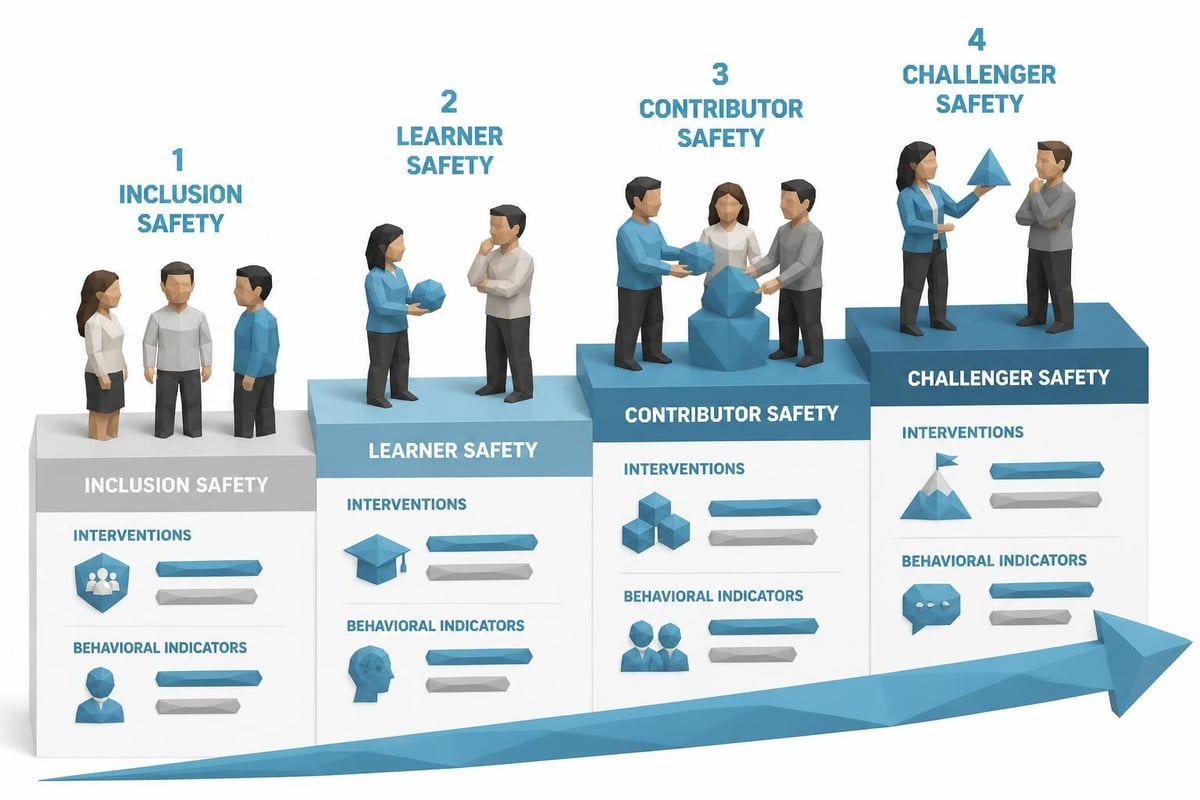
Low trust environments breed political maneuvering, information hoarding, and defensive behavior. Leadership team coaching builds trust through structured vulnerability exercises, accountability frameworks, and behavioral contracts.
The 4 stages of psychological safety provide a roadmap for systematically developing trust within teams. Coaches guide executives through progression from inclusion safety to challenger safety, where team members feel empowered to question status quo and propose innovative solutions.
Strategic Misalignment and Competing Priorities
Even talented executives can work at cross-purposes when strategic priorities remain unclear or contested. Leadership team coaching creates alignment through facilitated strategy sessions, priority-setting exercises, and resource allocation discussions.
Teams develop shared scorecards that make trade-offs explicit and create accountability for collective outcomes. This shifts focus from individual functional success to integrated organizational performance.
Implementing Scalable Team Coaching Programs
Organizations pursuing leadership team coaching at scale need structured implementation frameworks that maintain quality while expanding reach. The most successful programs balance standardization with customization.
Implementation phases typically include:
- Diagnostic Phase: Comprehensive assessment of team dynamics, organizational context, and desired outcomes
- Design Phase: Customized intervention planning aligned with assessment findings and strategic priorities
- Engagement Phase: Active coaching sessions combining skill-building, real-world application, and accountability
- Integration Phase: Embedding new behaviors into organizational systems and processes
- Sustainment Phase: Ongoing reinforcement and measurement to ensure lasting change
Each phase requires specific deliverables, success metrics, and stakeholder engagement. Organizations should establish clear governance structures that define roles, responsibilities, and decision rights throughout the coaching journey.
Measuring Return on Investment
Effective leadership team coaching generates measurable business impact. Organizations should establish KPIs before coaching begins and track progress consistently.
| Measurement Category | Sample Metrics | Data Sources |
|---|---|---|
| Team Effectiveness | Decision speed, meeting productivity, conflict resolution time | Process tracking, team surveys |
| Organizational Performance | Employee engagement, retention rates, productivity metrics | HR systems, operational data |
| Strategic Execution | Goal achievement, initiative completion, market responsiveness | Business dashboards, project tracking |
| Financial Impact | Revenue growth, cost reduction, efficiency gains | Financial reporting systems |
Regular measurement enables course corrections and demonstrates value to organizational sponsors. The data also informs future coaching investments and program refinements.
Government and Fortune 500 Applications
Leadership team coaching serves diverse organizational contexts with adapted approaches for different sectors. Government agencies and Fortune 500 companies face distinct challenges requiring specialized coaching methodologies.
Government Agency Considerations
Public sector organizations operate under unique constraints including political oversight, regulatory compliance, and mission-driven cultures. Leadership team coaching in government settings emphasizes:
- Mission alignment and public service values
- Stakeholder management across political boundaries
- Change management in bureaucratic systems
- Team morale and engagement in constrained environments
Coaches working with government teams need deep understanding of public sector dynamics, including procurement processes, transparency requirements, and civil service regulations. The coaching must align with broader organizational development initiatives while respecting institutional norms.
Fortune 500 Requirements
Large corporations demand coaching programs that scale across multiple business units while addressing enterprise-level strategic challenges. These organizations benefit from:
- Executive team alignment at division and corporate levels
- Culture transformation initiatives that cascade throughout organizations
- Leadership bench development for succession planning
- Integration support during mergers and acquisitions
Fortune 500 companies increasingly view leadership team coaching as competitive advantage rather than remedial intervention. Proactive coaching builds organizational resilience and adaptive capacity before crises emerge.

Integration with Organizational Systems
Sustainable leadership team coaching integrates with existing organizational systems rather than operating as isolated intervention. The most effective programs connect to talent management, performance management, and strategic planning processes.
HR leaders play critical roles in ensuring integration. They align coaching objectives with broader development plans and competency frameworks, creating coherent leadership development ecosystems.
Integration touchpoints include:
- Talent Reviews: Using coaching insights to inform succession planning and high-potential identification
- Performance Management: Incorporating team coaching objectives into individual and collective goal-setting
- Strategic Planning: Leveraging coached teams to drive strategy development and execution
- Culture Initiatives: Aligning team coaching with broader organizational culture change efforts
This systems approach ensures coaching investments reinforce rather than compete with other organizational priorities. Leaders see consistent messages and expectations across multiple touchpoints, accelerating behavior change and skill development.
Emerging Trends in Team Coaching
The leadership team coaching field continues evolving in response to changing work environments and organizational needs. Several trends are reshaping practice in 2026.
Virtual and hybrid team coaching has matured significantly, with coaches developing sophisticated approaches for building connection and accountability in distributed environments. Digital collaboration tools enable real-time coaching during actual team interactions rather than simulated exercises.
Data analytics increasingly inform coaching interventions. Advanced platforms track communication patterns, meeting effectiveness, and collaboration quality, providing coaches with granular insights that enable precise interventions. These technologies complement rather than replace human coaching expertise.
Focus on psychological safety examples demonstrates growing recognition that team performance depends on creating environments where members feel safe taking interpersonal risks. Coaches explicitly address psychological safety as foundational element of high-performing teams.
The integration of artificial intelligence in coaching support tools provides leaders with on-demand resources between formal coaching sessions. However, these tools enhance rather than replace skilled human coaches who navigate complex interpersonal dynamics and organizational politics.
Best Practices from Successful Programs
Organizations achieving exceptional results from leadership team coaching share common practices that maximize effectiveness and return on investment.
Executive Sponsorship and Commitment
The most successful programs secure active sponsorship from the CEO or senior executives who participate fully in coaching processes. This visible commitment signals organizational priority and creates accountability.
Sponsors should communicate coaching purpose, expected outcomes, and their personal commitment to the process. They participate in diagnostic activities, attend coaching sessions, and model desired behaviors throughout the organization.
Clear Success Criteria
Effective programs establish specific, measurable success criteria before coaching begins. These criteria align with strategic objectives and organizational priorities, ensuring coaching investments drive business results.
Success metrics should include both leading indicators (behavior changes, skill development) and lagging indicators (business outcomes, organizational performance). This balanced approach demonstrates coaching impact while enabling real-time adjustments.
Sustained Follow-Through
Leadership team coaching generates lasting impact when organizations commit to sustained follow-through beyond initial engagement. The best programs include:
- Regular reinforcement sessions that maintain momentum
- Peer accountability structures that support continued development
- Integration of learned practices into standard operating procedures
- Ongoing measurement and feedback loops
Organizations should view leadership team coaching as continuous investment rather than one-time intervention. The principles of coaching leaders emphasize sustained engagement for genuine transformation.
Selecting the Right Coaching Partner
Organizations seeking leadership team coaching must evaluate potential partners carefully. The quality and fit of the coaching provider significantly impact outcomes.
Key evaluation criteria include:
- Coach Quality: Credentials, experience, and track record with similar organizations
- Matching Process: Sophistication of coach-client matching methodology
- Assessment Tools: Validity and relevance of diagnostic instruments
- Program Flexibility: Ability to customize approaches for unique organizational needs
- Measurement Capability: Rigor of impact tracking and ROI demonstration
- Scalability: Capacity to support growth from pilot to enterprise-wide programs
Organizations should request case studies, speak with references, and pilot small-scale engagements before committing to enterprise programs. The investment in thorough provider evaluation pays dividends in superior outcomes.
Questions about does executive coaching work reflect appropriate skepticism. Organizations should demand evidence of effectiveness and insist on measurable outcomes tied to business priorities.
Cultural Transformation Through Team Coaching
Leadership team coaching serves as powerful catalyst for broader cultural transformation. When executive teams model new behaviors, demonstrate vulnerability, and hold each other accountable, these patterns cascade throughout organizations.
Cultural change requires more than aspirational value statements. It demands consistent behavior from leaders who shape organizational norms through daily actions and decisions. Coached leadership teams become culture carriers who actively reinforce desired behaviors and confront misalignment.
The process often surfaces difficult truths about existing culture, including unspoken norms, reward systems that contradict stated values, and structural barriers to desired behaviors. Effective coaches help teams navigate these discoveries productively, developing action plans that address root causes rather than symptoms.
Organizations serious about culture change must align leadership team coaching with broader transformation initiatives. This creates coherent narrative where coached teams drive culture evolution rather than reacting to externally imposed programs.
Leadership team coaching delivers measurable organizational impact when implemented with precision, sustained commitment, and integration into broader systems. The most effective programs combine evidence-based diagnostics with expert coaching matched to specific team needs and organizational contexts. Organizations pursuing excellence should partner with providers who demonstrate proven capability, rigorous measurement, and scalable methodologies. Noomii Leadership Coaching delivers precisely this combination through advanced assessments, proprietary matching algorithms, and a global network of certified executive coaches who transform leadership teams across government agencies, Fortune 500 companies, and organizations of every size. Learn more about how Noomii can help your leadership team achieve breakthrough results, and discover additional resources at https://accountabilitynow.net/ for comprehensive accountability frameworks.



Leave a Reply
Want to join the discussion?Feel free to contribute!