
Sir John Whitmore Coaching for Performance Guide
Sir John Whitmore revolutionized how organizations approach leadership development when he introduced his groundbreaking coaching methodology in the 1980s. His work transformed coaching from a niche practice into a fundamental management competency, demonstrating that asking the right questions unlocks far more potential than providing all the answers. For mid-market companies seeking measurable performance improvements, understanding sir john whitmore coaching for performance offers a practical framework that directly impacts business outcomes.
The Foundation of Performance Coaching
Sir John Whitmore's approach centered on a simple yet powerful premise: people perform best when they discover their own solutions rather than following prescribed instructions. This insight emerged from his background in sports psychology and his collaboration with Timothy Gallwey, author of "The Inner Game of Tennis."
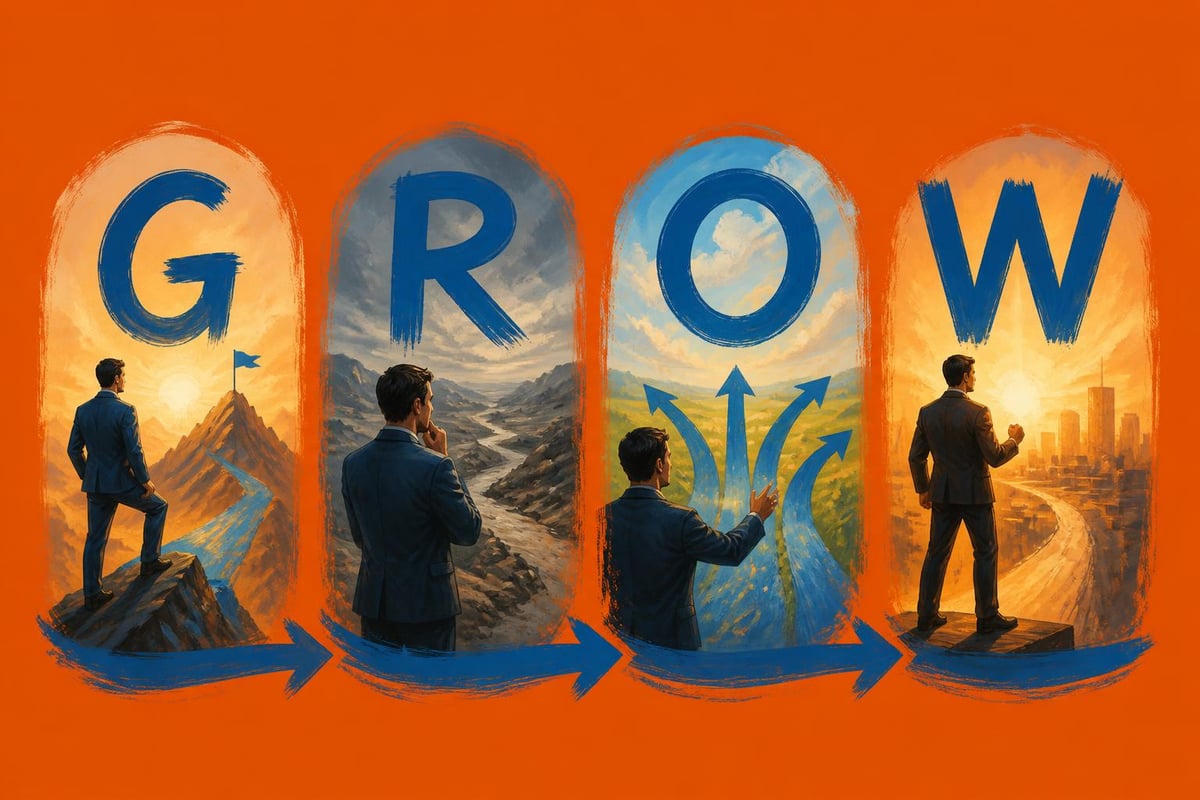
The GROW model became the practical expression of this philosophy. GROW stands for:
- Goal: Defining what the individual wants to achieve
- Reality: Examining the current situation objectively
- Options: Exploring possible approaches and solutions
- Will: Committing to specific actions with clear accountability
What distinguished sir john whitmore coaching for performance from traditional management was its focus on awareness and responsibility. Whitmore argued that leaders who foster these qualities in their teams create self-sufficient problem-solvers rather than dependent followers.
Why Traditional Management Fails
Most managers default to directive approaches because they're faster in the short term. Tell someone what to do, and the immediate problem gets solved. However, this creates three critical problems:
- Dependency: Team members stop thinking independently
- Bottlenecks: Every decision requires management approval
- Disengagement: People execute tasks without understanding why
The sir john whitmore coaching for performance methodology addresses these issues by shifting the manager's role from problem-solver to capability-builder. This aligns perfectly with research on psychological safety in the workplace, where employees who feel safe to think independently deliver superior results.
Applying GROW in Real Business Contexts
The Questioning Framework
Whitmore's genius lay in structuring questions that progress naturally through each GROW phase. Rather than asking "Why didn't you hit your target?" (which triggers defensiveness), a coaching manager asks "What factors influenced the outcome?" This subtle shift opens dialogue instead of shutting it down.
Effective GROW questions by stage:
| GROW Stage | Traditional Question | Coaching Question |
|---|---|---|
| Goal | What's your target? | What would success look like for you? |
| Reality | What went wrong? | What's working well, and what needs attention? |
| Options | Here's what you should do | What approaches have you considered? |
| Will | Get it done by Friday | What specific steps will you take, and by when? |
The Performance Consultants framework emphasizes that these questions must be genuine inquiries, not veiled instructions. When managers ask "Have you thought about doing X?" they're not coaching-they're directing with extra steps.
Real-World Implementation Challenges
Time pressure represents the biggest obstacle to adopting sir john whitmore coaching for performance. Managers believe coaching conversations take too long when deadlines loom. This misconception ignores the compounding returns: ten minutes spent coaching today saves hours of firefighting next month.
Mid-market companies face unique challenges here. Unlike enterprises with dedicated learning departments, these organizations need managers to coach while executing. This dual role requires manager training that goes beyond theory to practical application in live situations.

The Business Case for Performance Coaching
Measurable Outcomes
According to insights from Coaching for Performance, organizations that embrace Whitmore's methodology report:
- 35-50% improvement in decision-making speed
- 40% reduction in escalations to senior management
- 25-30% increase in employee engagement scores
- Lower turnover among high performers
These metrics matter because they tie directly to revenue and profitability. When managers coach rather than command, teams execute faster, adapt to changes more effectively, and require less supervision.
The Institute of Coaching biography on Whitmore highlights how his work demonstrated coaching's ROI decades before it became conventional wisdom. He proved that soft skills drive hard results.
Building a Coaching Culture
Implementing sir john whitmore coaching for performance at scale requires more than training individual managers. It demands systemic changes:
- Redefine performance metrics to include coaching behaviors
- Adjust meeting structures to incorporate coaching dialogues
- Model coaching at the executive level
- Provide ongoing practice through live observation and feedback
- Connect coaching to business KPIs rather than treating it as separate
Organizations often struggle because they treat coaching as an HR initiative disconnected from operations. Whitmore's approach works best when integrated into how work actually happens-in team meetings, project reviews, and strategic planning sessions.
For companies exploring how to find a career coach or wondering does executive coaching work, the answer lies in this integration. Coaching succeeds when it's embedded in daily workflows, not isolated in monthly sessions.
Modern Evolution of the GROW Model
Beyond the Basics
While GROW remains the foundation, practitioners have expanded the framework. The GROW(TH) model adds additional elements:
- Tactics: Specific implementation details
- Habits: Embedding new behaviors into routines
The Disruptive Leadership Institute’s analysis traces how GROW has been adapted for different contexts-from sales coaching to technical team leadership. The core principle remains constant: structured questioning that builds awareness and responsibility.
Technology and Coaching
Digital tools now support the sir john whitmore coaching for performance methodology in ways unavailable during his lifetime. Video coaching, AI-powered feedback, and distributed team platforms extend GROW's reach. However, as noted by experts on platforms like accountability coaching resources, technology amplifies good coaching but cannot replace the human element of genuine curiosity and presence.
Companies using Noomii’s corporate coaching approach benefit from coaches who combine Whitmore's proven frameworks with modern delivery methods, ensuring accessibility without sacrificing effectiveness.
Making Coaching Practical for Your Organization
Start Small, Scale Smart
Begin with pilot teams rather than company-wide rollouts. Identify three to five managers willing to experiment with coaching conversations for 90 days. Track specific metrics:
- Time spent on rework and corrections
- Employee-initiated solutions versus manager-directed solutions
- Team member confidence in decision-making
- Manager availability for strategic work
These concrete indicators demonstrate ROI better than abstract engagement scores. When peers see results, adoption accelerates organically.

Common Pitfalls to Avoid
Fake coaching occurs when managers ask GROW questions but ignore the answers, proceeding with their predetermined solution. This damages trust more than simple directive management.
Over-coaching happens when managers apply GROW to routine tasks that require quick decisions. Not every situation needs a coaching conversation-urgency and coaching must coexist.
Inconsistent application undermines credibility. When managers coach sporadically, team members never develop confidence in the approach. Establish regular rhythms: weekly one-on-ones using GROW, monthly skill-building sessions, quarterly development reviews.
Sir John Whitmore's coaching for performance methodology remains relevant precisely because it addresses timeless human dynamics: people want to contribute meaningfully, think independently, and see the impact of their work. These drivers haven't changed, even as business contexts evolve. For mid-market companies seeking practical leadership development that drives measurable results, Noomii delivers coaching embedded in your operations-live in your meetings, tied to your KPIs, with month-to-month terms that keep us accountable to visible outcomes.



Leave a Reply
Want to join the discussion?Feel free to contribute!