Our Coaches: The Strategic Advantage in Leadership Transformation
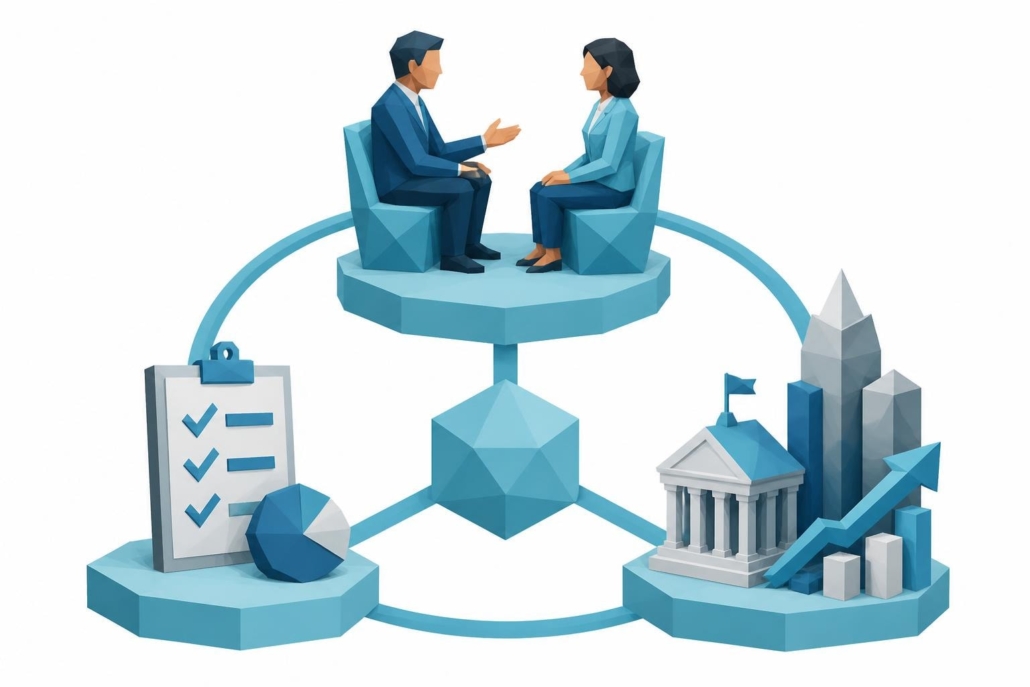
The caliber of coaching talent within an organization's leadership development strategy determines whether initiatives deliver measurable transformation or simply check compliance boxes. Organizations investing in executive development programs in 2026 face a critical decision: selecting coaching partners who bring not just credentials, but proven methodologies, sector-specific expertise, and the ability to navigate complex organizational dynamics. The difference between surface-level interventions and sustainable leadership transformation lies in the expertise, matching precision, and strategic approach that our coaches bring to every engagement.
The Evolution of Corporate Coaching Expertise
Corporate leadership coaching has transformed from a remedial intervention for struggling executives into a strategic imperative for organizational success. Our coaches represent this evolution, bringing rigorous training, specialized certifications, and extensive experience across diverse industries and leadership challenges.
The leadership coaching industry is projected to reach $206 billion by 2032, driven by organizations recognizing that executive development directly impacts retention, innovation, and competitive advantage. This growth reflects a fundamental shift in how businesses view coaching investments.
Certification Standards and Continuous Development
Our coaches maintain credentials from internationally recognized coaching bodies, including ICF (International Coach Federation), EMCC (European Mentoring and Coaching Council), and specialized executive coaching programs. These certifications require hundreds of documented coaching hours, ongoing professional development, and adherence to ethical standards.
Key certifications our coaches hold:
- Professional Certified Coach (PCC) and Master Certified Coach (MCC) designations
- Specialized executive coaching certifications from leading business schools
- Industry-specific credentials in healthcare leadership, government administration, and corporate governance
- Advanced training in leadership assessment tools (Hogan, EQi 2.0, 360-degree feedback instruments)
- Psychological safety and organizational culture transformation expertise
Beyond initial certification, our coaches engage in continuous learning to stay current with emerging leadership challenges, from understanding psychological safety frameworks to integrating evidence-based practices for toxic leader transformation.
Sector Expertise That Drives Precision Matching
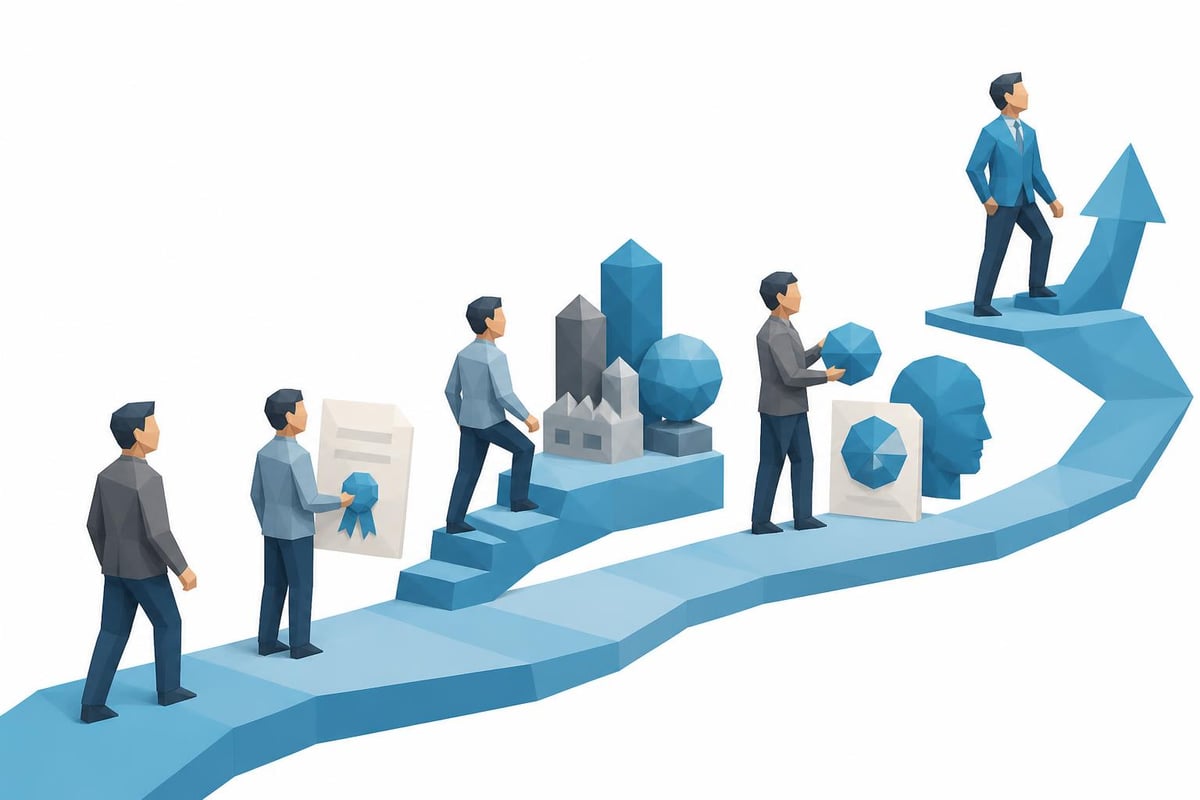
Generic coaching approaches fail when applied to complex organizational environments. Our coaches bring deep sector knowledge that enables them to understand context, anticipate challenges, and speak the language of the industries they serve.
| Sector | Specialized Coach Expertise | Typical Challenges Addressed |
|---|---|---|
| Government Agencies | Public service leadership, stakeholder management, compliance frameworks | Mission alignment, bureaucratic navigation, team morale |
| Fortune 500 Corporations | Executive presence, board relations, strategic decision-making | Succession planning, change leadership, cultural transformation |
| Healthcare Organizations | Clinical leadership, patient safety culture, regulatory compliance | Physician leadership development, interdisciplinary collaboration |
| Technology Companies | Innovation leadership, rapid scaling, talent retention | Managing hypergrowth, building resilient teams, strategic pivots |
This specialization enables our coaches to deliver targeted interventions rather than one-size-fits-all programs. When addressing challenges like those outlined in our toxic leader framework, sector expertise ensures coaches understand both the behavioral dynamics and the organizational context driving those patterns.
Matching Methodology: Beyond Surface Credentials
The proprietary matching algorithms that pair leaders with our coaches analyze multiple dimensions beyond basic qualifications:
- Leadership challenge specificity – Matching coaches who have successfully addressed similar situations
- Industry context and regulatory environment – Ensuring coaches understand compliance, governance, and sector norms
- Personality and communication style compatibility – Using assessment data to optimize coach-client chemistry
- Geographic and cultural considerations – Accounting for regional business practices and cultural nuances
- Developmental stage and career trajectory – Aligning coach experience with where leaders are in their journey
This precision matching ensures that when organizations invest in coaching, they're pairing leaders with coaches who can deliver immediate value and measurable outcomes.
Evidence-Based Coaching Methodologies
Our coaches operate from proven frameworks rather than intuition-based approaches. Every engagement begins with rigorous assessment, proceeds through structured interventions, and concludes with measurable outcomes.
The Six Principles Framework
Our coaches follow six core principles of effective leadership coaching that create the foundation for transformational work:
- Creating a supportive coaching environment where leaders feel safe exploring vulnerabilities
- Working within the coachee's agenda rather than imposing predetermined solutions
- Fostering self-awareness through reflection, feedback, and assessment insights
- Building on strengths while addressing developmental opportunities
- Encouraging experimentation with new behaviors in low-risk environments
- Ensuring accountability through clear commitments and progress tracking
These principles transform abstract coaching conversations into concrete behavioral change that organizations can measure and leaders can sustain.
Diagnostic Tools and Assessment Integration
Our coaches leverage validated assessment instruments to establish baselines, identify patterns, and track progress. These tools provide objective data that complements subjective observations and self-reporting.
Commonly deployed assessment tools:
- 360-degree feedback instruments measuring leadership competencies across stakeholder groups
- Personality assessments (Hogan, MBTI, DiSC) revealing behavioral tendencies and blind spots
- Emotional intelligence inventories identifying social awareness and relationship management capabilities
- Leadership style diagnostics determining adaptive versus maladaptive patterns
- Organizational culture assessments measuring psychological safety, trust, and engagement
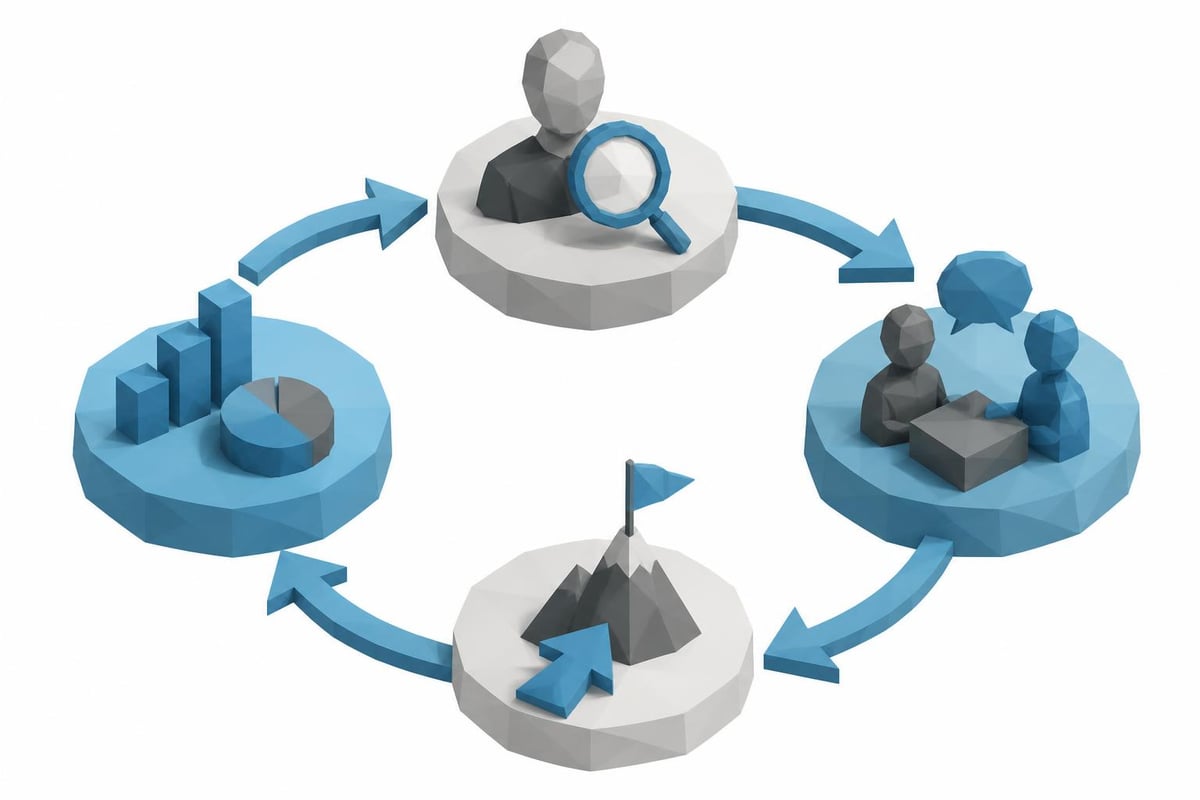
Integration of assessment data distinguishes our coaches from practitioners who rely solely on conversational inquiry. This evidence-based approach enables precision interventions targeting specific competency gaps rather than broad developmental themes.
Navigating Complex Organizational Dynamics
The most valuable coaching work happens not in isolation but within the complex systems where leaders operate. Our coaches bring systems thinking capabilities that address individual development while accounting for organizational culture, team dynamics, and structural constraints.
Addressing Toxic Leadership Patterns
When organizations face toxic leadership challenges, our coaches deploy specialized interventions that go beyond awareness-building. They work with leaders to:
- Identify triggering situations and automatic response patterns
- Understand the organizational impact of their behaviors
- Develop alternative responses aligned with desired leadership brand
- Practice new behaviors with structured accountability
- Repair relationships damaged by previous patterns
This work requires coaches who can balance empathy with directness, supporting leaders through difficult self-examination while maintaining clear expectations for behavioral change.
Building Psychological Safety Across Teams
Our coaches understand that individual leadership development creates limited impact without attention to team dynamics. They integrate frameworks like the 4 stages of psychological safety to help leaders create environments where teams can perform at their highest levels.
This includes coaching leaders to:
- Model vulnerability and acknowledge mistakes without defensiveness
- Invite dissenting opinions and reward constructive challenge
- Respond to failures as learning opportunities rather than threats
- Establish clear behavioral norms that reinforce inclusion and respect
- Hold team members accountable for maintaining psychological safety
The evolving landscape of leadership coaching in 2025 emphasizes these soft skills and inclusive leadership capabilities as essential for organizational success in an increasingly complex business environment.
Delivering Measurable Business Impact
Organizations investing in leadership development rightfully demand evidence that coaching delivers tangible returns. Our coaches design engagements with clear success metrics from the outset, ensuring accountability for outcomes rather than activity.
Return on Investment Framework
Key performance indicators tracked across coaching engagements:
| Metric Category | Specific Measures | Data Sources |
|---|---|---|
| Individual Performance | Goal achievement rates, promotion readiness, stakeholder feedback scores | 360 assessments, performance reviews, peer nominations |
| Team Effectiveness | Engagement scores, retention rates, productivity metrics | Employee surveys, turnover data, output measures |
| Organizational Culture | Psychological safety indicators, innovation metrics, collaboration scores | Culture assessments, project outcomes, cross-functional initiatives |
| Financial Impact | Revenue per leader, cost savings from retention, time-to-productivity for new leaders | HR analytics, financial reports, onboarding metrics |
Research shows that organizations experience an average ROI of 500-700% on leadership coaching investments, with benefits extending beyond the coached individual to their teams and broader organizational ecosystems.
Case Example: Fortune 500 Executive Transformation
A global manufacturing company engaged our coaches to address an executive whose technical brilliance was overshadowed by abrasive communication that eroded team morale. The engagement included:
- Baseline 360-degree assessment revealing significant perception gaps
- Targeted interventions on emotional regulation and stakeholder management
- Weekly practice sessions with accountability for new behaviors
- Team facilitation to rebuild trust and establish new norms
- Follow-up assessment at 6 and 12 months
Results included a 40-point increase in leadership effectiveness scores, 25% improvement in team engagement, and zero voluntary turnover over the subsequent 18 months compared to 35% in the prior period.
Integration With Organizational Systems
Our coaches don't operate as isolated consultants but as strategic partners who integrate their work with broader talent management and organizational development initiatives.
Alignment With HR Frameworks
Effective coaching complements existing leadership development infrastructure rather than competing with it. Our coaches coordinate with:
- Succession planning processes to accelerate high-potential leader readiness
- Performance management systems to reinforce goal achievement and accountability
- Learning and development programs to extend classroom concepts into practical application
- Diversity, equity, and inclusion initiatives to build inclusive leadership capabilities
- Change management efforts to support leaders through organizational transitions
This integration ensures coaching investments amplify rather than duplicate existing development resources.
Compliance and Governance Considerations
Organizations in regulated industries or government sectors face unique coaching requirements. Our coaches understand compliance frameworks and ethical standards specific to these environments.
Specialized capabilities for regulated sectors:
- Maintaining confidentiality while meeting reporting requirements
- Understanding conflict of interest considerations in government settings
- Navigating procurement and vendor management processes
- Documenting outcomes to satisfy audit and accountability standards
- Addressing leadership challenges within hierarchical organizational structures
For government agencies particularly, our coaches bring experience aligning leadership development with mission objectives and public service values while navigating complex stakeholder environments.
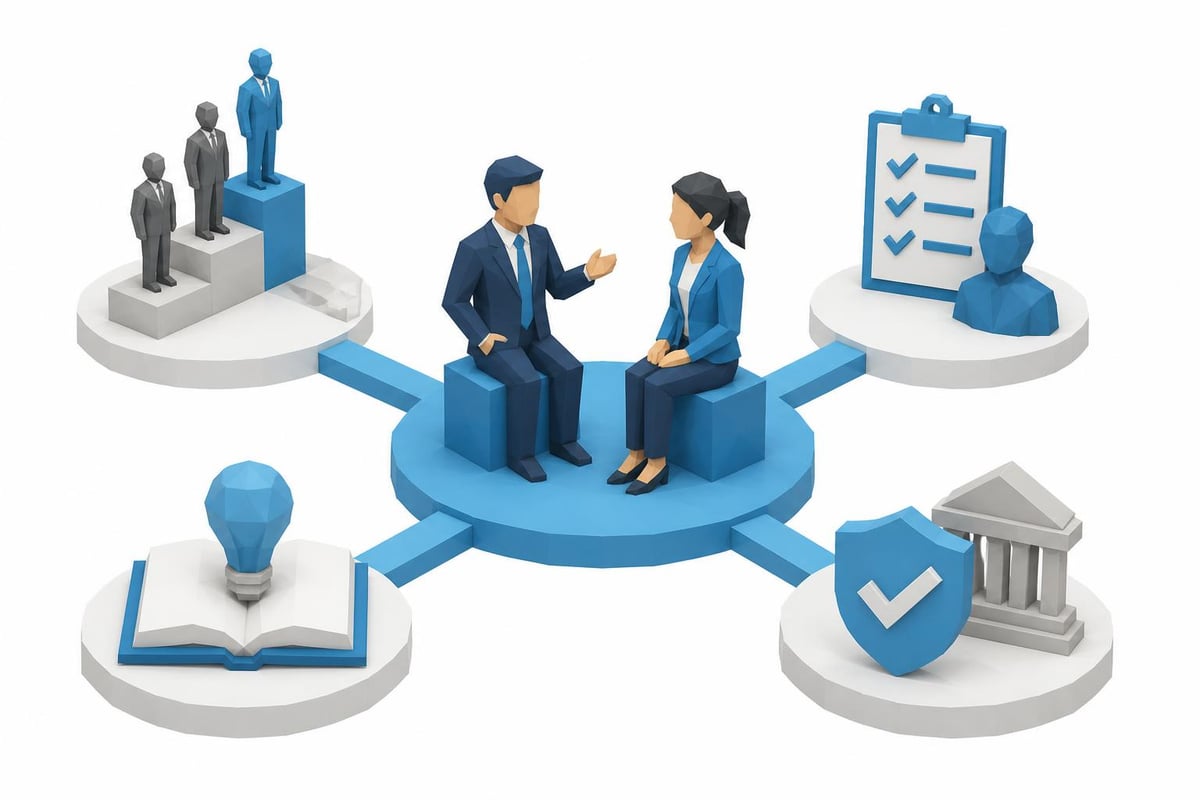
The Future of Leadership Coaching Expertise
As organizations face accelerating change, our coaches continuously evolve their capabilities to address emerging leadership challenges. Trends in corporate leadership coaching point toward several areas where our coaches are developing advanced expertise.
Hybrid Work Leadership
The permanent shift to hybrid work models demands new leadership capabilities. Our coaches help leaders:
- Build connection and culture across distributed teams
- Adapt communication strategies for virtual and asynchronous contexts
- Maintain accountability without defaulting to micromanagement
- Create equitable experiences for remote and in-office team members
- Leverage technology to enhance rather than replace human connection
AI-Augmented Leadership Development
While technology cannot replace the human elements of coaching, our coaches increasingly integrate digital tools to enhance their effectiveness. From assessment platforms to progress tracking applications, technology enables more frequent touchpoints and data-driven insights between formal sessions.
Organizations interested in leadership executive coaching benefit from coaches who thoughtfully integrate these tools without losing the relational foundation that drives transformation.
Resilience and Adaptive Capacity
The complexity and unpredictability characterizing modern business environments require leaders who can navigate ambiguity and recover from setbacks. Our coaches develop these capabilities through:
- Stress tolerance and emotional regulation techniques
- Cognitive flexibility exercises that challenge fixed mindsets
- Scenario planning and strategic thinking development
- Post-crisis reflection protocols that extract learning from failure
- Network building to access diverse perspectives and support
These competencies differentiate leaders who thrive under pressure from those who struggle when circumstances deviate from plans.
Selecting Coaching Partners for Strategic Impact
Organizations evaluating coaching partnerships should examine not just individual coach credentials but the systems, methodologies, and support infrastructure surrounding them. Our coaches benefit from:
Rigorous vetting processes ensuring only top-tier practitioners join our network
Ongoing quality assurance through client feedback, outcome tracking, and peer review
Professional development resources including case consultation, continuing education, and methodology updates
Technology platforms that streamline matching, scheduling, progress tracking, and outcome measurement
Research partnerships connecting coaches with emerging best practices and evidence-based innovations
This infrastructure ensures our coaches can focus on what they do best – transforming leaders and organizations – while benefiting from systems that enhance their effectiveness.
Questions to Ask Potential Coaching Partners
When evaluating whether our coaches align with your organizational needs, consider these questions:
- What specific sector experience do your coaches bring to our industry's unique challenges?
- How do you measure coaching effectiveness beyond participant satisfaction?
- What assessment tools and frameworks guide your coaching methodology?
- How do you ensure confidentiality while maintaining organizational visibility into progress?
- What support exists for coaches beyond their individual expertise?
- How do coaching engagements integrate with our existing talent development systems?
- What happens when initial coach-client matches don't produce desired chemistry?
- How do you stay current with emerging leadership challenges and best practices?
Organizations that understand whether executive coaching works examine these structural elements alongside individual coach qualifications.
Scaling Coaching Across Organizational Levels
While executive coaching historically focused on C-suite leaders, forward-thinking organizations extend coaching benefits across leadership levels to build capabilities throughout the management pipeline. Our coaches deliver scalable solutions that maintain quality while expanding reach.
Tiered Coaching Approaches
Executive Level (C-suite and Senior VPs):
- Intensive 1:1 engagements with 6-12 month durations
- Focus on strategic decision-making, board relations, organizational transformation
- Frequent sessions (bi-weekly or weekly) with between-session assignments
Director and Senior Manager Level:
- Focused engagements addressing specific developmental areas
- 3-6 month durations with emphasis on practical application
- Integration with team dynamics and cross-functional leadership
Emerging Leader Level:
- Group coaching and peer learning circles
- Foundation-building on core leadership competencies
- Shorter intervention periods (8-12 sessions) with clear developmental themes
This tiered approach allows organizations to deploy coaching resources strategically while building leadership capabilities at every level.
Team Coaching and Group Interventions
Our coaches also facilitate team-level interventions that address collective dynamics rather than individual development. These engagements focus on:
- Establishing shared purpose and behavioral norms
- Improving communication and conflict resolution patterns
- Building trust and accountability across team members
- Enhancing decision-making processes and strategic alignment
- Creating feedback cultures that support continuous improvement
Team coaching delivers multiplier effects, transforming not just individual leaders but the systems within which they operate.
Why Organizations Choose Our Coaches
The distinction between adequate coaching and transformational coaching lies in the expertise, methodology, and support infrastructure coaches bring to their work. Organizations choose our coaches because they deliver:
Proven track records with documented outcomes across similar organizational contexts
Specialized expertise addressing complex challenges from toxic leadership to cultural transformation
Evidence-based methodologies grounded in research and validated through practice
Systems thinking that accounts for organizational dynamics beyond individual behavior
Measurement rigor ensuring accountability for tangible results
Seamless integration with existing talent management and development frameworks
Scalability that maintains quality while expanding coaching benefits across leadership levels
The investment organizations make in leadership development determines whether they build adaptive, resilient cultures or simply maintain status quo performance. Our coaches represent the strategic advantage that transforms potential into measurable business impact.
Organizations committed to leadership excellence recognize that coaching quality directly impacts organizational outcomes. The choice of coaching partners shapes not just individual leader effectiveness but organizational culture, team performance, and long-term competitive advantage. When evaluating coaching solutions, examine not just credentials but the comprehensive systems, methodologies, and proven outcomes that distinguish truly transformational partnerships from transactional vendor relationships. For leaders seeking guidance, resources like Accountability Now can complement formal coaching programs with additional structure and support.
Leadership transformation requires more than good intentions and surface-level interventions. The expertise, sector knowledge, and proven methodologies our coaches bring to every engagement determine whether organizations achieve sustainable change or fleeting improvements. Noomii Leadership Coaching delivers precision coach matching, evidence-based diagnostics, and measurable impact through our global network of certified executive coaches who transform leaders and organizations at every level.



Leave a Reply
Want to join the discussion?Feel free to contribute!