
Estate Management Course: Building Leadership Excellence
Property and estate management professionals face increasingly complex challenges in 2026, from regulatory compliance to tenant expectations and operational efficiency. An estate management course provides the foundation for success in this demanding field, equipping managers with skills that extend far beyond property maintenance. These programs develop leadership capabilities, financial acumen, and strategic thinking that transform property managers into business leaders who drive measurable results.
Core Components of Estate Management Education
An estate management course typically covers several critical areas that prepare professionals for real-world challenges. The curriculum balances technical knowledge with leadership development, creating well-rounded managers capable of handling diverse responsibilities.
Property Operations and Financial Management
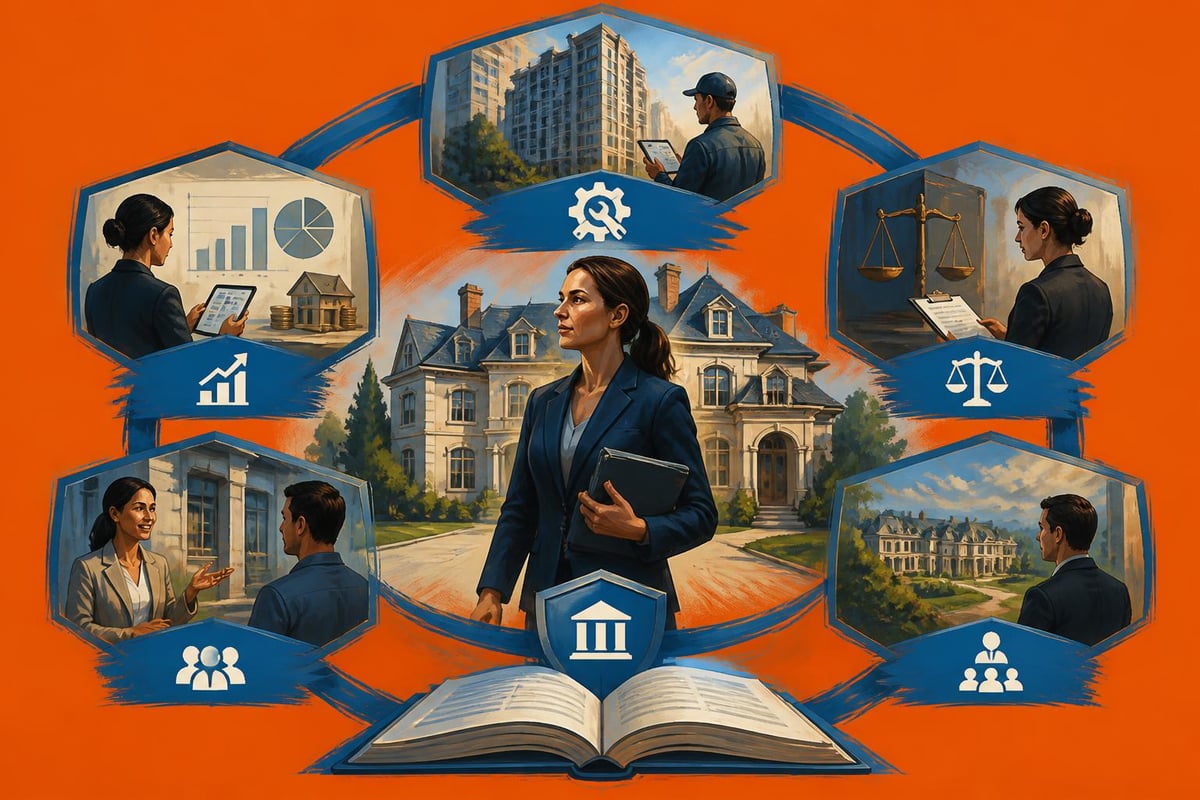
The operational foundation of any estate management course includes property maintenance systems, budgeting and financial reporting, and vendor management. Students learn to create operating budgets, analyze financial statements, and implement cost-control measures that improve net operating income.
Programs like the Property Management course at UCLA Extension emphasize practical financial skills including lease administration, rent collection, and capital improvement planning. These competencies directly impact property performance and investor returns.
Legal and Regulatory Frameworks
Understanding property law, fair housing regulations, and lease agreements forms another pillar of estate management education. Courses cover landlord-tenant law, contract negotiations, and risk management strategies that protect both property owners and occupants.
The legal aspects of real estate are particularly complex, requiring managers to stay current with changing regulations. A solid foundation in real estate law helps managers navigate disputes, ensure compliance, and minimize liability exposure.
Career Pathways and Professional Development
Completing an estate management course opens numerous career opportunities across residential, commercial, and industrial property sectors. The Institute of Real Estate Management provides comprehensive career resources that outline growth trajectories for property management professionals.
| Career Level | Typical Roles | Key Responsibilities |
|---|---|---|
| Entry-Level | Assistant Property Manager, Leasing Agent | Tenant relations, inspections, rent collection |
| Mid-Level | Property Manager, Portfolio Manager | Operations oversight, budgeting, team leadership |
| Senior-Level | Regional Manager, Director of Property Management | Strategic planning, P&L accountability, vendor negotiations |
| Executive | VP of Operations, Asset Manager | Portfolio optimization, investor relations, growth strategy |
Developing Leadership Capabilities
The most effective estate management programs recognize that technical skills alone don't create successful leaders. Managers must develop coaching abilities, communication excellence, and strategic thinking to build high-performing teams.
Property management professionals who invest in leadership development see improved team engagement, reduced turnover, and stronger operational results. These outcomes mirror the principles of effective executive coaching that transforms managers into leaders who drive accountability and performance.
Integrating Theory with Practical Application
Academic programs increasingly emphasize hands-on learning experiences that bridge classroom theory and real-world challenges. Virginia Tech’s Property Management major and Ball State University’s program both incorporate internships, case studies, and simulations that prepare students for immediate workplace contribution.
This practical approach aligns with modern corporate coaching methodologies that prioritize measurable outcomes over theoretical frameworks. Just as effective coaching ties progress to clear KPIs, the best estate management courses connect learning objectives to performance metrics.

Building Operational Excellence
Estate managers who complete comprehensive training programs learn to establish operating cadences, performance dashboards, and accountability systems that drive consistent results. These frameworks help teams execute priorities cleanly while maintaining focus on key performance indicators.
The skills developed through an estate management course translate directly to improved property performance:
- Reduced operating expenses through efficient vendor management
- Higher tenant satisfaction and retention rates
- Improved collections and reduced delinquency
- Stronger net operating income and property values
- Enhanced team productivity and reduced turnover
Specialized Training for Diverse Property Types
Different property sectors require specialized knowledge beyond general estate management principles. Residential property managers need deep expertise in tenant relations and fair housing law, while commercial property managers focus on lease negotiations and tenant improvement coordination.
Residential vs. Commercial Focus Areas
Residential Property Management emphasizes:
- Tenant screening and placement
- Lease renewals and retention strategies
- Maintenance coordination and emergency response
- Community building and resident satisfaction
Commercial Property Management prioritizes:
- CAM reconciliation and triple-net lease administration
- Tenant buildout coordination
- Occupancy optimization and lease negotiations
- Property repositioning and value enhancement
Online property management courses provide flexibility for working professionals to gain specialized credentials while maintaining their current responsibilities. This accessibility enables continuous professional development without career interruption.
Aligning Education with Business Outcomes
The most valuable estate management course outcomes extend beyond individual competency development to organizational impact. Managers who apply their training effectively create systems that outlast individual contributions and build sustainable competitive advantages.
For organizations considering investments in property management training, evaluating programs based on their emphasis on accountability, measurement, and practical application ensures maximum return on educational spending. The same principles that drive successful business coaching outcomes apply to estate management education-clear metrics, regular feedback, and demonstrated results.
Creating Accountable Property Management Teams
Estate managers trained in leadership principles create cultures of accountability where team members understand expectations, track progress against goals, and take ownership of outcomes. This approach, supported by resources like AccountabilityNow, transforms property management from reactive problem-solving to proactive performance optimization.
Programs that integrate leadership development with technical training prepare managers to:
- Establish clear performance expectations for all team members
- Implement regular check-ins and progress reviews
- Connect individual activities to property-level KPIs
- Provide coaching and development for underperforming staff
- Celebrate wins and recognize high performers
Selecting the Right Training Program
When evaluating estate management courses, professionals should consider program accreditation, faculty expertise, curriculum relevance, and career support services. Nichols College’s Real Estate Management degree integrates licensing preparation, providing added value for students seeking professional credentials.
The investment in quality education pays dividends throughout a property management career, opening doors to advancement opportunities and higher compensation. Working with career coaches can help professionals identify the most strategic educational investments for their specific goals and circumstances.
An estate management course provides the technical foundation and leadership skills necessary for success in today's complex property management environment, with measurable outcomes that benefit both individual careers and organizational performance. For mid-market companies seeking to build stronger operational teams and accountable leaders who drive results, Noomii delivers practical corporate coaching tied to clear KPIs-coaching that happens in your meetings, not on the sidelines, with month-to-month terms that keep us focused on visible, measurable business results.



Leave a Reply
Want to join the discussion?Feel free to contribute!