

Executive Performance and Accountability Coaching Frankfurt
Frankfurt's position as Europe's financial powerhouse demands exceptional leadership at every organizational level. As global corporations, mid-market firms, and government agencies navigate increasingly complex challenges, the need for executive performance and accountability coaching in Frankfurt has reached unprecedented levels. The city's unique business ecosystem requires leaders who can balance strategic vision with operational excellence while maintaining accountability to stakeholders across multiple markets and cultures.
The Frankfurt Executive Landscape and Its Unique Demands
Frankfurt serves as headquarters to the European Central Bank, Deutsche Bundesbank, and numerous multinational corporations. This concentration of financial and corporate power creates specific leadership challenges that generic coaching programs often fail to address.
Executives operating in Frankfurt face distinctive pressures. They must navigate stringent regulatory environments, manage culturally diverse teams spanning multiple time zones, and deliver results that satisfy both local stakeholders and international boards. The traditional German business culture emphasizes precision, reliability, and structured decision-making, yet global integration demands agility and innovation.

Performance Metrics That Matter in 2026
Modern executive performance measurement has evolved far beyond quarterly revenue targets. Organizations implementing executive performance and accountability coaching in Frankfurt now track multidimensional indicators that reflect true leadership effectiveness.
| Performance Category | Key Indicators | Measurement Frequency |
|---|---|---|
| Strategic Execution | Initiative completion rate, ROI on strategic projects | Quarterly |
| Team Development | Employee engagement scores, retention rates, succession readiness | Bi-annually |
| Stakeholder Impact | Board confidence ratings, client satisfaction, regulatory compliance | Quarterly |
| Innovation Leadership | New initiatives launched, market adaptation speed | Annually |
| Personal Accountability | 360-degree feedback scores, commitment fulfillment rate | Bi-annually |
The shift toward comprehensive metrics reflects a broader understanding that sustainable executive performance requires accountability across multiple dimensions. Leaders who excel in Frankfurt's competitive environment demonstrate consistent results across all these categories rather than excelling in isolation.
Accountability Systems That Drive Sustainable Change
Executive accountability extends beyond meeting performance targets. It encompasses ethical leadership, transparent communication, and consistent follow-through on commitments. Many organizations struggle when their accountability systems focus solely on outcomes while ignoring the behaviors and decisions that produce those results.
Effective executive performance and accountability coaching in Frankfurt establishes clear frameworks that connect daily actions to strategic objectives. This approach requires structured accountability partners, regular check-ins, and predetermined consequences for both achievement and deviation from agreed-upon standards.
The accountability framework includes:
- Weekly progress reviews against specific commitments
- Transparent reporting mechanisms to key stakeholders
- Documented decision-making processes for strategic choices
- Regular assessment of leadership behaviors and their organizational impact
- Structured feedback loops from direct reports and peers
Leaders who embrace these accountability systems consistently outperform those who rely solely on self-regulation. The external perspective provided through professional coaching creates objectivity that internal processes cannot replicate.
Building Accountability Into Organizational Culture
Individual executive accountability creates limited impact without supportive organizational systems. The most successful implementations of professional coaching programs integrate accountability principles throughout leadership teams and eventually across entire organizations.
This cultural transformation begins with senior leaders modeling accountability behaviors. When C-suite executives demonstrate transparent communication about challenges, acknowledge mistakes openly, and follow through consistently on commitments, these behaviors cascade through organizational levels.
Diagnostic Precision: Understanding Before Intervening
Generic leadership development programs frequently fail because they apply standardized solutions to unique organizational contexts. Executive performance and accountability coaching in Frankfurt succeeds when it begins with comprehensive diagnostic assessment rather than predetermined interventions.
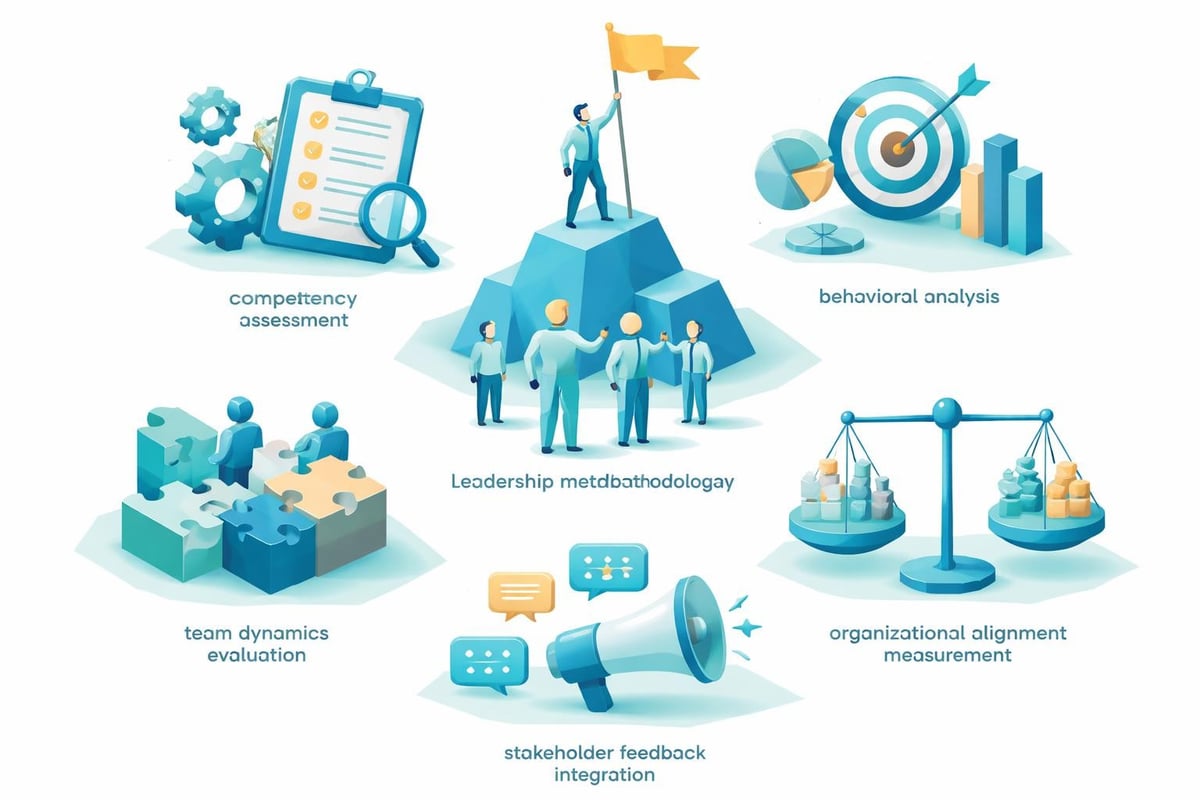
Advanced leadership diagnostics evaluate multiple dimensions simultaneously:
- Individual competency mapping across technical, interpersonal, and strategic domains
- Behavioral pattern analysis identifying productive and counterproductive habits
- Team dynamic assessment revealing collaboration effectiveness and conflict patterns
- Organizational alignment evaluation measuring coherence between individual actions and institutional goals
- Stakeholder perception analysis capturing 360-degree feedback from multiple organizational levels
These assessments create baseline data that enables precise intervention design. Rather than implementing generic leadership training, organizations can address specific gaps identified through evidence-based evaluation.
Matching Precision With Specialized Expertise
The Frankfurt market offers numerous coaching options, yet quality varies dramatically. Organizations seeking executive performance and accountability coaching in Frankfurt must evaluate coaches based on specific expertise relevant to their challenges rather than general credentials alone.
Specialized matching considers:
- Industry-specific experience in banking, manufacturing, technology, or professional services
- Cultural competency for managing international teams
- Proven track record addressing similar leadership challenges
- Coaching methodology alignment with organizational culture
- Language capabilities beyond basic English proficiency
When selecting executive coaching services, many organizations overlook the importance of methodology alignment. A coach's approach must complement rather than conflict with existing organizational development frameworks. This integration ensures coaching reinforces internal initiatives rather than creating competing priorities.
Addressing Toxic Leadership Patterns
Frankfurt's competitive business environment sometimes cultivates leadership behaviors that deliver short-term results while creating long-term organizational damage. Identifying and addressing these toxic patterns requires courage and specialized intervention strategies.
Common toxic leadership manifestations include:
- Command-and-control micromanagement that stifles innovation and reduces team autonomy
- Results-at-any-cost mentality that ignores ethical boundaries and employee wellbeing
- Information hoarding that concentrates power and prevents organizational learning
- Favoritism and inconsistent standards that undermine team cohesion
- Blame deflection that prevents accountability and organizational improvement
Effective executive performance and accountability coaching in Frankfurt addresses these patterns through structured intervention rather than mere awareness-building. This includes establishing clear behavioral standards, implementing accountability mechanisms, and sometimes involving specialized support for toxic leadership transformation.
The ROI of Behavioral Intervention
Organizations often hesitate to invest in behavioral coaching, viewing it as soft skill development with unclear returns. This perspective ignores substantial research demonstrating measurable ROI from effective executive coaching interventions.
| Intervention Area | Typical ROI Range | Measurement Timeline |
|---|---|---|
| Leadership effectiveness improvement | 300-700% | 12-18 months |
| Team productivity enhancement | 200-400% | 6-12 months |
| Employee retention improvement | 150-300% | 12-24 months |
| Innovation acceleration | 250-500% | 18-36 months |
These returns reflect comprehensive program implementation rather than isolated coaching sessions. The investment in executive performance and accountability coaching in Frankfurt generates returns through multiple channels: reduced turnover costs, improved team productivity, faster strategic execution, and enhanced organizational reputation.
Structured Coaching Programs Versus Ad Hoc Sessions
Many executives engage coaches reactively, seeking support during crises or transitions. While situational coaching provides value, structured programs deliver significantly greater impact through consistent engagement and cumulative skill development.
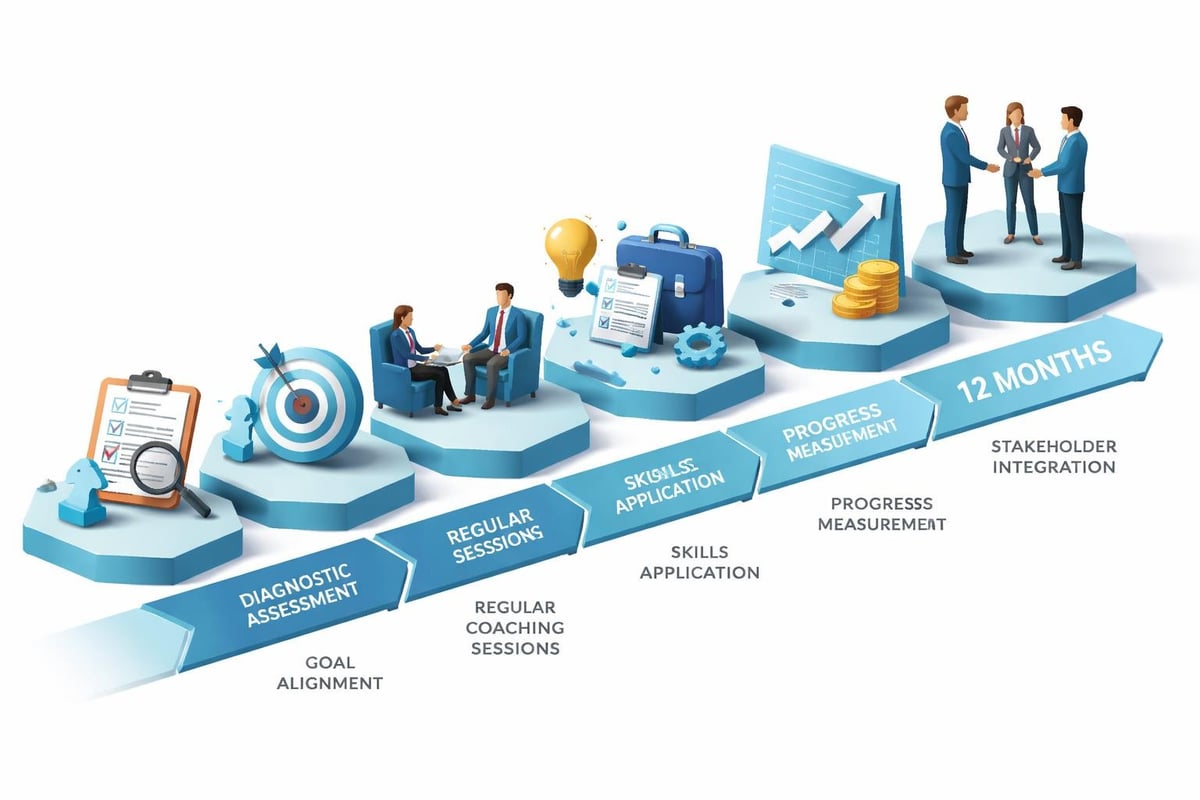
Structured programs typically include:
- Initial diagnostic assessment establishing baseline performance and identifying priority development areas
- Goal-setting sessions defining specific, measurable objectives aligned with organizational needs
- Regular coaching conversations scheduled weekly or bi-weekly for sustained momentum
- Skills practice and application between sessions with accountability for implementation
- Progress evaluation and adjustment at predetermined intervals to optimize effectiveness
- Stakeholder involvement including feedback from supervisors, peers, and direct reports
Organizations implementing these comprehensive executive coaching packages report significantly higher satisfaction and measurable impact compared to reactive coaching engagements. The structure creates accountability that casual arrangements cannot replicate.
Integration With Broader Leadership Development
Executive performance and accountability coaching in Frankfurt achieves maximum impact when integrated with broader organizational development initiatives. Isolated coaching creates individual growth that organizational systems may not support or utilize effectively.
Strategic integration involves coordination between coaching programs, leadership training initiatives, succession planning, and performance management systems. This holistic approach, often supported by specialized training partners who deliver complementary skills development, ensures that individual executive growth aligns with and reinforces institutional objectives.
Navigating Cultural Complexity in Frankfurt's International Environment
Frankfurt's position as a global financial hub creates unique cultural dynamics that influence executive effectiveness. Leaders must navigate traditional German business practices while managing teams that include professionals from dozens of nationalities with divergent communication styles and decision-making preferences.
Effective intercultural leadership coaching addresses these complexities by developing cultural intelligence alongside traditional executive competencies. This includes understanding how communication preferences vary across cultures, adapting leadership styles to diverse team compositions, and creating inclusive decision-making processes that leverage multicultural perspectives.
Cultural competency development focuses on:
- Recognizing implicit cultural assumptions that influence leadership decisions
- Adapting communication approaches for diverse audiences
- Managing conflict across cultural boundaries
- Leveraging diversity for innovation and problem-solving
- Building trust in multicultural team environments
Leaders who develop these capabilities report significantly improved team performance and higher engagement scores from international colleagues. The investment in cultural competency yields particularly strong returns in Frankfurt's globally integrated business environment.
Compliance and Governance Alignment
Frankfurt's regulatory environment demands rigorous compliance across financial services, manufacturing, and professional services sectors. Executive performance and accountability coaching in Frankfurt must incorporate governance considerations rather than treating them as separate from leadership development.
Modern compliance extends beyond rule-following to encompass ethical decision-making, transparent communication, and proactive risk management. Executives operating under frameworks like MiFID II, GDPR, and industry-specific regulations require coaching that integrates compliance awareness into daily leadership practices.
This integration involves developing judgment capabilities that enable leaders to identify regulatory implications of business decisions before implementation. It also requires establishing accountability systems that document decision-making processes and create audit trails demonstrating compliance with governance standards.
Building Ethical Leadership Capacity
Compliance represents minimum standards, while ethical leadership encompasses broader responsibility to stakeholders. Organizations implementing executive performance and accountability coaching in Frankfurt increasingly emphasize ethical reasoning alongside technical compliance knowledge.
This development includes scenario-based learning where executives analyze complex situations involving competing stakeholder interests, ambiguous information, and time pressure. The coaching process helps leaders develop frameworks for ethical decision-making that function effectively under real-world conditions rather than only in classroom discussions.
Measuring Coaching Impact Through KPIs
Organizations investing in executive development rightfully demand evidence of program effectiveness. Comprehensive measurement systems track both individual executive progress and organizational-level impact resulting from coaching interventions.
Individual-level metrics include:
- Competency improvement across assessed dimensions
- Goal achievement rates for coaching objectives
- 360-degree feedback score changes
- Behavioral consistency as observed by stakeholders
- Self-awareness and emotional intelligence development
Organizational-level metrics include:
- Team engagement and satisfaction scores
- Productivity and efficiency improvements
- Innovation metrics and strategic initiative success
- Retention rates for high-potential talent
- Cultural health indicators
The most sophisticated programs establish causal links between individual coaching and organizational outcomes. This requires longitudinal tracking and controlled comparison rather than simple before-after measurement. Organizations working with providers who offer evidence-based leadership diagnostics gain access to measurement systems that demonstrate clear ROI.
The Evolution of Executive Coaching Methodologies
Executive performance and accountability coaching in Frankfurt has evolved significantly beyond its origins in sports performance and therapeutic counseling. Modern approaches integrate insights from neuroscience, behavioral economics, organizational psychology, and leadership research to create evidence-based interventions.
Current methodologies emphasize:
- Neuroplasticity-informed skill development using repetition and reflection to build new leadership habits
- Behavioral economics applications addressing cognitive biases that compromise decision quality
- Systemic thinking recognizing how individual leaders influence and are influenced by organizational systems
- Strengths-based development building on existing capabilities rather than only addressing deficits
- Action learning principles emphasizing real-world application over theoretical knowledge
These approaches reflect growing sophistication in understanding how adults develop leadership capabilities. Programs incorporating these methodologies deliver measurably superior results compared to traditional coaching focused primarily on conversation and reflection without structured application.
Technology Enhancement of Coaching Delivery
Digital tools increasingly augment traditional coaching relationships, enabling more frequent touchpoints, better progress tracking, and enhanced accountability between sessions. While technology cannot replace human coaching relationships, it significantly enhances program effectiveness when properly integrated.
Platforms supporting executive performance and accountability coaching in Frankfurt now offer:
- Micro-learning modules addressing specific skill gaps
- Progress tracking dashboards visible to coaches and clients
- Automated reminders for commitment follow-through
- Digital 360-feedback collection and analysis
- Virtual coaching sessions enabling geographic flexibility
- AI-supported reflection prompts and goal tracking
Organizations evaluating coaching programs should assess technology integration as a program differentiator. The combination of human expertise with digital support creates more comprehensive and effective development experiences.
Sector-Specific Coaching Considerations
While leadership principles apply broadly, effective executive performance and accountability coaching in Frankfurt addresses sector-specific challenges that generic programs overlook. Financial services executives face different pressures than manufacturing leaders or professional services partners.
Financial services considerations:
- Regulatory compliance complexity across multiple jurisdictions
- Risk management decision-making under uncertainty
- Stakeholder communication during market volatility
- Board relationship management and governance
- Balancing innovation with regulatory constraints
Manufacturing sector priorities:
- Operational excellence and continuous improvement leadership
- Global supply chain management
- Technology transformation and Industry 4.0 adoption
- Union relations and workforce engagement
- Sustainability integration into business strategy
Professional services focus areas:
- Client relationship management and business development
- Partnership dynamics and governance
- Knowledge management and organizational learning
- Talent retention in competitive markets
- Brand building and thought leadership
Coaches with deep sector expertise, like those available through specialized coaching services, understand these nuances and design interventions addressing real challenges rather than generic leadership concepts.
Government and Public Sector Applications
Executive performance and accountability coaching in Frankfurt extends beyond corporate applications to government agencies and public sector organizations. These entities face unique challenges requiring specialized coaching approaches that honor public service missions while improving operational effectiveness.
Public sector leaders must balance political accountability, regulatory constraints, budget limitations, and public scrutiny while delivering services to diverse populations. Traditional private sector coaching often overlooks these distinctive pressures, creating programs that fail to address public leaders' actual challenges.
Effective public sector coaching addresses:
- Stakeholder management across political, bureaucratic, and public constituencies
- Resource optimization under budget constraints
- Change management in risk-averse cultures
- Public communication and crisis management
- Ethical leadership under intense scrutiny
- Collaboration across agency boundaries
Organizations supporting public sector clients require coaches who understand governmental operations, regulatory environments, and the unique motivations driving public service professionals. This specialization ensures coaching relevance and maximizes program impact.
Building Resilient Leadership Teams
Individual executive development creates limited organizational impact without cohesive leadership team functionality. Executive performance and accountability coaching in Frankfurt increasingly emphasizes team-level interventions alongside individual coaching.
Team coaching addresses collective capabilities:
- Strategic alignment across leadership team members
- Decision-making processes and governance structures
- Conflict resolution and productive disagreement
- Communication patterns and information sharing
- Trust building and psychological safety
- Collective accountability for organizational outcomes
This approach recognizes that organizational performance depends on leadership team coherence as much as individual executive capability. Team coaching interventions create shared understanding, aligned priorities, and collaborative problem-solving that individual coaching alone cannot achieve.
Succession Planning Integration
Forward-thinking organizations integrate executive coaching with succession planning initiatives, developing leadership bench strength while supporting current executives. This dual focus ensures continuity while enabling organizational evolution.
Succession-focused coaching includes:
- High-potential identification using validated assessment methodologies
- Targeted development addressing gaps between current and future role requirements
- Exposure opportunities providing stretch assignments with coaching support
- Knowledge transfer facilitating learning from experienced leaders
- Transition coaching supporting both departing and incoming executives
This integration creates leadership pipelines that reduce organizational vulnerability while supporting individual career development. Organizations implementing these approaches report significantly reduced transition disruption and faster time-to-productivity for newly promoted executives.
The German Market Context for Executive Coaching
Germany's coaching market differs significantly from Anglo-American markets in both structure and cultural expectations. Understanding these differences helps organizations implement executive performance and accountability coaching in Frankfurt more effectively.
German business culture emphasizes:
- Formal credentials and systematic training over informal experience
- Structured methodologies and proven frameworks
- Long-term relationships rather than transactional engagements
- Discretion and confidentiality in professional relationships
- Evidence-based approaches grounded in research
Coaches operating successfully in Frankfurt typically hold advanced degrees, professional certifications, and demonstrated expertise in specific domains. The market values substance over marketing, preferring coaches who demonstrate deep knowledge through publications, speaking engagements, and professional recognition rather than those who emphasize personal brand building.
Organizations can explore executive coaching options in Frankfurt that align with these cultural expectations while delivering measurable results. The emphasis on structured, evidence-based approaches creates natural alignment with sophisticated coaching methodologies that track progress and demonstrate ROI.
Executive performance and accountability coaching in Frankfurt addresses the unique demands of Europe's financial capital while incorporating global best practices in leadership development. Organizations that invest in comprehensive, evidence-based coaching programs create sustainable competitive advantages through enhanced leadership capability at all levels. When you're ready to transform leadership challenges into measurable organizational results, Noomii Leadership Coaching offers precision coach matching, advanced diagnostics, and scalable solutions tailored to your specific needs. For additional accountability frameworks that support sustained change, exploring resources like accountability systems and methodologies can complement your coaching investment with structured support mechanisms that ensure lasting impact.



Leave a Reply
Want to join the discussion?Feel free to contribute!