
Business Development Coach: Transform Growth Strategy
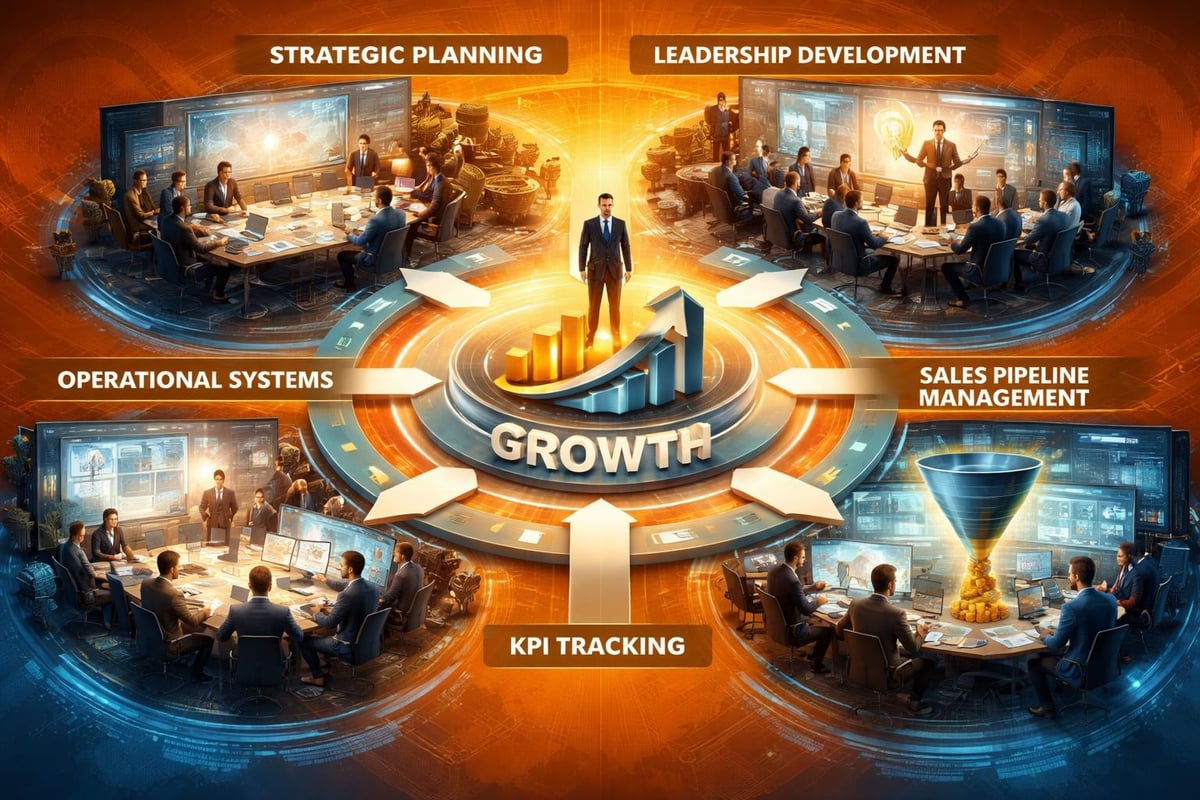
Growth doesn't happen by accident. Mid-market companies face unique challenges: market saturation, fierce competition, leadership gaps, and the constant pressure to scale without losing operational excellence. A business development coach works alongside your leadership team to identify bottlenecks, sharpen strategy, and build the systems that turn ambitious goals into repeatable wins. Unlike traditional consultants who deliver reports and disappear, these coaches embed themselves in your daily operations, transforming how your team thinks, decides, and executes.
What Sets a Business Development Coach Apart
The distinction between a business development coach and other advisory roles lies in the blend of accountability and action. While a business development coach bridges strategy and execution, focusing on sustainable growth frameworks that align with your company's unique challenges.
Key differentiators include:
- Active participation in leadership meetings and decision-making processes
- Direct coaching on pipeline development and sales effectiveness
- Real-time feedback during critical business conversations
- Measurable KPIs tied to engagement length and success metrics
Many organizations struggle to distinguish between various coaching specialties. A business development coach differs from marketing coaches (who focus on brand positioning and campaigns) and sales coaches (who concentrate solely on deal closure techniques). The business development focus encompasses the entire growth ecosystem: strategy, leadership capability, operational cadence, and market expansion.
The ROI Question Every Executive Asks
Corporate leaders demand measurable outcomes. According to best practices for business development coaches, successful engagements demonstrate value through specific performance indicators: revenue growth percentages, customer retention rates, decision velocity improvements, and leadership capability gains.
| Metric Category | Typical Improvements | Timeline |
|---|---|---|
| Decision Speed | 30-50% faster | 90 days |
| Manager Effectiveness | 40-60% improvement | 6 months |
| Employee Engagement | 25-35% increase | 4-6 months |
| Revenue Growth | 15-40% lift | 12 months |
The shift toward month-to-month engagements reflects market demand for accountability. Companies no longer accept multi-year contracts with vague deliverables. They want coaches who share risk and demonstrate progress quarterly, if not monthly.
When Your Organization Needs Business Development Coaching
Recognizing the right moment to engage a business development coach separates high-growth companies from stagnant ones. Several trigger points signal readiness for this investment.
Growth plateau scenarios:
- Revenue has flatlined despite market opportunities
- Sales pipeline remains inconsistent quarter over quarter
- Leadership team lacks alignment on strategic priorities
- Middle managers struggle to execute independently
- Customer churn rates exceed industry benchmarks
Your organization might also benefit from business development coaching frameworks when expanding into new markets, navigating organizational restructuring, or preparing for acquisition. These transitions demand strategic clarity and operational discipline that internal teams often lack bandwidth to develop alone.
For mid-market companies with 25 to 500 employees, the complexity multiplies. You're too large for startup agility but too small for enterprise resources. This gap creates friction in decision-making, communication breakdowns between departments, and inconsistent execution across teams. Professional team coaching and facilitation addresses these structural challenges systematically.
Building Accountable Leadership Through Coaching
Leadership development forms the foundation of sustainable business growth. A business development coach doesn't just advise your C-suite; they develop your entire leadership pipeline. This includes executive coaching for senior leaders, manager training for mid-level supervisors, and 360 assessments that reveal blind spots.
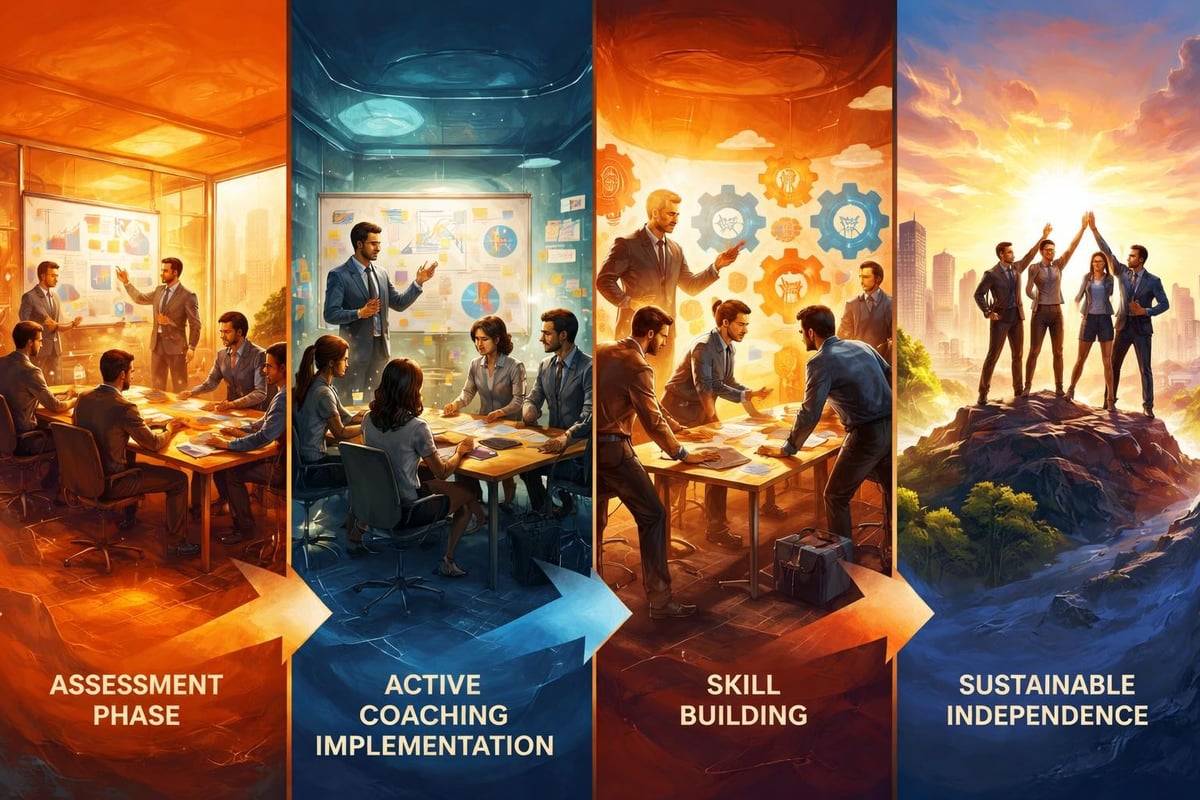
The coaching process typically follows this progression:
Phase 1: Assessment and Alignment (Weeks 1-4)
- Conduct stakeholder interviews
- Review current KPI scorecards and operational cadence
- Identify priority gaps and quick wins
- Establish success metrics and reporting rhythms
Phase 2: Active Coaching and Implementation (Months 2-6)
- Coach live in leadership meetings
- Train managers on coaching conversations
- Build or refine operating systems
- Track progress against agreed KPIs
Phase 3: Sustainability and Independence (Months 7-12)
- Transfer ownership to internal leaders
- Adjust support frequency as capabilities grow
- Document processes and frameworks
- Measure long-term impact on business results
Companies working with leadership development experts report higher engagement scores, lower turnover among high performers, and faster promotion readiness among emerging leaders. These outcomes compound over time, creating organizational resilience that weathers market volatility.
Practical Applications Across Business Functions
The versatility of a business development coach becomes apparent when examining cross-functional impact. While the primary engagement might focus on sales and growth, the ripple effects touch every department.
Sales and retention coaching transforms how teams approach customer relationships. Rather than transactional thinking, coaches instill strategic account management, consultative selling methodologies, and proactive retention strategies. Tools like The Analytics Doctor help teams build clearer dashboards for pipeline visibility and forecast accuracy.
Operations benefit through refined processes and clearer accountability structures. Many mid-market companies operate with tribal knowledge rather than documented systems. Coaches help formalize operating cadences, establish regular review rhythms, and create KPI scorecards that actually drive behavior.
Human resources gains strategic partners who understand talent development beyond traditional HR functions. When managers learn to coach rather than merely manage, employee development accelerates naturally. This shift reduces dependency on formal training programs while improving day-to-day learning.
Even administrative functions like workforce planning improve with coaching support. For organizations managing teams across locations, systems like Verlof.io streamline leave management and resource allocation, freeing managers to focus on strategic priorities rather than administrative tasks.
Selecting the Right Business Development Coach
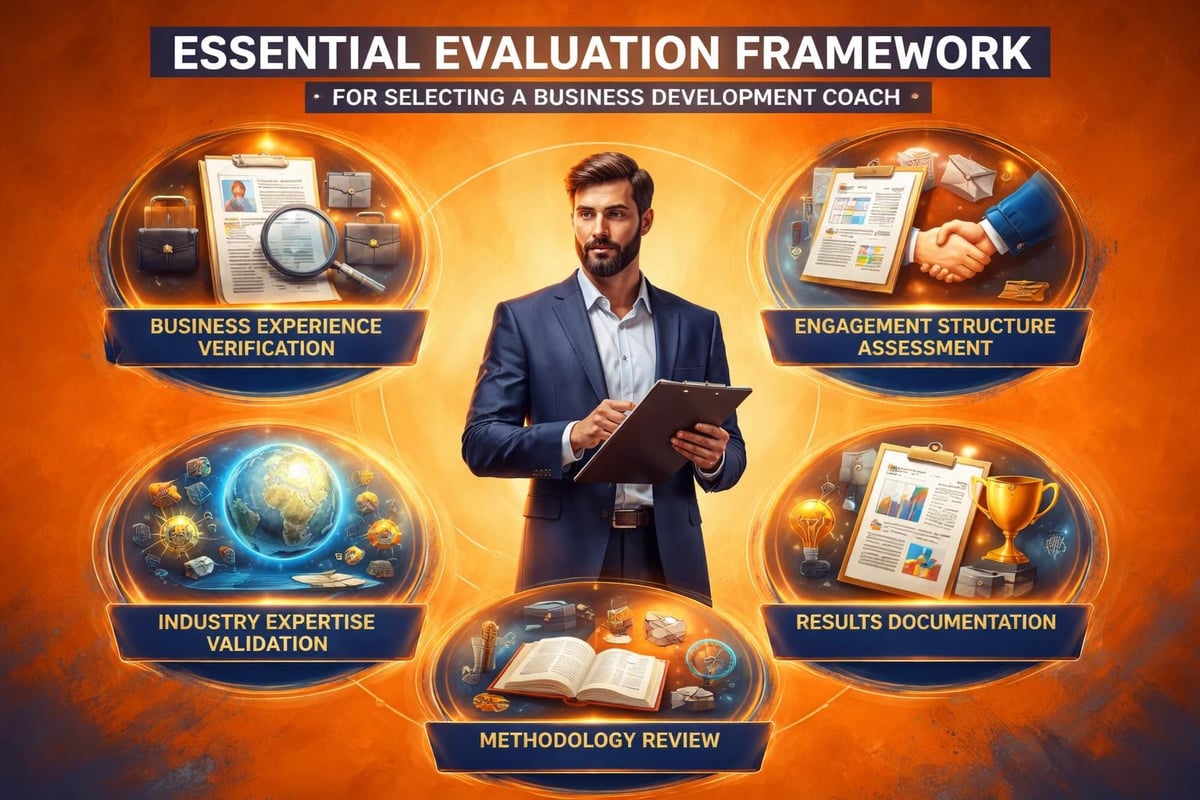
Not all coaches deliver equal value. The market includes certified professionals with impressive credentials but limited real-world business experience, as well as seasoned operators who coach without formal training. The ideal business development coach combines both: practical business acumen and coaching expertise.
| Evaluation Criteria | What to Look For | Red Flags |
|---|---|---|
| Business Experience | 15+ years operating roles | Only coaching background |
| Engagement Model | Month-to-month, KPI-driven | Multi-year contracts required |
| Industry Knowledge | Relevant sector expertise | Generic, one-size-fits-all approach |
| Coaching Methodology | Structured frameworks | Purely intuitive "advice" |
| Results Orientation | Client references, case studies | Vague testimonials |
When evaluating potential coaches through platforms like Noomii, review their specific experience with companies of your size and complexity. A coach who excels with startups may struggle with mid-market organizational dynamics. Similarly, enterprise specialists might over-engineer solutions for your scale.
Measuring Impact Beyond Revenue Numbers
While revenue growth remains the ultimate scorecard, leading indicators provide early signals of coaching effectiveness. Research on business development coaching benefits demonstrates that behavioral changes precede financial outcomes by several quarters.
Leading indicators to track:
- Meeting effectiveness scores (clarity, decisions made, action completion)
- Manager coaching frequency and quality (based on team feedback)
- Cross-functional collaboration metrics (project delivery, communication ratings)
- Strategic initiative completion rates (on-time, on-budget execution)
- Employee engagement pulse scores (trend direction, participation rates)
These metrics matter because they're controllable and actionable. Your leadership team can directly influence meeting quality, coaching habits, and collaboration patterns. Revenue, while critical, lags behind these operational improvements by months.
Organizations that build robust measurement systems create feedback loops that accelerate learning. When managers see immediate data on their coaching effectiveness, they adjust faster than waiting for annual engagement surveys. This real-time learning culture becomes self-reinforcing, reducing dependency on external coaches over time.
The transition from external coaching support to internal capability marks true success. A quality business development coach works toward their own obsolescence, building your team's skills until ongoing external support becomes optional rather than essential. This progression typically spans 12 to 24 months, depending on starting capability levels and growth ambitions.
Sustainable business growth requires more than strategy documents and quarterly planning sessions. It demands leadership teams who coach effectively, operational systems that drive accountability, and cultures that execute consistently. A business development coach accelerates this transformation by embedding directly in your operations, coaching live during critical moments, and tying progress to measurable outcomes. If you're ready for practical corporate coaching that delivers visible results without long-term contracts, explore how Noomii can partner with your mid-market company to build accountable leaders and high-performing teams.



Leave a Reply
Want to join the discussion?Feel free to contribute!