
Mental Coaching Guide: How It Works and What to Expect
Mental coaching is a structured, future-focused partnership in which a coach helps you build focus, confidence, resilience and decision habits so you perform better under pressure. It is not therapy. A mental coach works with healthy, capable adults on how they think and act toward a goal, not on treating illness or past trauma.
What does a mental coach do?
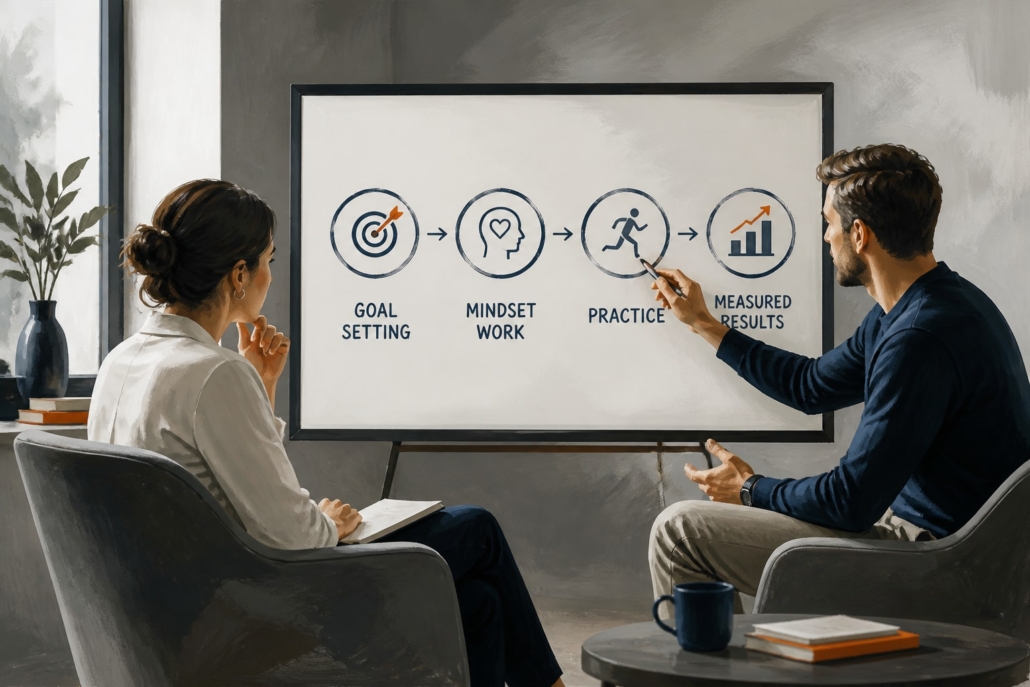
A mental coach helps you spot the thought patterns that cost you results, then trains replacement habits through practice between sessions. The work is concrete: clarifying a goal, finding what blocks it, rehearsing the moments that matter, and tracking whether behavior changes.
Typical activities include:
- Setting a specific performance goal and a measure for it
- Mapping the situations where you freeze, overthink or avoid
- Practicing tools such as pre-performance routines, reframing and attention control
- Reviewing real events (a presentation, a negotiation, a tough conversation) and adjusting
- Holding you accountable for the practice you committed to
Good coaches ask more than they tell. If a coach spends the hour lecturing you on theory, you are paying for a seminar, not coaching.
Mental coaching vs therapy: where is the line?
The line is purpose and population: therapy treats mental illness and heals past wounds, while coaching builds future performance in people who are functioning well. A coach does not diagnose or treat anxiety disorders, depression or trauma.
If you are dealing with persistent low mood, panic, or trauma, see a licensed therapist first. A coach can come later, or alongside therapy if your therapist agrees. A coach who promises to "fix" a clinical condition is a red flag, and so is one who cannot say when to refer you out.
Does mental coaching actually work?
Evidence is growing, though most of it is early and varies by format. In a 2025 study in JMIR Formative Research, people who used a digital mental health app with coaching showed greater symptom reduction than app-only users, and the group-by-time difference was statistically significant (P=.02). The data ran from April 2023 through May 2024 and compared one month of each approach.
Read that carefully. It is one study of a short period, and it measured symptoms in a digital program, not elite performance. What it supports is a modest, sensible claim: human accountability adds something that self-guided tools lack. That matches what experienced buyers report, which is that the person on the other end is what keeps the practice going.
What does a mental coaching engagement look like?
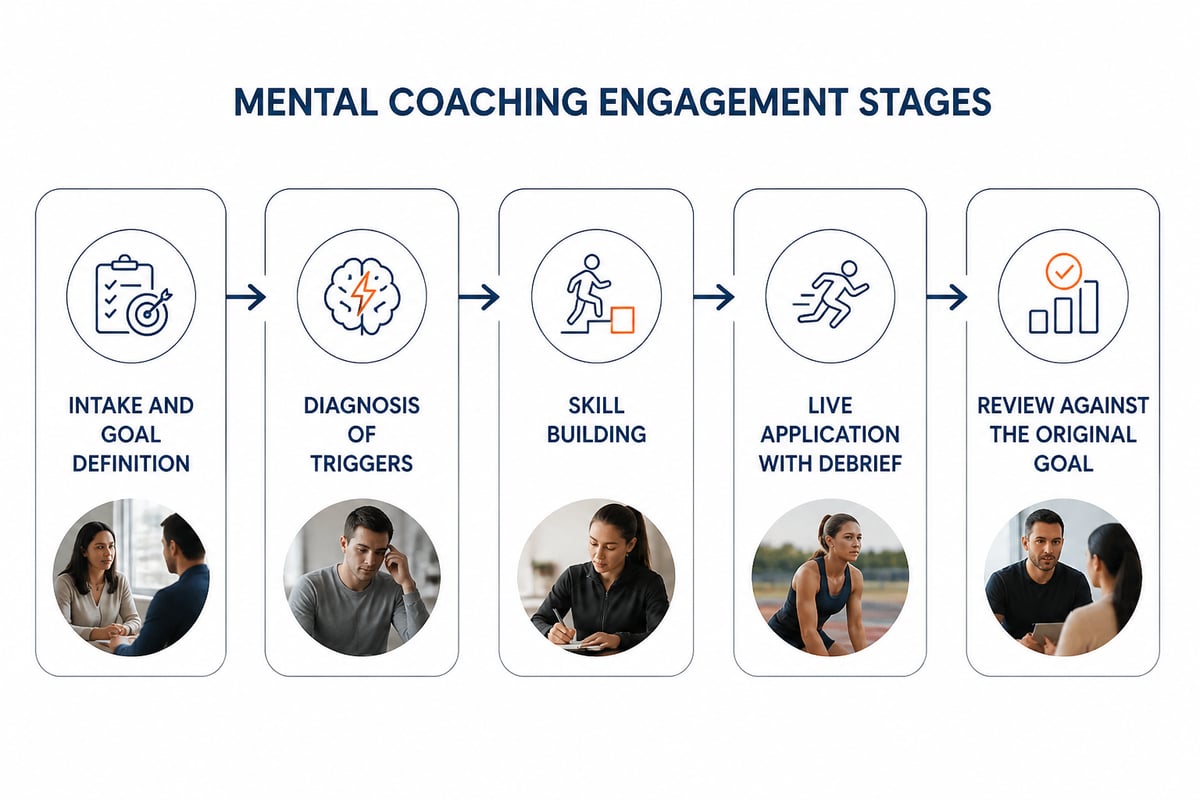
Most engagements follow a predictable arc, and knowing it helps you judge whether yours is on track.
- Intake and goal definition. You and the coach agree on what "better" means in observable terms.
- Diagnosis. You identify the specific triggers and patterns, not vague "confidence issues."
- Skill building. The coach teaches and you rehearse tools in low-stakes settings first.
- Live application. You use the tools in real situations and debrief afterward.
- Review and fade. You measure against the original goal and decide whether to continue.
Sessions are commonly weekly or biweekly. The real progress happens in the days between them.
A framework for judging results: the Trigger, Tool, Test check
Most people judge coaching by how they feel after a session, which is the weakest signal available. A better check has three parts.
- Trigger: Can you name the exact situation that derails you?
- Tool: Do you have a specific technique for that situation, not a general attitude?
- Test: Did you use it in real life this month, and what changed?
If you cannot answer all three after four to six sessions, the engagement is drifting. Raise it with your coach directly. Good ones welcome the question.
Hypothetical example: a manager who freezes in meetings
Hypothetical example: a manager who goes quiet when senior leaders challenge her numbers might work through a short pre-meeting routine, a rehearsed way to ask for time to think, and a post-meeting debrief, tracking how often she holds her position.
How much does a mental coach cost?
Costs vary widely by coach, format and market. Expect a spread: independent coaches set their own rates, and prices depend on session length and frequency.
Ask three things before you commit:
- What is the session length and frequency?
- Is there a free consultation first?
- Can I stop if it is not working, or am I locked into a package?
Month-to-month terms protect you better than a prepaid bundle. If the coach is good, you will stay because the results are visible.
What degree or credential does a mental performance coach need?
No single degree is legally required to call yourself a mental coach in most places, which is why credentials deserve scrutiny rather than worship. Some coaches hold a master's in sport or applied psychology, some hold coaching certifications, and some have decades of relevant experience with no paper at all.
Do not choose on letters alone. A certificate shows someone completed a course. It does not show they get results. Ask for specifics: who they have coached, what changed, how they measure progress, and what they do when a client needs a therapist instead. Experience in your context matters more than a badge. A sales leader is usually better served by a coach who has worked with sales teams than by a generalist with a long credential list.
Human coach, AI tool or app: which fits?
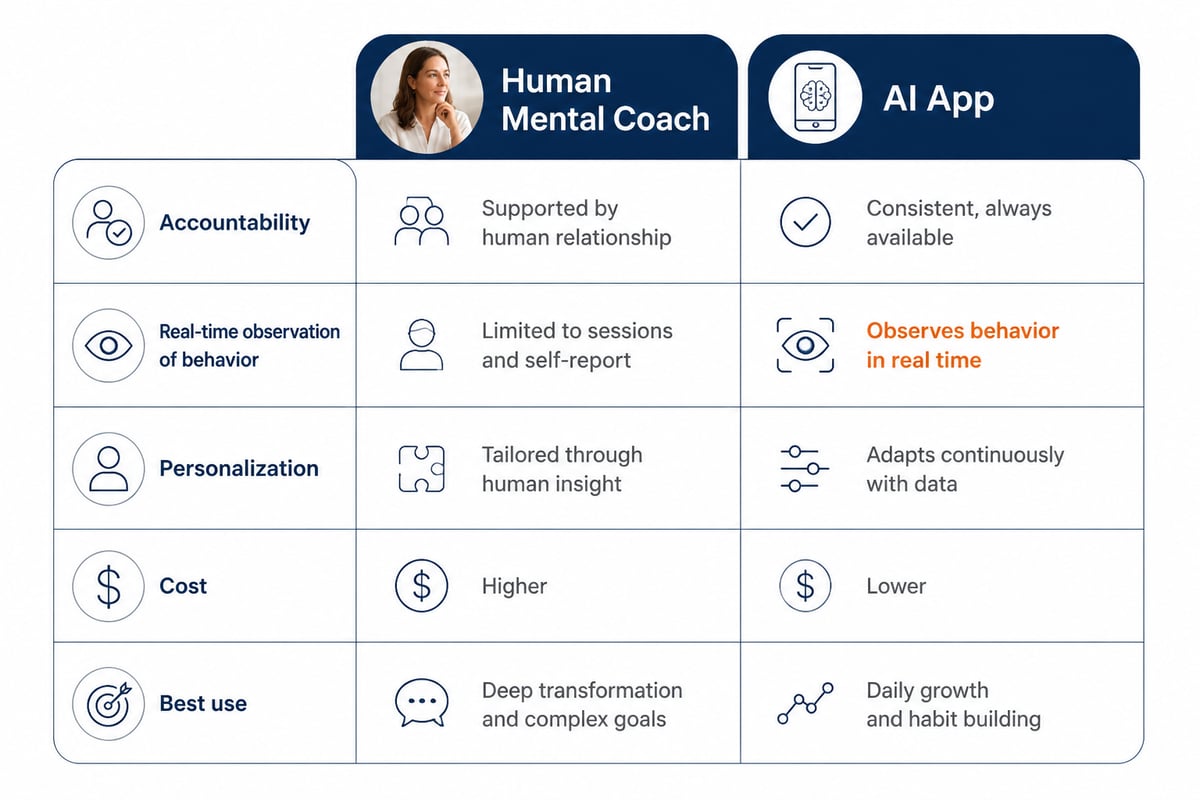
AI tools and apps are useful for reminders, journaling prompts and low-stakes practice, and they cost little. They cannot watch you freeze in a real meeting, notice the pattern you keep hiding, or hold you to a commitment with any real stakes. The JMIR finding above points the same direction: coaching added value beyond the app alone.
A sensible path for many people is an app for daily structure and a human coach for the hard, specific work.
How do you choose a mental coach?
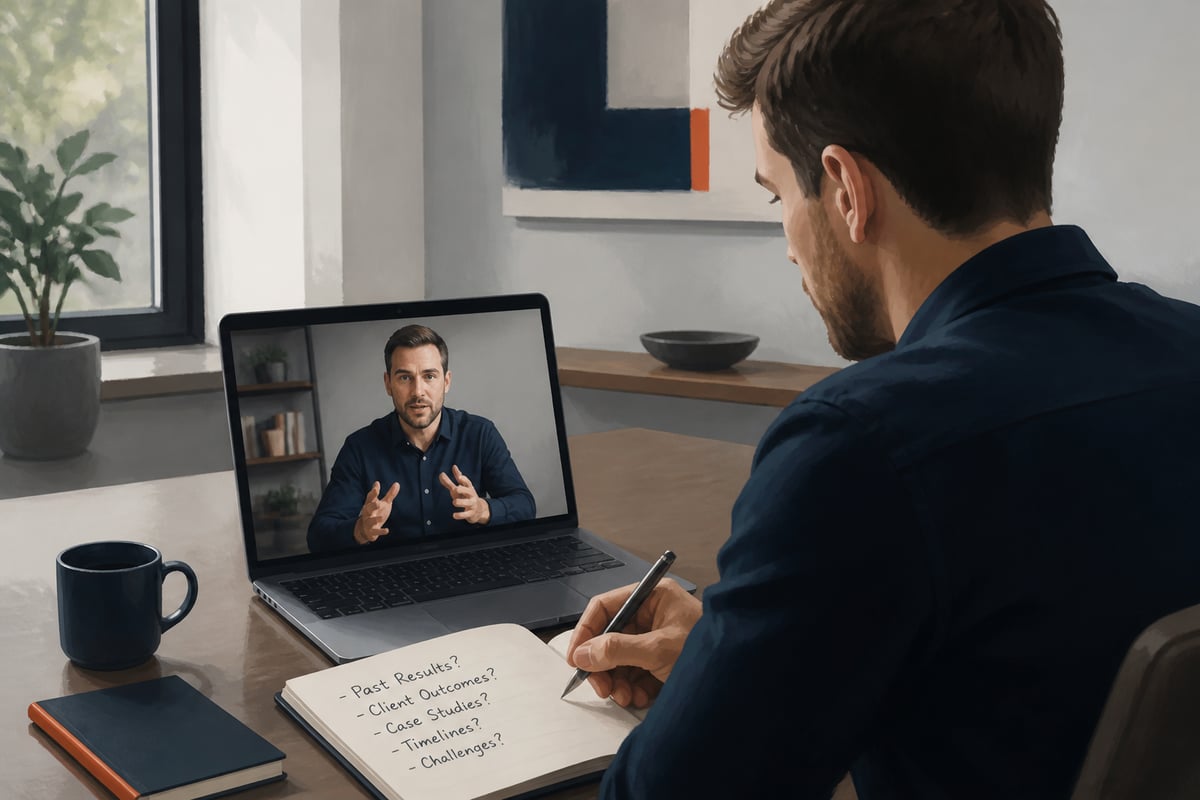
Choose on fit, evidence and trial, in that order. Fit means you can be honest with them. Evidence means they can describe past results without vague promises. Trial means you test the relationship before committing.
Use a free consultation to ask how they would approach your exact goal. Compare at least two coaches. If you want a future-focused partner for goals, habits and next steps, life coaching on Noomii covers that ground, and you can browse life coaches in the United States or coaches working remotely from places like Singapore. Leaders can look at executive coaches in Minnesota or business coaches in Colorado, and Noomii’s coach FAQ explains how coaches work with clients.
What is the 70/30 rule in coaching?
The 70/30 rule says the client should do roughly 70 percent of the talking and the coach 30 percent. The idea is that insight you generate yourself sticks better than advice you are handed. If a coach dominates the conversation, that is worth noticing.
Frequently asked questions
What is mental coaching?
It is a structured partnership that builds focus, resilience and decision habits for performance goals, without treating mental illness.
Is mental coaching the same as therapy?
No. Therapy treats clinical conditions and trauma. Coaching is future-focused and for people functioning well.
What does a mental coach do in a session?
They ask questions, help you define goals, teach tools, review real events and set practice for the week.
How long does mental coaching take?
It depends on the goal. Many people judge progress after four to six sessions using the Trigger, Tool, Test check.
How much does a mental coach cost?
Rates vary by coach and format. Ask for pricing in the free consultation and prefer flexible terms over prepaid packages.
Do you need a degree to be a mental performance coach?
Not legally in most places. Judge a coach on documented results and relevant experience, not credentials alone.
Can an AI app replace a mental coach?
Apps help with structure and reminders. A human adds observation, challenge and accountability.
Is mental coaching only for athletes?
No. Executives, managers, sales professionals and anyone facing high-pressure moments use it.
What is the 70/30 rule in coaching?
The client talks about 70 percent of the time and the coach about 30 percent, so insight comes from you.
Start by writing down one situation where pressure costs you results, then bring it to two free consultations and compare how each coach would approach it. Noomii is free to search, matches you on goals, personality and budget with up to five coach recommendations, and every coach is an independent professional, so you can Get My Free Match and start those conversations this week. If you want future-focused help with goals and habits, see Noomii's life coaching.



Leave a Reply
Want to join the discussion?Feel free to contribute!