

AI and Performance Reviews: What Changes in 2027
Performance reviews are undergoing their most significant transformation since forced ranking died in the 2010s. The difference this time is not methodology but infrastructure. AI-driven evaluation systems are now embedded in 67% of Fortune 500 HR tech stacks, yet most organizations have no formal governance framework for algorithmic decision-making about people. When examining ai and performance reviews what changes in 2027, the central issue is not whether AI will improve evaluations but whether leadership teams understand the accountability shift happening beneath their org charts. Organizations that fail to align AI capabilities with human judgment, compliance requirements, and coaching interventions will face legal exposure, cultural erosion, and talent flight that no algorithm can reverse.
The Governance Gap Most Executives Are Ignoring
The problem is not that AI generates biased performance data. The problem is that most C-suite leaders believe their legal and HR teams have already addressed algorithmic bias when they have not.
In Q3 2026, a mid-market financial services firm discovered that its AI-powered review system had systematically downgraded performance scores for employees who took parental leave. The algorithm interpreted extended absence as reduced contribution. No one caught it for 18 months because leadership assumed the vendor's "fairness certification" meant the system was compliant. It did not.
Three governance failures emerged in that case:
- No internal audit of algorithmic weighting or training data
- No human review threshold for anomalous score patterns
- No integration between the AI system and existing EEO compliance protocols
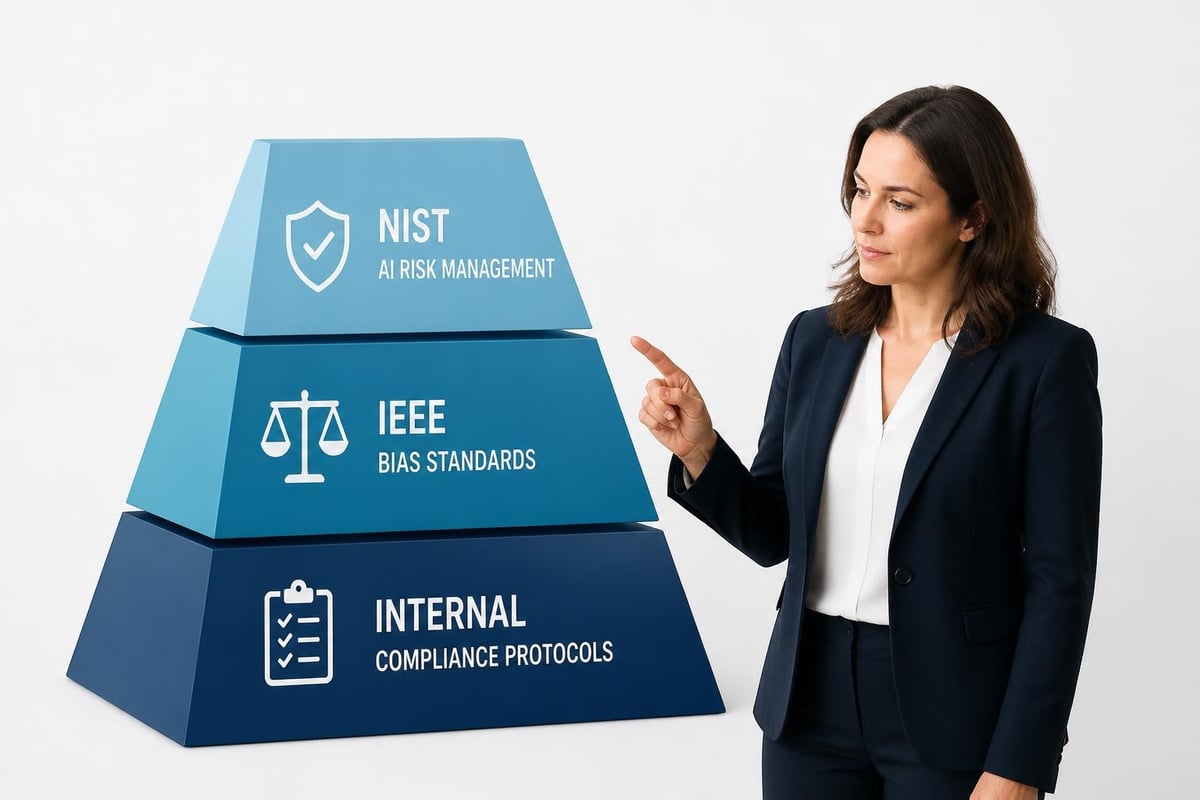
The NIST AI Risk Management Framework provides a structure for managing these risks, but adoption remains inconsistent. Only 22% of enterprises have implemented formal AI risk assessments for HR systems, according to a late-2026 survey of CHROs at companies with over 10,000 employees.
When leaders ask about ai and performance reviews what changes in 2027, the answer starts with governance, not features. Organizations need defined accountability for algorithmic decisions, regular bias audits, and clear escalation paths when AI-generated evaluations conflict with manager judgment or compliance standards.
What Compliance Actually Requires
Most organizations treat AI performance tools as software procurement decisions rather than compliance events. That approach creates legal and reputational exposure.
The IEEE Standard 7003-2024 on Algorithmic Bias Considerations establishes expectations for bias identification, impact assessment, and continuous monitoring. It is not legally binding in most jurisdictions, but it reflects emerging consensus on professional responsibility. Plaintiffs' attorneys are already citing it in employment litigation.
| Compliance Area | Current State | 2027 Expectation |
|---|---|---|
| Bias audits | Vendor self-certification | Independent third-party validation |
| Training data transparency | Black box acceptable | Documented data sources and weighting |
| Human override protocols | Informal manager discretion | Formal escalation with audit trail |
| Impact assessments | Pre-deployment only | Quarterly review cycles |
Organizations that deploy AI performance systems without documented governance will face the same scrutiny that algorithmic hiring tools encountered in 2024-2025. The difference is that performance reviews affect existing employees with longer tenures, stronger legal standing, and more institutional knowledge to challenge anomalous outcomes.
The Coaching Integration No One Is Building
AI and performance reviews what changes in 2027 also means rethinking how evaluation connects to development. Most organizations treat these as separate processes. Performance review happens in Q4. Development planning happens in Q1. Coaching engagements start in Q2 if budget allows.
That sequential model breaks when AI generates real-time performance insights. Leaders now have continuous data on decision quality, communication patterns, and team dynamics. The question is whether organizations can convert that data into timely coaching interventions rather than annual review conversations.
A logistics company with 40,000 employees piloted this approach in 2026:
- Problem: High-potential directors were underperforming in cross-functional projects despite strong technical skills
- Diagnosis: AI sentiment analysis of meeting transcripts revealed communication patterns that triggered conflict rather than collaboration
- Solution: Integrated AI performance data with executive coaching packages focused on stakeholder influence and conflict resolution
- Result: 34% improvement in project completion rates and 28% reduction in escalations to senior leadership
- Lesson: AI is better at identifying behavioral patterns than managers are, but only coaching changes those patterns
The breakthrough was not the AI. It was the integration. Performance data flowed directly into coaching engagement parameters. Coaches received anonymized behavioral insights before first sessions. Development plans updated in real time as AI detected pattern changes.
Most HR leaders have not built this integration because they treat performance management and leadership development as separate budget lines managed by different teams. When considering ai and performance reviews what changes in 2027, the strategic advantage goes to organizations that collapse that separation.
The Early-Career Performance Paradox
Research from KPMG, the University of Texas McCombs School of Business, and Harvard Business Review reveals a critical dynamic: early-career employees who use AI tools show higher short-term productivity but develop weaker foundational skills. Performance reviews that reward output without assessing skill development create a time bomb for organizational capability.
This is not a hypothetical concern. A professional services firm discovered in late 2026 that analysts who relied heavily on AI for client deliverables scored 40% lower on problem-solving assessments than peers who used AI selectively. The AI-dependent analysts looked productive in monthly reviews but lacked the judgment to handle complex or ambiguous situations.
The implication for performance management is direct. Organizations need review criteria that evaluate not just what employees produce but how they produce it and what capabilities they are building. AI can track output. It cannot yet assess judgment development or adaptive capacity.

The Manager Accountability Shift You Are Not Preparing For
AI-driven performance systems expose a problem most organizations prefer to ignore: manager judgment is inconsistent, biased, and often indefensible when examined against objective data.
A retail organization with 15,000 employees compared manager-assigned ratings to AI-generated performance data across 2,400 employees in 2026. The findings were uncomfortable.
- Managers rated employees they personally liked 1.3 points higher (on a 5-point scale) than objective performance data supported
- Recency bias was extreme: 78% of rating variance correlated to performance in the final 45 days before review
- Managers consistently overrated poor performers they had hired themselves and underrated strong performers they inherited
AI does not eliminate these biases. It makes them visible. That visibility creates accountability pressure most managers have never experienced.
The question for 2027 is whether organizations will use AI as a check on manager judgment or as a replacement for it. Early evidence suggests most are choosing replacement, which creates new problems. Boston University research warns that removing human judgment entirely can worsen outcomes when AI systems optimize for measurable outputs at the expense of harder-to-quantify contributions like mentoring, culture-building, or strategic thinking.
The emerging best practice is a hybrid model:
- AI generates performance data across defined metrics
- Managers provide written justification for ratings that deviate from AI recommendations by more than one rating level
- HR reviews all deviations for pattern analysis
- Coaching interventions target managers whose deviations show consistent bias patterns
This approach maintains manager accountability while using AI as a calibration tool. It also creates a documented decision trail that supports both performance improvement conversations and legal defensibility when needed.
The Contrarian View on Transparency
Conventional wisdom says employees should have full visibility into how AI evaluates their performance. The ACM joint statement on algorithmic decision-making emphasizes transparency and explainability as core principles.
Practical experience suggests this is wrong.
Full transparency creates gaming behavior. When employees know exactly how the algorithm weighs meeting participation, email responsiveness, or project completion timing, they optimize for those metrics rather than actual performance. A technology company discovered this when it shared its AI performance model with employees. Within 90 days, meeting attendance increased 23% while meeting productivity (measured by decision velocity and action item completion) declined 17%.
The better approach is outcome transparency, not mechanism transparency. Employees should understand what good performance looks like and how they are tracking against those standards. They should not have access to the algorithmic weighting that generates those assessments.
This creates tension with transparency advocates, but it reflects a fundamental truth: performance evaluation is not a game to be won. It is a judgment to be earned. AI should support that judgment, not replace it with a point system that encourages optimization over contribution.
What 2027 Actually Looks Like for Enterprise Organizations
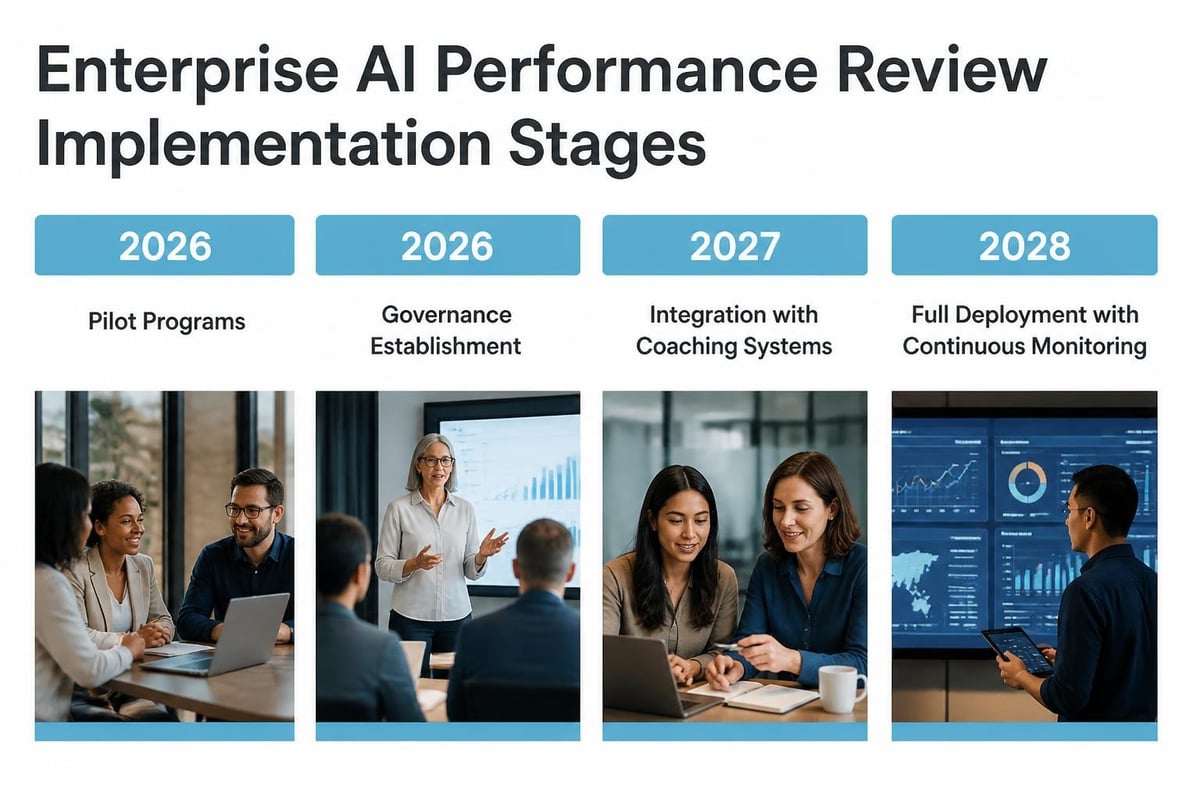
When examining ai and performance reviews what changes in 2027, the practical reality is messier than vendor marketing suggests. Most large organizations will operate hybrid systems with inconsistent AI adoption, incomplete governance, and significant change management challenges.
The World Economic Forum report on AI at scale identified five patterns among organizations making measurable progress:
- Pilot programs limited to specific business units or roles rather than enterprise-wide deployment
- Formal AI councils with cross-functional representation (HR, legal, IT, business leaders)
- Regular human audits of AI-generated performance data with defined statistical thresholds for intervention
- Integration with existing leadership development programs rather than standalone AI tools
- Transparent communication about what AI can and cannot evaluate
The organizations struggling share common failures: vendor over-reliance, lack of internal AI literacy, and treating performance AI as a technology problem rather than a leadership problem.
The Questions CHROs Should Be Asking Right Now
Most CHRO conversations about AI performance tools focus on features and pricing. The questions that matter are harder.
Governance and accountability:
- Who owns the decision when AI recommendations conflict with manager judgment?
- What statistical variance triggers a bias audit?
- How do we document algorithmic decision-making for regulatory and legal purposes?
Integration and effectiveness:
- How does AI performance data connect to coaching interventions and development planning?
- What happens to employees whose performance patterns do not fit algorithmic models?
- How do we evaluate manager effectiveness when AI generates the underlying performance data?
Culture and change management:
- How do we communicate AI's role without creating fear or gaming behavior?
- What happens to trust when employees believe algorithms rather than managers control their careers?
- How do we maintain human judgment as a core cultural value while adopting AI tools?
SHRM’s analysis of performance review evolution suggests that successful organizations treat these as leadership questions, not HR questions. The CEO and board need to establish principles. HR implements within those guardrails.
The Coaching Strategy Most Organizations Are Missing
The highest-value application of AI in performance reviews is not better ratings. It is better coaching targeting.
Organizations spend substantial money on leadership development and coaching programs but allocate those resources based on seniority, potential ratings, or manager nominations. AI enables precision targeting based on actual behavioral patterns and performance gaps.
A financial services firm implemented this approach in Q2 2026:
| Challenge Area | AI Detection Method | Coaching Intervention | Measured Outcome |
|---|---|---|---|
| Poor delegation leading to bottlenecks | Analysis of task assignment patterns and completion dependencies | Executive coaching on strategic delegation and team development | 41% reduction in approval cycle times |
| Ineffective stakeholder management | Meeting sentiment analysis and email communication patterns | Targeted coaching on influence and conflict resolution | 29% improvement in cross-functional project success rates |
| Weak decision-making under uncertainty | Decision reversal tracking and outcome analysis | Coaching on judgment frameworks and scenario planning | 37% reduction in costly strategic reversals |
The breakthrough was specificity. Instead of generic leadership coaching, the organization deployed targeted interventions addressing precise behavioral patterns AI identified. The ROI from executive coaching improved dramatically because coaching resources addressed actual performance gaps rather than assumed development needs.
This approach requires integration between performance systems and coaching programs that most organizations have not built. When leaders ask about ai and performance reviews what changes in 2027, the answer for sophisticated organizations is this: AI enables coaching precision we have never had before, but only if we integrate the systems and align the strategy.
The Team Performance Dimension
Individual performance reviews miss half the picture in modern organizations. Most value creation happens in teams, yet most AI performance tools still evaluate individuals.
Team coaching programs that integrate AI-generated team performance data represent the next frontier. AI can track team decision velocity, conflict patterns, communication effectiveness, and outcome delivery in ways that were previously impossible.
A manufacturing organization piloted AI-driven team performance reviews in 2026. The system analyzed meeting transcripts, decision documentation, project milestone completion, and cross-functional collaboration patterns. It identified teams with strong individual performers but poor collective performance and teams with average individuals who delivered exceptional collective results.
The insight challenged conventional thinking about talent density. High-performing teams were not necessarily composed of high-performing individuals. They were teams with strong collaboration patterns, clear decision rights, and effective conflict resolution.
This matters because most organizations still promote and compensate based on individual performance even when they claim to value teamwork. AI-driven team performance data creates accountability for collaboration and collective outcomes that individual reviews cannot capture.
What Leaders Need to Do Differently Starting Now
The strategic question about ai and performance reviews what changes in 2027 is not whether to adopt AI tools. Most organizations already have. The question is whether leadership teams will establish governance, integrate coaching, and maintain human accountability or whether they will delegate performance judgment to algorithms without understanding the consequences.
Five actions separate leaders who are managing this transition well from those who are creating future problems:
- Establish algorithmic accountability before the next review cycle – Define who owns decisions when AI and human judgment conflict, document the process, and communicate it clearly
- Integrate performance data with coaching deployment – Stop treating evaluation and development as sequential processes and build real-time connections between performance insights and coaching interventions
- Audit for bias quarterly, not annually – Implement statistical monitoring for pattern-based bias and establish clear thresholds for human review and intervention
- Invest in manager AI literacy – Most managers do not understand how AI evaluates performance and cannot explain it to employees. This creates trust problems coaching cannot fix
- Maintain outcome transparency while limiting mechanism transparency – Employees should know where they stand and what good performance looks like without access to algorithmic weighting that encourages gaming
Organizations that execute these actions will use AI to improve performance management accuracy, coaching effectiveness, and talent development outcomes. Organizations that skip them will face legal exposure, cultural damage, and talent loss that no algorithm can reverse.
The difference between these outcomes is not technology sophistication. It is leadership judgment about where human accountability matters most and where AI support creates value. That judgment cannot be delegated to vendors, HR teams, or algorithms. It requires direct CEO and board involvement in establishing principles, monitoring implementation, and course-correcting when systems deviate from intended outcomes.
Performance reviews have always reflected organizational values and leadership priorities. AI does not change that. It makes those values and priorities more visible, more measurable, and more consequential. The question for 2027 is whether your organization is ready for that accountability.
AI is transforming performance reviews faster than most governance and coaching systems can adapt, creating risks and opportunities that require direct leadership attention. The Noomii Corporate Leadership Program helps organizations integrate AI-driven performance insights with precision coaching interventions, establish accountability frameworks for algorithmic decisions, and develop leaders who can navigate the intersection of technology and human judgment. Our evidence-based diagnostics, expert coach matching, and measurable impact methodology ensure your performance management evolution strengthens rather than undermines organizational culture and capability.
“`json
{
“@context”: “https://schema.org”,
“@type”: “FAQPage”,
“mainEntity”: [
{
“@type”: “Question”,
“name”: “What are the biggest risks of using AI in performance reviews in 2027?”,
“acceptedAnswer”: {
“@type”: “Answer”,
“text”: “The biggest risks are governance gaps, algorithmic bias that goes undetected, lack of integration between AI evaluations and coaching interventions, and loss of manager accountability. Organizations that deploy AI performance tools without formal bias audits, clear decision rights when AI conflicts with human judgment, and documented compliance protocols face legal exposure and cultural damage. Most enterprises have not yet established the governance frameworks needed to manage these risks effectively.”
}
},
{
“@type”: “Question”,
“name”: “How should organizations integrate AI performance data with leadership coaching?”,
“acceptedAnswer”: {
“@type”: “Answer”,
“text”: “The most effective approach is real-time integration where AI-detected behavioral patterns and performance gaps directly inform coaching engagement parameters and development planning. This means coaches receive anonymized behavioral insights before sessions, coaching interventions target specific AI-identified challenges like delegation bottlenecks or stakeholder management gaps, and development plans update continuously as AI detects pattern changes. This requires collapsing the traditional separation between performance management and leadership development systems.”
}
},
{
“@type”: “Question”,
“name”: “Should employees have full transparency into how AI evaluates their performance?”,
“acceptedAnswer”: {
“@type”: “Answer”,
“text”: “No. Full algorithmic transparency creates gaming behavior where employees optimize for measurable metrics rather than actual contribution. The better approach is outcome transparency: employees should clearly understand performance standards and how they are tracking against them, but not have access to algorithmic weighting details. This maintains performance evaluation as a judgment to be earned rather than a point system to be gamed, while still providing clarity on expectations and progress.”
}
},
{
“@type”: “Question”,
“name”: “What governance structure do organizations need for AI performance review systems?”,
“acceptedAnswer”: {
“@type”: “Answer”,
“text”: “Organizations need three governance layers: formal AI risk management following frameworks like NIST’s AI Risk Management Framework, regular bias audits using standards like IEEE 7003-2024, and internal compliance protocols that define decision rights, escalation paths, and audit requirements. This includes quarterly statistical monitoring for bias patterns, documented processes for when AI recommendations conflict with manager judgment, and clear accountability for algorithmic decisions affecting employee careers and compensation.”
}
},
{
“@type”: “Question”,
“name”: “How does AI impact early-career employee development and performance evaluation?”,
“acceptedAnswer”: {
“@type”: “Answer”,
“text”: “Research shows early-career employees who rely heavily on AI tools demonstrate higher short-term productivity but develop weaker foundational skills and judgment. This creates a critical challenge for performance reviews: evaluating not just output but how employees produce results and what capabilities they are building. Organizations need review criteria that assess skill development, problem-solving ability, and adaptive capacity, not just AI-augmented productivity metrics. This requires evaluating the process and capability-building, not just outcomes.”
}
}
]
}
“`


Leave a Reply
Want to join the discussion?Feel free to contribute!