AI Coaching Platforms Are Changing Everything (2026)
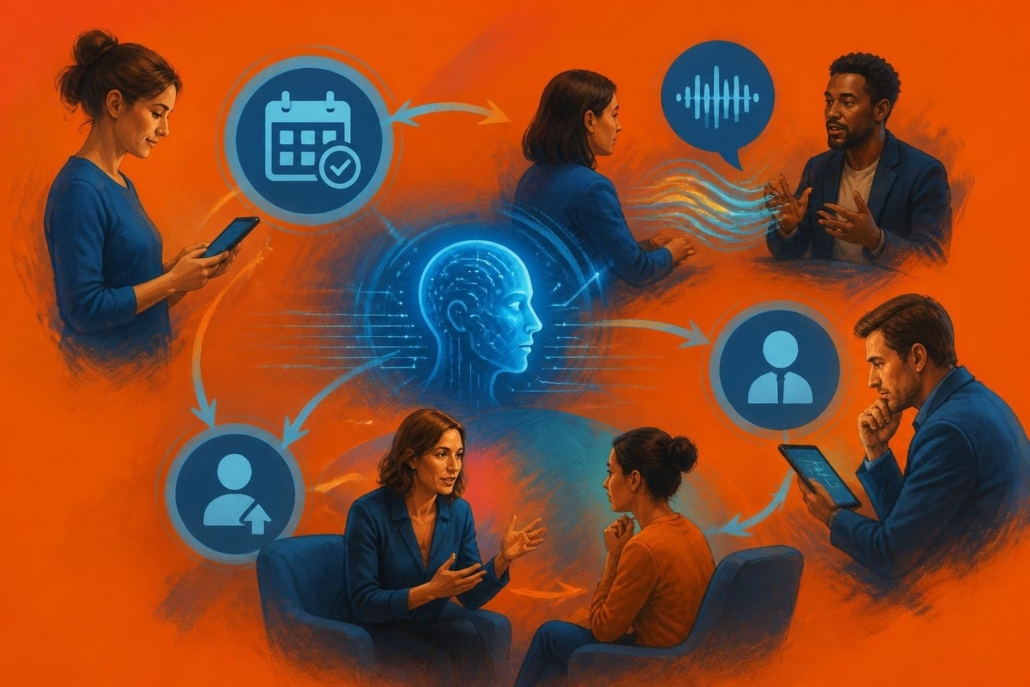
The drumbeat is getting louder: AI coaching platforms are changing everything. Vendors promise personalized leadership development at scale, 24/7 availability, and costs a fraction of traditional coaching. Enterprise buyers are listening, especially CHROs at mid-market companies facing pressure to develop more managers with flat or shrinking budgets. But the story vendors tell and the outcomes companies actually see often diverge sharply. After years of watching early adopters navigate these tools, clear patterns have emerged about what works, what fails, and where human expertise still matters most.
The Promise Versus the Pattern
AI coaching platforms entered the market with compelling narratives. Leaders could get instant feedback, personalized development plans, and practice conversations with chatbots trained on thousands of coaching sessions. The pitch resonated with companies scaling rapidly, promoting first-time managers, or trying to democratize access beyond the C-suite.
The reality has been more nuanced:
- Engagement drops sharply after initial novelty (typical 30-day retention under 15% without manager integration)
- Behavioral change requires accountability structures AI alone cannot provide
- Complex leadership challenges (conflict, politics, strategic ambiguity) expose chatbot limitations quickly
- Data privacy concerns slow adoption in regulated industries and with senior executives
The platforms work best as supplements, not replacements. Research on AI-augmented coaching shows promise when human coaches use AI to scale reflection and feedback between sessions, but standalone bots struggle with the messy, emotional, high-stakes conversations that drive real leadership development.
Where AI Coaching Actually Adds Value
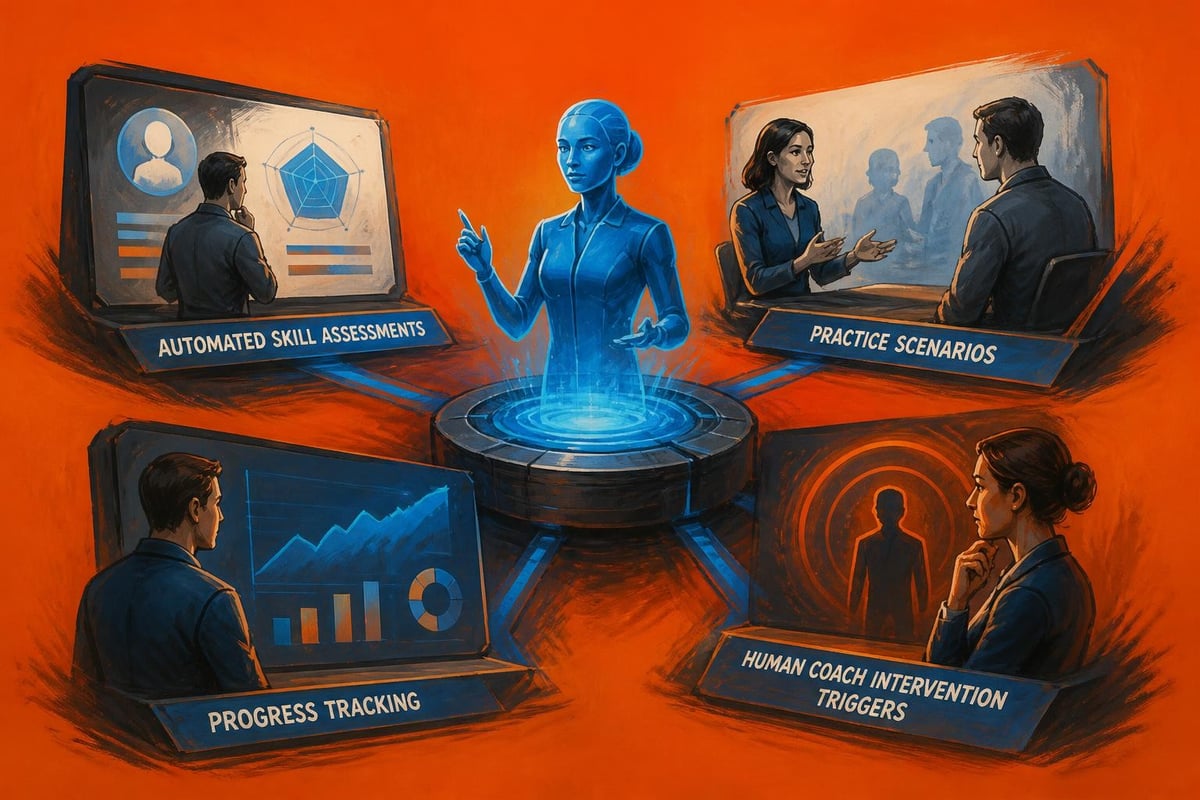
Mid-market companies have found specific use cases where AI coaching platforms deliver measurable value without overpromising transformation. The key is positioning them as tools within a broader development system, not standalone solutions.
High-ROI applications we've observed:
- Onboarding managers to frameworks taught by human coaches (reinforcement, not initial instruction)
- Practicing difficult conversations before real stakes (terminations, performance feedback)
- Tracking development goals between quarterly coaching sessions
- Scaling microlearning on communication, delegation, and feedback skills
The platforms fail when companies eliminate human coaching entirely, expecting AI to carry the full development load. First-time managers especially need live observation, real-time intervention in team meetings, and accountability from someone who knows their business context. That's why AI tools work best when they help stressed managers become better coaches to their own teams, not when they replace coaching relationships altogether.
The Business Case That Actually Matters
Finance and operations leaders evaluating AI coaching platforms need different metrics than HR typically provides. Completion rates and satisfaction scores matter far less than whether managers are making faster decisions, retaining high performers, and executing priorities with less friction.
| Metric Type | Traditional HR Metrics | Business-Aligned Metrics |
|---|---|---|
| Engagement | Platform logins, module completions | Manager behavior change observed by direct reports |
| Learning | Assessment scores, badge collection | Time to decision, meeting efficiency improvements |
| Satisfaction | NPS, survey ratings | Retention of key contributors, promotion readiness |
| Cost | Per-seat licensing | Revenue per manager, turnover cost reduction |
We've seen mid-market companies spend six figures on AI coaching platforms with high engagement scores but zero measurable improvement in leadership effectiveness. Conversely, companies that integrate AI tools into existing coaching programs-where human coaches set goals, AI provides practice, and live observation validates progress-show clear KPI improvements within 90 days.
The difference is accountability structure. AI coaching platforms are changing everything about access and convenience, but they're not changing the fundamental requirement that leaders need witnesses, feedback in context, and consequences tied to development commitments.
The Risk Management Gap
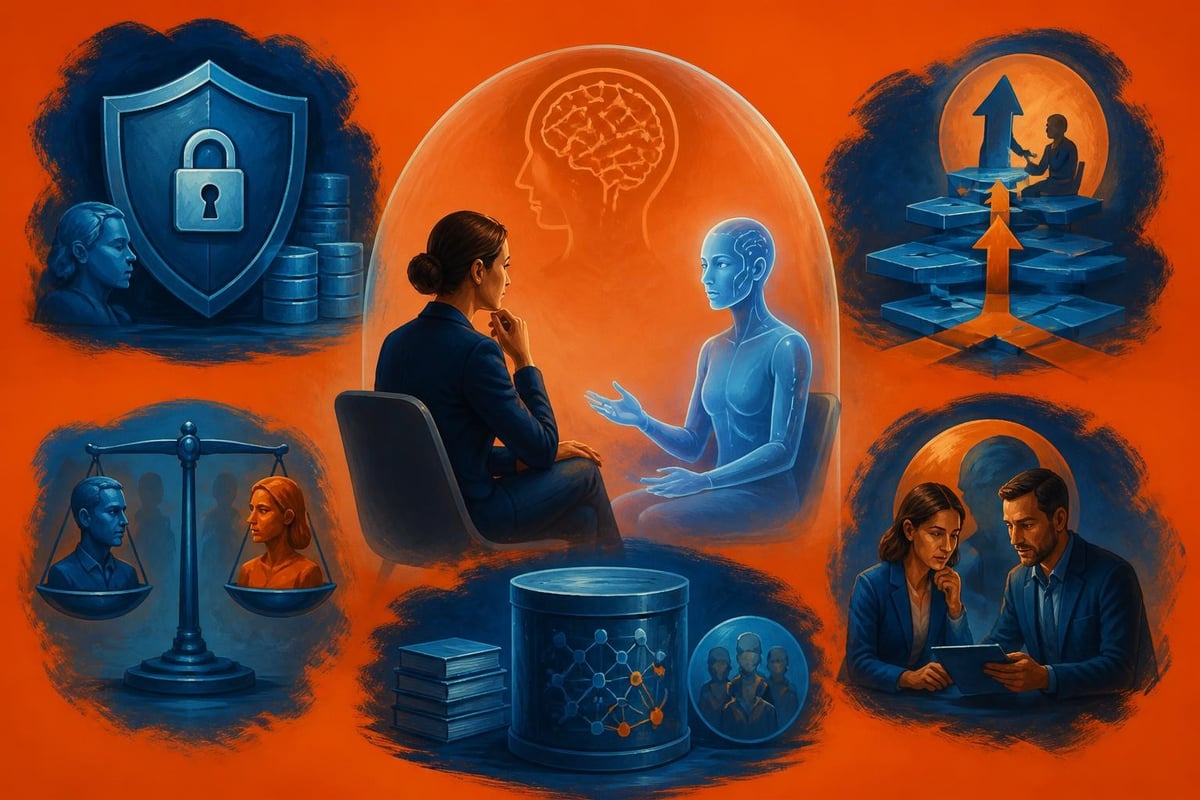
As enterprises adopt AI coaching at scale, governance questions are surfacing that most platforms haven't adequately addressed. Who owns the conversation data? How are models trained, and what biases exist in coaching advice? What happens when a chatbot gives advice that backfires in a sensitive employee situation?
NIST’s AI Risk Management Framework provides guidance, but implementation remains inconsistent across vendors. Mid-market buyers should demand:
- Transparency on training data sources and model limitations
- Data residency controls and deletion guarantees
- Escalation protocols when AI detects high-risk situations (harassment, legal exposure)
- Bias audits specific to leadership advice and diverse employee populations
Deloitte’s internal chatbot pilots illustrate how sophisticated buyers are approaching governance, but most mid-market companies lack the internal expertise to audit vendor claims effectively.
The Human Coaching Integration Model
The companies seeing real ROI from AI coaching platforms use a deliberate integration model rather than wholesale replacement. Human coaches focus on high-value activities-live team meeting facilitation, strategic decision coaching, conflict mediation-while AI handles reinforcement, practice, and tracking.
A typical blended model at a 150-person mid-market company:
- Executive team receives monthly one-on-one coaching from experienced leadership coaches
- Directors use AI platforms for weekly reflection prompts tied to coaching goals
- Managers practice feedback conversations with chatbots before delivering them live
- Human coaches join quarterly all-hands meetings to observe leadership in action
- AI platforms track 360 assessment progress and flag regression patterns
This structure costs roughly 40% less than full human coaching at scale while maintaining the accountability and context that drive actual behavior change. The AI doesn't replace expertise; it extends the human coach's reach between sessions.
Research shows AI can make us better leaders when used to augment decision-making and self-awareness, not substitute for relationship and accountability. The mid-market companies achieving visible results understand this distinction clearly.
What Buyers Should Demand in 2026
The AI coaching market has matured enough that buyers can separate substance from hype. Contract negotiations should focus on outcomes, integration support, and risk-sharing rather than feature lists and certification counts.
Non-negotiable requirements:
- Month-to-month terms with exit flexibility (avoid multi-year locks during rapid AI evolution)
- Integration with existing HRIS, Slack, and meeting tools (adoption depends on workflow embedding)
- Human coach partnership options for complex cases and accountability
- Transparent pricing tied to usage, not just seats (many licenses go unused)
- Demonstrated ROI case studies in similar industries and company sizes
Ask vendors how they've handled failures, not just successes. The best platform partners admit where AI coaching falls short and proactively design hybrid models. Vendors still promising full human replacement are either naive or dishonest; neither is acceptable in 2026.
The Contractor and Certification Disruption
AI coaching platforms are changing everything for individual coaches too, especially those relying primarily on methodology and frameworks rather than deep business expertise. Coaches who built careers around assessments, workbooks, and scripted conversations face commoditization as chatbots replicate those activities at near-zero marginal cost.
The survivors will be coaches who deliver what AI cannot:
- Live facilitation in high-stakes team meetings
- Political navigation and stakeholder management in complex organizations
- Industry-specific pattern recognition from years of operating experience
- Accountability structures tied to business KPIs, not just personal goals
Certification alone won't protect anyone. The coaching industry's credential obsession created an illusion that methodology matters more than results. AI is exposing that illusion brutally. Buyers increasingly filter for business coaches and executive coaches with operating backgrounds who can coach in context, not classroom theorists with impressive certifications.
The Path Forward for Mid-Market Companies
For companies between 25 and 500 employees, AI coaching platforms offer genuine value when integrated thoughtfully into broader leadership development systems. The key is avoiding two extremes: blind vendor faith and complete AI rejection.
Start with clear business problems-faster decision-making, manager retention, execution consistency-then evaluate whether AI, human coaching, or blended approaches best address each challenge. Track leading indicators (manager behavior observed by teams) and lagging indicators (retention, promotion readiness, revenue per leader) every 90 days.
Partner with coaches and platforms willing to share risk through aligned incentives and month-to-month terms. If results aren't visible within one quarter, change approaches quickly rather than waiting out long contracts. The technology is evolving too rapidly for multi-year commitments to make strategic sense.
Frequently Asked Questions
What are AI coaching platforms and how do they work?
AI coaching platforms use large language models to deliver personalized leadership development through chatbots, simulations, and automated feedback. Users interact via text or voice, receiving advice on management challenges, practicing difficult conversations, and tracking development goals. Most platforms integrate with workplace tools like Slack or Microsoft Teams.
Can AI coaching replace human executive coaches?
No. AI coaching platforms handle reinforcement, practice, and tracking effectively but cannot replicate human judgment in complex political situations, high-stakes conflicts, or strategic ambiguity. The best results come from blended models where human coaches focus on live observation and accountability while AI scales practice between sessions.
How much do AI coaching platforms cost compared to traditional coaching?
AI coaching typically costs between $50-200 per user annually versus $3,000-15,000 for traditional executive coaching engagements. However, ROI comparisons are misleading because they address different use cases. Mid-market companies see best results spending 60% on human coaching for leadership teams and 40% on AI tools for manager-level reinforcement.
What risks should companies consider before adopting AI coaching?
Key risks include data privacy concerns (who owns conversation data), bias in AI-generated advice, lack of escalation protocols for sensitive situations, and engagement drop-off without accountability structures. Companies should review vendor governance practices against frameworks like NIST's AI Risk Management Framework before deployment.
How do you measure ROI from AI coaching platforms?
Avoid vanity metrics like logins and completions. Instead, track manager behavior changes observed by direct reports through 360 assessments, retention rates of high performers, time-to-decision improvements, and meeting efficiency gains. Business-aligned metrics tied to revenue, retention, and execution matter more than learning completion rates.
Which managers benefit most from AI coaching tools?
Mid-level managers (directors, senior managers) leading 5-20 people see highest value. They face repetitive coaching situations (feedback, delegation, conflict) where AI practice adds real value between human coaching sessions. C-suite executives and first-time managers typically need more human interaction for context and accountability.
Should we eliminate human coaching budgets and shift entirely to AI platforms?
Absolutely not. Companies that eliminated human coaching entirely saw initial cost savings but experienced manager effectiveness regression within 6-12 months. Behavioral change requires accountability from humans who know your business context. AI should extend human coaches' reach, not replace their expertise and relationship-based accountability.
How do AI coaching platforms handle sensitive employee situations?
Most platforms lack sophisticated escalation protocols for harassment, mental health crises, or legal exposures. Review vendor policies carefully and maintain clear guidelines for when managers should escalate to HR or human coaches. Never rely on AI as the sole resource for high-risk leadership challenges involving employee safety or legal liability.
What questions should we ask AI coaching vendors during evaluation?
Demand specifics on training data sources, bias audit results, data ownership and deletion policies, integration capabilities with your existing tools, demonstrated ROI in similar industries, contract flexibility (avoid multi-year locks), and how they've handled implementation failures. Ask what the platform cannot do; honest limitation acknowledgment signals vendor maturity.
AI coaching platforms are changing everything about access and scale in leadership development, but they're not changing the fundamental truth that accountability drives behavior change. Mid-market companies need practical coaching tied to business KPIs, not theoretical frameworks delivered through chatbots alone. Noomii Corporate Coaching delivers exactly that: we coach live in your meetings, track progress against clear metrics, and operate month-to-month so you stay because results are visible, not because you're locked into long contracts. If you want leadership development that moves your business numbers, not just completion rates, let's talk.



Leave a Reply
Want to join the discussion?Feel free to contribute!