
Coaching Versus Counseling: Which One Do You Need?
The coaching versus counseling question surfaces constantly in organizations, HR departments, and leadership development conversations. Leaders confuse the two, buyers misallocate budgets, and coaches overstep boundaries. The stakes are real: choosing the wrong support wastes money, delays progress, and can harm people. Understanding the distinct roles, regulation, focus, and outcomes of each lets you deploy the right resource at the right time. This clarity protects your team, sharpens accountability, and drives measurable results.
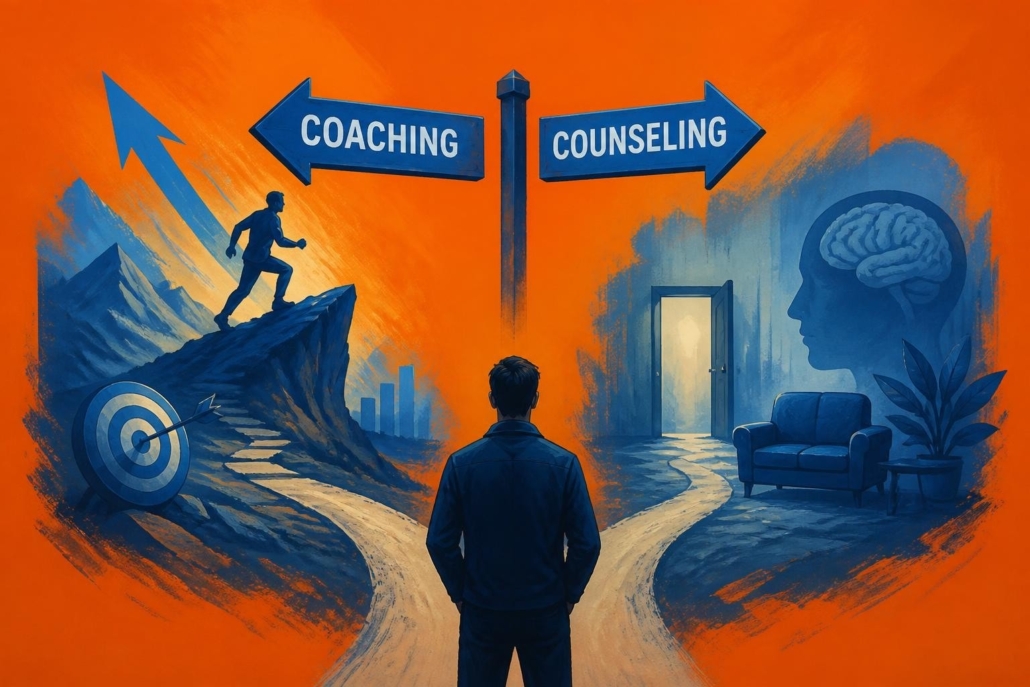
The Core Difference: Future Performance Versus Past Healing
Coaching versus counseling begins with direction of focus. Coaching is forward-looking. It targets performance, goals, behavior change, and execution. A leadership coach asks: What do you want to achieve? What's blocking progress? How will you measure success? Sessions revolve around KPIs, accountability, skill building, and closing the gap between current state and desired outcome.
Counseling, by contrast, is rooted in clinical mental health. The American Psychological Association defines psychotherapy as treatment for mental health challenges, emotional distress, and diagnosable conditions. Counselors diagnose, treat, and help clients heal from trauma, anxiety, depression, addiction, and relationship dysfunction. Sessions explore past experiences, emotional regulation, and therapeutic frameworks.
Key distinctions:
- Coaching addresses performance, goals, and capability.
- Counseling treats mental health conditions and emotional disorders.
- Coaches are not licensed to diagnose or treat clinical issues.
- Counselors are regulated, licensed professionals with clinical training.

When a manager struggles with delegation, you bring in a coach. When an employee shows signs of depression or trauma, you refer to a licensed counselor. Mixing the two creates risk and delays the help people actually need.
Regulation, Credentials, and Scope of Practice
The coaching versus counseling divide sharpens around regulation. Counseling is a licensed profession in every U.S. state. The American Counseling Association sets ethical standards, education requirements, and supervised clinical hours. Counselors hold degrees (often master's or doctorate), pass exams, maintain continuing education, and operate under state boards. They can bill insurance, diagnose DSM-5 conditions, and provide evidence-based psychotherapy.
Coaching remains largely unregulated. No universal license exists. Certifications proliferate, but they are voluntary and inconsistent. The National Board for Health & Wellness Coaching offers one credible standard in wellness coaching, but most coaching niches lack enforceable professional guardrails. Anyone can call themselves a coach tomorrow.
| Aspect | Coaching | Counseling |
|---|---|---|
| Regulation | Voluntary certifications, no licensing | State-licensed, clinical oversight |
| Education | Variable, often self-taught or short programs | Master's or doctorate in counseling/psychology |
| Scope | Performance, goals, behavior, accountability | Diagnosis, treatment, mental health |
| Insurance | Not billable (except some health coaching) | Often covered by health insurance |
| Ethics enforcement | Industry-specific, voluntary | State boards, legal consequences |
This regulatory gap matters. Coaches who drift into therapy territory without training put clients at risk. Conversely, companies hiring counselors to improve sales performance misunderstand the clinical focus. Clear boundaries protect everyone.
When Coaching Crosses the Line
Coaching versus counseling becomes dangerous when coaches ignore limits. I've seen coaches try to "work through" employee trauma, address eating disorders, or counsel couples through infidelity. These are clinical issues requiring licensed professionals.
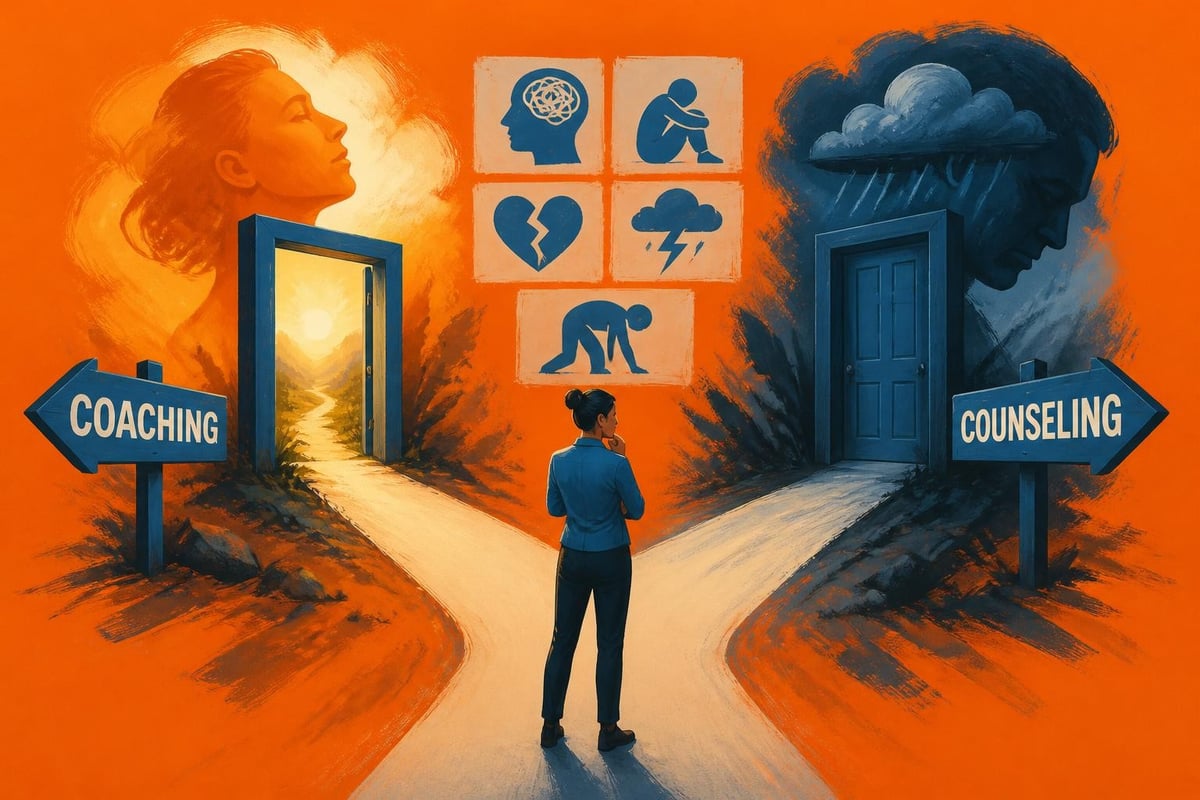
Smart coaches recognize red flags:
- Persistent anxiety or depression symptoms
- Substance abuse or addictive behaviors
- Trauma, PTSD, or abuse history
- Suicidal ideation or self-harm
- Relationship crises rooted in mental health
When these surface, ethical coaches refer to licensed counselors or therapists. The NHS guidance on counseling vs coaching offers a practical framework: coaching supports well individuals pursuing goals; counseling supports individuals managing mental health challenges.
Ignoring this boundary doesn't just fail clients. It exposes organizations to liability and damages trust in coaching itself.
Where Coaching Delivers Measurable Business Outcomes
Strip away the confusion, and coaching shines in organizational performance. Research on health and wellness coaching demonstrates measurable outcomes in chronic illness management, behavior change, and goal achievement. Corporate coaching applies the same principles to leadership, execution, and team dynamics.
Coaching works best for:
- Developing managers who coach their own teams
- Driving accountability around KPIs and scorecards
- Accelerating decision-making and execution
- Improving communication in leadership teams
- Building skills in sales, retention, and influence
- Facilitating team alignment and operating cadence
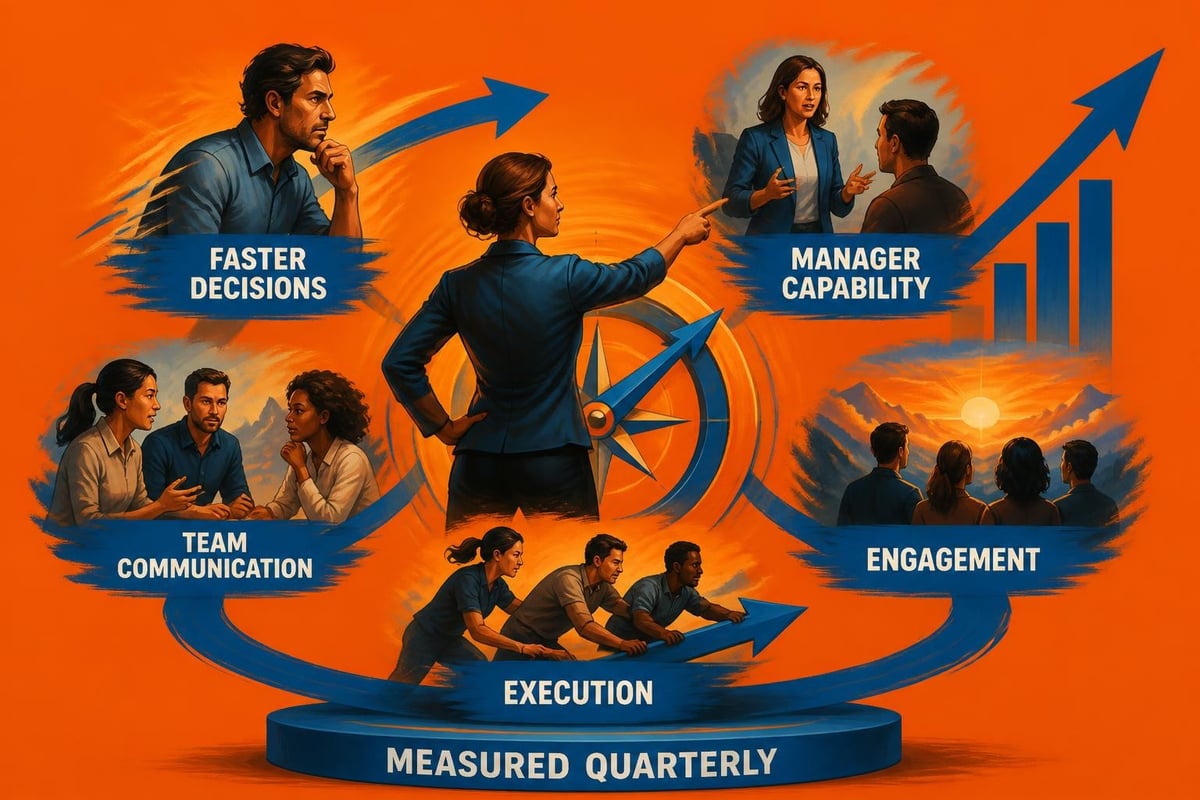
At Noomii, we coach live in client meetings. We don't sit on the sideline with theory. We roll up our sleeves, tie progress to clear KPIs, and track ROI month over month. That's the coaching versus counseling difference in action: we focus on performance, accountability, and business results, not emotional healing or clinical treatment.
Organizations waste budget when they expect coaching to fix mental health issues or hire counselors to improve sales pipeline management. Each discipline has a lane. Stay in it.
How to Choose the Right Support for Your Team
The coaching versus counseling decision hinges on diagnosis. If the issue is performance, capability, or goal-related, coaching fits. If the issue involves mental health, emotional distress, or clinical symptoms, counseling is required.
Decision Criteria
| Situation | Right Support | Why |
|---|---|---|
| Manager struggles with delegation and prioritization | Coaching | Performance and skill development |
| Employee experiencing grief, trauma, or depression | Counseling | Clinical mental health treatment |
| Sales team missing targets, lacks accountability | Coaching | Execution, KPIs, behavior change |
| Leader showing signs of burnout and anxiety | Counseling first, then coaching | Address mental health before performance |
| Executive transition, new role, strategic clarity | Coaching | Future-focused, goal-oriented support |
Some situations require both, in sequence. A leader dealing with anxiety benefits from counseling first, then coaching to build leadership capacity once stabilized. Trying to coach someone in crisis delays the help they need and sets both coach and client up for failure.
Red Flags That Signal Counseling, Not Coaching
- Persistent sadness, hopelessness, or lack of motivation unrelated to work challenges
- Difficulty functioning at work or home due to emotional distress
- Substance use affecting performance or relationships
- History of trauma resurfacing in work situations
- Relationship conflicts rooted in unresolved emotional issues
Coaches who recognize these signs and refer appropriately demonstrate professionalism and protect client outcomes. Organizations that conflate coaching and counseling waste time and money while leaving real needs unmet.
The Myth of the All-in-One Coach-Counselor
Coaching versus counseling clarity exposes a dangerous myth: the idea that one person can do both. Some coaches claim dual expertise, often citing life coach certifications alongside a counseling degree. The problem isn't credentials. It's role confusion.
When you hire a coach, you expect accountability, performance focus, and business results. When you see a counselor, you expect confidentiality, clinical treatment, and emotional safety. Blending the two muddies boundaries, creates dependency, and dilutes effectiveness.
Why separation matters:
- Coaches thrive on directness, challenge, and accountability.
- Counselors prioritize safety, exploration, and emotional processing.
- Mixing roles confuses clients about what to expect.
- Dual relationships create ethical conflicts and dependency.
The best outcomes emerge when coaches stay in their lane and counselors stay in theirs. Organizations benefit when they deploy the right resource for the right need. Leaders improve when they understand which support addresses their actual challenge.
If you're hiring executive coaching that delivers measurable outcomes, demand clarity. Ask: What's your scope? How do you handle mental health issues? What's your referral process? Coaches who can't answer cleanly signal risk.
FAQ: Coaching Versus Counseling
What is the main difference between coaching and counseling?
Coaching focuses on future performance, goals, and accountability. Counseling addresses mental health, emotional healing, and clinical treatment of diagnosable conditions.
Can a coach diagnose mental health issues?
No. Coaches are not licensed to diagnose or treat mental health conditions. That's the exclusive domain of licensed counselors, psychologists, and psychiatrists.
When should I hire a coach instead of a counselor?
Hire a coach when the challenge involves performance, skill development, goal achievement, or leadership capability. Choose counseling for anxiety, depression, trauma, or emotional distress.
Are coaching certifications the same as counseling licenses?
No. Coaching certifications are voluntary and largely unregulated. Counseling licenses require master's-level education, supervised clinical hours, exams, and state oversight.
Can coaching and counseling work together?
Yes, in sequence. Counseling can stabilize mental health first, then coaching builds performance and capability. But roles should remain separate to avoid boundary confusion.
How do I know if my employee needs counseling instead of coaching?
Look for clinical symptoms: persistent sadness, anxiety, trauma, substance use, or difficulty functioning. These require licensed mental health professionals, not coaches.
Is coaching covered by insurance like counseling?
Rarely. Most coaching is not billable to health insurance. Some health and wellness coaching may qualify, but traditional performance or executive coaching does not.
What should a coach do if a client shows signs of mental health issues?
Ethical coaches recognize limits and refer clients to licensed counselors or therapists. Attempting to address clinical issues without training is harmful and unethical.
How can organizations ensure they're hiring the right support?
Diagnose the need first. Performance, goals, and accountability issues call for coaching. Mental health, emotional distress, or clinical symptoms require licensed counselors. Clarify scope and referral processes upfront.
Understanding coaching versus counseling protects your team, sharpens resource allocation, and ensures people get the right help at the right time. When you need practical corporate coaching that drives faster decisions, stronger communication, and measurable business results, Noomii delivers month-to-month accountability without long contracts. We coach live in your meetings, tie progress to clear KPIs, and share risk through aligned incentives so you stay because outcomes are visible.


Leave a Reply
Want to join the discussion?Feel free to contribute!