

ICF Accreditation Is Not a Hiring Requirement
Most coaches believe the International Coaching Federation credential opens doors. Most buyers believe they need ICF-accredited coaches to mitigate risk. Both beliefs are disconnected from how organizations actually hire coaches. While icf accreditation is not a hiring requirement in the vast majority of corporate settings, the credential has become a dominant talking point that obscures what buyers truly value: demonstrated expertise, relevant experience, and measurable results.
What Organizations Actually Require When Hiring Coaches
Corporate buyers operate under procurement rules, talent acquisition standards, and risk management frameworks. None of these frameworks mandate ICF accreditation as a prerequisite.
The U.S. Office of Personnel Management guidance on skills-based hiring demonstrates federal hiring policy now emphasizes assessments, competencies, and demonstrated abilities over credential checklists. This mirrors corporate hiring trends across industries.
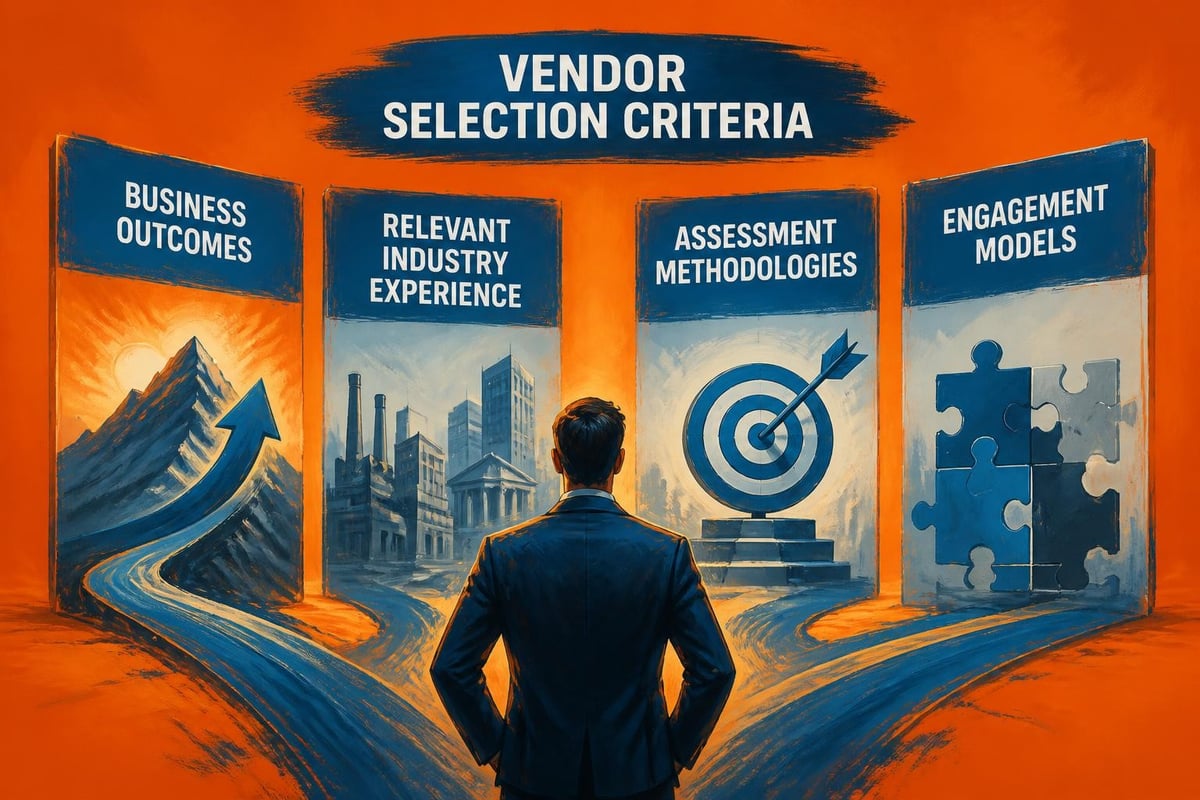
When mid-market companies evaluate coaches, they assess:
- Track record in similar industries or challenges
- Coaching methodology and approach
- Assessment tools and measurement frameworks
- References from comparable clients
- Cultural and operational fit
- Pricing structure and engagement terms
ICF accreditation may appear on vendor questionnaires, but rarely as a disqualifying factor. Buyers want proof the coach can drive the outcomes they need, whether that's improving manager retention, accelerating leadership transitions, or strengthening team execution.
Why the Credential Myth Persists
The coaching industry perpetuates the belief that icf accreditation is not a hiring requirement less often than it should. Training programs, certification bodies, and credentialing organizations benefit financially when coaches believe credentials equal employability.
Three forces reinforce this myth:
- Certification program marketing positions credentials as career essentials rather than optional professional development
- Inexperienced coaches substitute credentials for experience because they lack client results to showcase
- Risk-averse procurement teams default to credential requirements when they lack coaching expertise themselves
The EMCC Global accreditation overview reveals that multiple credentialing pathways exist internationally, yet no legal or regulatory body mandates any single standard for coaching practice. If ICF were truly required, alternative credentials would hold no market value.
The Real Selection Criteria
HR teams and executives hiring coaches focus on factors credentials cannot guarantee. According to SHRM’s coverage of how coaching changes workplace interactions, organizations prioritize coaches who understand business context, adapt methodology to company culture, and integrate with existing talent development systems.
| What Buyers Actually Evaluate | Why It Matters More Than Credentials |
|---|---|
| Industry-specific experience | Coaches understand context, terminology, and common challenges without onboarding time |
| Assessment and measurement tools | Organizations need ROI justification and progress tracking |
| Engagement model flexibility | Month-to-month terms reduce risk versus long contracts |
| References from similar companies | Proof of results in comparable environments |
| Integration with internal initiatives | Coaching must align with existing leadership frameworks and competency models |
A meta-analysis in Frontiers in Psychology examining workplace coaching effectiveness found that coaching impact correlated with relationship quality, goal clarity, and contextual fit, not coach credentials. The research reinforces what practitioners observe: icf accreditation is not a hiring requirement because buyers select coaches who deliver results, regardless of certification status.
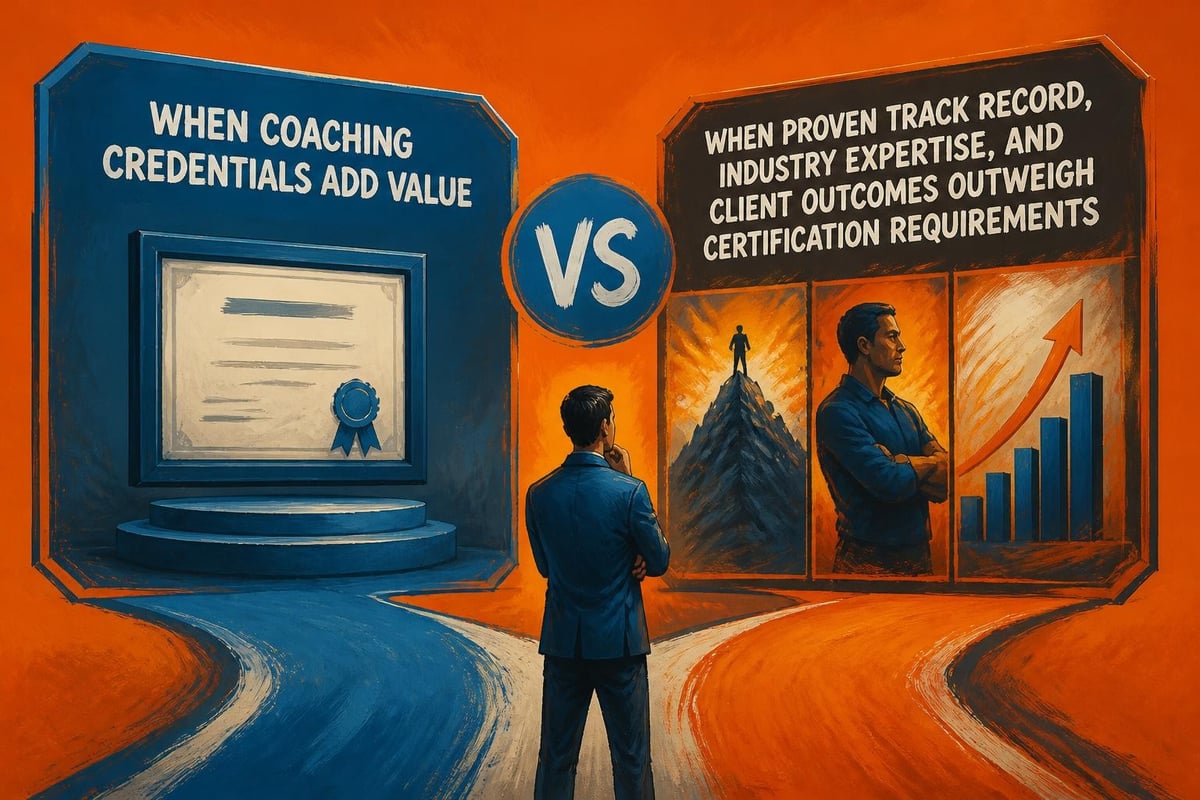
When Credentials Actually Matter
Credentials serve specific purposes in narrow contexts. Understanding when they add value versus when they create false security helps both coaches and buyers make better decisions.
Credentials provide value when:
- New coaches need structured learning and supervised practice hours
- Professional development budgets require documented training completion
- Internal HR policies mandate minimum training thresholds for vendor databases
- Coaches seek peer community and ongoing professional development
Credentials create false expectations when:
- Coaches substitute training hours for client experience
- Buyers use credentials as proxies for coaching quality
- Certification becomes a marketing crutch rather than a competency signal
- Organizations pay premium rates for credentials rather than proven expertise
The Harvard Business Review guide on assessing candidates who don’t fit the mold provides frameworks for evaluating non-traditional candidates based on demonstrated ability rather than checkbox credentials. These same principles apply when hiring coaches.
How to Evaluate Coaches Without Relying on Credentials
Organizations that move beyond credential-dependent selection find better coaching fits and stronger results. The evaluation framework below prioritizes evidence over assumptions.
Discovery Questions That Reveal Coaching Quality
- What specific business outcomes have you driven with clients similar to us? (Look for KPIs, retention data, promotion rates, revenue impact)
- How do you measure coaching progress and ROI? (Assessment tools, scorecards, feedback mechanisms)
- What does your coaching methodology look like in practice? (Session structure, between-session accountability, integration with work)
- Can you provide references from companies in our industry or facing similar challenges? (Verify relevance and results)
- How do you handle coaching that isn't producing results? (Accountability, course correction, engagement terms)
Research published in NCBI examining executive coaching through randomized controlled trials demonstrates that coaching effectiveness depends on goal specificity, feedback quality, and behavioral practice, not on coach credentials. This evidence supports evaluation frameworks focused on methodology and measurement rather than training hours.
Red Flags in Coach Selection
- Credential-heavy marketing with minimal client results
- Resistance to ROI measurement or progress tracking
- Long contract requirements with no performance accountability
- Generic coaching approaches not tailored to industry context
- Inability to articulate clear methodology or assessment framework
Organizations working with leadership coaching specialists should expect coaches who customize engagements to business needs, not coaches who apply one-size-fits-all certification training to every client.
The Shift Toward Skills-Based Coaching Selection
Forward-thinking organizations now evaluate coaches the same way they evaluate other professional service providers: through demonstrated competency, relevant experience, and verifiable results.
This shift mirrors broader talent acquisition trends away from degree requirements and toward skills validation. Just as software companies hire developers based on portfolio projects rather than computer science degrees, smart buyers hire coaches based on client outcomes rather than certification letters.
Practical steps for skills-based coach evaluation:
- Request case studies with specific problem, approach, and measurable outcome
- Conduct trial sessions or pilots before long-term commitments
- Evaluate coaches on cultural and operational fit, not just methodology
- Prioritize month-to-month terms that allow performance-based continuation
- Build internal coaching literacy so procurement teams can assess quality
The reality that icf accreditation is not a hiring requirement creates opportunities for experienced coaches who deliver results but chose alternative development paths. It also protects buyers from overpaying for credentials that don't guarantee effectiveness.

What This Means for Coaches and Organizations
Coaches building sustainable practices should invest in expertise, client results, and specialized industry knowledge rather than accumulating credentials as a primary strategy. As covered in why ICF won’t fix a lead generation problem, credentials don't replace marketing, positioning, or demonstrated value.
Organizations should develop coaching literacy among procurement and HR teams so they can evaluate coaches on factors that predict success: relevant experience, assessment rigor, measurement frameworks, and cultural fit.
The credential conversation distracts from what matters: can this coach help our leaders make faster decisions, communicate more effectively, and drive measurable business results? That question requires examining track record, methodology, and engagement model, not reviewing certification letters.
Understanding that icf accreditation is not a hiring requirement empowers both buyers and coaches to focus on what actually drives coaching value: expertise, experience, measurement, and accountability.
FAQ
Is ICF accreditation required to coach corporate clients?
No. ICF accreditation is a voluntary professional credential, not a legal or regulatory requirement. Most corporate buyers evaluate coaches based on experience, results, and methodology rather than specific credentials.
Do any organizations require ICF credentials for coaching contracts?
Some large organizations include ICF accreditation in vendor questionnaires or preferred criteria, but it rarely serves as a mandatory requirement. Most companies allow alternative credentials or equivalent experience.
What should I look for instead of ICF accreditation when hiring a coach?
Prioritize industry-specific experience, demonstrated client results, assessment and measurement tools, relevant references, coaching methodology, and engagement terms that align with your risk tolerance and budget.
How do I verify a coach's effectiveness without relying on credentials?
Request case studies with specific outcomes, speak with references from similar companies, conduct a trial engagement, evaluate the coach's assessment framework, and ensure clear ROI measurement is part of the engagement.
Are there any industries where ICF accreditation is genuinely required?
No industry legally requires ICF accreditation. Some regulated professions like healthcare may require state licensure for therapy or counseling, but coaching itself remains unregulated across industries.
What credentials do matter when hiring coaches?
Relevant professional background (former executive, industry specialist, licensed therapist for therapeutic coaching) often matters more than coaching credentials. Look for expertise in the specific challenge you're addressing.
Can non-credentialed coaches be more effective than ICF-certified coaches?
Yes. Research shows coaching effectiveness correlates with relationship quality, goal clarity, and contextual fit, not credentials. Experienced coaches without formal certification often deliver stronger results than newly credentialed coaches without client track records.
How should procurement teams evaluate coaches if not by credentials?
Build internal coaching literacy, develop skills-based evaluation criteria, request work samples and case studies, conduct structured interviews focused on methodology, and pilot engagements before committing to long-term contracts.
What percentage of corporate coaching buyers require ICF accreditation?
No reliable industry data tracks this precisely, but procurement professionals report that credentials appear in minority of RFPs as preferred rather than required criteria, with most buyers prioritizing experience and results over certification status.
The evidence is clear: icf accreditation is not a hiring requirement, and treating it as one limits both coach selection quality and coaching market efficiency. Organizations achieve better results when they evaluate coaches on proven expertise, relevant experience, and measurable outcomes rather than credential checklists. If you need practical corporate coaching that delivers business results without the credential theater, Noomii matches mid-market companies with experienced coaches who tie progress to clear KPIs, work month-to-month, and focus on outcomes like faster decisions, stronger manager capability, and improved team execution.


Leave a Reply
Want to join the discussion?Feel free to contribute!