
I Trusted AI Coaching and Paid the Price: What Failed
The promise seemed irresistible: instant coaching feedback, 24/7 availability, and a fraction of the cost of human expertise. Like many leaders managing stretched teams and tight budgets in 2026, I trusted AI coaching and paid the price. Not in dollars alone, but in missed opportunities, damaged trust, and wasted months before we recognized the fundamental gap between algorithmic pattern matching and genuine business insight.
The Seductive Promise of AI-Powered Coaching
AI coaching platforms flooded the market between 2023 and 2025, each claiming breakthrough capabilities. The pitch hit every pain point: no scheduling friction, no personality conflicts, infinite patience, and insights drawn from millions of conversations.
The features looked compelling:
- Real-time feedback on leadership challenges
- Personalized development plans
- Progress tracking and analytics
- Cost savings of 70-90% versus human coaches
- Zero geographic or timezone constraints
Our mid-market SaaS company, 180 employees across four offices, piloted an AI coaching platform for our management team. The vendor promised leadership development outcomes comparable to human executive coaching. The first month felt productive. Managers logged sessions, received suggestions, and reported initial satisfaction.
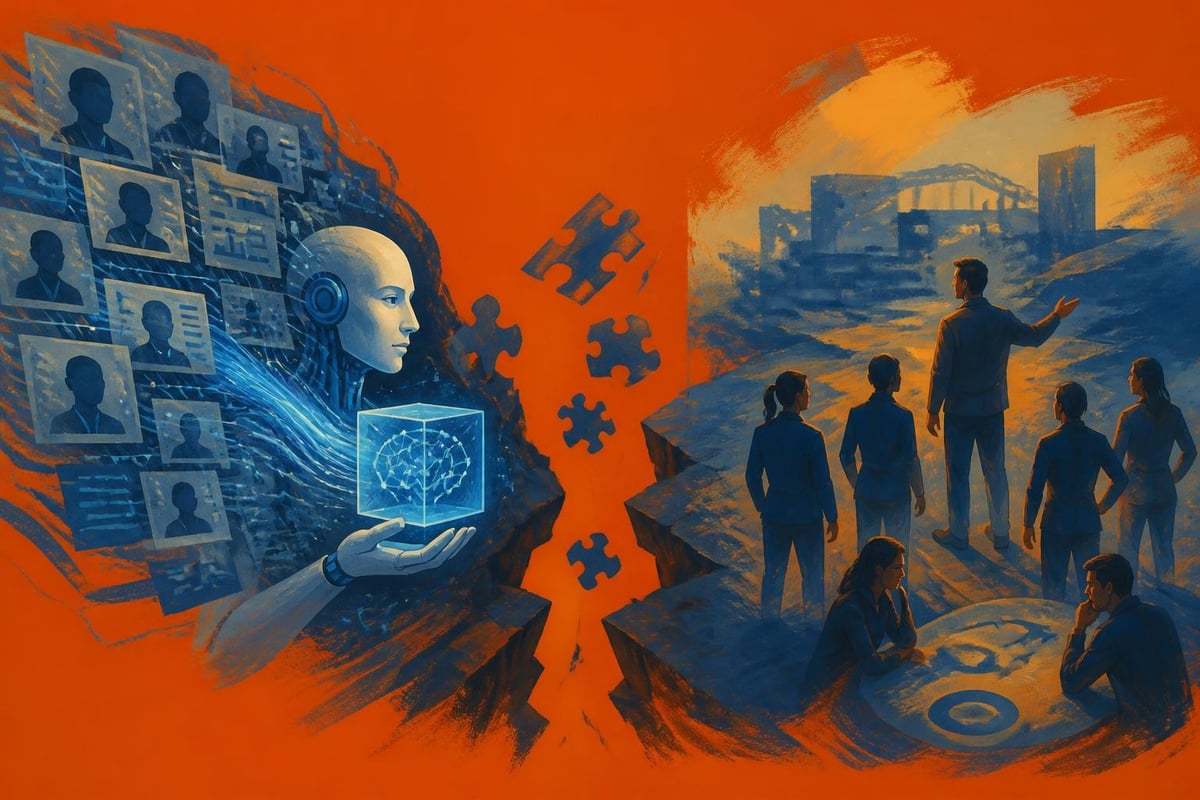
Then reality surfaced. The AI delivered plausible-sounding guidance that consistently missed critical context. When a director asked how to handle a toxic high performer, the system suggested standard conflict resolution frameworks. It never asked about our commission structure, the team's revenue dependency on this individual, or our upcoming product launch timeline. The advice was textbook correct and operationally useless.
When Algorithms Met Reality: Three Costly Failures
The Accountability Theater Problem
AI coaching excels at reflection prompts and action planning. It struggles with enforcement and follow-through because it lacks skin in the game. Our managers completed dozens of AI-generated development plans. Implementation rate? Less than 15%.
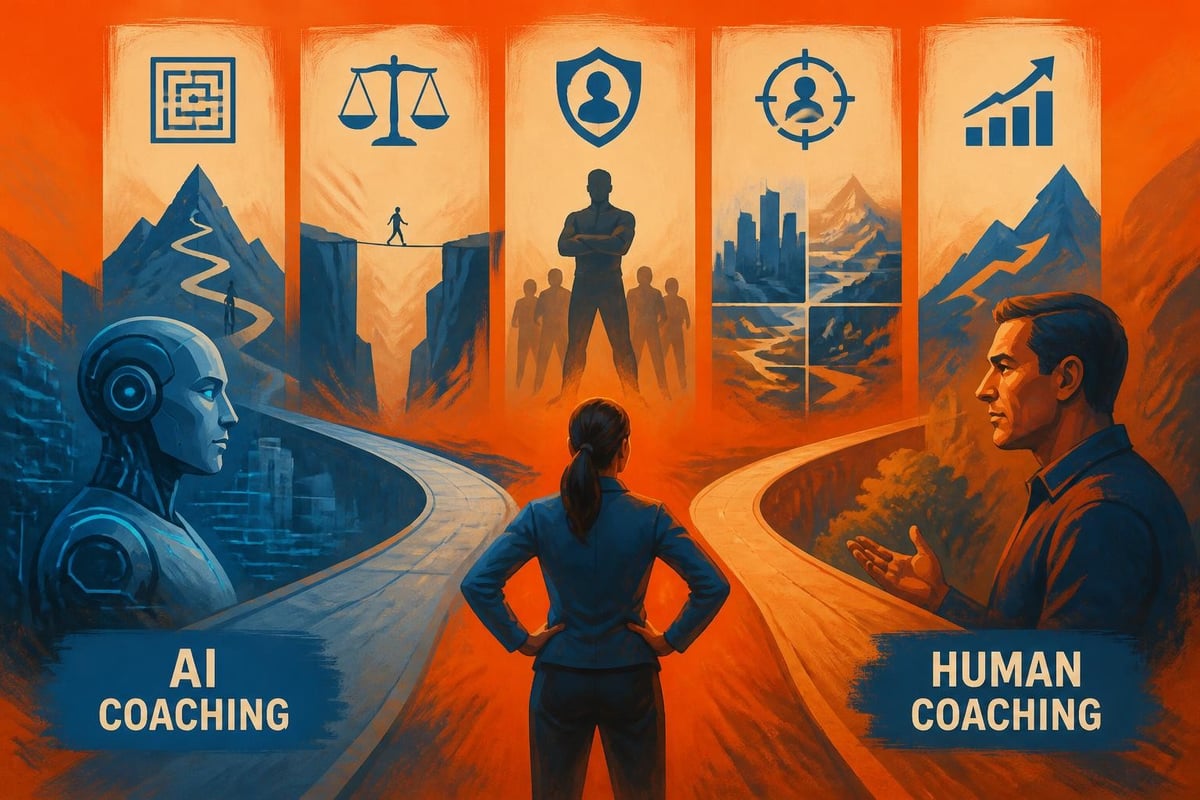
Human coaches bring three accountability mechanisms AI cannot replicate:
- Relationship capital – the discomfort of disappointing someone you respect
- Pattern recognition across sessions – noticing when excuses repeat
- Direct challenge – calling out avoidance in real time
When I trusted AI coaching and paid the price, the hidden cost was managers who felt "coached" without changing behavior. The platform tracked engagement metrics while performance gaps widened.
The Hallucination Risk in High-Stakes Decisions
Research on detecting hallucinations in language models reveals a fundamental problem: AI systems generate confident responses even when factually wrong or contextually inappropriate. For coaching, this creates dangerous scenarios.
One of our VPs used the AI coach to work through a restructuring decision. The system recommended eliminating a role that actually served as critical glue for cross-functional coordination. The advice sounded strategic. It would have damaged our operations for quarters.
| Risk Category | AI Coaching Impact | Human Coach Mitigation |
|---|---|---|
| Contextual blindness | Generic frameworks applied universally | Asks probing questions about specific situation |
| Hallucination | Plausible but inaccurate guidance | Admits uncertainty, researches, or defers |
| Accountability vacuum | No consequences for poor advice | Reputation and relationship at stake |
| Ethical complexity | Pattern-based responses to novel dilemmas | Judgment informed by experience and values |
The Stanford policy framework for AI in therapy and coaching emphasizes safety protocols and evaluation standards that most commercial platforms ignore. We learned this after implementation, not before.
The Missing ROI Connection
AI coaching platforms excel at tracking activity. They struggle to connect coaching conversations to business outcomes. Our platform provided engagement dashboards showing session frequency, completion rates, and sentiment scores.
It never tied coaching topics to our actual KPIs: win rates, retention, project delivery, or cross-functional collaboration quality. When we asked managers how AI coaching improved their team's performance, answers were vague. "It helped me think through challenges" doesn't move revenue or reduce churn.
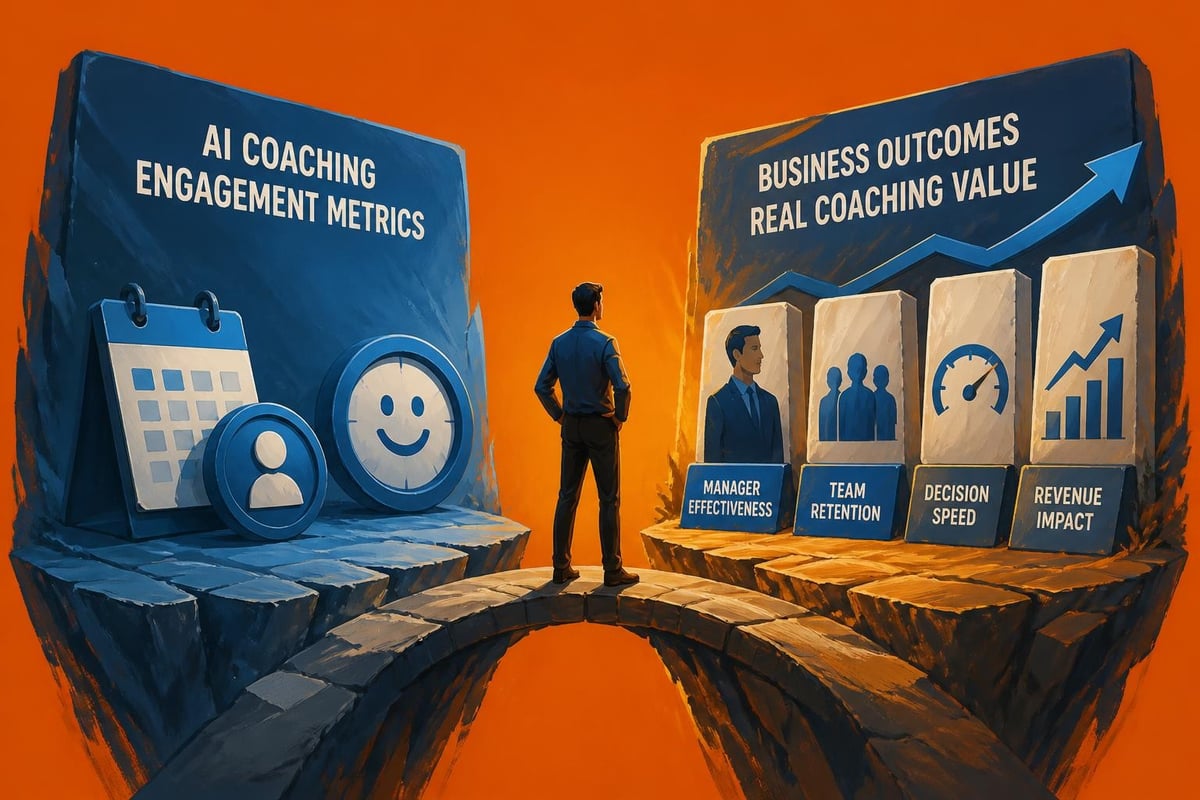
Executive coaches who understand your industry and business model start with outcomes, then design interventions. They coach live in your meetings, observe your operating rhythms, and adjust based on what moves your specific needles. AI coaching starts with conversations and hopes for transfer.
What Actually Works: The Evidence from Real Deployments
After abandoning our AI-only approach, we interviewed 30 peer companies about their coaching strategies. The pattern was clear: AI tools work as supplements, not substitutes.
Successful hybrid models we observed:
- AI handles scheduling, resource curation, and session prep
- Human coaches deliver the actual coaching conversation
- AI tracks commitments and sends accountability reminders
- Human coaches review progress and adjust approach
Companies that tried AI-only coaching reported similar experiences: initial enthusiasm, gradual recognition of limitations, quiet pivot back to human expertise. The IEEE standards for AI-based coaching systems acknowledge this reality, focusing on trust, privacy, and safety requirements that assume human oversight.
One manufacturing company shared their lesson bluntly: "We thought we were buying coaching. We actually bought a journaling app with a chatbot." The distinction matters.
The Regulatory and Ethical Reckoning Ahead
As AI coaching scales, regulatory scrutiny intensifies. The EU AI Act classifies certain AI applications as high-risk, triggering transparency and safety obligations. While coaching isn't explicitly categorized yet, the ethical frameworks for automated mental healthcare apply directly to coaching scenarios involving stress, performance anxiety, or career transitions.
The question isn't whether AI coaching will face regulation. It's whether your organization will get caught using poorly designed systems before standards emerge.
Red flags that signal AI coaching isn't ready for your use case:
- Vendor cannot explain training data sources or bias mitigation
- No human oversight or escalation protocols
- Claims of equivalence to certified human coaches
- Lack of outcome measurement beyond engagement metrics
- Missing privacy and data retention transparency
When platforms address coaching challenges that genuinely require human judgment, expertise, and accountability, businesses looking for practical results discover the gap between marketing and reality quickly.
Lessons from Paying the Price
Our six-month AI coaching experiment cost $47,000 in platform fees plus opportunity cost from delayed leadership development. More valuable than the money was learning what actually drives coaching outcomes.
What we got wrong:
- Prioritized cost savings over effectiveness
- Confused activity metrics with results
- Underestimated the importance of relationship and accountability
- Assumed technology could replicate expertise and judgment
What we do now:
We work with Noomii for executive and leadership coaching tied directly to our operating cadence and KPIs. Coaches attend our leadership team meetings, observe our actual dynamics, and design interventions around real challenges. Progress connects to business outcomes we already measure: manager retention, promotion readiness, cross-functional project success, and decision quality.
We still use AI tools for scheduling, resource sharing, and progress tracking. But the coaching itself? That requires someone who understands our business, challenges our thinking, and stays accountable for results.
FAQ
Q: Can AI coaching ever replace human coaches completely?
A: Not for complex, high-stakes, or context-dependent coaching challenges. AI works well for structured skill practice, resource delivery, and accountability reminders, but lacks the judgment, relationship capital, and business acumen that drive leadership coaching outcomes.
Q: How do I evaluate if an AI coaching platform is legitimate?
A: Ask about training data sources, hallucination mitigation, human oversight protocols, outcome measurement beyond engagement, and whether claims are supported by peer-reviewed research rather than vendor case studies.
Q: What's the hidden cost of AI coaching that companies miss?
A: Opportunity cost. Months spent with ineffective AI coaching delay real development, allow problems to worsen, and create false confidence that coaching is happening when behavior isn't changing.
Q: Is AI coaching subject to the same ethics standards as human coaching?
A: Not yet, but regulatory frameworks are emerging. The EU AI Act and Stanford's proposed evaluation standards signal increasing scrutiny, especially for applications involving mental health, performance, or career decisions.
Q: When does AI coaching actually work well?
A: For low-stakes practice, knowledge transfer, structured skill drills, scheduling logistics, and as a supplement to human coaching rather than a replacement.
Q: How can I tell if AI coaching advice is hallucinated?
A: Cross-check recommendations against your specific context, look for vague generalities that could apply to any situation, and be suspicious of confident advice that doesn't acknowledge tradeoffs or ask clarifying questions.
Q: What should be in a pilot before full AI coaching rollout?
A: Clear outcome metrics tied to business results, human coach comparison group, escalation protocols for complex scenarios, user feedback loops, and predetermined success criteria beyond engagement rates.
Q: Do certification requirements apply to AI coaching systems?
A: Current coaching certifications apply to humans, not software. This regulatory gap means AI coaching platforms operate without the ethical standards, supervision requirements, or competency frameworks that govern human coaches.
Q: What's the biggest mistake companies make with AI coaching?
A: Treating it as equivalent to human coaching rather than as a tool that requires human judgment to use effectively. The platform is not the coach, and activity is not the same as outcomes.
<script type="application/ld+json">
{
  "@context": "https://schema.org",
  "@type": "FAQPage",
  "mainEntity": [
    {
      "@type": "Question",
      "name": "Can AI coaching ever replace human coaches completely?",
      "acceptedAnswer": {
        "@type": "Answer",
        "text": "Not for complex, high-stakes, or context-dependent coaching challenges. AI works well for structured skill practice, resource delivery, and accountability reminders, but lacks the judgment, relationship capital, and business acumen that drive leadership coaching outcomes."
      }
    },
    {
      "@type": "Question",
      "name": "How do I evaluate if an AI coaching platform is legitimate?",
      "acceptedAnswer": {
        "@type": "Answer",
        "text": "Ask about training data sources, hallucination mitigation, human oversight protocols, outcome measurement beyond engagement, and whether claims are supported by peer-reviewed research rather than vendor case studies."
      }
    },
    {
      "@type": "Question",
      "name": "What's the hidden cost of AI coaching that companies miss?",
      "acceptedAnswer": {
        "@type": "Answer",
        "text": "Opportunity cost. Months spent with ineffective AI coaching delay real development, allow problems to worsen, and create false confidence that coaching is happening when behavior isn't changing."
      }
    },
    {
      "@type": "Question",
      "name": "Is AI coaching subject to the same ethics standards as human coaching?",
      "acceptedAnswer": {
        "@type": "Answer",
        "text": "Not yet, but regulatory frameworks are emerging. The EU AI Act and Stanford's proposed evaluation standards signal increasing scrutiny, especially for applications involving mental health, performance, or career decisions."
      }
    },
    {
      "@type": "Question",
      "name": "When does AI coaching actually work well?",
      "acceptedAnswer": {
        "@type": "Answer",
        "text": "For low-stakes practice, knowledge transfer, structured skill drills, scheduling logistics, and as a supplement to human coaching rather than a replacement."
      }
    },
    {
      "@type": "Question",
      "name": "How can I tell if AI coaching advice is hallucinated?",
      "acceptedAnswer": {
        "@type": "Answer",
        "text": "Cross-check recommendations against your specific context, look for vague generalities that could apply to any situation, and be suspicious of confident advice that doesn't acknowledge tradeoffs or ask clarifying questions."
      }
    },
    {
      "@type": "Question",
      "name": "What should be in a pilot before full AI coaching rollout?",
      "acceptedAnswer": {
        "@type": "Answer",
        "text": "Clear outcome metrics tied to business results, human coach comparison group, escalation protocols for complex scenarios, user feedback loops, and predetermined success criteria beyond engagement rates."
      }
    },
    {
      "@type": "Question",
      "name": "Do certification requirements apply to AI coaching systems?",
      "acceptedAnswer": {
        "@type": "Answer",
        "text": "Current coaching certifications apply to humans, not software. This regulatory gap means AI coaching platforms operate without the ethical standards, supervision requirements, or competency frameworks that govern human coaches."
      }
    },
    {
      "@type": "Question",
      "name": "What's the biggest mistake companies make with AI coaching?",
      "acceptedAnswer": {
        "@type": "Answer",
        "text": "Treating it as equivalent to human coaching rather than as a tool that requires human judgment to use effectively. The platform is not the coach, and activity is not the same as outcomes."
      }
    }
  ]
}
</script>
I trusted AI coaching and paid the price by learning that algorithms cannot replace the judgment, accountability, and business acumen that drive real leadership development. The future includes AI tools, but effective coaching still requires human expertise tied to your specific challenges and measurable outcomes. Noomii Corporate Coaching delivers practical, results-focused executive and leadership development for mid-market companies, coaching live in your meetings with progress tied to clear KPIs and month-to-month terms that keep us accountable for visible results.


Leave a Reply
Want to join the discussion?Feel free to contribute!