

What BetterUp Means for Coaches (2026 Reality)
Understanding what BetterUp means for coaches requires cutting through marketing noise and facing hard truths about platform economics, AI disruption, and the coaching career paths available in 2026. BetterUp represents a fundamental shift: coaching as enterprise software, not professional service. This changes who gets work, what skills matter, how coaches are paid, and which career trajectories survive the next five years. Whether you're considering joining their network, competing against them, or watching from the sidelines, the implications affect every independent coach and corporate coaching buyer today.
The BetterUp Model: What Coaches Actually Experience
BetterUp's platform approach standardizes coaching delivery at enterprise scale. Coaches become contractors within a technology layer that handles matching, scheduling, measurement, and client management.
Selection and Onboarding Reality
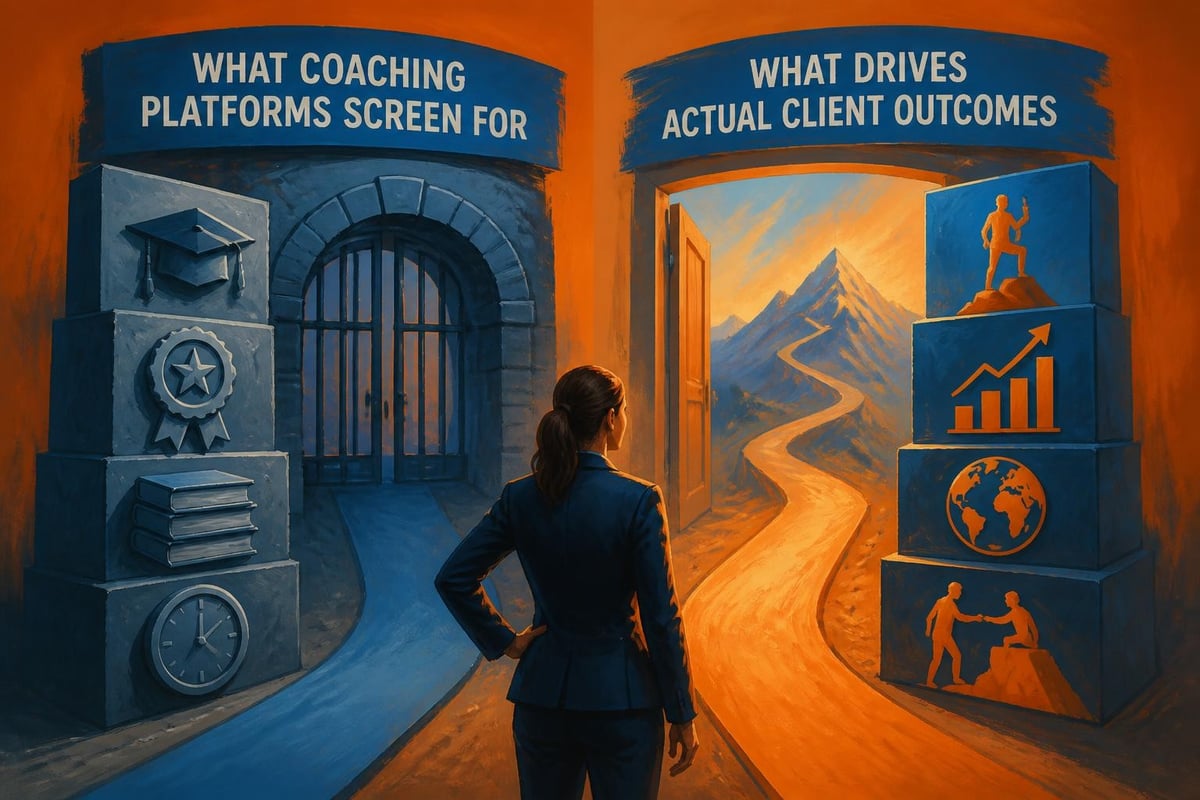
BetterUp’s coach selection process emphasizes credentials, assessments, and platform fit over client acquisition skills. The company screens for ICF certification, advanced degrees, and coaching hours. Once accepted, coaches enter structured training on methodology, platform tools, and BetterUp's measurement framework.
Here's what new platform coaches discover:
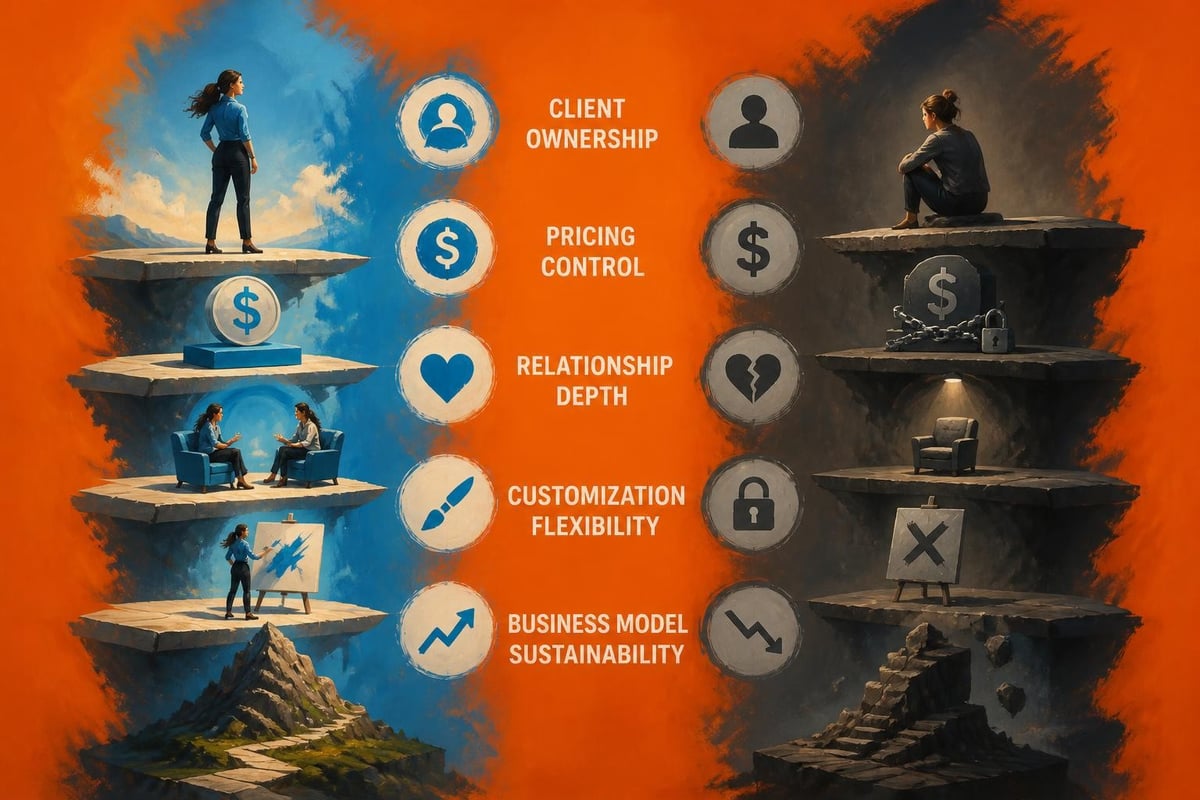
- You surrender client relationships to the platform
- Matching algorithms control your utilization rate
- Session notes, assessments, and methods follow templates
- Pricing and contract terms are set centrally
- Platform rules determine scheduling flexibility
This creates efficiency for enterprise buyers but fundamentally changes the coach's role. You become a delivery resource, not a business owner managing client relationships end to end.
AI Coaching Integration: The January 2025 Turning Point
When BetterUp launched AI coaching in early 2025, it signaled what many practitioners suspected: platforms prioritize technology leverage over human coach expansion. AI handles lower-complexity interactions, reserving human coaches for escalated needs.
What This Means for Human Coaches on Platform
The integration shifts utilization patterns. Clients start with AI, progress to human coaches for complex situations, then cycle back to AI for maintenance and reinforcement. This creates three immediate impacts:
- Reduced session volume per coach as AI absorbs routine check-ins
- Higher complexity in remaining human sessions requiring advanced facilitation
- Measurement pressure to justify human cost premium over AI alternatives
Industry analyst Josh Bersin noted that AI coaching platforms change the economics of leadership development by reducing per-person costs. For enterprise buyers, this is attractive. For coaches, it means demonstrating value AI cannot replicate.
The coaching skills that matter in AI-hybrid environments:
- Live meeting facilitation and team dynamics intervention
- Custom diagnostic work tied to business KPIs
- High-stakes leadership transitions and conflict resolution
- Cross-functional collaboration and operating rhythm design
Generic life coaching, self-awareness conversations, and accountability check-ins move to AI. Coaches who cannot work at business execution level face reduced demand.
The Credential Myth BetterUp Reinforces
BetterUp's emphasis on ICF credentials and formal certifications perpetuates a costly myth: that certificates predict coaching outcomes. Fifteen years of matching coaches to corporate clients reveals a different pattern.
| Factor | Credential View | Outcome Reality |
|---|---|---|
| Success Predictor | ICF hours, degrees | Business results, client retention |
| Client Priority | Coach pedigree | Problem solved, speed to impact |
| Skill Development | Classroom training | Live client work, pattern recognition |
| Differentiation | Certificate tier | Niche expertise, industry knowledge |
The coaches who deliver measurable results often built expertise through consulting, operating roles, or deep industry experience. A business coach in the United States with ten years running revenue operations brings more value to a sales leadership engagement than a newly certified PCC with therapy training.
Economic Reality: Platform Pay Versus Independent Practice
Understanding what BetterUp means for coaches requires examining compensation structure. Platform coaches trade client ownership and pricing control for volume and administrative simplicity.
Platform economics typically deliver:
- Fixed session rates (often $150-$300 per hour equivalent)
- Variable utilization based on matching algorithms
- No client acquisition costs or marketing burden
- Limited ability to upsell, extend engagements, or build long-term relationships
Independent coaches building direct corporate relationships face higher client acquisition costs but control pricing, engagement design, and relationship depth. A coach working directly with a mid-market company can charge $3,500-$8,000 monthly for embedded leadership work with clear KPI accountability. Platform constraints make this impossible.
The Retention Economics Clients Miss
Enterprise buyers choosing platforms often overlook retention risk. When coaches are platform resources, client loyalty attaches to the technology, not the practitioner. If the platform relationship ends, coaching relationships disappear.
Direct coaching relationships create different economics. When a leadership coach in Dubai delivers results tied to revenue growth or team performance, the client retains that relationship regardless of platform changes. This matters more than buyers realize during initial procurement.
Career Paths: Platform Track Versus Independent Build
What BetterUp means for coaches depends entirely on career goals and risk tolerance. The platform track offers predictable income and operational simplicity but caps upside and limits business control.
When Platform Coaching Makes Sense
Consider the BetterUp path if you:
- Want steady coaching volume without marketing
- Prefer structure, templates, and methodology guidance
- Value enterprise client access without sales cycles
- Accept income ceilings for reduced business risk
This works for coaches treating coaching as professional employment rather than business ownership.
When Independent Practice Wins
Building independent corporate coaching practice creates different leverage:
- Direct client relationships with custom engagement design
- Pricing aligned to business results, not session counts
- Ability to coach live in client meetings and operating rhythms
- Freedom to integrate consulting, training, and coaching flexibly
The executive coach in Japan who embeds in leadership teams, coaches during strategy sessions, and ties work to quarterly OKRs cannot operate within platform constraints. The value model is fundamentally different.
The AI-Resistant Coaching Model
BTS research on scaling coaching with AI identifies the coaching work AI cannot replicate: live facilitation in high-stakes business contexts, complex team dynamics, and real-time decision support during critical meetings.
This points to the AI-resistant coaching model:
- Embed in client operations rather than schedule separate coaching sessions
- Tie coaching to KPIs and business metrics that matter to leadership
- Facilitate live meetings where decisions happen and conflicts surface
- Coach managers to coach their teams, multiplying impact beyond one-to-one sessions
Platforms struggle to deliver this because it requires customization, business acumen, and willingness to share risk based on outcomes. The standardized platform model optimizes for scalability, not depth.
What Mid-Market Buyers Should Consider
Understanding what BetterUp means for coaches helps buyers make smarter decisions. Comparing enterprise coaching providers in 2026 reveals that platform solutions optimize for different outcomes than embedded coaching partnerships.
Platform coaching delivers when you need:
- Broad employee access to coaching at scale
- Consistent methodology across distributed teams
- Self-service tools and AI-assisted development
- Compliance-friendly documentation and measurement
Independent corporate coaching wins when you need:
- Leadership development tied to specific business results
- Custom operating rhythm design and KPI accountability
- Live coaching during critical meetings and decisions
- Coaches who understand your industry and business model
A team coach in Ohio working month-to-month with clear ROI metrics creates different value than platform access for 500 employees. Both have roles, but buyers often choose based on procurement ease rather than outcome fit.
Frequently Asked Questions
Is BetterUp a good career move for new coaches?
BetterUp provides volume and structure helpful for building hours and developing coaching skills, but it limits business ownership, pricing control, and client relationships. Treat it as professional employment rather than business building.
How does AI coaching affect human coaches on platforms?
AI reduces session volume for routine coaching interactions, shifting human coaches toward higher-complexity engagements. This requires stronger business acumen and facilitation skills beyond traditional coaching conversations.
What credentials does BetterUp require from coaches?
BetterUp emphasizes ICF certification, advanced degrees, and documented coaching hours. However, credentials predict platform acceptance, not coaching outcomes. Business results matter more than certificates.
Can coaches build independent practices while working with BetterUp?
Platform contracts typically restrict direct client relationships and competing activities. Review agreements carefully if you plan to build an independent practice alongside platform work.
What type of coaching does AI replace first?
AI handles accountability check-ins, goal tracking, self-awareness conversations, and routine skill practice. Live facilitation, complex team dynamics, and business-tied leadership work remain human-dependent.
How much do BetterUp coaches actually earn?
Compensation varies by utilization and session rates, typically $150-$300 per session equivalent, but volume depends on algorithmic matching. Independent coaches controlling pricing and engagement design often earn more per client relationship.
Should mid-market companies choose BetterUp or independent coaches?
Platform solutions work for broad access and standardized methodology. Independent coaches excel when you need custom work tied to specific business results, KPIs, and embedded support during critical decisions.
What skills separate AI-resistant coaches from those facing displacement?
Live meeting facilitation, team dynamics intervention, business KPI integration, cross-functional collaboration design, and high-stakes leadership support resist AI automation. Generic coaching conversations do not.
How do platforms like BetterUp change corporate coaching procurement?
Platforms shift procurement from relationship-based coaching partnerships to software purchases with coaching as a feature. This favors scalability over customization and standardization over business-specific expertise.
What BetterUp means for coaches boils down to this: platforms optimize for scalability while independent practice optimizes for depth and measurable business outcomes. If you need leadership development tied to clear KPIs, live meeting support, and coaching that drives faster decisions and cleaner execution, Noomii delivers embedded corporate coaching with month-to-month terms and shared risk. You stay because results are visible, not because contracts trap you.


Leave a Reply
Want to join the discussion?Feel free to contribute!