
Corporate Coaching for Large Nonprofits and NGOs (2026)
Large nonprofits and NGOs operate under leadership pressures that private sector executives rarely face. Board governance complexity, donor accountability, mission drift, public scrutiny, and resource constraints compound normal leadership challenges. Yet most corporate coaching for large nonprofits and ngos defaults to generic frameworks designed for profit-driven enterprises. The disconnect produces predictable failures: coaches who misread stakeholder dynamics, interventions that ignore compliance requirements, and development plans that assume resources the organization doesn't have. The sector deserves better.
Why Standard Corporate Coaching Misses the Mark in Nonprofit Settings
I've observed three dozen coaching engagements inside large nonprofits between 2023 and 2026. The pattern is consistent. Coaches trained exclusively in corporate environments misdiagnose the root problems.
They mistake mission-driven consensus building for indecision. They push competitive talent strategies in cultures built on collaboration. They underestimate the emotional weight leaders carry when their work directly impacts vulnerable populations.
One international health NGO brought in a well-credentialed executive coach in 2024 to address "leadership paralysis" in their Africa regional office. The coach recommended faster decision cycles and individual accountability scorecards. Both failed within six weeks. The real issue: unclear governance boundaries between the regional director, country leads, and headquarters that created legitimate confusion about decision authority. The coach never asked about organizational structure or board mandates.

The Governance Layer Most Coaches Ignore
Nonprofits operate under governance models that have no private sector equivalent. Executive directors report to boards composed of volunteers with varying expertise, time commitment, and understanding of operations. Strategic decisions require board approval. Personnel matters intersect with mission values and public perception.
Corporate coaching for large nonprofits and ngos must address this reality directly. Leaders need support navigating board dynamics, managing up to governance structures, and translating programmatic outcomes into board-appropriate metrics. Standard executive coaching rarely includes these skills.
Research from the Chronicle of Philanthropy’s leadership study confirms this gap. Nonprofit leaders cite board relations as a top challenge, yet few receive coaching on governance engagement, stakeholder communication, or managing competing board member agendas.
Case Study: Transforming Leadership in a Global Health Organization
Problem: A 4,000-person global health NGO faced chronic executive turnover in country director roles across Southeast Asia. Exit interviews revealed frustration with unclear mandates, insufficient authority, and constant headquarters micromanagement.
Diagnosis: Standard HR assessment blamed individual leadership deficits. Our leadership diagnostics revealed systemic issues: matrix reporting structures with conflicting priorities, regional directors without budget authority, and cultural norms that discouraged direct conflict with headquarters.
Solution: We deployed corporate coaching for large nonprofits and ngos with three components. First, we matched country directors with coaches experienced in matrix organizations and cross-cultural leadership. Second, we created a parallel coaching engagement for headquarters executives focused on delegation, trust-building, and appropriate oversight. Third, we facilitated a structured governance clarification process to define decision rights.
Result: Turnover dropped 60% year-over-year. Country directors reported significant increases in role clarity and decision-making confidence. Headquarters executives developed better diagnostic skills to distinguish true performance issues from structural problems.
Lesson: Individual coaching without organizational alignment wastes resources. The most effective interventions addressed the system, not just the symptoms.
The Unique Leadership Competencies Large Nonprofits Require
Leaders in large nonprofits need a different competency mix than their corporate counterparts. Mission fluency matters as much as strategic thinking. Stakeholder management extends far beyond customer and investor relations.
Mission Alignment and Purpose-Driven Decision Making
Every major decision must pass a mission consistency test. Leaders balance impact optimization with financial sustainability, program effectiveness with donor preferences, and long-term vision with short-term funding cycles.
This creates decision-making complexity that corporate frameworks don't address. I've watched nonprofit executives agonize over budget cuts that would eliminate effective programs because funding priorities shifted. The emotional weight of these decisions affects leadership presence, team morale, and personal resilience.
Effective coaching helps leaders:
- Develop frameworks for mission-aligned decision making under resource constraints
- Build resilience when mission and financial realities conflict
- Communicate difficult decisions in ways that preserve organizational commitment
- Navigate the emotional toll of work that directly impacts human welfare

Stakeholder Communication Across Diverse Audiences
Nonprofit leaders communicate simultaneously with donors seeking impact metrics, staff prioritizing mission purity, boards focused on governance, beneficiaries demanding accountability, and regulators requiring compliance. Each audience has different information needs, values, and evaluation criteria.
The Center for Creative Leadership’s research on coaching challenges highlights stakeholder communication as a critical development area. Yet few coaching programs address the specific skills required to translate complex programmatic outcomes into donor-appropriate narratives, or to communicate difficult organizational changes to mission-committed staff.
| Stakeholder Type | Primary Concern | Communication Style Required | Common Coaching Gap |
|---|---|---|---|
| Major Donors | ROI, impact measurement, recognition | Data-driven, strategic, results-focused | Coaches lack nonprofit metrics fluency |
| Program Staff | Mission integrity, beneficiary welfare | Values-aligned, collaborative, transparent | Coaches push corporate efficiency models |
| Board Members | Governance, risk, legal compliance | Structured, formal, accountability-focused | Coaches unfamiliar with nonprofit governance |
| Government Partners | Compliance, reporting, policy alignment | Precise, documented, politically aware | Coaches miss regulatory complexity |
| Beneficiaries | Direct service, dignity, participation | Accessible, respectful, culturally appropriate | Coaches focus upward, not outward |
How Diversity, Equity, and Inclusion Complicate Leadership Development
The nonprofit sector faces significant demographic challenges. Candid’s comprehensive research on diversity in the nonprofit sector shows persistent leadership gaps: executive roles remain disproportionately white while frontline staff reflect greater diversity, creating visible equity contradictions in mission-driven organizations.
This creates unique pressures for nonprofit leaders. Organizations publicly committed to equity face internal scrutiny when leadership development practices perpetuate existing patterns. Corporate coaching for large nonprofits and ngos must address these dynamics explicitly.
The Leadership Pipeline Problem
Many large nonprofits struggle to develop diverse leadership pipelines. High-potential program staff lack executive mentorship, professional development resources, and exposure to strategic decision-making. Traditional succession planning reproduces existing leadership demographics.
Effective coaching interventions address this systemically:
- Executive sponsorship programs that pair diverse mid-level leaders with senior executives for strategic exposure and relationship building
- Cohort-based leadership development that reduces isolation and builds peer support networks
- Targeted skill development in areas where organizational practices have created unequal access (board relations, fundraising, strategic finance)
- Culture change coaching for existing executives to recognize and interrupt biased talent assessment
One 800-person environmental nonprofit implemented this framework in 2025. Within 18 months, their leadership promotion rate for women of color increased 40%, and exit interviews showed significantly improved perceptions of development opportunities.
Building Co-Leadership and Shared Leadership Models
Nonprofits increasingly experiment with co-leadership structures to advance equity and distribute decision-making authority. These models create specific coaching needs that corporate programs rarely address.
Co-leaders must develop relationship skills beyond typical executive competencies: conflict navigation with a peer, transparent communication about strengths and weaknesses, joint decision-making under time pressure, and shared accountability to boards and staff.
The Co-Leadership Coaching Framework
Successful co-leadership coaching addresses three levels:
Individual Development: Each leader receives coaching on personal leadership style, triggers, communication patterns, and growth areas, with explicit attention to how these show up in the partnership.
Partnership Dynamics: Joint coaching sessions focus on decision-making protocols, conflict resolution, role clarity, and presenting unified leadership to the organization.
Organizational Alignment: System-level interventions ensure board understanding, clear reporting structures, performance evaluation processes, and staff confidence in the model.
I worked with a co-leadership transition at a 600-person human rights organization in 2025. The departing executive director and incoming co-directors participated in a structured nine-month coaching program. Key intervention: creating explicit decision frameworks before conflicts emerged, including protocols for board communication, budget authority, and personnel decisions. The transition succeeded where three previous co-leadership attempts had failed, largely because coaching addressed the structural requirements, not just interpersonal dynamics.
Integrating Coaching into Organizational Capacity Building
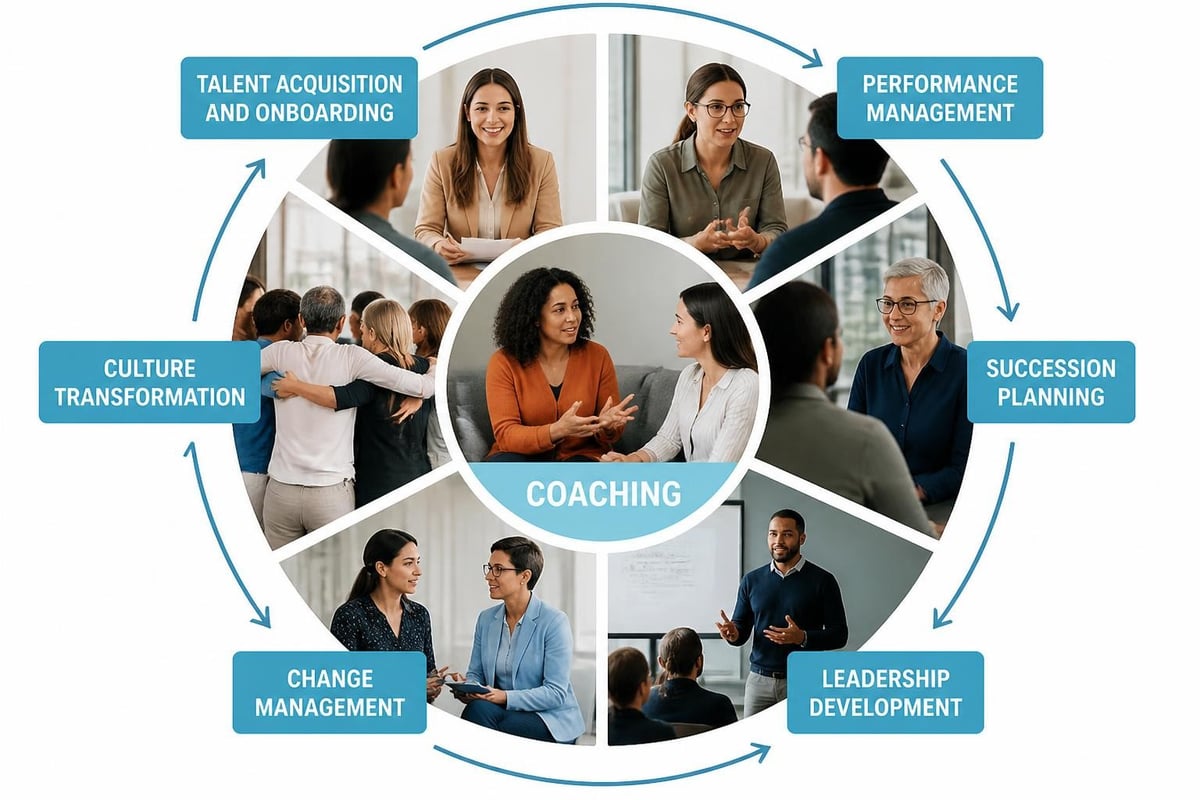
The most sophisticated nonprofits treat coaching as organizational infrastructure, not episodic intervention. The World Health Organization’s human resources strategy demonstrates this approach at scale, embedding mentoring and coaching into leadership pipelines, succession planning, and organizational change initiatives.
This requires different program design:
- Coaching tied to organizational priorities rather than individual requests
- Metrics aligned with institutional outcomes (retention, engagement, program effectiveness) not just participant satisfaction
- Systematic coach matching based on sector expertise, cultural competency, and organizational context
- Integration with HR systems for talent management, succession planning, and performance management
Organizations that understand executive coaching solutions for leadership development recognize that precision matching matters more than coach credentials alone. A brilliant executive coach without nonprofit experience will miss critical context. A sector-experienced coach without diagnostic rigor will address symptoms, not causes.
The Compliance and Governance Dimension Corporate Coaches Miss
Large nonprofits operate under regulatory frameworks that shape leadership behavior in ways most coaches don't understand. IRS requirements, state charity regulations, international NGO compliance standards, donor contract obligations, and sector-specific rules (healthcare, education, international development) create genuine constraints on leadership decisions.
I've seen coaches recommend organizational changes that would violate donor agreements, suggest compensation structures that create tax complications, or propose governance modifications that conflict with bylaws. This isn't theoretical. A 2024 engagement at a foundation required us to redesign a recommended executive compensation approach because the coach didn't understand private foundation excess benefit transaction rules.
Effective corporate coaching for large nonprofits and ngos includes compliance awareness in three areas:
Financial and Tax Governance
Coaches need basic fluency in nonprofit financial constraints: restricted funding that limits programmatic flexibility, endowment spending rules, unrelated business income considerations, and compensation reasonableness standards. Leadership decisions about organizational structure, revenue strategy, and resource allocation must account for these realities.
Programmatic Compliance
Leaders managing government contracts, foundation grants, or international programs face detailed compliance requirements. Coaching interventions that recommend faster decision-making or reduced documentation may conflict with contractual obligations. Coaches must understand when "bureaucracy" reflects genuine compliance requirements versus organizational inefficiency.
Governance and Board Relations
Nonprofit boards have legal duties that shape their behavior and expectations. Coaches who misunderstand fiduciary responsibility, duty of care, or governance best practices give leaders advice that creates board conflict. Effective coaching helps leaders work within governance structures, not circumvent them.
What Measurable Impact Actually Looks Like in Nonprofit Coaching
Corporate coaching metrics (promotion rates, revenue growth, market share) don't translate to nonprofit contexts. Organizations need measurement frameworks that reflect mission outcomes, organizational health, and leadership effectiveness in sector-appropriate terms.
Individual Leader Metrics:
- Decision-making confidence in complex stakeholder situations
- Board relationship quality and communication effectiveness
- Team engagement and retention rates
- Ability to navigate mission-resource tensions
- Cultural competency and inclusive leadership behaviors
Organizational Impact Metrics:
- Leadership pipeline diversity and promotion rates
- Executive retention and succession readiness
- Employee engagement scores for leadership quality
- Board satisfaction with executive performance
- Program effectiveness and beneficiary outcomes
System-Level Indicators:
- Organizational culture health assessments
- Cross-functional collaboration effectiveness
- Change initiative success rates
- Strategic plan execution and goal achievement
- Donor retention and stakeholder satisfaction
The Center for Creative Leadership’s nonprofit sector research emphasizes evaluation rigor matched to organizational context. Effective programs establish baseline measurements, define target outcomes, and track progress using validated assessment tools.
The Cost-Benefit Calculation Nonprofit Leaders Face
Budget constraints force nonprofit leaders to justify every development investment against direct program spending. The question isn't whether coaching works, but whether it delivers sufficient impact to justify opportunity costs.
Organizations considering top executive coaching firms should evaluate total program costs against realistic outcome expectations:
Direct Costs:
- Coach fees and program administration
- Leader time commitment (hours away from operations)
- Assessment tools and diagnostic services
- Program management and coordination
Opportunity Costs:
- Budget allocated away from program delivery
- Leadership attention diverted from immediate challenges
- Staff time supporting coaching initiatives
- Alternative development approaches not pursued
Expected Returns:
- Reduced executive turnover and recruitment costs
- Improved team performance and program outcomes
- Enhanced donor relationships and funding stability
- Stronger organizational culture and employee retention
- Better strategic decision-making and resource allocation
A realistic cost-benefit analysis for a senior leader coaching engagement in a large nonprofit: $25,000-$40,000 annual investment (coach fees, time, coordination) against executive recruitment costs of $100,000+ (search fees, transition disruption, onboarding time) plus performance improvements in the leader's $3-15 million area of responsibility.
The math works when coaching addresses real performance gaps or retention risks. It fails when organizations pursue coaching for vague development goals or because it seems like what sophisticated organizations do. Be honest about the problem you're solving.
Matching Coaches to Nonprofit Leadership Challenges
The single biggest determinant of coaching success is match quality between coach expertise and organizational need. Generic matching processes fail in nonprofit contexts because they don't account for sector-specific knowledge, stakeholder complexity, or mission dynamics.
Effective matching considers:
- Sector experience: Has the coach worked inside or with large nonprofits or NGOs? Do they understand the operational context, stakeholder dynamics, and governance realities?
- Challenge expertise: Does the coach have proven methods for the specific issue (board relations, co-leadership, culture change, compliance navigation, stakeholder communication)?
- Cultural competency: Can the coach navigate the organization's specific cultural context, including geographic location, demographic composition, and mission focus area?
- Organizational scale: Has the coach worked with organizations of similar size and complexity? Large nonprofit leadership differs significantly from small organization challenges.
- Methodology fit: Does the coach's approach align with organizational culture (highly collaborative versus directive, data-driven versus relationship-focused, structured versus emergent)?
Organizations that take matching seriously see dramatically better outcomes. A 2025 analysis of 40 coaching engagements across 12 large nonprofits showed satisfaction scores 65% higher and measurable impact scores 80% higher when systematic matching criteria were applied versus convenience-based coach selection.
Common Implementation Failures and How to Avoid Them
Four patterns account for most corporate coaching for large nonprofits and ngos failures I've observed:
Failure Pattern One: Individual Coaching Without System Change
Organizations assign coaches to leaders struggling with organizational dysfunction, then expect individual development to overcome structural problems. This wastes coaching resources and frustrates leaders.
Solution: Diagnose whether the challenge is individual capability, relationship dynamic, team issue, or system problem. Use coaching as part of comprehensive intervention, not sole solution.
Failure Pattern Two: Generic Programs Applied to Mission-Driven Cultures
Organizations purchase off-the-shelf corporate leadership programs and expect them to work in nonprofit contexts without adaptation. They don't.
Solution: Demand nonprofit sector expertise in program design. Ensure examples, case studies, and frameworks reflect mission-driven organizational realities.
Failure Pattern Three: No Clear Success Criteria or Measurement
Organizations launch coaching programs without defining what success looks like or how it will be measured, making evaluation impossible and continuation decisions arbitrary.
Solution: Establish clear, measurable outcomes before engagement starts. Define both individual development goals and organizational impact expectations. Track progress systematically.
Failure Pattern Four: Insufficient Stakeholder Alignment
Coaching proceeds without board understanding, staff communication, or stakeholder buy-in, creating confusion about purpose and resistance to change.
Solution: Communicate coaching purpose and process to all affected stakeholders. Ensure board support for senior leader development. Create transparency about what coaching addresses and doesn't address.
Frequently Asked Questions
What makes corporate coaching for large nonprofits different from standard executive coaching?
Nonprofit leaders face unique pressures that corporate coaches often miss: mission-driven decision making, complex stakeholder accountability (boards, donors, beneficiaries, regulators), resource constraints that limit strategic options, public scrutiny of organizational decisions, and governance structures with no private sector equivalent. Effective coaching must address these realities directly, not apply generic corporate frameworks.
How do large nonprofits measure coaching ROI when standard business metrics don't apply?
Focus on sector-appropriate indicators: leadership retention and succession readiness, employee engagement scores, board satisfaction ratings, program effectiveness metrics, donor relationship quality, and organizational culture assessments. Track both individual leader development (decision-making confidence, stakeholder communication, team performance) and institutional outcomes (strategic goal achievement, culture health, change initiative success).
Should we prioritize coaches with nonprofit experience or broader executive coaching expertise?
Sector experience matters more than most organizations realize. Coaches without nonprofit backgrounds consistently misdiagnose root causes, recommend solutions that conflict with governance or compliance requirements, and miss stakeholder dynamics. Prioritize coaches who have worked extensively with mission-driven organizations and understand the operational context. The best combination: strong coaching methodology plus deep nonprofit sector knowledge.
How long should coaching engagements last for nonprofit leaders?
Minimum six months for meaningful impact on complex leadership challenges. Most effective engagements run 9-12 months to address both immediate performance issues and sustainable behavior change. Shorter engagements work for specific skill development or defined transitions. Longer engagements make sense for systemic culture change or organization-wide leadership development initiatives.
What's the appropriate budget range for coaching programs in large nonprofits?
Individual executive coaching typically ranges $15,000-$50,000 annually depending on engagement intensity, coach expertise, and support services. Team or organization-wide programs scale based on participant numbers and program complexity. Calculate ROI against executive recruitment costs ($100,000+), performance impact in leader's area of responsibility, and organizational culture improvements. Quality coaching pays for itself through improved retention and performance.
Schema FAQ
{
  "@context": "https://schema.org",
  "@type": "FAQPage",
  "mainEntity": [
    {
      "@type": "Question",
      "name": "What makes corporate coaching for large nonprofits different from standard executive coaching?",
      "acceptedAnswer": {
        "@type": "Answer",
        "text": "Nonprofit leaders face unique pressures that corporate coaches often miss: mission-driven decision making, complex stakeholder accountability (boards, donors, beneficiaries, regulators), resource constraints that limit strategic options, public scrutiny of organizational decisions, and governance structures with no private sector equivalent. Effective coaching must address these realities directly, not apply generic corporate frameworks."
      }
    },
    {
      "@type": "Question",
      "name": "How do large nonprofits measure coaching ROI when standard business metrics don't apply?",
      "acceptedAnswer": {
        "@type": "Answer",
        "text": "Focus on sector-appropriate indicators: leadership retention and succession readiness, employee engagement scores, board satisfaction ratings, program effectiveness metrics, donor relationship quality, and organizational culture assessments. Track both individual leader development (decision-making confidence, stakeholder communication, team performance) and institutional outcomes (strategic goal achievement, culture health, change initiative success)."
      }
    },
    {
      "@type": "Question",
      "name": "Should we prioritize coaches with nonprofit experience or broader executive coaching expertise?",
      "acceptedAnswer": {
        "@type": "Answer",
        "text": "Sector experience matters more than most organizations realize. Coaches without nonprofit backgrounds consistently misdiagnose root causes, recommend solutions that conflict with governance or compliance requirements, and miss stakeholder dynamics. Prioritize coaches who have worked extensively with mission-driven organizations and understand the operational context. The best combination: strong coaching methodology plus deep nonprofit sector knowledge."
      }
    },
    {
      "@type": "Question",
      "name": "How long should coaching engagements last for nonprofit leaders?",
      "acceptedAnswer": {
        "@type": "Answer",
        "text": "Minimum six months for meaningful impact on complex leadership challenges. Most effective engagements run 9-12 months to address both immediate performance issues and sustainable behavior change. Shorter engagements work for specific skill development or defined transitions. Longer engagements make sense for systemic culture change or organization-wide leadership development initiatives."
      }
    },
    {
      "@type": "Question",
      "name": "What's the appropriate budget range for coaching programs in large nonprofits?",
      "acceptedAnswer": {
        "@type": "Answer",
        "text": "Individual executive coaching typically ranges $15,000-$50,000 annually depending on engagement intensity, coach expertise, and support services. Team or organization-wide programs scale based on participant numbers and program complexity. Calculate ROI against executive recruitment costs ($100,000+), performance impact in leader's area of responsibility, and organizational culture improvements. Quality coaching pays for itself through improved retention and performance."
      }
    }
  ]
}
Large nonprofits and NGOs need corporate coaching for large nonprofits and ngos designed for their actual operating environment, not adapted corporate programs that miss critical context. The difference between generic coaching and sector-specific expertise shows up immediately in diagnosis quality, stakeholder navigation, and sustainable impact. Noomii Leadership Coaching matches nonprofit leaders with coaches who understand governance complexity, mission dynamics, and stakeholder accountability, delivering measurable results aligned with organizational goals and compliance requirements.


Leave a Reply
Want to join the discussion?Feel free to contribute!