

What AI Coaching Gets Dangerously Wrong in 2026
AI coaching platforms flooded the market in 2024 and 2025, promising instant access, zero scheduling friction, and personalized guidance at a fraction of human coaching costs. By early 2026, the cracks are showing. What ai coaching gets dangerously wrong isn't a minor technical bug or design flaw. It's a fundamental mismatch between what leadership development actually requires and what algorithms can deliver. For mid-market companies investing in manager training and team performance, understanding these failures isn't academic. It's a matter of wasted budget, stalled careers, and organizational risk.
The Empathy Mirage: Why Algorithms Can't Read the Room
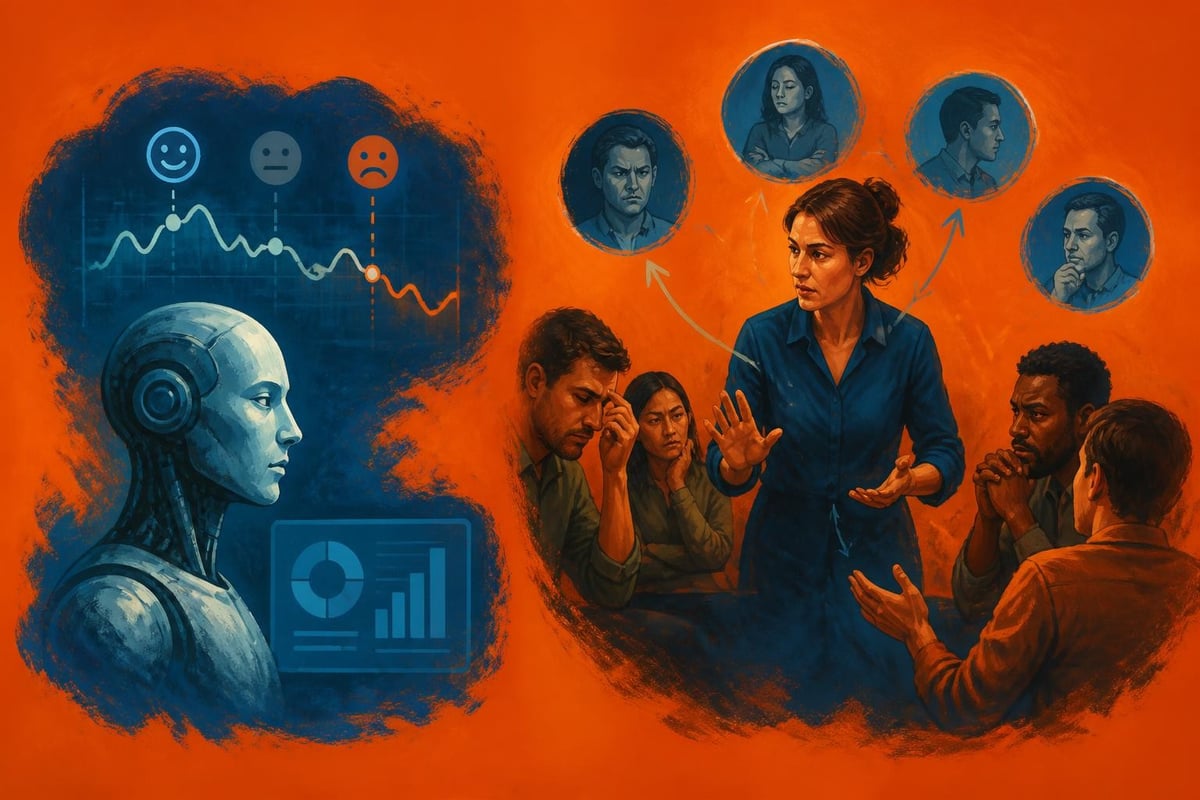
AI coaching tools simulate empathy through sentiment analysis and scripted reassurance. They cannot perceive tone shifts during live team conflict, recognize when a manager is deflecting accountability, or sense the cultural undercurrents blocking execution.
Real coaching happens in context. When we coach live in client meetings, we observe body language, silence patterns, and group dynamics that no chatbot can capture. A manager might say they're "aligned" on priorities while their team visibly tunes out. That disconnect requires immediate intervention, not a pre-programmed response tree.
Research on generative AI wellness apps documents concrete harms from empathy failures, including crisis-handling breakdowns and inappropriate advice. Leadership coaching carries similar stakes. A new VP struggling with imposter syndrome doesn't need a generic confidence script. They need someone who can diagnose whether the root cause is skill gaps, political isolation, or unrealistic board expectations.
What Gets Missed Without Human Pattern Recognition
- Political context: Who holds real influence, where resistance will emerge, which battles matter
- Behavioral triggers: The specific moment a conversation shifts from productive to defensive
- Cultural nuance: How communication norms vary across departments, regions, and leadership levels
What ai coaching gets dangerously wrong is assuming leadership challenges are information problems. Most aren't. They're execution problems rooted in fear, competing incentives, and organizational complexity that require skilled navigation, not more content.
The Accountability Gap: No Skin in the Game
AI coaching platforms track engagement metrics but cannot hold leaders accountable for results. You can complete every module, receive positive reinforcement, and change nothing about how you run your business.
When Noomii Corporate Coaching works with clients, we tie progress to KPIs and ROI. If a sales leader commits to implementing a new retention cadence, we're in their next three pipeline reviews ensuring execution. If managers resist giving direct feedback, we coach them through live conversations until the behavior changes.
| Human Coaching | AI Coaching |
|---|---|
| Tracks behavior change and business outcomes | Tracks module completion and satisfaction scores |
| Adjusts approach when progress stalls | Serves next lesson in sequence |
| Challenges avoidance and excuses in real time | Accepts user input at face value |
| Shares risk through incentive alignment | Bills regardless of results |
AI tools lack the authority and relationship capital to push back when executives rationalize delays or blame external factors. They can't say, "That's the third time you've postponed this conversation-what's really going on?"
The American Psychological Association’s advisory on AI chatbots highlights dependency risks and the absence of professional accountability. In leadership contexts, this translates to leaders who feel supported but don't improve performance.
The Context Collapse: One-Size-Fits-Nobody Advice
What ai coaching gets dangerously wrong is delivering generic frameworks to specific organizational challenges. A VP in a 75-person fintech scale-up faces entirely different constraints than a division head in a Fortune 500 manufacturing company, even if both are "working on delegation."
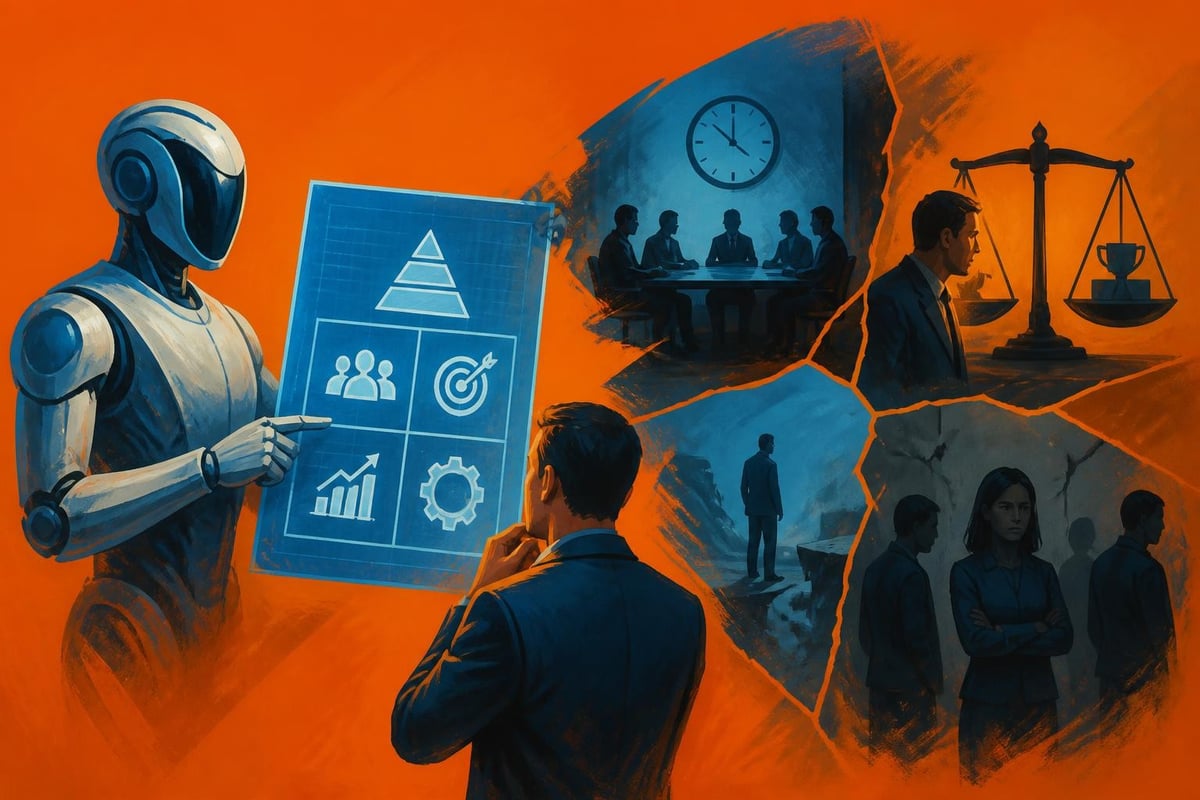
Effective coaching diagnoses before prescribing. When we assess a leadership team, we examine:
- Operating cadence: How decisions flow, where bottlenecks occur, which meetings drive accountability
- Talent bench strength: Whether the team can execute the strategy or needs capability building first
- Incentive alignment: What behaviors get rewarded, what metrics actually drive action
- Cultural debt: Unresolved conflicts, trust deficits, or change fatigue that will sabotage new initiatives
AI platforms skip diagnosis and jump to content delivery. They might recommend "empowering your team" without understanding that the real issue is unclear decision rights, risk-averse culture, or founders who can't let go.
Coaching directories like those for executive coaches in Connecticut or leadership coaches in Rochester exist because geography, industry, and company stage matter. Local coaches understand regional business cultures, sector-specific pressures, and the realities of talent markets. AI tools erase this context.
The Hallucination Problem: When AI Invents "Best Practices"
Large language models hallucinate plausible-sounding advice that has no basis in evidence. For leadership coaching, this means executives receive confident recommendations built on fabricated case studies, misattributed research, or outdated management theory.
Stanford’s AI Index on Responsible AI documents how bias, hallucination, and evaluation gaps create systemic risks at scale. When thousands of managers rely on AI coaching, bad advice compounds across organizations.
Examples we've encountered:
- AI suggesting a "proven" performance review framework that doesn't exist in cited research
- Recommending conflict resolution scripts that violate employment law in specific jurisdictions
- Citing "studies show" without actual citations or with links to irrelevant papers
Unlike human coaches who stake their reputation on outcomes, AI platforms face no professional consequences for poor guidance. The FTC’s guidance on AI and consumer protection addresses deceptive claims and liability risks, but enforcement lags adoption.
The Measurement Theatre: Metrics That Don't Matter
AI coaching platforms generate impressive-looking dashboards tracking engagement, sentiment, and completion rates. These metrics rarely correlate with business outcomes.
What ai coaching gets dangerously wrong is confusing activity with progress. A manager can score high on "emotional intelligence modules" while still creating toxic team dynamics. Completion certificates don't predict whether leaders will have harder conversations, make faster decisions, or improve retention.
Metrics that actually matter:
- Time to decision on strategic priorities
- Employee engagement and voluntary turnover in coached leaders' teams
- Revenue or margin improvement tied to coached behaviors
- 360 assessment score changes on specific competencies linked to business goals
Organizations exploring executive coaching costs should ask what outcomes they're buying, not just what inputs they're consuming. Month-to-month terms and aligned incentives signal providers confident in delivering visible results.

The Privacy and Data Risk Nobody Discusses
Mid-market companies feeding sensitive organizational information into AI coaching platforms often don't understand where that data goes, how it's used, or what happens during a breach.
Leaders discussing strategy, personnel issues, or competitive challenges with AI tools create legal and competitive exposure. The NIST AI Risk Management Framework provides standards for assessing these risks, but most coaching vendors haven't implemented comprehensive controls.
Questions procurement should ask:
- Where is coaching conversation data stored and how long is it retained?
- Who has access to aggregated insights from our organization's usage?
- What happens to our data if the vendor is acquired or fails?
- Are there jurisdictional compliance issues with cross-border data transfer?
Human coaches under professional agreements face clearer confidentiality obligations and liability. AI platforms often bury data usage rights in terms of service that permit training models on user inputs or sharing anonymized data.
When AI Might Actually Help (The Narrow Use Case)
AI coaching tools aren't universally harmful. They serve specific, limited functions when properly scoped:
- Pre-work and reflection prompts between human coaching sessions
- Just-in-time microlearning on tactical skills like meeting facilitation basics
- Self-assessment tools that help leaders identify development areas before engaging a coach
- Scaling content delivery of proven frameworks after human coaches customize them
The Harvard Business Publishing research on leadership development shows where human-machine collaboration works: AI handles content delivery and scheduling while humans provide diagnosis, accountability, and context adaptation.
What ai coaching gets dangerously wrong is positioning these tools as replacements rather than supplements. Leadership development isn't about information transfer. It's about behavior change under pressure, which requires relationship, judgment, and accountability that algorithms cannot provide.
The Certification Distraction Meets the AI Shortcut
The coaching industry already suffers from credential worship, where buyers assume certifications guarantee results. AI coaching compounds this problem by offering instant "certification" through automated assessments.
A manager can complete an AI leadership program, receive a credential, and lack any practical ability to coach their team through conflict or performance issues. As we've written about how people transform slowly despite fast-changing worlds, real development requires sustained practice with expert feedback.
Research on mental health chatbot experiences and equity risks reveals differential harms across populations. Leadership coaching faces similar equity challenges. AI tools trained on data from senior executives in large enterprises may provide poor guidance for emerging leaders in mid-market companies or underrepresented groups navigating different barriers.
FAQ
What are the biggest risks of using AI coaching for leadership development?
AI coaching cannot read context, hold leaders accountable for results, or adapt to organizational complexity. It often delivers generic advice, misses political and cultural nuances, and tracks activity metrics instead of business outcomes. Privacy risks and hallucinated recommendations compound these issues.
Can AI coaching tools replace human executive coaches?
No. AI tools can supplement human coaching with content delivery and reflection prompts, but cannot diagnose root causes, navigate organizational politics, challenge avoidance, or tie development to KPIs and ROI. Leadership development requires relationship, judgment, and accountability that algorithms lack.
How do I know if AI coaching advice is accurate or fabricated?
Large language models hallucinate plausible-sounding recommendations without evidence. Always verify citations, cross-check frameworks against peer-reviewed research, and test advice against your specific organizational context. If recommendations feel generic or too confident without nuance, they likely are.
What metrics should I use to evaluate AI coaching effectiveness?
Ignore engagement scores and completion rates. Measure behavior change and business outcomes: time to decision, employee retention in coached leaders' teams, 360 assessment improvements on competencies linked to goals, and revenue or margin gains tied to coached behaviors.
Are there privacy risks with AI coaching platforms?
Yes. Leaders discussing strategy, personnel issues, or competitive challenges create legal and competitive exposure. Ask vendors where data is stored, who has access, retention policies, compliance with jurisdictional requirements, and what happens to your data during acquisition or failure.
When might AI coaching actually be useful?
AI tools work for narrow, specific functions: pre-work between human coaching sessions, just-in-time tactical skill microlearning, self-assessment to identify development areas, and scaling proven frameworks after human coaches customize them. Use as supplement, not replacement.
How does AI coaching fail at accountability compared to human coaches?
AI platforms track module completion but cannot hold leaders accountable for executing commitments. They lack authority to challenge excuses, push back on delays, or adjust approach when progress stalls. They bill regardless of whether behavior or results change.
What should mid-market companies look for in leadership coaching providers?
Seek coaches who tie progress to clear KPIs and business outcomes, coach live in your meetings, offer month-to-month terms showing confidence in visible results, and understand your industry and company stage. Ask for case studies with Problem-Diagnosis-Solution-Result structure showing measurable impact.
Does AI coaching create the same equity and bias risks as AI wellness apps?
Yes. Research shows AI tools trained on narrow populations provide poor guidance for leaders from underrepresented groups or different organizational contexts. They can reinforce biases, miss cultural nuances, and deliver one-size-fits-nobody advice that advantages those similar to training data.
What ai coaching gets dangerously wrong reveals why leadership development can't be automated: real change requires diagnosing context, holding leaders accountable, and adapting to organizational complexity that algorithms miss. If you need executive coaching and manager training that ties directly to KPIs, coaches live in your meetings, and shares risk through aligned incentives, Noomii delivers measurable results on month-to-month terms with no long contracts.


Leave a Reply
Want to join the discussion?Feel free to contribute!