

Corporate Coaching Providers Across MENA: 2026 Guide
The leadership crisis in Middle East and North Africa organizations isn't a pipeline problem-it's a precision problem. Most corporate coaching providers across MENA deliver generic programs that ignore sector-specific challenges, cultural nuances, and the regulatory complexity facing organizations from Riyadh to Rabat. The result? Programs that look impressive on paper but fail to move engagement scores, reduce toxic behaviors, or strengthen decision-making where it counts. CEOs and CHROs who understand this gap are demanding different standards from their coaching investments in 2026.
What MENA Organizations Actually Need From Coaching Partners
Organizations across the region face three simultaneous pressures that conventional coaching vendors consistently underestimate: rapid digital transformation, human capital development priorities driven by economic diversification, and regulatory environments that vary dramatically by jurisdiction.
The diagnostic failures we observe most often:
- Providers who use Western leadership models without adapting for context
- Assessment tools validated only in North American or European populations
- Coach matching based solely on availability rather than sector expertise
- Programs that ignore compliance and governance requirements
- No measurable KPIs tied to organizational outcomes
The Evidence Gap Problem
When we audit corporate coaching engagements across MENA markets, fewer than 30% include baseline diagnostics that measure both individual leadership competencies and team-level dysfunction. This creates a fundamental problem: you cannot demonstrate ROI if you never establish what success looks like in your specific organizational context.
The 2024 Deloitte Middle East Human Capital Trends research confirms what we see in practice-organizations are investing more in leadership development while simultaneously struggling to prove impact. The disconnect stems from vendor selection processes that prioritize brand recognition over diagnostic rigor.

Why Traditional Vendor Selection Fails MENA Organizations
Most procurement processes for corporate coaching providers across MENA follow a predictable pattern: RFP issuance, vendor presentations, pricing negotiations, selection. What's missing? A frank assessment of whether the provider has actually solved problems similar to yours.
The Questions Leaders Should Ask But Don't
We developed a diagnostic framework after reviewing 40+ failed coaching engagements across Gulf Cooperation Council countries, North Africa, and Levant markets. Here's what differentiates providers who deliver results:
| Selection Criterion | Weak Signal | Strong Signal |
|---|---|---|
| Coach Expertise | "Certified coaches with 10+ years experience" | "Coaches with demonstrated expertise in your sector, validated through case outcomes" |
| Matching Process | "We'll assign someone from our roster" | "Algorithmic matching based on leader's challenges, industry, and behavioral patterns" |
| Cultural Competence | "Our coaches work globally" | "Coaches who understand regional governance, family business dynamics, and local regulatory frameworks" |
| Measurement | "360-degree feedback and satisfaction surveys" | "Baseline diagnostics, intervention tracking, and defined KPIs tied to organizational objectives" |
| Governance Alignment | "We follow ICF standards" | "Programs designed to meet your compliance requirements and audit standards" |
The cost of getting this wrong isn't just wasted budget. It's executive turnover, prolonged team dysfunction, and delayed transformation initiatives. When executive coaching investments fail to deliver, organizations become skeptical of development interventions precisely when they need them most.
The Five-Stage Diagnostic We Use With MENA Clients
After working with government agencies and Fortune 500 companies across the region, we identified a consistent pattern: organizations that skip rigorous diagnostics get generic solutions. Those that invest in evidence-based assessment get targeted interventions that actually move outcomes.
Stage One: Organizational Context Mapping
Before matching a single coach, we establish what's actually broken. This isn't about surveys-it's about understanding the specific leadership behaviors driving your challenges.
What we map:
- Executive decision-making patterns and bottlenecks
- Team communication breakdowns and conflict triggers
- Cultural health indicators across departments
- Regulatory and governance requirements specific to your jurisdiction
- Strategic priorities and how current leadership behaviors support or undermine them
Stage Two: Individual and Team Behavioral Assessment
Generic personality tests tell you little about whether a leader can navigate family business dynamics, manage cross-cultural teams, or adapt to regulatory change. We use validated assessment tools that measure behaviors relevant to your organizational context.
The difference between assessment and diagnosis: assessment describes; diagnosis explains why behaviors persist and what interventions will shift them.
Stage Three: Precision Coach Matching
This is where most corporate coaching providers across MENA fail. Matching should never be about coach availability or geography alone. Our proprietary algorithm considers:
- Sector-specific expertise validated through case outcomes
- Experience with similar organizational challenges (toxic leadership, low engagement, strategic misalignment)
- Cultural competence in your specific market
- Specialized skills (conflict resolution, change management, strategic thinking)
- Regulatory and governance knowledge relevant to your industry
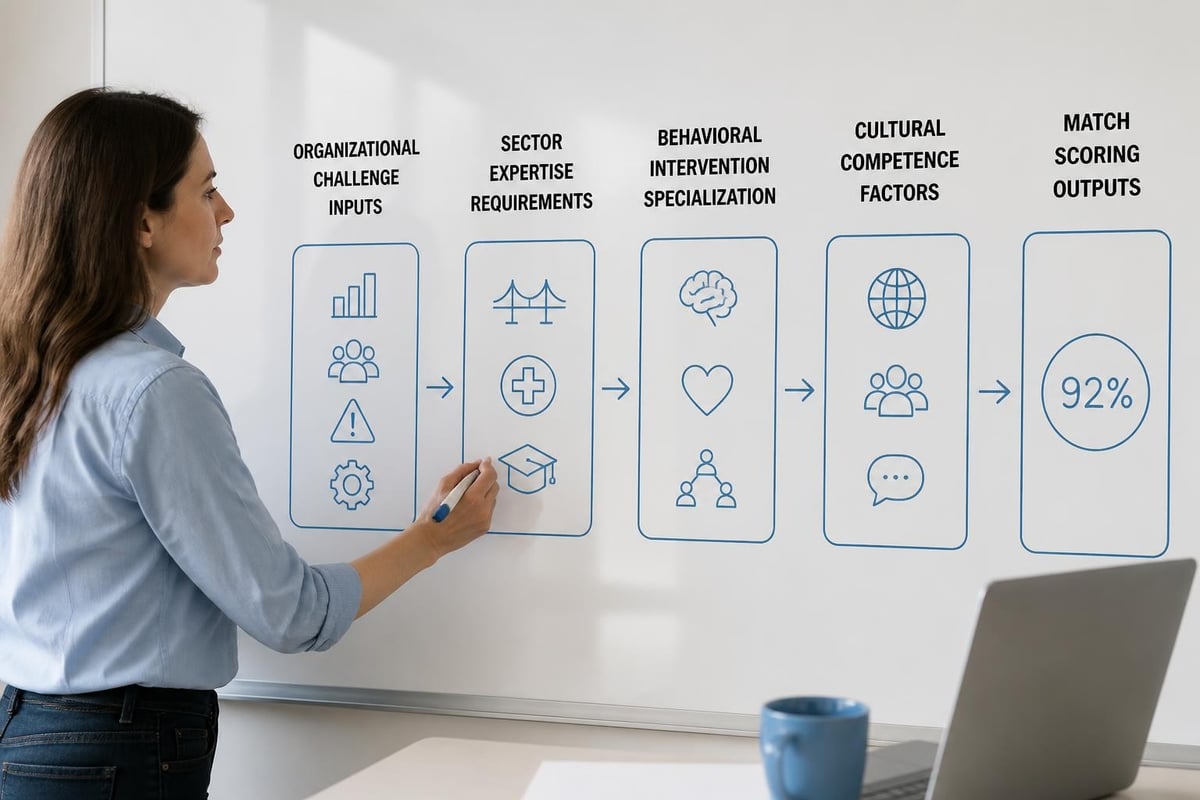
The leadership teams in top Middle East companies face unique pressures that require coaches who understand regional business models, not just leadership theory.
Stage Four: Intervention Design and Compliance Review
Once diagnostics and matching are complete, we design targeted intervention plans that address root causes, not symptoms. Every plan undergoes compliance review to ensure alignment with organizational governance standards.
Intervention components include:
- Behavioral change protocols tied to diagnostic findings
- Trust-building frameworks for damaged team relationships
- Accountability structures that outlast the coaching engagement
- Integration with existing leadership development initiatives
- Measurement protocols that generate audit-ready documentation
Stage Five: Impact Tracking Against Defined KPIs
The final stage separates serious providers from vendors who disappear after invoicing. We establish measurable KPIs at program outset and track progress through defined cultural health indicators.
| KPI Category | Example Metrics | Tracking Cadence |
|---|---|---|
| Individual Leadership | Decision-making speed, conflict resolution effectiveness, strategic alignment scores | Monthly |
| Team Performance | Engagement scores, communication quality ratings, collaboration metrics | Quarterly |
| Organizational Impact | Retention of key talent, promotion readiness, succession depth | Bi-annually |
| Compliance | Governance adherence, ethical decision-making, regulatory alignment | Ongoing |
What Organizations Miss About Scalability
Scalability isn't about putting 50 leaders through the same program. It's about maintaining diagnostic precision and coach quality as you expand across business units, geographies, and organizational levels.
Most corporate coaching providers across MENA claim scalability but deliver dilution. As programs grow, assessment rigor declines, coach matching becomes generic, and measurement focuses on completion rates rather than outcomes.
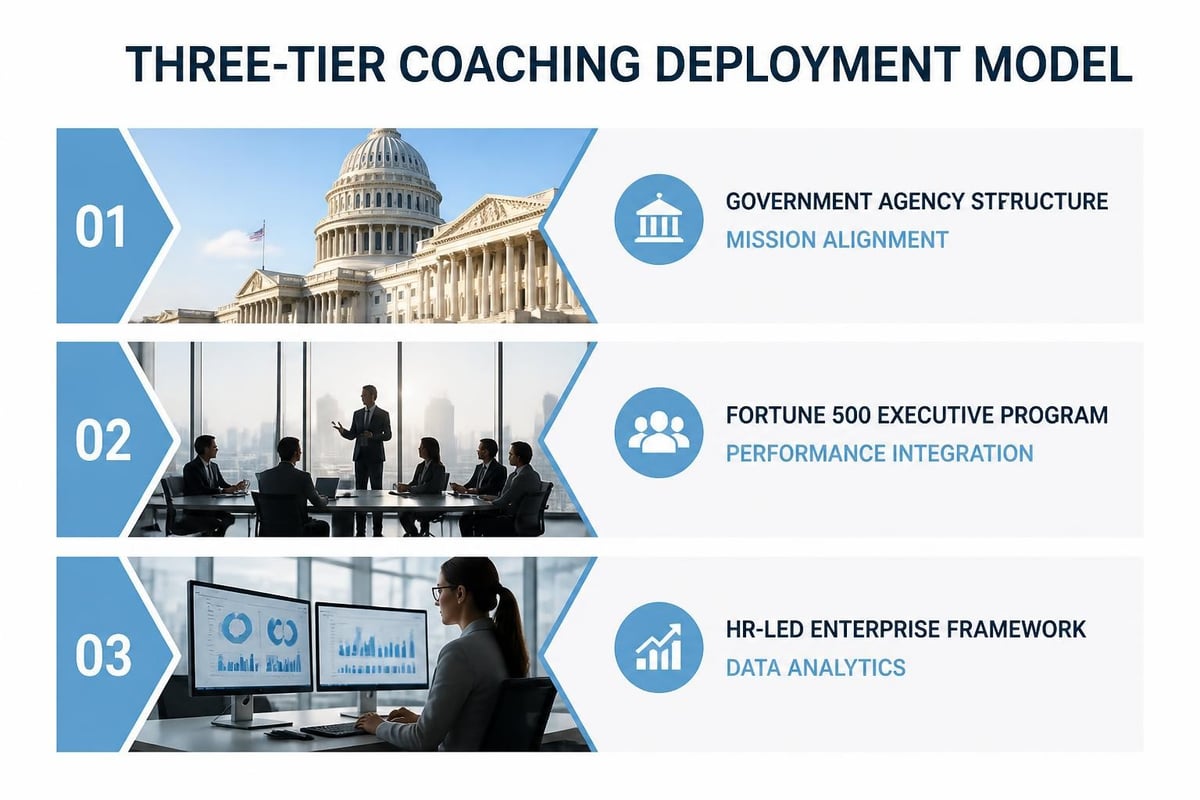
The Scalability Framework That Works
For government agencies: Structured programs that align with mission objectives while supporting team morale and public service excellence. This requires coaches who understand bureaucratic dynamics, not just private sector models.
For Fortune 500 companies: High-touch programs that enhance executive performance while building resilient cultures. This demands coaches with board-level experience and track records in complex organizational transformation.
For HR leaders: Integration with internal leadership development frameworks while providing data-driven insights that demonstrate ROI. This means platforms that generate analytics, not just anecdotes.
The Future of Jobs Report projections for MENA markets show accelerating demand for mentoring, teaching, and leadership skills-precisely the competencies that effective coaching develops.
The Governance Question Nobody Asks Until It's Too Late
In our experience auditing failed coaching engagements, governance failures cluster around three issues: confidentiality boundaries, conflict of interest protocols, and documentation standards.
Common governance gaps:
- No clear protocols for when coaching surfaces ethical violations
- Ambiguous confidentiality agreements that expose organizations to risk
- Missing documentation standards for compliance audits
- Undefined processes for coach performance issues
- No integration with existing HR compliance frameworks
Organizations operating across MENA jurisdictions face particularly complex governance requirements. A coaching program designed for Dubai may not meet regulatory standards in Saudi Arabia or Egypt. Corporate coaching providers across MENA must demonstrate fluency with these variations, not just claim global reach.
The Real Cost of Coaching Done Wrong
When we benchmark executive coaching costs, organizations often focus on hourly rates while ignoring total cost of failure. Here's what poor coaching vendor selection actually costs:
Direct costs:
- Wasted coaching fees (typically $30,000–$80,000 per executive annually)
- Internal HR and L&D time managing ineffective programs
- Replacement assessment and vendor selection processes
Indirect costs:
- Executive turnover during or shortly after coaching
- Prolonged team dysfunction while waiting for results
- Damaged credibility of development interventions
- Delayed transformation initiatives that depend on leadership capability
The most expensive coaching programs aren't those with premium pricing. They're programs that fail to diagnose correctly, match precisely, or measure rigorously.
Why Regional Expertise Matters More Than Global Brand
The appeal of established global coaching brands is understandable. They have recognizable names, polished marketing, and extensive coach rosters. What they often lack: deep expertise in MENA organizational dynamics.
What Regional Expertise Actually Means
We distinguish between coaches who "work in MENA" and those who understand the region's unique leadership challenges:
Family business dynamics: Decision-making in family-controlled enterprises follows different patterns than Western corporate models. Coaches need specific frameworks for navigating these structures.
Cross-cultural team management: MENA organizations increasingly manage teams spanning 10+ nationalities. This requires coaches skilled in cultural bridging, not just diversity awareness.
Public sector transformation: Government agencies across the Gulf and North Africa face pressures that don't exist in Western bureaucracies. Coaches must understand public service excellence in these contexts.
Regulatory complexity: Financial services, healthcare, and energy sectors operate under evolving regulatory frameworks that vary by jurisdiction. Effective coaching addresses compliance realities, not abstract leadership theory.
Similar to how enterprise coaching providers in Japan must understand local business culture, corporate coaching providers across MENA must demonstrate genuine regional competence.
The Integration Challenge HR Leaders Face
CHROs tell us their biggest frustration: coaching vendors who operate in isolation from existing talent development infrastructure. Effective programs integrate seamlessly with performance management systems, succession planning, and competency frameworks already in place.
The Integration Checklist
Before selecting a corporate coaching provider across MENA, verify integration capability across these dimensions:
- Performance systems: Can coaching insights flow into performance reviews without violating confidentiality?
- Succession planning: Does the program identify and develop promotion-ready talent?
- Competency frameworks: Do interventions align with your existing leadership competencies?
- Learning management: Can program data populate your LMS and analytics platforms?
- Compliance documentation: Does the provider generate audit-ready records that meet your governance standards?
The SHRM MENA conference insights consistently show that HR practitioners want coaching partners who understand internal systems, not vendors who demand organizations adapt to their methodology.
The Contrarian Take: When Not to Invest in Coaching
Not every leadership challenge requires coaching. Organizations waste resources when they deploy coaching for problems that demand different interventions.
When coaching is the wrong solution:
- Structural dysfunction: If broken processes or misaligned incentives drive poor leadership behaviors, fix the structure first
- Skills gaps: Technical or functional skill deficits often need training, not coaching
- Wrong person in role: No amount of coaching fixes a fundamental role mismatch
- Absence of organizational support: Coaching fails when leaders return to environments that punish new behaviors
- No appetite for change: Leaders who don't want to develop won't benefit from external support
The best corporate coaching providers across MENA will tell you when coaching isn't the answer. Vendors who sell coaching for every problem lack the judgment you need in a strategic partner.
What the Data Shows About MENA Coaching Demand
Regional organizations are increasing leadership development investments while simultaneously becoming more sophisticated buyers. This creates opportunity for providers who deliver measurable results and risk for those relying on brand recognition alone.
Research on learning as strategy in MENA markets shows organizations prioritizing programs that:
- Demonstrate clear ROI through defined metrics
- Integrate with digital transformation initiatives
- Support Emiratization, Saudization, and other nationalization programs
- Address ESG and sustainability leadership requirements
- Build bench strength for succession
Organizations that approach coaching as a strategic lever rather than a remedial intervention see dramatically different results. This requires vendors who bring diagnostic rigor, measurement discipline, and genuine sector expertise.
Frequently Asked Questions
What differentiates corporate coaching providers across MENA from global firms?
Regional providers should demonstrate specific expertise in MENA organizational dynamics, governance requirements, and cultural contexts. The key differentiator is whether they've solved problems similar to yours in similar organizational environments, not just geographic presence.
How do you measure coaching ROI in leadership development programs?
Effective measurement starts with baseline diagnostics establishing current state across individual competencies, team behaviors, and organizational outcomes. ROI comes from tracking defined KPIs (engagement, retention, promotion readiness, decision-making effectiveness) against those baselines through the coaching engagement and beyond.
What compliance considerations matter for MENA coaching programs?
Organizations must verify that coaching providers understand jurisdiction-specific regulatory requirements, maintain appropriate confidentiality protocols, generate audit-ready documentation, and have clear processes for escalating ethical violations or compliance issues that surface during coaching.
How long should a corporate coaching engagement last?
Duration depends on diagnostic findings and intervention complexity. Individual executive coaching typically runs 6-12 months. Team interventions addressing dysfunction may require 12-18 months. Beware vendors who propose uniform engagement lengths before understanding your specific challenges.
Should we use one coaching provider or multiple vendors?
The answer depends on organizational size, geographic spread, and challenge complexity. Single providers offer consistency and integration benefits. Multiple vendors may be necessary for specialized needs or political neutrality. The critical factor is diagnostic precision and measurement rigor, regardless of provider count.
The organizations winning in MENA markets understand that leadership development isn't about credential accumulation or generic programs. Success requires diagnostic precision, coach expertise matched to specific challenges, and measurement discipline that demonstrates tangible impact. When you need corporate coaching providers across MENA who deliver evidence-based diagnostics, precision matching, and scalable solutions aligned with your governance requirements, Noomii Leadership Coaching combines advanced assessments, proprietary algorithms, and a global network of certified coaches to transform leadership at every organizational level.


Leave a Reply
Want to join the discussion?Feel free to contribute!