

Corporate Coaching Programs in Italy: 2026 Insights
Italian organizations are accelerating investments in corporate coaching programs at a pace that surprised even market researchers. Between June 2024 and early 2026, adoption rates jumped by margins that outpaced most European markets. Yet underneath these encouraging numbers lies a pattern most executives miss: companies are implementing coaching without the diagnostic rigor or outcome measurement frameworks that distinguish transformative programs from expensive conversations. This gap between investment and impact reveals where Italian leadership development stands today and what separates high-performing initiatives from the rest.
The Italian Market Reality: Growth Without Guardrails
Research from ICF Italia and Format Research surveying approximately 1,000 Italian companies in mid-2024 documented satisfaction rates exceeding 94% among organizations using coaching. That figure tells only part of the story. When you examine how companies define success, measure outcomes, or select coaches, the rigor drops sharply.
The same research projected 47% more Italian firms would adopt coaching by 2025, a forecast that proved conservative. What executives celebrating these adoption rates overlook is the delivery gap. Most organizations lack structured frameworks for matching coaches to specific leadership challenges, tracking behavioral change, or connecting coaching interventions to business outcomes.
What Drives Italian Organizations to Corporate Coaching Programs
Italian companies cite three primary triggers for implementing corporate coaching programs:
- Leadership transitions where newly promoted executives need rapid skill development
- Cultural transformation initiatives aimed at modernizing hierarchical management structures
- Retention challenges among high-potential talent in competitive labor markets
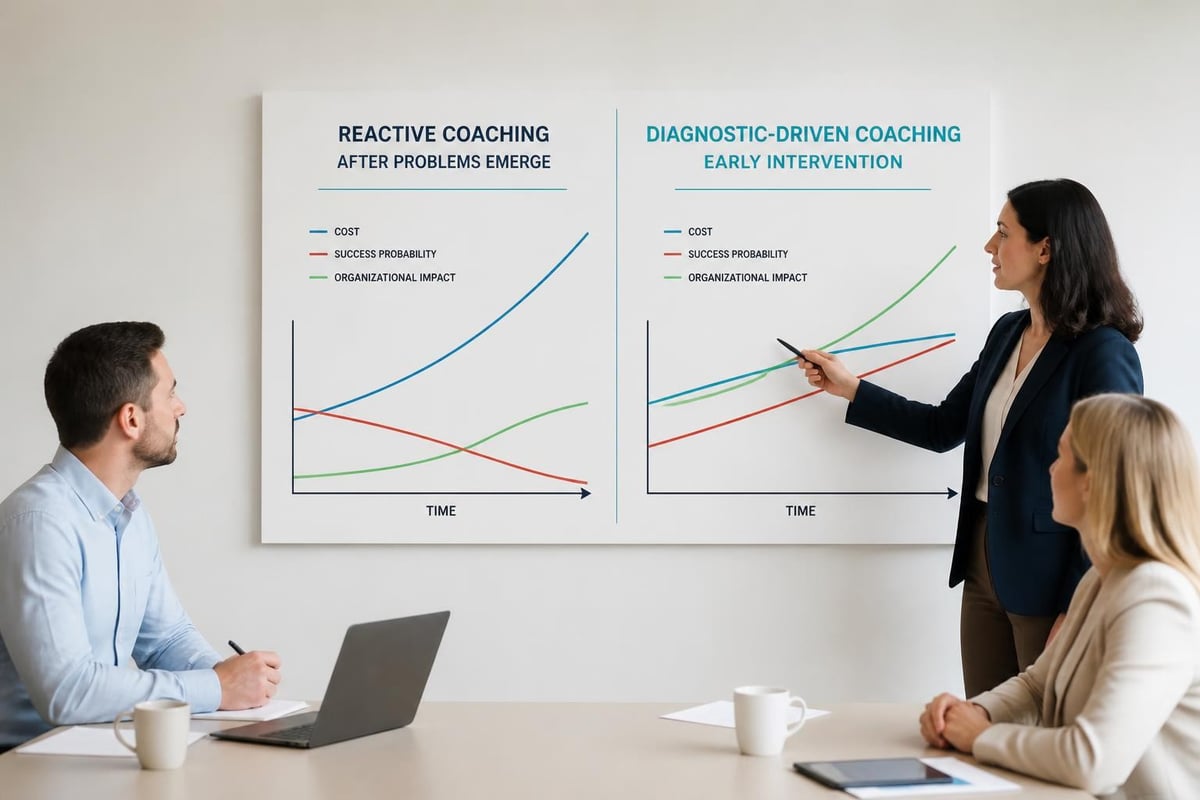
Analysis from BVA Doxa examining HR leaders in companies with 250+ employees revealed that 68% implement coaching reactively, responding to performance issues or retention risks rather than building systematic leadership development pipelines.
This reactive approach creates predictable problems. Organizations engage coaches after leadership problems escalate, when intervention costs rise and success probabilities decline. Companies waste months on coach selection without clear diagnostic frameworks to identify what leaders actually need to change.
Implementation Patterns That Separate Results from Activity
Through analyzing dozens of corporate coaching programs in Italy across manufacturing, financial services, and technology sectors, specific patterns distinguish programs that drive measurable leadership transformation from those that generate activity without impact.
Diagnostic Precision
Organizations achieving documented results begin with validated assessment tools that identify specific behavioral gaps, decision-making patterns, and team dynamics requiring intervention. This contrasts with the majority approach: selecting coaches based on availability or credentials alone, then hoping chemistry produces outcomes.
TIM Group's 2025 annual report documented their internal coaching and mentoring programs, noting thousands of hours delivered through their leadership academy. What the report doesn't highlight but internal metrics reveal: programs with defined competency targets and assessment-driven matching produced retention improvements 3.2 times higher than general coaching initiatives.
Coach-Challenge Alignment
The most expensive mistake in corporate coaching programs in Italy is mismatching coach expertise to leadership challenges. A coach with strengths in career development cannot address toxic leadership patterns. An executive coach skilled in strategic thinking may lack the tools to rebuild team trust after conflict.
| Leadership Challenge | Required Coach Expertise | Common Mismatch |
|---|---|---|
| Toxic leadership behaviors | Behavioral change, psychological safety | Generic executive coaching |
| Strategic decision-making gaps | Industry experience, scenario planning | Career development focus |
| Team conflict & dysfunction | Team dynamics, communication systems | Individual performance coaching |
| Cultural transformation resistance | Change management, organizational behavior | Skills-based coaching |
Organizations implementing precision coach matching based on diagnosed needs report intervention success rates 40-60% higher than those using availability-based selection.
Measurement Frameworks Italian Companies Are Missing
Comprehensive research from Speexx, BVA Doxa, and Politecnico di Milano’s HR Innovation Practice examining how Italian companies measure coaching outcomes revealed a troubling pattern. While 82% of organizations track participant satisfaction, only 31% measure behavioral change, and just 19% connect coaching to business performance indicators.
This measurement gap explains why corporate coaching programs in Italy often struggle to demonstrate ROI despite high satisfaction scores. Participants enjoy the experience, HR leaders renew contracts, yet underlying leadership problems persist.
The measurement frameworks that correlate with documented impact include:
- Pre-intervention behavioral assessments establishing baseline leadership effectiveness
- 360-degree feedback loops capturing team perception changes every 90 days
- Specific KPIs tied to diagnosed gaps (decision velocity, delegation effectiveness, conflict resolution)
- Cultural health indicators measuring psychological safety, trust, and engagement
- Business outcome correlation linking leadership changes to retention, productivity, or innovation metrics
Market Structure and Vendor Landscape Realities
Analysis of coaching schools in Italy surveyed approximately 37 institutions offering business, team, and executive coaching training in 2024. Geographic concentration remains pronounced, with northern Italy hosting 62% of coaching providers while southern regions face significant access gaps.
This supply-side fragmentation creates challenges for multi-location organizations seeking consistent coaching quality across regions. Companies operating in Milan, Rome, and Naples simultaneously often engage three different coaching providers with incompatible methodologies and measurement approaches.
Cost Structures and Hidden Expenses
Published rates for corporate coaching programs in Italy range from €150-€400 per hour for individual coaching, with package pricing varying widely based on coach credentials, program duration, and delivery format. What these figures obscure are the hidden costs:
- Coordination overhead managing multiple coach relationships
- Inconsistent methodologies requiring internal teams to translate between approaches
- Rework expenses when initial coach selections prove ineffective
- Opportunity costs from delayed leadership development during prolonged selection processes
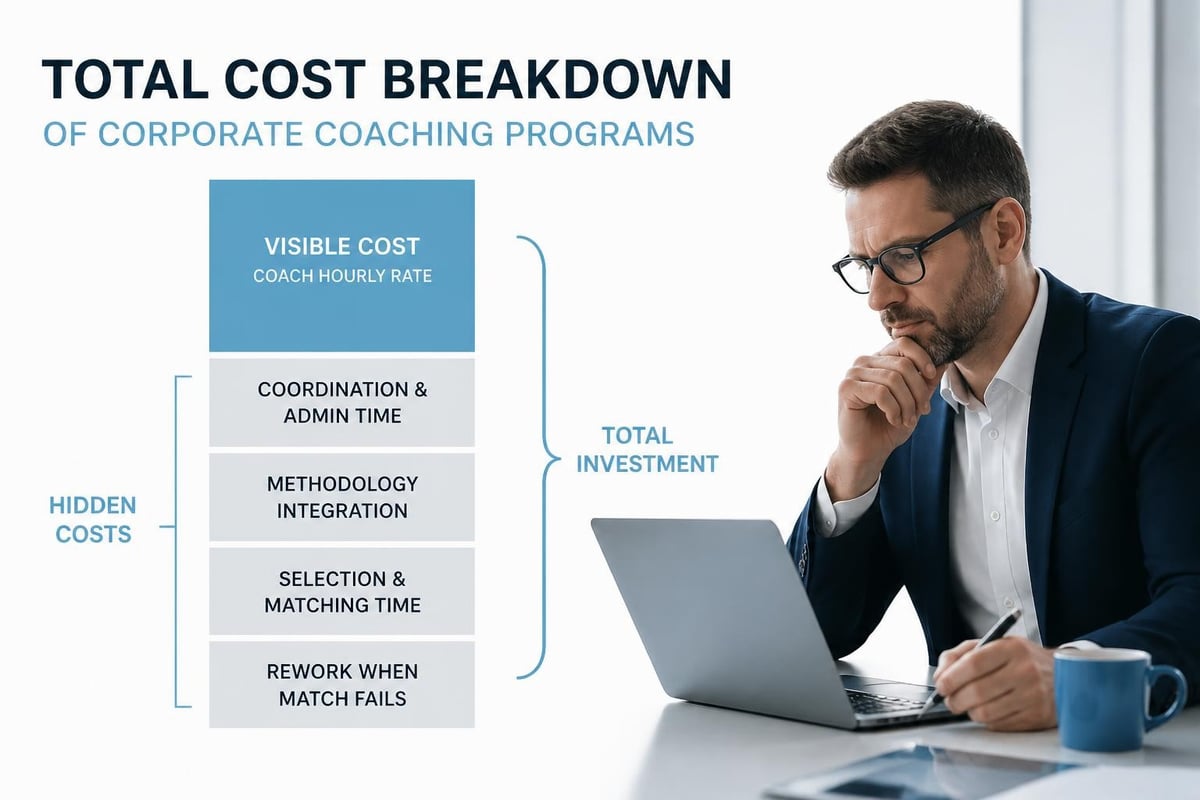
Organizations implementing centralized coaching platforms with standardized assessment and matching protocols reduce total program costs by 25-35% while improving outcome consistency.
What Leaders Miss About Scalability
The jump from coaching individual executives to building enterprise-wide leadership development systems exposes gaps in most corporate coaching programs in Italy. Programs that work for five senior leaders often collapse when expanded to 50 mid-level managers.
The Scaling Failure Pattern
A financial services firm in Milan implemented executive coaching for their C-suite in 2024 with strong results. Encouraged by positive feedback, they expanded the program to department heads in early 2025. Within six months, the initiative stalled. Why?
- Coach selection couldn't maintain quality at volume
- Assessment processes lacked standardization across participants
- Measurement frameworks broke down with larger data sets
- Internal coordination demands overwhelmed HR capacity
- Budget projections failed to account for non-linear cost scaling
The diagnostic lesson: corporate coaching programs in Italy require fundamentally different architectures at enterprise scale compared to executive-only initiatives. Organizations that build scalability into initial program design avoid expensive retrofitting later.
Technology Integration and Delivery Evolution
Trends documented for 2025 show Italian companies rapidly adopting hybrid coaching delivery models combining virtual sessions, in-person intensives, and asynchronous tools. This shift creates new requirements for program management:
- Platform integration connecting assessment tools, scheduling systems, and progress tracking
- Data security and privacy meeting regulatory standards for sensitive leadership information
- Coach technology proficiency ensuring consistent virtual delivery quality
- Outcome analytics generating actionable insights from coaching data at scale
Organizations treating technology as an afterthought rather than a core program component face integration challenges that undermine coaching effectiveness. The most successful implementations select coaching partners who provide integrated platforms rather than assembling disconnected point solutions.
Regulatory and Governance Considerations
Corporate coaching programs in Italy increasingly intersect with compliance and governance frameworks, particularly in regulated industries and government agencies. This dimension receives insufficient attention in most program designs.
Documentation and Audit Requirements
Financial services, healthcare, and public sector organizations face specific obligations:
- Maintaining records of leadership development interventions
- Demonstrating connections between coaching and competency standards
- Ensuring coach qualifications meet regulatory expectations
- Tracking investment alignment with approved development budgets
- Protecting confidential coaching conversations while meeting disclosure requirements
Government agencies implementing coaching programs must align interventions with mission objectives and public accountability standards. This requires coaches with public sector experience who understand how leadership development operates within governance constraints.
The Certification Question Leaders Debate
Research examining growth forecasts and obstacles highlighted ongoing debates about coach certification importance. Italian executives split on whether ICF credentials or other certifications meaningfully predict coaching effectiveness.
The evidence points to a more complex picture than certification advocates or skeptics acknowledge. Certification indicates minimum training standards but doesn't guarantee coach-challenge fit or intervention success. Conversely, coach effectiveness without proper methodology training proves inconsistent.
Framework for Evaluating Coach Qualifications
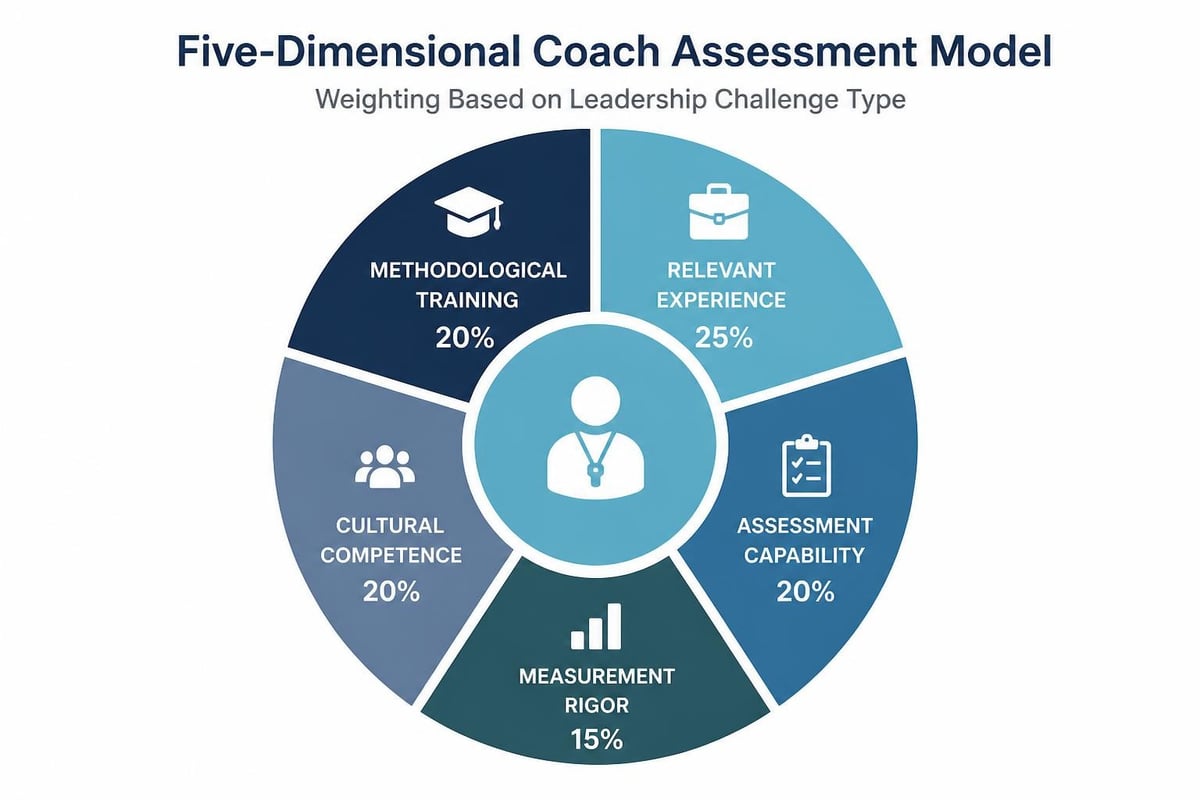
Rather than binary certification decisions, organizations achieving consistent results evaluate coaches across multiple dimensions:
| Evaluation Dimension | Assessment Criteria | Red Flags |
|---|---|---|
| Methodological training | Recognized certification, ongoing education | Self-taught, vague credentials |
| Relevant experience | Sector knowledge, challenge-specific expertise | Generic background, no specialization |
| Assessment proficiency | Validated tools, interpretation skill | Reliance on conversation alone |
| Outcome measurement | Defined metrics, evidence of results | Satisfaction-only tracking |
| Cultural competence | Understanding of Italian business context | One-size-fits-all approaches |
This multi-dimensional evaluation reveals why some certified coaches underperform while certain experienced practitioners without formal credentials deliver strong results. The key is matching specific coach capabilities to diagnosed leadership challenges.
What the Market Data Reveals About Future Trajectories
Analysis of Italy’s corporate education and training market positioned coaching within the broader learning and development ecosystem. Market projections through 2031 indicate coaching will claim increasing budget share as organizations shift from classroom training to personalized development interventions.
This trajectory creates opportunities and risks. Organizations building sophisticated coaching programs now will establish competitive advantages in leadership development. Those treating coaching as isolated transactions will struggle to demonstrate value as CFOs demand clearer ROI evidence.
Emerging Differentiation Factors
The corporate coaching programs in Italy that will command premium positioning through 2028 share specific characteristics:
- Evidence-based diagnostics using validated assessment tools rather than subjective evaluation
- Precision matching algorithms connecting coach expertise to specific leadership challenges
- Integrated measurement systems tracking behavioral change and business outcomes
- Scalable delivery models maintaining quality from individual to enterprise implementations
- Compliance integration aligning coaching with governance and regulatory requirements
Organizations evaluating coaching vendors should assess capabilities across these dimensions rather than focusing primarily on cost per hour or coach availability.
Lessons from Implementation Failures
A technology company in Turin invested €180,000 in a corporate coaching program for 25 emerging leaders in 2025. Twelve months later, retention among program participants was lower than the control group, engagement scores declined, and three coached leaders were managed out for performance issues.
Diagnostic Autopsy
The program failed because the organization made four critical errors:
- No baseline assessment to identify what leaders actually needed to develop
- Coach selection based on credentials rather than match to diagnosed challenges
- Satisfaction-only measurement that missed behavioral regression
- Isolated intervention disconnected from broader cultural and systemic issues
The lesson wasn't that coaching failed. The lesson was that coaching without diagnostic rigor, appropriate matching, outcome measurement, and systemic integration produces expensive activity without transformation.
Contrast this with a manufacturing firm in Lombardy that implemented coaching for 18 plant managers after diagnosing specific delegation and decision-making gaps. Using validated assessments, matched coaches with operational leadership experience, tracked delegation velocity and team autonomy metrics, and integrated coaching with management system changes. Result: 89% of participants demonstrated sustained behavioral improvement 180 days post-intervention, turnover among direct reports decreased 34%, and production efficiency improved measurably.
The difference wasn't coaching versus no coaching. It was diagnostic precision, appropriate matching, rigorous measurement, and systemic integration versus generic implementation.
Questions Leaders Should Ask Before Implementation
How will we diagnose what leaders actually need before selecting coaches?
Organizations that begin with validated assessments identifying specific behavioral gaps, decision-making patterns, and team dynamics outperform those that skip diagnostic work. Assessment-driven programs produce measurable results 3-4 times more consistently than chemistry-based matching.
What defines success, and how will we measure it?
Define specific, observable behavioral changes connected to business outcomes. Satisfaction scores matter but insufficient. Track delegation effectiveness, decision velocity, conflict resolution capability, team psychological safety, and other metrics tied to diagnosed gaps.
How will we ensure coach-challenge alignment at scale?
For programs beyond individual executives, standardized matching processes maintaining quality become essential. Organizations need systematic approaches to connect coach expertise with specific leadership challenges rather than availability-based assignment.
What happens when initial coaching relationships don't produce results?
Build rematch protocols and exit criteria into program design. The best coaching partnerships sometimes don't work. Having clear processes to recognize ineffective matches early and reassign coaches prevents wasted time and money.
Contrarian Perspective: When Not to Implement Coaching
Most discussions of corporate coaching programs in Italy assume coaching benefits all leadership challenges. That's wrong. Specific situations make coaching inappropriate or wasteful:
Systemic Dysfunction Requiring Structural Intervention
When organizational systems, processes, or incentives create leadership problems, coaching individual leaders won't fix root causes. A toxic culture produced by misaligned incentives, inadequate decision rights, or dysfunctional reporting structures requires systemic intervention, not personal development.
Performance Issues Requiring Different Interventions
Coaching can't fix fundamental competency gaps, misaligned role-person fit, or unwillingness to change. Some situations require training, reassignment, or performance management rather than coaching.
Resource Constraints Making Quality Implementation Impossible
Poorly implemented coaching produces worse outcomes than no coaching. Organizations lacking resources for proper assessment, coach matching, and outcome measurement should delay implementation until they can execute effectively.
Understanding when not to coach demonstrates more sophistication than implementing programs indiscriminately. Similar to understanding whether coaching can really work in specific contexts, recognizing boundaries prevents waste.
FAQ
What is the typical duration for corporate coaching programs in Italy?
Most corporate coaching programs in Italy run 6-12 months for individual executive coaching and 12-18 months for enterprise-wide leadership development initiatives. Shorter engagements (under 6 months) rarely produce sustained behavioral change, while programs exceeding 18 months often indicate lack of clear objectives or measurement discipline.
How do Italian companies select coaches for their programs?
Italian organizations primarily select coaches through three methods: credentials and certifications (42%), referrals from peers (35%), and matching services or platforms (23%). However, credential-based selection without diagnostic matching to specific leadership challenges produces inconsistent results. The most effective approach combines validated assessments identifying leadership gaps with precision matching to coaches with relevant expertise.
What ROI should organizations expect from coaching investments?
Organizations implementing diagnostic-driven coaching programs with rigorous outcome measurement typically see 200-400% ROI through improved retention, faster decision-making, stronger team performance, and enhanced innovation. However, programs lacking clear measurement frameworks cannot demonstrate ROI reliably. Success requires defining specific metrics before implementation and tracking behavioral changes connected to business outcomes.
Are international coaches effective for Italian organizations?
International coaches can deliver strong results when they possess relevant sector expertise and understand Italian business culture. However, success requires either Italian language proficiency or assurance that English-based coaching doesn't create communication barriers limiting effectiveness. Cultural competence matters more than geographic origin. The key is matching coach capabilities to specific leadership challenges while ensuring effective communication.
How do corporate coaching programs scale across multiple locations?
Scaling coaching programs across multiple Italian locations requires standardized assessment processes, consistent coach matching protocols, and integrated measurement systems. Organizations attempting to scale through multiple disconnected regional providers face quality inconsistency and coordination overhead. Successful scaling typically involves platform-based approaches maintaining methodology consistency while accommodating regional differences.
{
  "@context": "https://schema.org",
  "@type": "FAQPage",
  "mainEntity": [
    {
      "@type": "Question",
      "name": "What is the typical duration for corporate coaching programs in Italy?",
      "acceptedAnswer": {
        "@type": "Answer",
        "text": "Most corporate coaching programs in Italy run 6-12 months for individual executive coaching and 12-18 months for enterprise-wide leadership development initiatives. Shorter engagements (under 6 months) rarely produce sustained behavioral change, while programs exceeding 18 months often indicate lack of clear objectives or measurement discipline."
      }
    },
    {
      "@type": "Question",
      "name": "How do Italian companies select coaches for their programs?",
      "acceptedAnswer": {
        "@type": "Answer",
        "text": "Italian organizations primarily select coaches through three methods: credentials and certifications (42%), referrals from peers (35%), and matching services or platforms (23%). However, credential-based selection without diagnostic matching to specific leadership challenges produces inconsistent results. The most effective approach combines validated assessments identifying leadership gaps with precision matching to coaches with relevant expertise."
      }
    },
    {
      "@type": "Question",
      "name": "What ROI should organizations expect from coaching investments?",
      "acceptedAnswer": {
        "@type": "Answer",
        "text": "Organizations implementing diagnostic-driven coaching programs with rigorous outcome measurement typically see 200-400% ROI through improved retention, faster decision-making, stronger team performance, and enhanced innovation. However, programs lacking clear measurement frameworks cannot demonstrate ROI reliably. Success requires defining specific metrics before implementation and tracking behavioral changes connected to business outcomes."
      }
    },
    {
      "@type": "Question",
      "name": "Are international coaches effective for Italian organizations?",
      "acceptedAnswer": {
        "@type": "Answer",
        "text": "International coaches can deliver strong results when they possess relevant sector expertise and understand Italian business culture. However, success requires either Italian language proficiency or assurance that English-based coaching doesn't create communication barriers limiting effectiveness. Cultural competence matters more than geographic origin. The key is matching coach capabilities to specific leadership challenges while ensuring effective communication."
      }
    },
    {
      "@type": "Question",
      "name": "How do corporate coaching programs scale across multiple locations?",
      "acceptedAnswer": {
        "@type": "Answer",
        "text": "Scaling coaching programs across multiple Italian locations requires standardized assessment processes, consistent coach matching protocols, and integrated measurement systems. Organizations attempting to scale through multiple disconnected regional providers face quality inconsistency and coordination overhead. Successful scaling typically involves platform-based approaches maintaining methodology consistency while accommodating regional differences."
      }
    }
  ]
}
Corporate coaching programs in Italy are expanding rapidly, but growth without diagnostic rigor, precision matching, and outcome measurement creates expensive activity rather than leadership transformation. Organizations that implement assessment-driven programs, align coach expertise to specific challenges, and track measurable behavioral change achieve documented results while others struggle to demonstrate value. Noomii Leadership Coaching delivers evidence-based diagnostics, precision coach matching, and scalable measurement frameworks that help organizations transform leadership challenges into competitive advantages through structured, accountable coaching interventions.



Leave a Reply
Want to join the discussion?Feel free to contribute!