
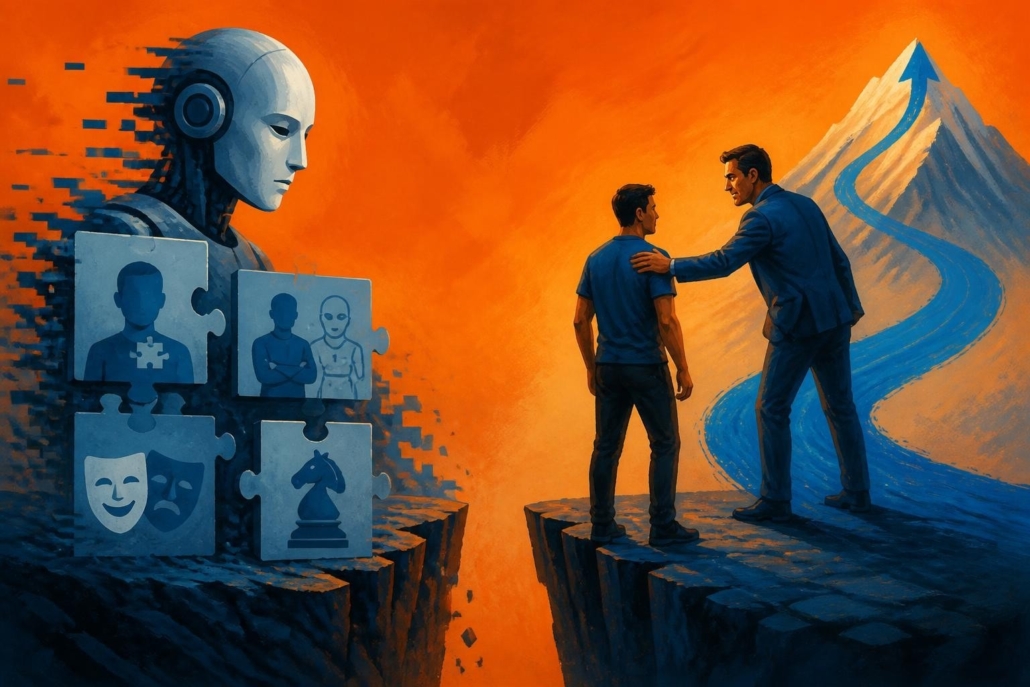
Why I Stopped Using AI as My Coach: What I Learned
I spent six months testing every major AI coaching platform on the market. The promise was compelling: instant feedback, 24/7 availability, personalized development plans, and a fraction of the cost of human coaching. What I discovered instead was a fundamental gap between algorithmic suggestions and the type of accountability, pattern recognition, and strategic insight that actually changes leadership behavior. Understanding why I stopped using AI as my coach reveals critical truths about what drives real performance improvement in organizations.
The Personalization Illusion
AI coaching tools excel at surface-level customization. They remember your name, reference previous conversations, and adjust recommendations based on your inputs. But personalization in effective coaching goes far deeper than pattern matching and data retrieval.
Real coaching adapts to what you're NOT saying. During a session with a human coach at a mid-market manufacturing company, the executive claimed his team communication was "fine." The coach noticed his body language shift when discussing quarterly reviews, pressed into that discomfort, and uncovered a six-month pattern of avoiding difficult feedback conversations. That led to measurable improvement in team performance within 90 days.

AI tools miss these moments entirely. Research on AI coaching limitations confirms they struggle with nuanced business strategy and cultural imperatives. They provide median answers optimized for broad applicability, not breakthrough insights tailored to your specific operating context.
What AI Gets Wrong About Context
- Industry specifics: Generic advice about "active listening" doesn't account for the fast-paced decision culture in SaaS versus the consensus-driven approach in healthcare
- Team dynamics: AI can't observe how your leadership style interacts with your actual team members in real meetings
- Timing sensitivity: Knowing when to push for change versus when to consolidate gains requires reading organizational energy
- Political landscape: Understanding stakeholder relationships, power structures, and unwritten rules that determine what's actually feasible
The Accountability Gap That Actually Matters
This is why I stopped using AI as my coach more than any other factor. Accountability in AI platforms means reminders, check-ins, and progress tracking. Real accountability means someone who knows when you're rationalizing, when you're avoiding the hard conversation, and when you're settling for incremental improvement instead of the transformation your role demands.
| AI Accountability | Human Coach Accountability |
|---|---|
| Tracks completion of action items | Challenges the quality and ambition of your goals |
| Sends reminder notifications | Notices patterns of avoidance across months |
| Provides encouragement | Provides uncomfortable truth when needed |
| Measures activity | Measures impact on business outcomes |
I tested this directly. An AI tool congratulated me for completing five "difficult conversations" in a month. A human coach asked why none of those conversations addressed the revenue miss in my largest account and why I kept scheduling them on Friday afternoons when people were mentally checked out. The AI measured activity. The coach measured results.
For organizations serious about leadership coaching that drives performance, this distinction determines whether coaching creates actual behavior change or just makes people feel productive.
The Strategic Thinking Problem
AI coaching operates within the boundaries of its training data. It synthesizes existing knowledge effectively but cannot generate novel strategic insights for your specific business challenge. This became apparent when I used an AI coach to work through a pricing strategy dilemma.
The tool provided a thorough analysis of value-based pricing principles, competitive positioning frameworks, and change management tactics. All accurate. All generic. None of it addressed the core tension: our product served two distinct buyer personas with conflicting value perceptions, and our sales team lacked the diagnostic skills to segment effectively.
A human business coach identified this in 15 minutes by asking three questions about our sales qualification process. The limitations of AI in complex business scenarios become especially pronounced when you need someone to connect dots across strategy, operations, and human capability gaps.
Where AI Falls Short in Business Coaching
- Cannot diagnose root causes beyond what you explicitly describe
- Lacks experience pattern recognition from working across dozens of similar situations
- Misses stakeholder dynamics that determine what solutions are actually implementable
- Provides best practices instead of adapted-to-your-constraints strategies
- Cannot challenge your framing of the problem itself
The Emotional Intelligence Ceiling
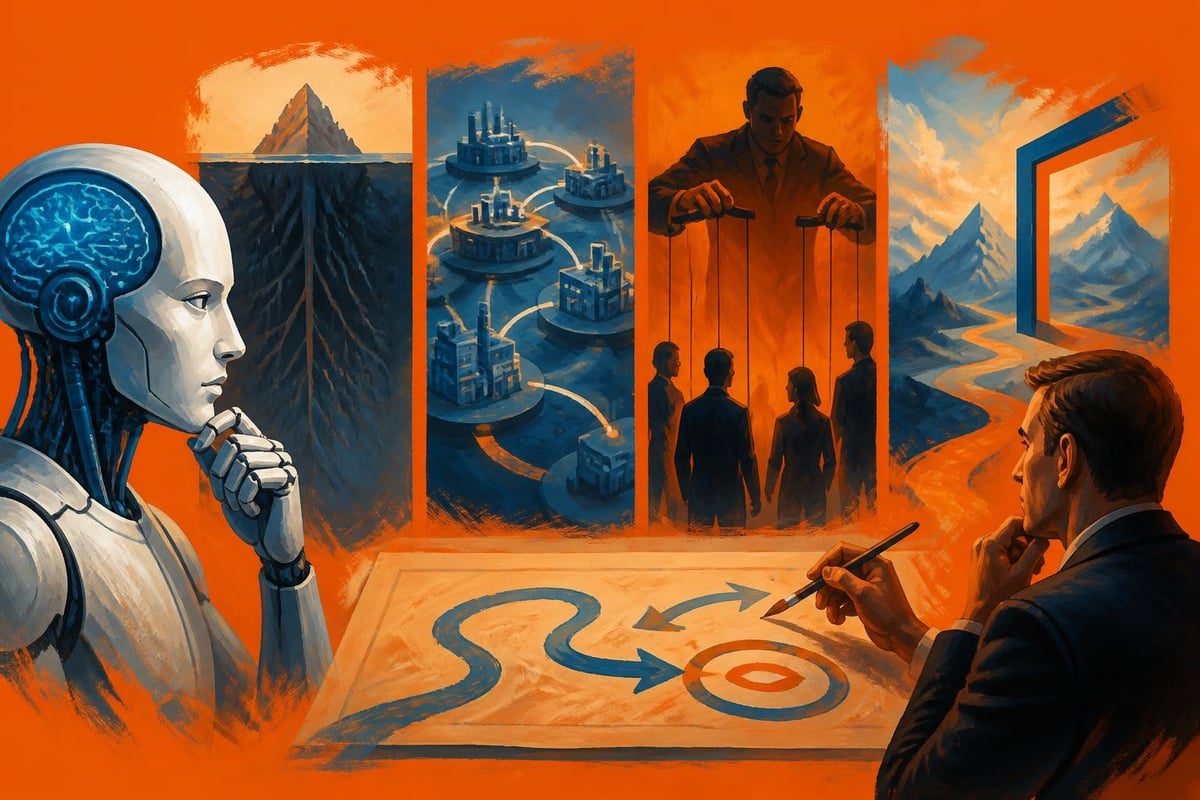
Studies examining AI coaching ethics and limitations highlight a persistent challenge: AI cannot genuinely understand emotional context or provide authentic empathy. It can recognize sentiment in your words and respond with supportive language, but it cannot read the room, sense what you're protecting, or know when to shift approaches based on your emotional state.
During a leadership transition coaching engagement, the executive was intellectually on board with delegating more authority but kept finding reasons to stay involved in operational details. An AI coach would track delegation instances and provide reinforcement. The human coach recognized fear of irrelevance and worked on identity transition, not task management.
What This Means for Your Organization
If you're evaluating coaching solutions for your leadership team, the question isn't whether AI has value. It does for specific applications: skills practice, knowledge reinforcement, interim support between sessions. The question is whether AI alone can drive the leadership capability and business outcomes you need.
The coaching that moves metrics requires:
- Someone who challenges your comfortable explanations
- Pattern recognition from seeing similar challenges across companies
- Real-time observation of how you operate in actual business situations
- Accountability tied to business KPIs, not completion of coaching activities
- Strategic insight that accounts for your industry, culture, and constraints
Organizations working with business coaches who deliver measurable ROI typically combine coach expertise with systematic processes: live meeting observation, KPI tracking, manager development that cascades through the organization, and month-to-month accountability that keeps everyone focused on outcomes.
The Over-Reliance Risk Nobody Discusses
Perhaps the most insidious problem with AI coaching is how it can atrophy your judgment. The risks of overreliance on AI tools extend beyond bad advice. They include reduced critical thinking, decreased comfort with ambiguity, and weakened decision-making muscles.
When you can ask an AI coach for instant analysis of any situation, you stop developing your own diagnostic capability. When it provides structured approaches to every challenge, you stop building comfort with messy, non-linear problem solving. Leadership development isn't about having better answers available. It's about becoming someone who can generate better answers under pressure, with incomplete information, in situations the textbook never covered.

This is why I stopped using AI as my coach. Not because the technology lacks value, but because the value it provides can actually impede the deeper capability development that distinguishes high-performing leaders.
A Framework for Choosing Coaching Approaches
Based on testing AI platforms alongside human coaching engagements across 40+ leaders in mid-market companies, here's what works where:
Use AI coaching for:
- Skills practice and repetition (presentation skills, meeting facilitation basics)
- Knowledge reinforcement between human coaching sessions
- Self-service leadership content and frameworks
- Initial self-assessment and awareness building
Choose human coaching for:
- Strategic capability development tied to business outcomes
- Leadership transition and role advancement
- Team dynamics and organizational challenges
- Accountability that drives uncomfortable growth
- Pattern diagnosis across complex, interconnected problems
Combine both when:
- Budget requires leverage but outcomes matter
- Leaders need ongoing reinforcement plus periodic strategic guidance
- You're scaling manager development across the organization
The decision framework isn't about picking AI or human coaching. It's about matching the development challenge to the intervention that actually changes behavior and drives business results.
FAQ
What are the main reasons people stop using AI as their coach?
The primary reasons include lack of genuine personalization beyond surface inputs, absence of real accountability that challenges rationalization, inability to provide strategic insight adapted to specific business contexts, missing emotional intelligence and empathy, and the risk of creating dependency that weakens independent judgment.
Can AI coaching tools replace human coaches for leadership development?
No. AI tools effectively support skills practice and knowledge reinforcement but cannot replace human coaches for strategic leadership development. They lack the pattern recognition from cross-company experience, ability to diagnose unstated root causes, real-time observation capability, and strategic judgment needed for measurable leadership impact.
What types of coaching work best with AI versus human coaches?
AI works well for skills repetition, content delivery, self-assessment tools, and reinforcement between sessions. Human coaching is essential for strategic capability development, team dynamics, organizational challenges, accountability tied to business outcomes, and complex problem diagnosis requiring adapted solutions.
How does AI coaching accountability differ from human coach accountability?
AI accountability focuses on activity tracking, completion metrics, reminders, and encouragement. Human coach accountability challenges goal quality, identifies avoidance patterns, provides uncomfortable truth when needed, and measures impact on actual business outcomes rather than just task completion.
Why can't AI coaches provide the same strategic insights as human coaches?
AI operates within training data boundaries and cannot generate novel insights for specific business challenges. It lacks experience-based pattern recognition, cannot read stakeholder dynamics or political landscapes, misses what's unsaid in conversations, and provides best practices rather than constraint-adapted strategies.
What are the risks of relying too heavily on AI coaching?
Over-reliance on AI coaching can atrophy critical thinking skills, reduce comfort with ambiguity, weaken decision-making capability, decrease diagnostic skill development, and create dependency on algorithmic suggestions instead of building independent leadership judgment.
How do AI coaching limitations affect business outcomes?
AI limitations result in generic advice disconnected from company culture, missed root cause diagnosis, inability to address team dynamics, lack of real-time behavioral feedback, and failure to connect leadership development to measurable business KPIs and operational improvement.
What should organizations consider when evaluating AI versus human coaching?
Organizations should assess whether they need activity tracking or outcome transformation, evaluate the complexity of leadership challenges, consider the importance of real-time observation and feedback, determine if strategic business judgment is required, and analyze whether genuine accountability drives necessary behavior change.
Can AI and human coaching be effectively combined?
Yes. The most effective approach often combines AI for skills practice and reinforcement with human coaching for strategic development, accountability, and business outcome focus. This leverages AI efficiency while maintaining human expertise for complex leadership challenges and measurable organizational impact.
AI coaching tools serve specific purposes well, but they cannot replace the strategic judgment, real accountability, and adapted insight that drive measurable leadership development. When your organization needs coaching that ties to business outcomes, works live in your operations, and creates lasting capability change, Noomii connects you with experienced coaches who deliver results on month-to-month terms with clear KPI alignment.



Leave a Reply
Want to join the discussion?Feel free to contribute!