

What CrowdStrike Teaches About Crisis Leadership
On July 19, 2024, a faulty software update from CrowdStrike, one of the world’s most trusted cybersecurity firms, crashed 8.5 million Windows machines globally. Airlines grounded flights. Hospitals delayed surgeries. Banks locked customers out. The outage exposed a truth that boards and CHROs consistently miss: technical competence does not equal crisis leadership readiness. What CrowdStrike teaches about crisis leadership extends far beyond IT infrastructure. It reveals how organizations fail when senior leaders lack the judgment, communication discipline, and team resilience frameworks necessary to navigate high-stakes disruption. Most organizations remain dangerously unprepared.
The Leadership Failures Nobody Wants to Acknowledge
CrowdStrike’s technical recovery was exceptional. Systems came back online within hours. But the leadership response revealed patterns that plague Fortune 500 companies and government agencies alike. CEO George Kurtz appeared on NBC’s Today Show within 48 hours, yet Forbes identified critical communication gaps that eroded stakeholder trust during the crucial first 24 hours.
The real failure was not technical. It was organizational. Senior leaders underestimated the human and operational impact cascading through their customer base. They defaulted to engineering-speak when executives needed business context. They failed to equip mid-level managers with the talking points necessary to reassure anxious teams.
Why Experience Under Fire Matters More Than Credentials
Security professionals now prioritize leaders who have managed major incidents, regardless of outcome. This preference reflects a hard truth: crisis leadership cannot be learned from case studies or simulations. Leaders who have never faced enterprise-wide disruption make predictable errors under pressure.
During the CrowdStrike incident, organizations with seasoned CISOs and crisis-tested executive teams recovered faster. They had pre-established communication protocols. They understood how to triage technical, operational, and reputational damage simultaneously. They knew when to escalate and when to empower frontline teams.
Organizations without this experience floundered. Executives froze. Communication broke down. Teams worked 72-hour shifts without strategic direction. The human cost was severe, yet most boards never saw it reflected in post-incident reports.
The Communication Breakdown That Cost Trust
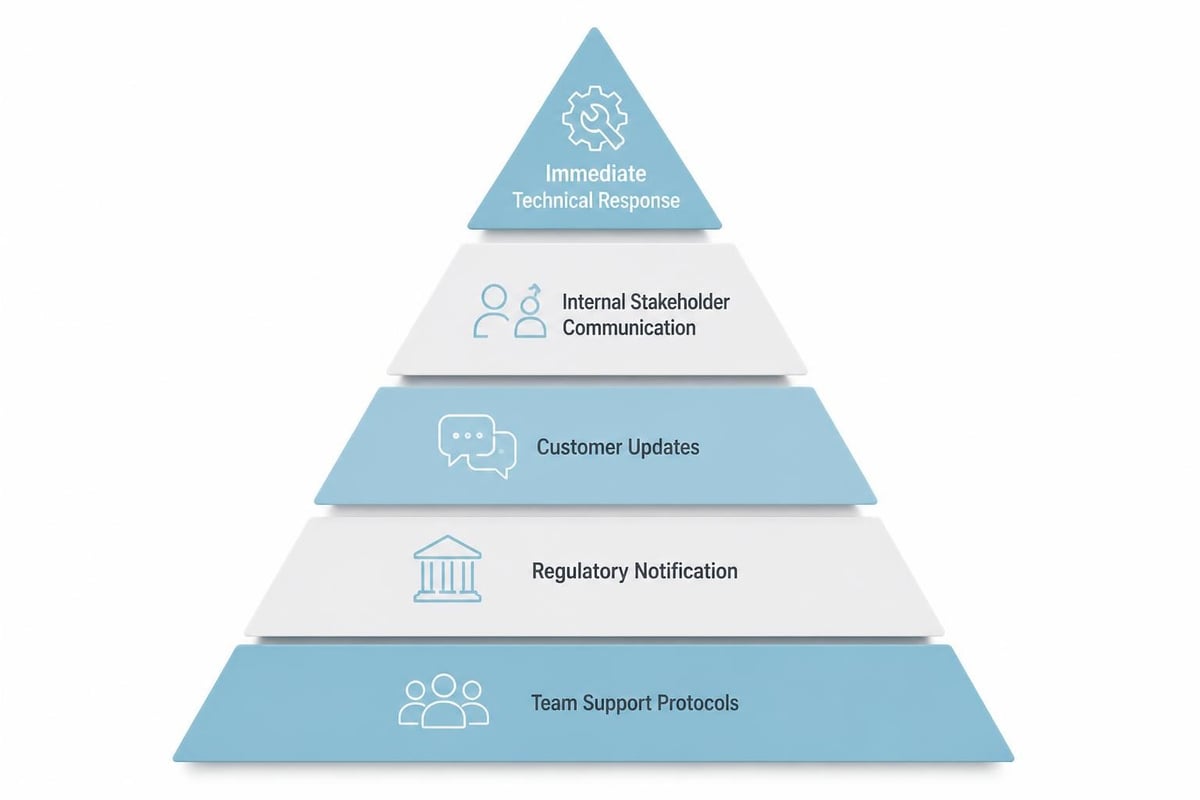
What CrowdStrike teaches about crisis leadership centers on communication velocity and precision. In the first six hours, affected organizations needed three things: acknowledgment, impact assessment, and expected resolution timeline. CrowdStrike provided technical details but failed to deliver business context that non-technical executives could cascade to their teams.
IBM’s cybersecurity crisis communication framework emphasizes that speed matters less than clarity and consistency. CrowdStrike’s initial updates satisfied engineers but left CFOs, COOs, and CHROs unable to answer basic questions from their boards and employees.
This gap reflects a deeper leadership failure: the inability to translate technical complexity into strategic implications. Senior leaders must speak multiple languages during crises. They need to satisfy technical teams, reassure customers, inform boards, and support frontline employees simultaneously. Most executives lack this range.
The Talking Points Leaders Actually Needed
Organizations that managed the CrowdStrike incident effectively created simple communication frameworks within the first two hours:
- For Boards: Impact scope, financial exposure, regulatory implications, recovery timeline
- For Employees: What broke, what works, what they should do, when normal operations resume
- For Customers: Acknowledgment, current status, next update timing, escalation path
- For Regulators: Incident summary, data exposure assessment, remediation steps, compliance status
Leaders who waited for perfect information before communicating lost credibility. Those who communicated early and often, even with incomplete data, maintained trust. The difference was not information quality. It was leadership judgment about what stakeholders needed to hear and when.
The Human Cost Nobody Measured
TechRadar’s analysis of cybersecurity team burnout reveals what post-incident reports consistently miss. IT and security teams worked brutal hours during the CrowdStrike recovery. Many organizations treated this as expected sacrifice. Few recognized it as a leadership failure.
What CrowdStrike teaches about crisis leadership includes this: your people are not infinitely resilient. Extended crisis response without structured support burns out your best talent. Organizations that pushed teams past sustainable limits during the incident now face retention problems, degraded performance, and knowledge loss they cannot afford.
| Leadership Action | Short-Term Impact | Long-Term Cost |
|---|---|---|
| Unlimited overtime expectation | Faster recovery | Team burnout, turnover |
| No psychological support | Cost savings | Reduced resilience, PTSD |
| Hero culture messaging | Motivation boost | Unsustainable expectations |
| Recognition without recovery time | Morale spike | Accumulated exhaustion |
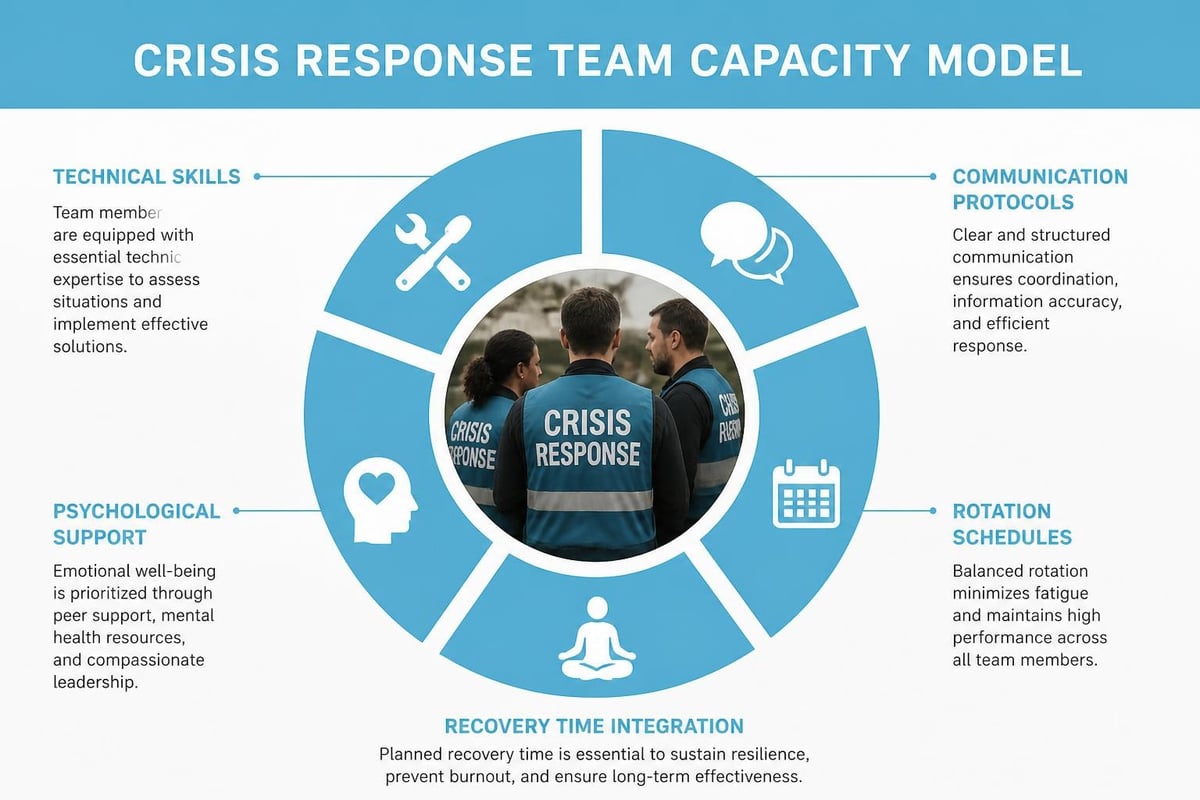
The organizations that managed this correctly built recovery time into their incident response plans. They recognized that sustained crisis operations require rotation, psychological support, and explicit permission to disengage. Leaders who treat crisis response as a sprint create teams that cannot handle the next marathon.
Building Team Resilience Before Crisis Hits
Psychological safety frameworks become critical during high-stress incidents. Teams that trust their leaders to acknowledge mistakes, accept uncertainty, and prioritize wellbeing perform better under pressure. Teams conditioned to fear blame hide problems, delay escalation, and collapse under sustained stress.
The CrowdStrike incident exposed which organizations had built this foundation and which had not. Teams with strong psychological safety reported issues immediately, proposed creative solutions, and maintained performance through extended recovery periods. Teams in fear-based cultures delayed bad news, waited for permission, and burned out faster.
This is not soft skills territory. It is operational readiness. Leaders who dismiss psychological safety as HR nonsense create fragile organizations that break during crisis. Leaders who build it systematically create resilient teams that adapt under pressure.
What Boards Are Still Getting Wrong
Most board-level crisis discussions focus on technical controls and insurance coverage. What CrowdStrike teaches about crisis leadership is that these conversations miss the point. The real risk is leadership capability gaps that only surface when everything goes wrong.
Forrester’s proactive crisis management analysis highlights that organizations need crisis-ready leaders at every level, not just the C-suite. During the CrowdStrike incident, organizations with crisis-trained mid-level managers maintained operational continuity. Organizations that concentrated crisis authority at the top created bottlenecks that slowed recovery.
Boards should ask these questions now, not after the next incident:
- Experience Inventory: How many executives have led teams through enterprise-wide crises?
- Communication Readiness: Can every VP cascade crisis updates to their teams within 30 minutes?
- Team Resilience: What percentage of critical teams show burnout indicators?
- Decision Authority: Where do crisis decisions bottleneck during after-hours incidents?
- Recovery Protocols: Do incident response plans include team recovery and rotation?
Most boards cannot answer these questions with data. They rely on assurances from executives who have never been tested. This is governance malpractice.
The CISO Leadership Gap
TechTarget’s examination of CISO crisis responsibilities reveals a role expanding faster than leadership development supports. CISOs now bridge technical response and business continuity, yet most lack training in crisis communication, stakeholder management, and organizational resilience.
The CrowdStrike incident proved that technical expertise alone cannot carry the CISO role during major disruptions. CISOs need coaching in executive presence, board communication, and team leadership under pressure. Organizations that invest in this development gain materially better crisis outcomes.
This connects directly to challenges Fortune 500 leaders face: the gap between technical competence and executive leadership capability. Many CISOs excel at security architecture but struggle to lead cross-functional teams through ambiguous, high-stakes situations. This gap costs organizations millions during incidents.
Building Leadership Capability That Actually Works
What CrowdStrike teaches about crisis leadership demands structured development, not generic training. Organizations need targeted interventions that build specific capabilities: decision-making under uncertainty, multi-stakeholder communication, team resilience management, and sustained performance under pressure.
Leadership development programs that work share these characteristics:
- Scenario-based practice with realistic time pressure and incomplete information
- Multi-level communication drills that require translating technical issues into business context
- Team resilience protocols integrated into operational planning, not treated as afterthoughts
- Post-incident reflection that captures lessons without blame
- Rotation and recovery planning built into crisis response frameworks
The missing element in most programs is personalized coaching from leaders who have managed similar crises. Generic workshops cannot replicate the judgment required to make consequential decisions with partial data and escalating pressure.
The Case for Experienced Crisis Coaching
Organizations that paired executives with coaches experienced in crisis leadership showed measurably better incident outcomes. These coaches provided:
- Real-time decision support during active incidents, not theoretical advice
- Communication coaching specific to stakeholder needs and organizational context
- Team management guidance that balanced operational demands with human limits
- Post-incident development plans addressing gaps revealed under pressure
This approach contrasts sharply with classroom training that teaches frameworks without context. Leaders need guidance from people who have made similar decisions and understand the consequences of getting them wrong.

The Strategic Governance Question
Creating a cyber-first culture through strategic governance requires boards to treat crisis leadership as a strategic capability, not an operational detail. The CrowdStrike incident demonstrated that technical controls matter less than leadership judgment when complex systems fail.
Organizations need governance structures that:
- Audit leadership crisis readiness with the same rigor applied to financial controls
- Measure team resilience indicators as leading indicators of operational risk
- Track communication effectiveness during incidents as a performance metric
- Assess decision velocity and quality under pressure across leadership levels
- Mandate recovery protocols that protect team capacity for sustained operations
Most organizations have none of this. They audit technical controls obsessively while ignoring the leadership gaps that amplify every incident’s impact. This is backwards.
What Gets Measured Gets Managed
Organizations that implement leadership crisis readiness metrics see tangible improvements:
| Metric | Baseline (2024) | Post-Development (2025) | Impact |
|---|---|---|---|
| Communication cascade time | 4.2 hours | 45 minutes | 82% improvement |
| Decision bottlenecks identified | 12 per incident | 3 per incident | 75% reduction |
| Team burnout indicators | 34% at risk | 12% at risk | 65% improvement |
| Stakeholder satisfaction scores | 2.8/5.0 | 4.3/5.0 | 54% increase |
These improvements did not come from better technology or more staff. They came from targeted leadership development that addressed specific capability gaps revealed through assessment and coaching.
Applying These Lessons Now
What CrowdStrike teaches about crisis leadership requires immediate action, not future planning. Organizations face three urgent priorities:
First, inventory your crisis leadership experience. Identify which executives have led teams through major disruptions. Map coverage gaps across critical functions. Recognize that credentials do not equal crisis readiness.
Second, audit your communication infrastructure. Test whether leaders at every level can cascade crisis updates effectively. Identify where technical jargon blocks business understanding. Fix communication bottlenecks before the next incident.
Third, measure team resilience systematically. Deploy validated assessments that identify burnout risk, psychological safety gaps, and capacity constraints. Treat this data as serious as financial metrics.
These actions separate organizations that learn from those that repeat the same failures. The CrowdStrike incident provided a master class in what goes wrong when leadership capability lags behind technical complexity. Smart organizations use this lesson to build resilience before their own crisis hits.
The Development Framework That Delivers
Effective crisis leadership development integrates assessment, coaching, and measurement:
- Diagnostic Assessment: Identify individual and team capability gaps using validated tools
- Targeted Coaching: Match leaders with experienced coaches who understand their specific challenges
- Scenario Practice: Create realistic simulations that test decision-making under pressure
- Team Integration: Build communication and resilience protocols into operational workflows
- Measurement: Track improvement through defined KPIs tied to organizational outcomes
This framework works because it addresses actual capability gaps with precision interventions, not generic training that assumes all leaders need the same development.
Why Traditional Approaches Fail
Most crisis leadership development fails because it treats the problem as knowledge transfer rather than capability building. Leaders do not need more frameworks. They need practice making consequential decisions with incomplete information, communicating across multiple stakeholder groups simultaneously, and maintaining team performance through sustained pressure.
Classroom training cannot replicate these conditions. Case studies provide vicarious learning but not experiential capability. What works is structured coaching from leaders who have navigated similar crises and can help executives develop judgment through guided practice and reflection.
The CrowdStrike incident revealed this gap starkly. Organizations with traditionally-trained leaders struggled despite having crisis management plans. Organizations with experientially-developed leaders adapted faster, communicated better, and protected team capacity more effectively.
The difference was not intelligence or effort. It was preparation through practice under realistic conditions with experienced guidance.
The CrowdStrike outage revealed leadership gaps that most organizations still ignore: the inability to communicate across stakeholder groups, failure to protect team resilience, and lack of experience making high-stakes decisions under pressure. These are not theoretical problems. They cost organizations millions in extended recovery time, lost productivity, and damaged stakeholder trust. The Noomii Corporate Leadership Program delivers precision coaching solutions that build crisis-ready leaders through evidence-based assessments, experienced coach matching, and measurable development plans tailored to your organization’s specific challenges.



Leave a Reply
Want to join the discussion?Feel free to contribute!