
Certification Is Not a Business Plan
Every month, hundreds of new coaches complete certification programs believing they’ve just built a business. They haven’t. They’ve earned a credential that confirms they studied a curriculum and passed an assessment. That’s valuable for learning frameworks and ethics, but certification is not a business plan. It doesn’t identify your ideal clients, create your service offerings, generate leads, or produce revenue. The coaching industry has sold aspiring practitioners a dangerous myth that completing coursework translates to market readiness.
The Certification Trap Most New Coaches Fall Into
Walk into any coach training cohort and you’ll hear the same aspirations: finish the program, get certified, hang out a shingle, start coaching. The logic appears sound until you examine the outcomes. Industry data shows that over 60% of newly certified coaches earn less than $15,000 annually from coaching, and many abandon the profession within two years.
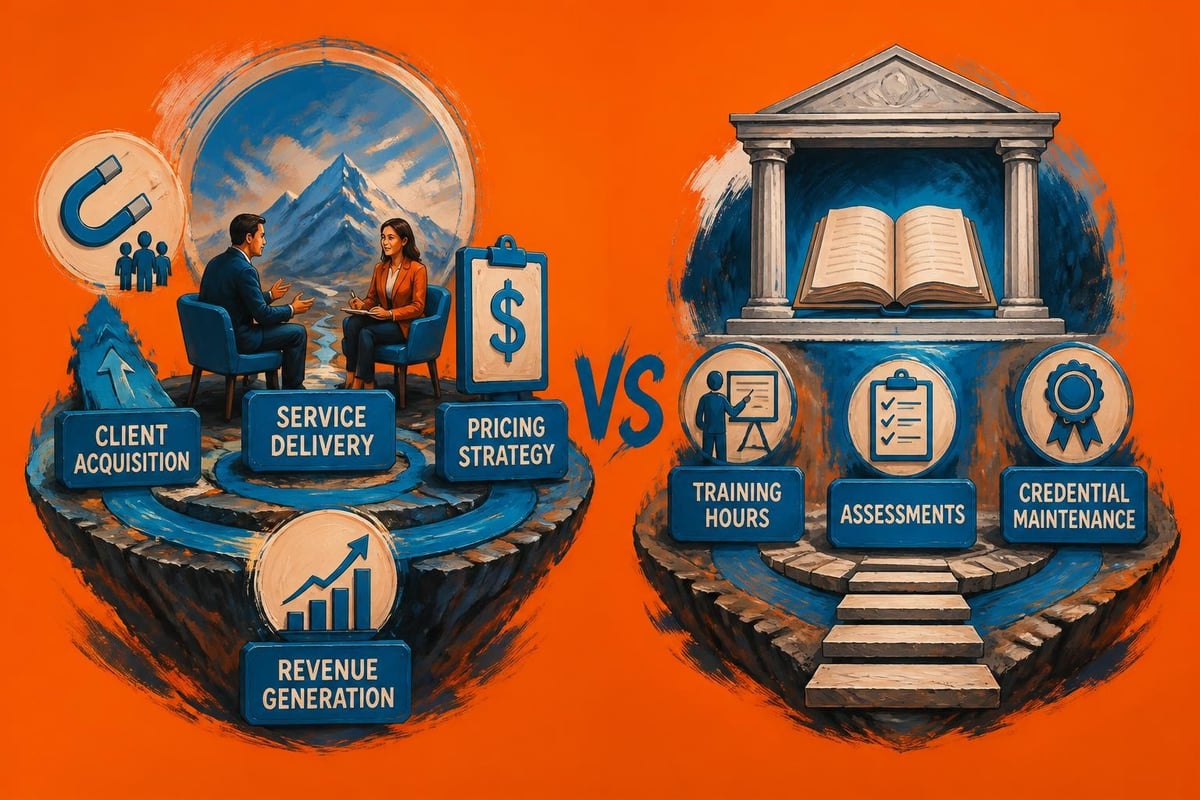
The certification completion checklist typically includes:
- Completing required training hours
- Passing knowledge assessments
- Submitting recorded coaching sessions
- Paying credential maintenance fees
- Listing credentials on your LinkedIn profile
What’s missing from that list:
- Target market research and validation
- Service packaging and pricing strategy
- Lead generation systems
- Sales conversations and conversion processes
- Delivery infrastructure and client management
- Financial projections and cash flow planning
The gap between these lists represents the business you didn’t build while earning your credential. Understanding what certification can and cannot achieve matters more than most training programs acknowledge.
What Actually Builds a Coaching Practice
Between 2019 and 2026, I’ve observed hundreds of coaches launch practices. The successful ones share common patterns that have nothing to do with credential letters after their names. They treat their practice like a business from day one.
Market Research Before Program Selection
The coaches who build sustainable practices identify their target market before choosing a certification program. They ask:
- Who specifically do I want to serve?
- What problems do these clients face that they’ll pay to solve?
- Where do these potential clients currently look for help?
- What language do they use to describe their challenges?
One coach I worked with in 2024 spent three months interviewing mid-level managers before selecting a leadership development certification. She validated demand, tested pricing, and presold her first six clients before completing her credential. When she finished her program, she had a waiting list. That’s business thinking.
Service Design Tied to Client Outcomes
Certification is not a business plan because credentials don’t define deliverables. Your clients don’t buy ICF PCC status or a certificate from a prestigious institution. They buy specific outcomes: better team performance, career transitions, improved executive presence, faster decision-making.
The most successful coaching businesses, including specialized corporate coaching, design services around measurable outcomes first, then select methodologies and tools to deliver those results. The sequence matters.
| Business-First Approach | Certification-First Approach |
|---|---|
| Identify client pain points | Complete training program |
| Design outcome-based offers | List credentials on website |
| Test pricing and packaging | Wait for clients to find you |
| Build lead generation system | Network with other coaches |
| Deliver and refine based on results | Pursue additional certifications |
The Revenue Reality Check
Here’s what kills most coaching practices: the belief that credentials create demand. They don’t. In seven years of tracking coaching businesses, I’ve never seen a certification alone generate consistent revenue.
Revenue comes from:
- Systematic outreach to your target market through speaking, writing, partnerships, or direct prospecting
- Clear positioning that communicates who you serve and what specific outcomes you deliver
- Pricing aligned with value rather than hourly rates that commoditize your expertise
- Delivery systems that create client results worth referencing and repeating
- Client acquisition costs lower than lifetime client value
Most coaches spend $8,000 to $25,000 on certification programs. Determining whether certification aligns with business goals requires honest math. If you invested that same capital in market research, website development, content marketing, and strategic partnerships, would you generate more revenue faster?
The answer isn’t always no, especially when clients require specific credentials. Corporate buyers, healthcare organizations, and government agencies often mandate particular certifications. But even in regulated industries, the credential gets you in the door while your business systems close the sale and deliver results.
Building Business Infrastructure While Learning
Smart coaches integrate business development into their certification timeline. They don’t wait until graduation to start building their practice.
During certification programs, effective coaches:
- Test service offerings with beta clients at reduced rates
- Build email lists through content that addresses target market challenges
- Establish partnerships with complementary service providers
- Develop case studies and testimonials from practice clients
- Create pricing structures based on market research
- Build foundational business systems for contracts, scheduling, and payment processing
Creating a structured business plan transforms certification from an endpoint into a foundation. The coaches who treat their training period as market research and product development launch with momentum instead of starting from zero.
The Credential Arms Race Nobody Wins
When certification doesn’t generate expected revenue, many coaches pursue additional credentials. I’ve watched practitioners collect ICF, EMCC, Center for Creative Leadership, and niche certifications totaling over $50,000 in training costs while earning less than $30,000 annually from coaching.
This credential accumulation signals a fundamental misunderstanding: certification is not a business plan, and more certifications don’t fix missing business fundamentals. The industry profits from this confusion, offering advanced programs that promise differentiation but deliver more theory without market connection.
Warning signs you’re in the credential trap:
- You’ve earned three or more coaching certifications
- Your LinkedIn headline lists credential acronyms but not client outcomes
- You can’t articulate your specific target market in one sentence
- You’ve invested more in training than you’ve earned from coaching
- You believe the next certification will unlock your practice
The coaches building six-figure practices focus on market problems, not credential collection. They develop frameworks that address what leaders actually face rather than recycling generic models from certification programs.
What Buyers Actually Evaluate
Corporate buyers purchasing coaching services evaluate very different criteria than individual consumers. After reviewing hundreds of coach selection processes, the pattern is clear.
Enterprise buyers prioritize:
- Relevant industry experience and business acumen
- Track record of measurable results in similar contexts
- Cultural fit and communication style
- References from comparable organizations
- Pricing structure and ROI demonstration
- Delivery flexibility and responsiveness
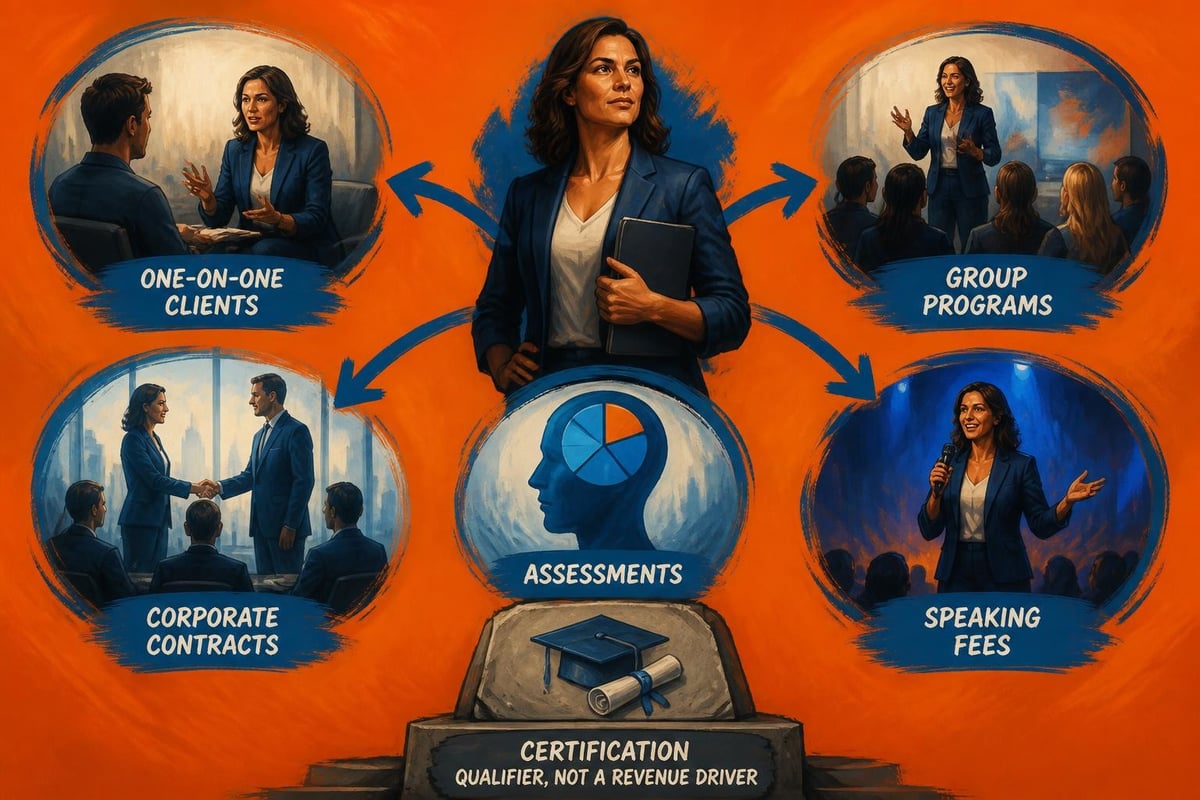
Certification appears on this list, but typically as a minimum qualifier, not a differentiator. When competing for a mid-market leadership development engagement, your ICF credential matters less than your understanding of their specific challenges and your ability to tie coaching outcomes to business KPIs.
Individual buyers follow similar logic. They research coaches through directories like Noomii looking for relevant expertise, not credential letters. A sales leader seeking performance coaching cares whether you understand sales cycles, pipeline management, and quota pressure, not which certification body endorsed your training.
Frequently Asked Questions
Q: Do I need coaching certification to start a coaching business?
A: No legal requirement exists in most markets, though some corporate buyers and government contracts mandate specific credentials. Start by validating market demand for your services, then determine if certification helps you serve that market better.
Q: How much should I invest in coaching certification versus business infrastructure?
A: Allocate at least equal investment to business systems, marketing, and client acquisition as you spend on certification. A $15,000 certification should be matched with $15,000 in website development, content creation, and market testing.
Q: Why do so many certified coaches struggle to find clients?
A: Certification teaches coaching methodology but rarely teaches business development, marketing, sales, or service design. Most programs graduate coaches who can facilitate conversations but cannot identify prospects, articulate value, or convert leads.
Q: Should I pursue advanced certifications to differentiate my practice?
A: Only if your target market specifically values or requires that credential. Most differentiation comes from niche focus, proven results, and business positioning, not additional training programs.
Q: How long does it typically take to build a sustainable coaching practice?
A: Coaches who treat their practice as a business typically need 12 to 24 months to reach sustainable income levels, regardless of certification timing. Those who start business development during certification programs accelerate this timeline.
Q: What’s more valuable than coaching certification for building my business?
A: Market research identifying specific client problems, service design creating measurable outcomes, pricing strategy aligned with value delivered, lead generation systems producing consistent prospects, and sales skills converting conversations to clients.
Q: Can I succeed as a coach without any certification?
A: Yes, especially in niches where clients value relevant experience over credentials. Many successful executive coaches, business coaches, and industry specialists built practices based on professional expertise rather than coaching credentials.
Q: How do I know if certification will help my specific coaching business?
A: Research your target market’s expectations, interview potential clients about their selection criteria, and review competitor credentials. If your ideal clients require or strongly prefer certification, pursue it strategically as one component of your business plan.
Q: What should my business plan include if I’m building a coaching practice?
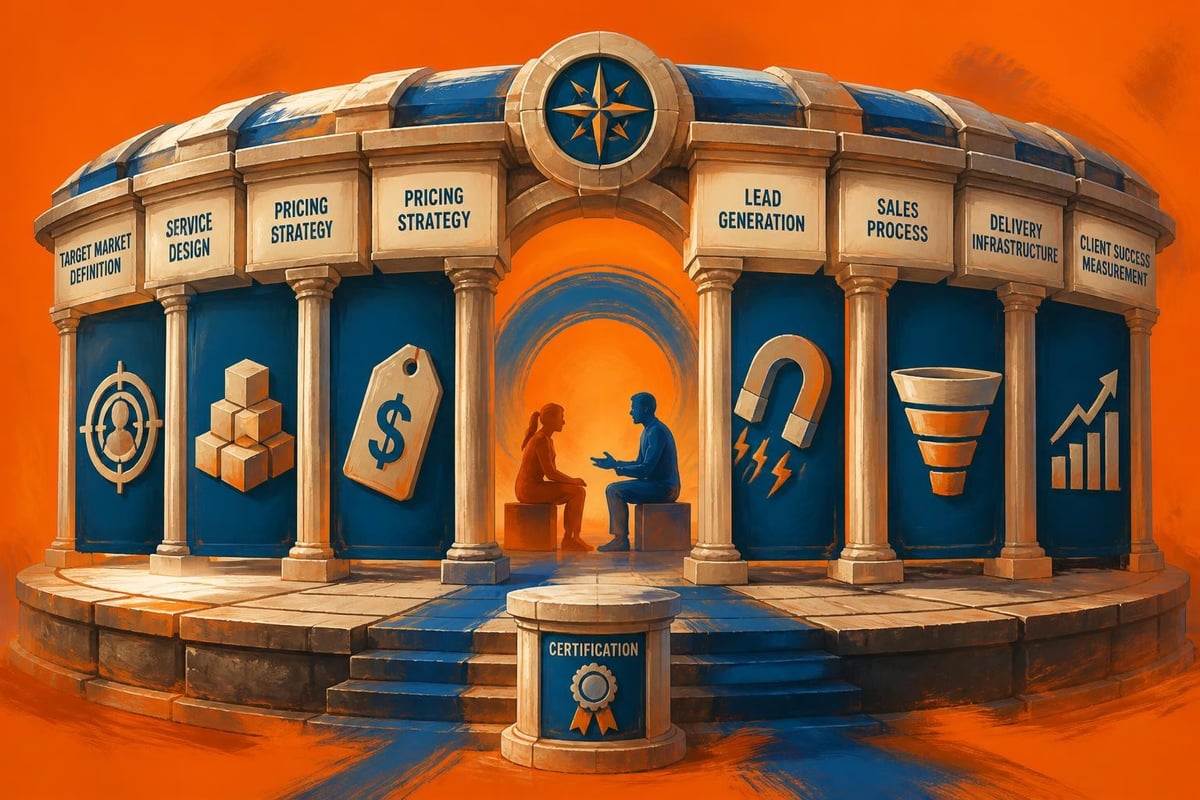
A: Target market definition, competitive analysis, service offerings with clear outcomes, pricing strategy, marketing and lead generation plan, sales process, financial projections, delivery systems, and client success metrics tied to business results.
Building a successful coaching practice requires treating certification as professional development, not business creation. The credential proves you studied a methodology. Your business plan proves you understand your market, can generate leads, convert prospects, deliver results, and build sustainable revenue. If you’re ready to work with coaches who focus on measurable business outcomes rather than credential worship, Noomii connects mid-market companies with practical corporate coaching that delivers faster decisions, stronger leadership, and cleaner execution tied to clear KPIs and ROI.



Leave a Reply
Want to join the discussion?Feel free to contribute!