

Why AI Coaching Felt Smart but Failed: What Went Wrong
Between 2023 and 2025, hundreds of mid-market companies rushed to deploy AI coaching platforms. The pitch was compelling: scale leadership development, reduce costs, deliver personalized coaching to every manager without hiring more coaches. By early 2026, most of those deployments are being quietly rolled back. Understanding why ai coaching felt smart but failed matters because the pattern reveals fundamental misunderstandings about what coaching actually does and what AI can't replace.
The Promise That Hooked Decision Makers
AI coaching platforms sold three attractive claims to mid-market companies. First, they promised unlimited scalability. Second, they guaranteed 24/7 availability without human scheduling friction. Third, they offered data-driven insights no human coach could match.
The business case looked bulletproof:
- 40-60% cost reduction versus human coaches
- Instant deployment across all employees
- Built-in analytics dashboards
- No calendar coordination or time zone issues
- Standardized quality across every interaction
The CFO approved. HR got excited. Rollout began. Then reality arrived. Many organizations discovered that AI deployments gone wrong share common patterns, including misaligned business goals and weak management support.
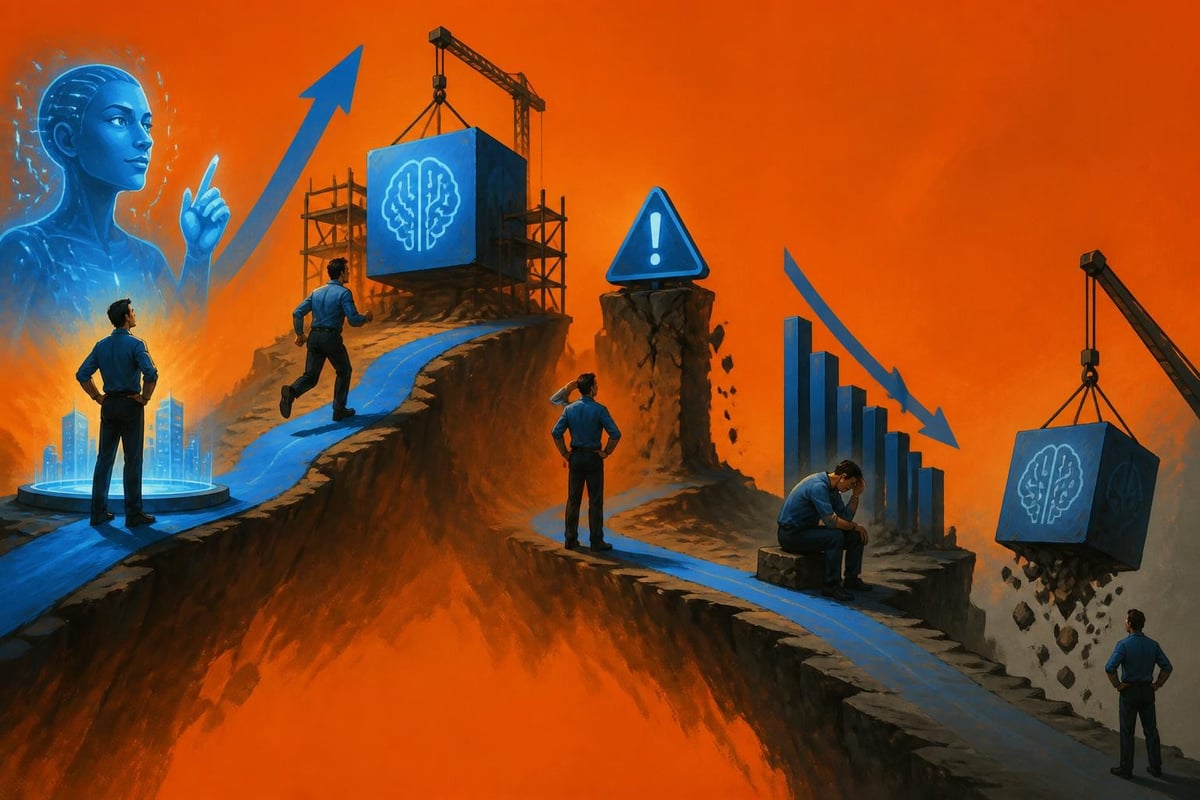
Where AI Coaching Hit the Wall
The first failure point emerged within 30 days. Managers stopped using the platform. Usage data revealed a pattern: initial curiosity, a few sessions, then abandonment. Exit interviews exposed why ai coaching felt smart but failed at the point of actual coaching need.
The Context Problem
AI coaching tools couldn't handle the messy reality of leadership challenges. A mid-market manufacturing company rolled out an AI coach for their 80 managers in Q3 2024. By Q1 2025, usage had dropped 89%. When managers were asked why, the answers clustered around one theme: the AI couldn't understand their specific situation.
Real coaching scenarios that broke AI systems:
- Navigating a layoff while maintaining team morale
- Managing a high performer who undermines others
- Balancing competing priorities during rapid growth
- Addressing performance issues tied to personal crises
- Building trust after a failed initiative damaged credibility
The AI provided generic frameworks. Managers needed judgment calls based on organizational politics, individual personalities, and cultural nuance. Limitations on using AI for coaching content include lack of emotional intelligence and contextual understanding, precisely what these managers experienced.
The Data Quality Trap
AI coaching relies on data inputs: 360 feedback, performance reviews, engagement scores, meeting notes. Most mid-market companies don't have clean, comprehensive data. Their systems are fragmented. Feedback is inconsistent. Performance data is subjective and incomplete.
| Data Requirement | Typical Mid-Market Reality | AI Coaching Impact |
|---|---|---|
| Structured 360 feedback | Annual, often skipped | Shallow analysis |
| Performance metrics | Inconsistent formats | Pattern recognition fails |
| Meeting transcripts | Privacy concerns block access | No behavioral insight |
| Engagement data | Survey fatigue, low response | Missing context |
| Historical coaching notes | Non-existent or siloed | No learning continuity |
This gap meant AI coaches operated partially blind, delivering advice disconnected from actual circumstances. As research on enterprise AI failures shows, the problem isn't AI capability but unprepared systems and poor data quality.
The Human Coaching Advantage Becomes Obvious
Companies that deployed AI coaching alongside human coaches saw the contrast immediately. Human coaches doing leadership development noticed problems AI missed. They read body language in meetings. They picked up hesitation in tone. They connected dots between a manager's current struggle and a pattern from six months earlier.
What human coaches provided that AI couldn't:
- Real-time observation in actual meetings and decision points
- Pattern recognition across organizational culture and history
- Judgment about when to push hard versus back off
- Credibility earned through demonstrated expertise in similar situations
- Accountability that felt personal, not algorithmic
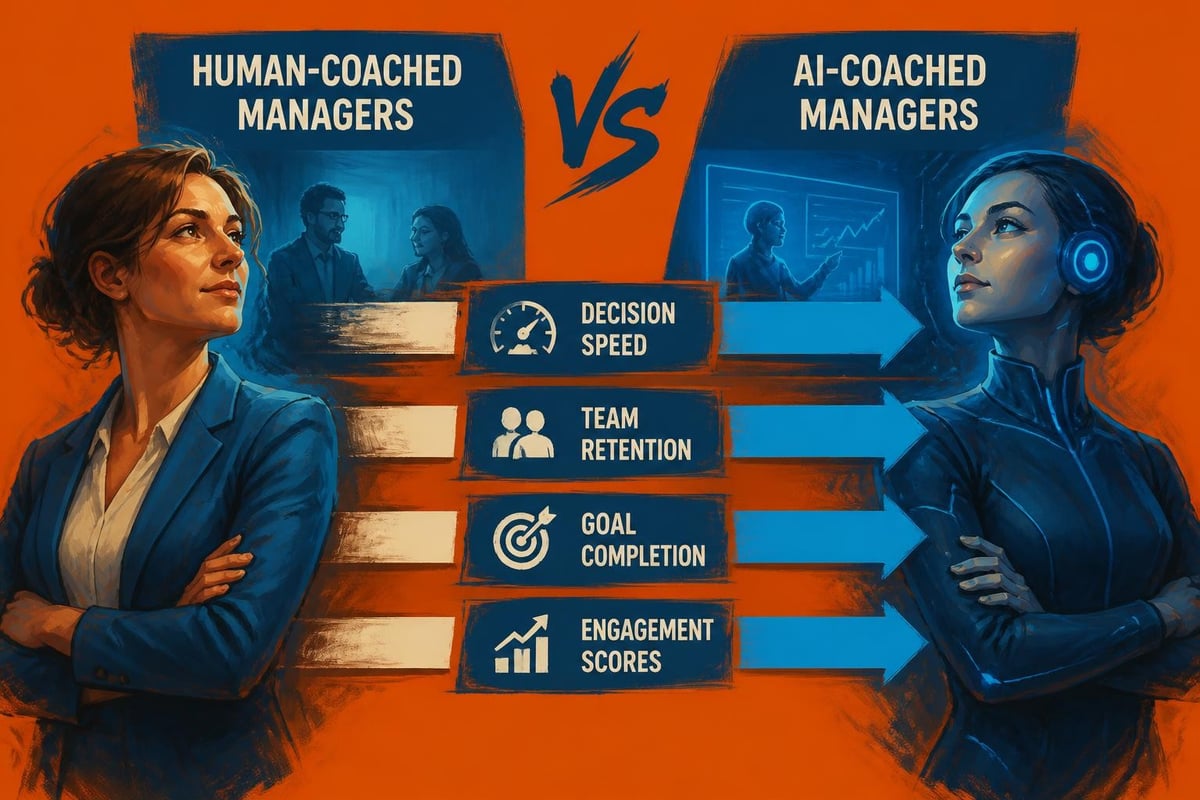
One Fortune 500 division ran a controlled experiment in late 2024. They assigned 40 managers to AI coaching and 40 to human executive coaches. The human-coached group showed measurable improvements in decision speed (32% faster), team retention (18% higher), and goal achievement (41% better completion rates). The AI group showed minimal change. Understanding psychological safety in the workplace requires the nuanced human insight these results reflected.
Why Organizations Kept Investing Despite Red Flags
Here's what makes this story instructive: most buyers saw warning signs early but pressed ahead anyway. Why? Three factors explain the persistence.
Sunk Cost and Vendor Lock-In
Multi-year contracts created financial pressure to make AI coaching work. Platform fees, integration costs, and change management investments added up. Walking away meant admitting failure and eating costs. Many companies quietly reduced expectations instead of pulling the plug, hoping usage would improve.
Credential and Tech Worship
The platforms came with impressive credentials: AI researchers from top universities, venture backing, partnerships with business schools. Companies trusted the pedigree more than their own early feedback. This mirrors the broader pattern in coaching where certification dependency can overshadow proven results and practical experience.
Misunderstanding What Coaching Delivers
The deepest failure wasn't technical. It was conceptual. Buyers thought coaching was primarily information transfer and framework delivery. AI can do that. But effective coaching is relationship, judgment, accountability, and context-specific challenge. Those require human presence.
Research on real-world AI breakdowns shows over-automation and misaligned expectations as recurring themes. AI coaching failures followed this exact pattern.
The Hybrid Model Trap
Some vendors pivoted to hybrid models: AI for scheduling, note-taking, and basic questions; humans for actual coaching conversations. This reduced costs but introduced new problems. Managers got confused about when to use which tool. The AI component added friction without adding value. By mid-2025, most companies using hybrid models had effectively reverted to human-only coaching with expensive tech overhead.
The hybrid model promise versus reality:
| Promised Benefit | Actual Outcome |
|---|---|
| AI handles routine tasks, freeing coaches for high-value work | Coordination overhead negates time savings |
| Seamless handoff between AI and human | Managers confused about escalation triggers |
| Lower cost than full human coaching | Tech costs plus human costs exceed human-only approach |
| Better data tracking | Data rarely influences coaching approach |
What This Means for Leadership Development in 2026
The AI coaching failures of 2024-2025 taught three lessons that matter now. First, coaching is not a content delivery problem. It's a judgment, relationship, and accountability challenge. Second, cost reduction through automation backfires when the automation can't deliver outcomes. Third, measurable business results require coaches who understand business, not algorithms that pattern-match on corporate speak.
Companies getting leadership development right in 2026 are choosing coaches who work in the business, not on the sidelines. They're tying coaching to KPIs and operating cadence. They're demanding month-to-month terms so results drive renewal, not contracts. And they're prioritizing expertise and outcomes over credentials and theory.
The question isn't whether AI has a role in coaching support tools. It does. But deploying AI as the coach rather than as the assistant was the core mistake explaining why ai coaching felt smart but failed.
What Buyers Should Demand Instead
If your organization is evaluating coaching solutions in 2026, here's the filter that separates effective coaching from expensive failures:
Demand demonstrated results tied to business metrics. Ask for before-and-after data on decision speed, retention, revenue growth, or execution quality. Vague testimonials about "transformation" don't count.
Require coaches who work in your context. The best coaches observe your actual meetings, review your real priorities, and tie development to your operating rhythm. Remote-only, schedule-when-convenient approaches miss critical context.
Insist on month-to-month terms. If the coaching works, you'll renew. If it doesn't, you shouldn't be locked in. Vendors confident in their outcomes don't need long contracts.
Prioritize expertise over certifications. A coach with 15 years scaling mid-market companies beats a recently certified coach with impressive credentials but limited business experience. Real-world pattern recognition matters more than framework mastery.
Connect coaching to accountability systems. Coaching that exists separate from your KPI scorecards, operating cadence, and team goals feels like professional development theater. Effective coaching integrates directly into how you run the business.
Organizations seeking business coaching built on outcomes rather than promises are asking tougher questions and getting better results because of it.
FAQ: AI Coaching Failures and What Works Instead
Why did AI coaching fail when AI succeeds in other business applications?
AI excels at pattern recognition in clean, high-volume, rule-based scenarios. Coaching requires judgment in unique, low-volume, context-heavy situations with messy human dynamics. The mismatch between AI's strengths and coaching's requirements drove failures.
Can AI play any useful role in leadership development?
Yes, as a support tool. AI can help schedule sessions, transcribe conversations for review, surface relevant past discussions, and track progress on commitments. But the actual coaching judgment, challenge, and accountability need human delivery.
How can companies tell if a coaching vendor is selling repackaged AI?
Ask how coaches gather context. If the answer focuses on pre-session questionnaires and platform data rather than live observation and meeting participation, you're likely getting AI-heavy or remote-only coaching that misses critical context.
What were the most common early warning signs of AI coaching failure?
Declining usage after initial curiosity, managers reporting generic advice that didn't fit their situation, no measurable improvement in business metrics, and requests to bring in human coaches for "complex cases" that turned out to be most cases.
Why didn't hybrid AI-human coaching models solve the problem?
They added coordination complexity without adding value. The AI component became overhead rather than help. Managers defaulted to waiting for human sessions rather than engaging with AI components, negating the efficiency promise.
What business metrics actually improve with effective human coaching?
Decision speed, manager retention, team retention under specific managers, goal completion rates, quality of delegation, meeting effectiveness, priority clarity, and cross-functional collaboration. These require before-and-after measurement tied to coaching engagements.
How much should effective business coaching cost in 2026?
For mid-market companies, expect $3,000-$8,000 per month per coach working with multiple managers, depending on intensity and scope. Much cheaper usually means less experienced coaches or remote-only models. Much more expensive often reflects brand premium rather than outcome improvement.
What's the difference between coaches who deliver results and those who don't?
Results-focused coaches tie their work to your KPIs, participate in your operating cadence, challenge thinking in real meetings, and work month-to-month. Theory-focused coaches deliver frameworks in scheduled sessions, stay removed from daily operations, and prefer long contracts.
Should companies avoid all AI tools in leadership development?
No. Avoid AI as the coach. Use AI as a tool supporting human coaches: scheduling, note-taking, pattern analysis, progress tracking, and research. The human delivers judgment, accountability, and context-specific challenge that drives actual behavior change.
AI coaching failures revealed that effective leadership development requires human judgment, business context, and accountability that algorithms can't replicate. When coaching operates in your meetings, ties to your KPIs, and delivers measurable results, it works. When it's algorithm-driven and removed from your actual operations, it fails. Noomii connects mid-market companies with experienced coaches who work in your business, not on the sidelines, delivering faster decisions, stronger managers, and cleaner execution on month-to-month terms because results should drive renewal, not contracts.



Leave a Reply
Want to join the discussion?Feel free to contribute!