

Why Toxic Leaders Survive Too Long in Organizations
The typical toxic leader remains in position 18 to 24 months after their behavior becomes undeniable to senior leadership. I've watched this pattern repeat across financial services, healthcare systems, and government agencies. The evidence trail starts with exit interview data showing the same name. HR documents pattern complaints. Skip-level meetings reveal team dysfunction. Yet the leader stays. Understanding why toxic leaders survive too long requires examining the specific mechanisms that protect them and the organizational vulnerabilities they exploit.
The Results Shield: When Performance Numbers Hide Cultural Damage
Toxic leaders survive because they deliver measurable outcomes that boards and executives value. Revenue growth. Cost reductions. Operational efficiency gains. These metrics provide cover even as team turnover accelerates and engagement scores plummet.
In one Fortune 500 manufacturing division I audited in 2025, a VP increased productivity by 23% over two years while his direct reports experienced 67% turnover. The finance team celebrated the productivity gains. HR flagged the retention crisis. The metrics that mattered to compensation committees protected him.

The True Cost Calculation Nobody Makes
Organizations fail to connect toxic leadership to downstream costs because the damage appears in different budget lines:
- Recruitment and onboarding expenses show up in HR
- Knowledge loss impacts project timelines in operations
- Decreased innovation affects product development
- Legal settlements appear in risk management
- Reputation damage shows in employer brand metrics
The toxic leader's P&L looks clean. This fragmented cost structure makes intervention harder to justify using traditional ROI frameworks.
One healthcare system I worked with in 2024 calculated their toxic department head cost them $4.7 million annually when they aggregated turnover, training, productivity loss, and patient satisfaction decline. His department showed a 12% year-over-year efficiency improvement.
Organizational Immunity: The Structural Defenses That Protect Toxic Leaders
Why toxic leaders survive too long becomes clearer when you examine the institutional antibodies that neutralize accountability mechanisms. These aren't accidental. They're predictable organizational responses.
Board-level distance from operational reality creates the first defense layer. Directors see quarterly reports and polished presentations. They don't attend the staff meetings where the toxic leader berates team members or the one-on-ones where high performers explain why they're leaving.
The sponsor problem provides additional protection. Senior executives who promoted the toxic leader have reputational capital invested in that decision. Admitting the hire was a mistake reflects on their judgment. I've seen three separate cases where a CHRO delayed action on a toxic director because the CEO had personally recruited them.
The Fear Economy
Toxic leaders survive by making the cost of speaking up higher than the cost of silence. This calculation plays out across multiple constituencies:
| Group | Fear Factor | Resulting Behavior |
|---|---|---|
| Direct Reports | Retaliation, career damage | Minimize in skip-levels, eventually leave quietly |
| Peers | Being labeled "not a team player" | Avoid confrontation, protect own teams |
| HR Business Partners | Weakening relationship with business leader | Document but don't escalate aggressively |
| Senior Leadership | Division performance decline, talent loss | Request coaching, delay decisive action |
The toxic leader needs only to make examples of one or two people who challenged them. Everyone else learns. This is why toxic leaders get away with it across sectors including military, corporate, and government environments.
The Intervention Delay Pattern
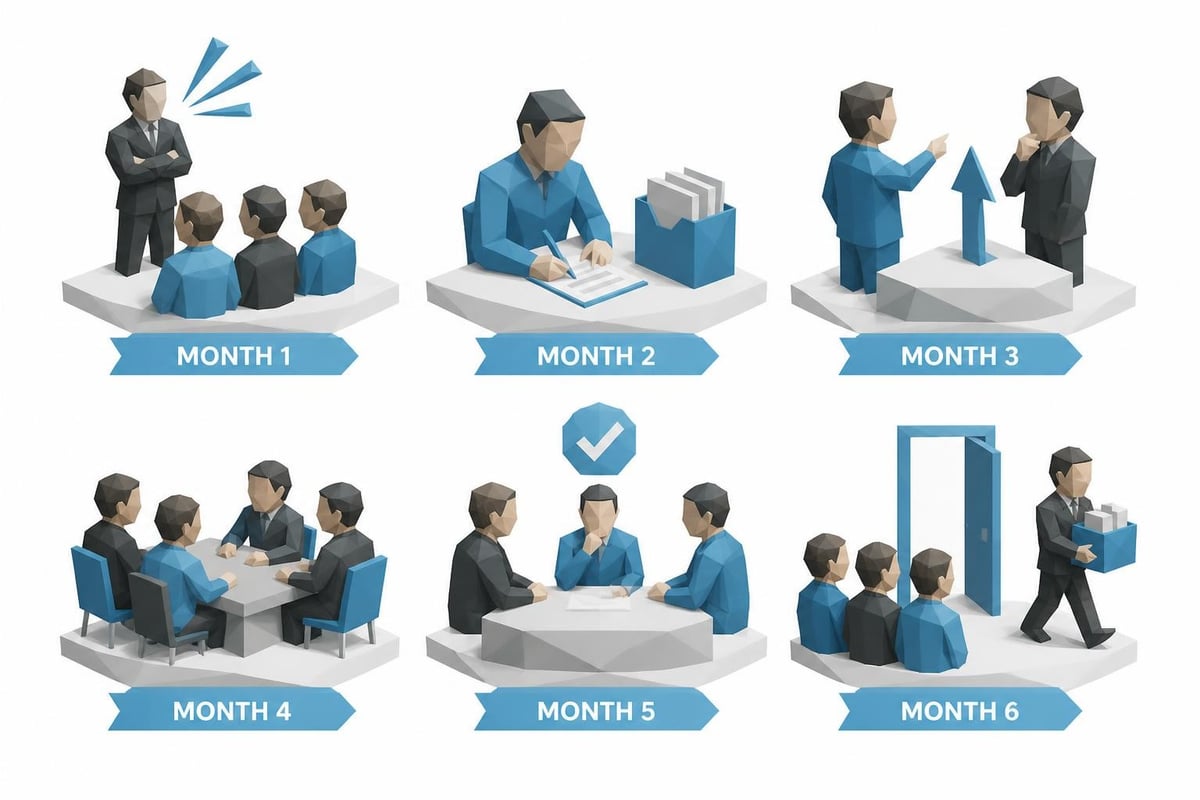
After analyzing 47 toxic leadership situations across clients from 2023 to 2026, I've identified a consistent timeline that explains why toxic leaders survive too long:
Months 1-6: The Honeymoon Erosion
Early warning signs appear in team dynamics and communication patterns. High performers start avoiding the leader. Meeting tone shifts. These signals remain below executive visibility.
Months 7-12: The Documentation Phase
HR begins receiving complaints. Exit interviews name the leader. The HRBP suggests coaching. The leader's manager has "a conversation" about leadership style. No formal consequences occur.
Months 13-18: The Escalation Threshold
A critical incident occurs: a discrimination complaint, a mass resignation, a customer escalation. Senior leadership can no longer ignore the pattern. They commission an investigation or culture assessment.
Months 19-24: The Deliberation Period
Legal reviews the situation. Executives debate options. Performance improvement plans get drafted. The leader may receive an executive coach. The question of whether coaching can reduce conflict and rehabilitate toxic patterns gets tested.
Months 25+: The Exit
The leader "decides to pursue other opportunities" or gets moved to a role with no direct reports. The organization announces a "mutual decision" or "reorganization."
This 18 to 24-month gap between problem recognition and problem resolution represents the survival window.
Why the Standard Responses Fail
Organizations default to three interventions when toxic leadership becomes undeniable: coaching, training, or reassignment. Each fails for specific reasons.
Executive coaching fails when the leader lacks genuine motivation to change or when the organizational context rewards their toxic behavior. I've coached leaders who nodded through sessions then returned to the same patterns because those patterns still delivered the results their bosses valued. Effective leadership coaching requires both individual commitment and organizational reinforcement of new behaviors.
Leadership training fails because toxic leadership isn't a skills gap. These leaders know how to communicate effectively, build trust, and develop talent. They choose not to because the current approach works for their objectives. Sending them to a program on emotional intelligence or inclusive leadership wastes resources.
Reassignment fails because it exports the problem. The toxic leader damages a new team while the organization signals that destructive behavior doesn't end careers. This is particularly common in matrixed organizations where leaders can be moved laterally without demotion.
What Actually Works: The Intervention Framework
Based on successful toxic leader removals I've supported, effective intervention requires three simultaneous actions:
- Clear behavioral documentation linked to specific business impact (turnover cost, project failure, customer loss)
- Executive alignment on non-negotiable standards and consequences before talking to the leader
- Rapid timeline from notification to exit (30-90 days maximum)
The longer the timeline, the more opportunity for the toxic leader to create political protection, retaliate against witnesses, or manipulate the narrative.
The Board's Blind Spot
Directors ask about culture in board meetings. They review engagement survey results. They approve diversity and inclusion initiatives. Yet they remain systematically uninformed about toxic leadership until the damage reaches crisis levels.
This happens because information flows to boards get filtered through the executives who may be protecting toxic leaders. The CHRO presents aggregated data. The CEO frames narratives. Directors see trends, not individuals.
Board composition contributes to the problem when directors lack operational leadership experience. Private equity backgrounds or financial expertise don't prepare directors to recognize toxic leadership patterns or understand the connection between psychological safety and organizational performance.
In 2025, I worked with a board that discovered their fastest-growing division had 92% annual turnover in roles reporting to one SVP. The board had never seen turnover data by leader. Once they demanded it, the pattern became obvious. The SVP was exited within 60 days.
The Successor Problem Nobody Discusses
Organizations delay removing toxic leaders because they lack a ready replacement. This succession gap extends the survival window and increases total organizational damage.
Internal candidates are damaged or departed. The toxic leader's most talented direct reports have either left or been marginalized. The high performers who could step up are now at competitors.
External recruitment takes time. Finding, vetting, and onboarding a senior leader requires 4 to 6 months minimum. Executives choose the known quantity of the toxic leader over the uncertainty of an interim period.
The toxic leader knows this and exploits it. They make themselves indispensable by hoarding information, creating dependency, and ensuring no strong number two exists. Research on why toxic business leaders persist identifies this pattern across industries.
Building the Succession Buffer
Organizations that remove toxic leaders quickly maintain stronger bench strength through:
- Formal succession planning with identified backups for every critical role
- Knowledge management systems that prevent information hoarding
- Interim leader protocols that normalize temporary leadership during transitions
- External executive networks for rapid placement when needed
The Cultural Permission Structure
Why toxic leaders survive too long often traces to the broader organizational culture that tolerates or rewards their behavior. These permission structures operate explicitly and implicitly.
Explicit permission appears in statements like "he gets results" or "she's tough but effective" or "that's just his style." Leadership teams that make these statements tell toxic leaders their behavior is acceptable as long as outcomes continue.
Implicit permission shows up in promotion patterns, compensation decisions, and resource allocation. When toxic leaders receive bonuses, expanded teams, and bigger roles despite documented behavioral issues, everyone notices. The organization's values are revealed through what it rewards, not what it claims in culture statements.
I worked with a technology company in 2024 where the toxic leader was the CEO's former classmate. He survived five years of documented toxicity because firing him meant acknowledging the CEO's judgment failure. The organization lost 14 senior engineers before the board intervened.

The Cost of Waiting: A Quantified Analysis
Most organizations understand toxic leadership creates costs. Few quantify them with precision. Based on data from client situations, here's the typical damage accumulation:
| Damage Category | 12-Month Cost | 24-Month Cost | Calculation Basis |
|---|---|---|---|
| Direct Reports Turnover | $380K – $640K | $760K – $1.28M | 3-6 departures × replacement cost |
| Extended Team Attrition | $520K – $890K | $1.04M – $1.78M | Ripple effect turnover |
| Productivity Loss | $440K – $750K | $880K – $1.5M | Disengagement impact on output |
| Recruitment/Onboarding | $180K – $320K | $360K – $640K | Hard costs for replacement |
| Management Time | $95K – $175K | $190K – $350K | HR, legal, executive hours |
Total 24-Month Cost Range: $3.23M to $5.55M for a typical director or VP-level toxic leader in a mid-sized organization.
This analysis excludes reputation damage, customer impact, innovation loss, and legal settlement costs, which can multiply the total by 2x to 5x depending on circumstances.
What CHROs Miss in Their Response
Human resources leaders often recognize toxic leadership before anyone else. They see the exit interview data, receive the complaints, and watch the engagement scores decline. Yet they frequently contribute to why toxic leaders survive too long through three specific failures.
They frame it as a performance management issue rather than a business crisis requiring immediate executive action. The language matters. "This leader needs coaching" prompts a different response than "this leader is costing us $4 million annually and creating legal exposure."
They wait for the perfect documentation before escalating. Legal caution is appropriate. Excessive documentation requirements create delay that allows damage to compound. In practice, three documented incidents with business impact is sufficient for action.
They underestimate their own organizational capital. The CHRO who declares a toxic leader situation is a board-level priority and demands action within 90 days typically gets it. The CHRO who suggests coaching and monitoring extends the survival window indefinitely.
The most effective CHROs I've worked with present toxic leadership situations with quantified business impact, clear recommended actions, and explicit timelines for decision-making.
The Evidence-Based Removal Process
Organizations that successfully remove toxic leaders within 90 days of decision follow a consistent protocol:
Phase One: Documentation Assembly (Days 1-14)
Compile existing evidence including exit interviews, HR complaints, engagement data by team, performance reviews, and witness statements. Calculate total business impact including turnover cost, productivity loss, and risk exposure.
Phase Two: Executive Alignment (Days 15-21)
Present evidence to CEO, CHRO, and General Counsel. Agree on standards, timeline, and messaging. Identify interim leader. Prepare communication plan for affected teams.
Phase Three: Notification and Terms (Days 22-28)
Meet with toxic leader. Present evidence. Offer resignation with severance or termination. Most choose resignation when evidence is clear and exit terms are reasonable.
Phase Four: Transition Execution (Days 29-60)
Announce transition. Install interim leader. Communicate with affected teams. Conduct stay interviews with high performers. Begin external search for permanent replacement.
Phase Five: Cultural Repair (Days 61-90)
Address team trauma through facilitated discussions. Reset norms and expectations. Rebuild psychological safety in the workplace. Track leading indicators of recovery including engagement, retention, and productivity.
This 90-day timeline prevents the extended survival window while managing legal, operational, and reputational risk.
The Prevention Framework
Preventing toxic leaders from taking root is simpler than removing them once established. Organizations with low toxic leadership rates implement these five practices:
Behavioral interviewing that tests for empathy, self-awareness, and team development. Generic competency interviews miss toxic patterns. Structured scenarios revealing how candidates handle conflict, failure, and feedback provide better signals.
Reference checks that specifically ask about leadership style and team outcomes. Questions like "How did this person's direct reports describe working for them?" and "What was voluntary turnover like on their team?" reveal patterns.
90-day check-ins with new leader's team members. Skip-level meetings or anonymous surveys at 30, 60, and 90 days catch toxic patterns before they become entrenched. Early intervention prevents the full survival cycle.
Clear behavioral standards tied to consequences. Documented expectations for how leaders treat people, with explicit examples of unacceptable behavior and predetermined consequences, remove ambiguity. Understanding examples of psychological safety at work helps define positive standards.
Leading indicators tracked at board level. When directors see quarterly turnover by leader, engagement scores by team, and internal mobility patterns, toxic leaders can't hide in aggregate data.
The Role of Specialized Intervention
Some toxic leader situations require external expertise to break organizational paralysis. This happens when internal HR lacks credibility with the executive team, when legal concerns dominate decision-making, or when the toxic leader has powerful sponsors.
Independent leadership assessments provide objective evidence that internal stakeholders can't dismiss as political or biased. Third-party evaluation of leadership competencies, team dynamics, and organizational impact creates decision clarity.
Executive coaching from specialists in toxic leadership rehabilitation can work in specific cases: when the leader shows genuine insight into their impact, when the behavior is recent rather than longstanding, and when the organization commits to reinforced accountability. Research distinguishing toxic from incompetent leadership helps determine rehabilitation potential.
Facilitated transition support helps organizations execute the removal process while managing legal risk, maintaining business continuity, and supporting affected teams through recovery.
Organizations that engage these resources early typically reduce the toxic leader survival window from 18-24 months to 3-6 months, dramatically reducing total organizational damage.
Frequently Asked Questions
How do you distinguish between a toxic leader and someone who is just demanding or has high standards?
Demanding leaders set challenging goals and hold people accountable while maintaining respect, psychological safety, and team development. Toxic leaders achieve results through fear, humiliation, or manipulation while creating turnover, disengagement, and cultural damage. The key distinction shows in how direct reports describe the experience and in whether the leader develops or destroys talent over time.
Can a toxic leader change their behavior through coaching or training?
Genuine behavior change requires self-awareness, motivation to change, and sustained accountability. In my experience, approximately 15-20% of toxic leaders successfully rehabilitate through intensive coaching when they genuinely recognize their impact and when the organization reinforces new behaviors. The remaining 80-85% either relapse to toxic patterns or leave. Organizations should set clear behavioral milestones with predetermined consequences rather than pursuing indefinite coaching.
What should board members do if they suspect toxic leadership but lack direct evidence?
Request disaggregated data on turnover by leader, engagement scores by team, and exit interview themes by department. Conduct confidential conversations with 5-10 employees at various levels. Commission an independent culture assessment if patterns emerge. Board members have authority to demand information and should use it when toxic leadership signals appear in aggregate metrics.
How long should an organization give a toxic leader to improve after intervention?
Thirty to ninety days maximum. Longer timelines allow continued damage and signal the organization isn't serious about standards. Clear behavioral expectations with weekly check-ins and predetermined decision points at 30, 60, and 90 days create appropriate urgency while allowing time for genuine change if the leader is capable.
What's the best way to communicate a toxic leader's departure to their team?
Acknowledge the transition directly without disparaging the departing leader or minimizing the team's experience. Focus on future standards and support. Example: "We've made a leadership change in this department. We recognize this team has experienced challenges, and we're committed to rebuilding trust and providing the leadership support you deserve. Here's what happens next…" Then deliver on those commitments through actions, not just words.
Organizations that allow toxic leaders to survive 18 to 24 months beyond clear evidence of damage pay compounding costs in talent, culture, and business results. The mechanisms protecting toxic leaders are predictable and addressable through quantified impact analysis, executive alignment on standards, and rapid intervention protocols. When your organization faces this challenge, the Noomii Leadership Coaching program provides evidence-based diagnostics, specialized coach matching, and structured intervention plans that accelerate resolution while managing legal and operational risk.



Leave a Reply
Want to join the discussion?Feel free to contribute!