
Can Coaching Change Your Life? Evidence and Reality
The question "can coaching change your life" surfaces in search millions of times yearly, yet most answers skim past the hard reality: coaching changes lives only when specific conditions align. After observing thousands of coaching engagements across mid-market companies and Fortune 500 divisions, the pattern is clear. Transformation happens when coaches work inside your actual business problems, not from the sidelines. It happens when progress ties to measurable outcomes, not vague "growth." And it happens fastest when coaching addresses systemic behavior patterns, not just individual mindset.
The Evidence Behind Coaching Transformation
Research confirms what frontline experience shows daily. Studies on life coaching effectiveness demonstrate measurable improvements in goal achievement, behavioral change, and sustained progress when coaching follows structured approaches. But these results rarely emerge from certification-obsessed coaching that prioritizes credentials over capability.
What the data reveals:
- Coaching participants show 70% higher goal attainment rates compared to self-directed efforts
- Behavioral change sticks when tied to real-world accountability systems
- Transformation accelerates when coaches work directly in operational contexts
The disconnect? Most coaching happens in isolated sessions, divorced from where decisions actually occur. Can coaching change your life when it never touches your daily execution environment? Unlikely.

The Corporate Coaching Reality Check
Inside companies with 25 to 500 employees, leadership coaching faces a brutal test: does it move business metrics or just consume budget? The pattern separating transformation from theater is consistent.
| Coaching Approach | Typical Outcome | Why It Fails or Succeeds |
|---|---|---|
| Monthly 1-on-1 sessions only | Minimal lasting change | Disconnected from real decision points |
| Live coaching in actual meetings | Faster execution, stronger accountability | Addresses problems at the source |
| Generic leadership frameworks | Surface improvements | Lacks business context |
| KPI-tied coaching scorecards | Measurable ROI | Creates visible proof points |
Companies often ask whether coaching delivers transformation. The better question: does your coaching model create conditions where change can actually stick? Real success stories show transformation follows specific patterns, not magic.
What Actually Changes Through Coaching
Can coaching change your life at the individual level? Yes, but transformation follows predictable mechanics that have nothing to do with certification worship. Here's what changes when coaching works:
- Decision velocity increases because managers learn to separate opinion from analysis
- Communication clarity improves as teams practice structured feedback in real situations
- Accountability becomes systemic when coaching embeds KPI scorecards into operating cadence
- Manager capability expands as leaders shift from directing to coaching their teams
- Execution friction drops because priorities align across functions
The Contrarian Truth About Life Change
The coaching industry sells transformation as an inevitable outcome of hiring any certified coach. Reality disagrees sharply. Transformation requires three elements most coaching engagements lack:
Skill application under pressure. Reading about conflict resolution differs entirely from practicing it during a tense leadership team meeting. Coaches who work live in your meetings build capability that transfers.
Behavioral accountability systems. Research-backed benefits confirm what practitioners observe: change sticks when tied to visible metrics and regular review cycles. Generic action items vanish after the call ends.
Environmental reinforcement. One executive changing behavior in isolation creates theater. Entire teams changing interaction patterns creates culture shift. The difference? Coaching that addresses systemic patterns, not just individual symptoms.
The Noomii Corporate Coaching Framework
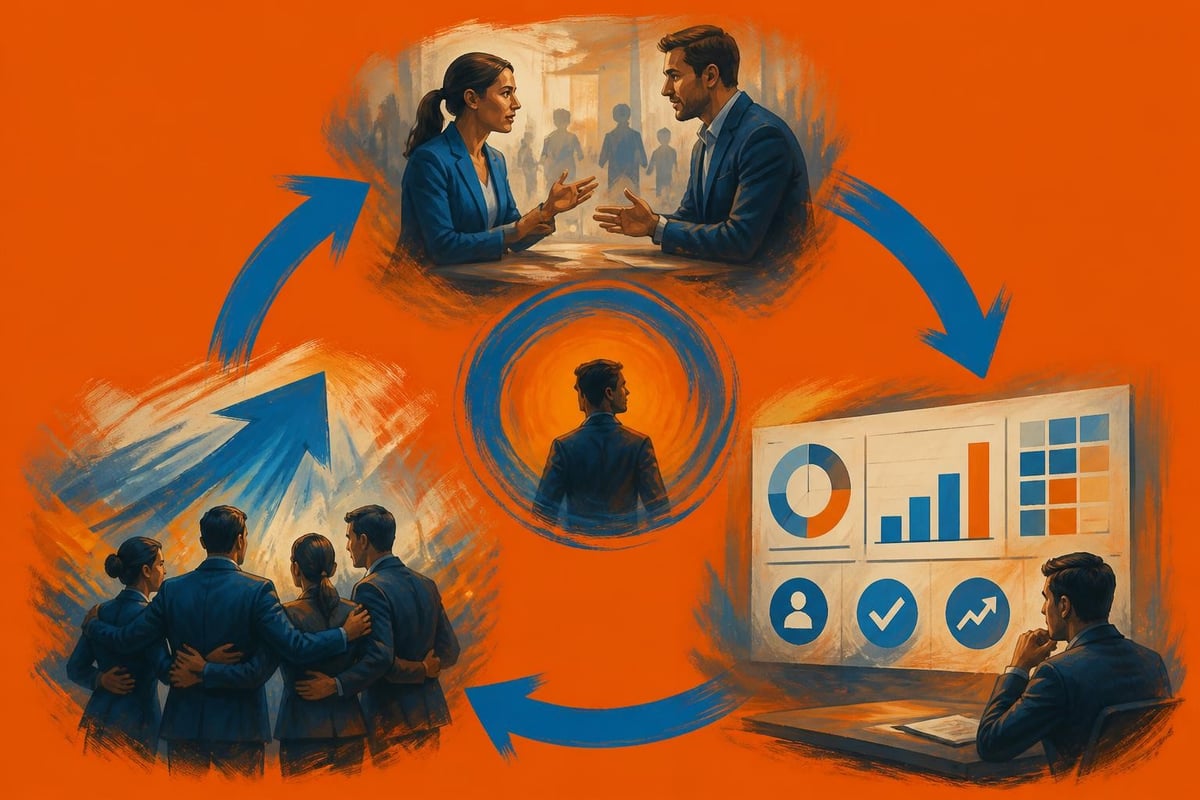
After years of observing what separates impactful coaching from credential theater, we built a model that ties transformation to business outcomes. Can coaching change your life in measurable ways? Only when structured correctly.
How We Approach Transformation Differently
- Month-to-month terms eliminate long-contract risk and force continuous value delivery
- Live meeting coaching embeds capability building at actual decision points
- KPI scorecards create visible proof of progress, not coaching fairy dust
- 360 leadership assessments diagnose real patterns before designing interventions
- Aligned incentive options share risk when feasible, proving confidence in outcomes
This approach challenges the credential-obsessed coaching model. We prioritize outcomes over certificates, experience over theory, and measurable results over feel-good sessions.
Real Transformation Patterns We Observe
Case Study: Mid-Market Manufacturing Company
Problem: Leadership team made slow decisions, missed quarterly targets, finger-pointed across departments.
Diagnosis: No operating cadence, unclear KPIs, managers solved problems instead of coaching teams.
Solution: Installed weekly KPI scorecards, coached live in leadership meetings, trained managers in coaching conversation frameworks.
Result: Decision cycle dropped from 3 weeks to 5 days. Quarterly target achievement rose from 60% to 88% over two quarters.
Lesson: Transformation happened because coaching occurred where decisions happened, not in isolated sessions.
Organizations exploring examples of psychological safety at work often miss this point. Safety emerges from practiced behavior, not workshop concepts. You build it by coaching real interactions in real meetings.
The AI Coaching Disruption Nobody Discusses
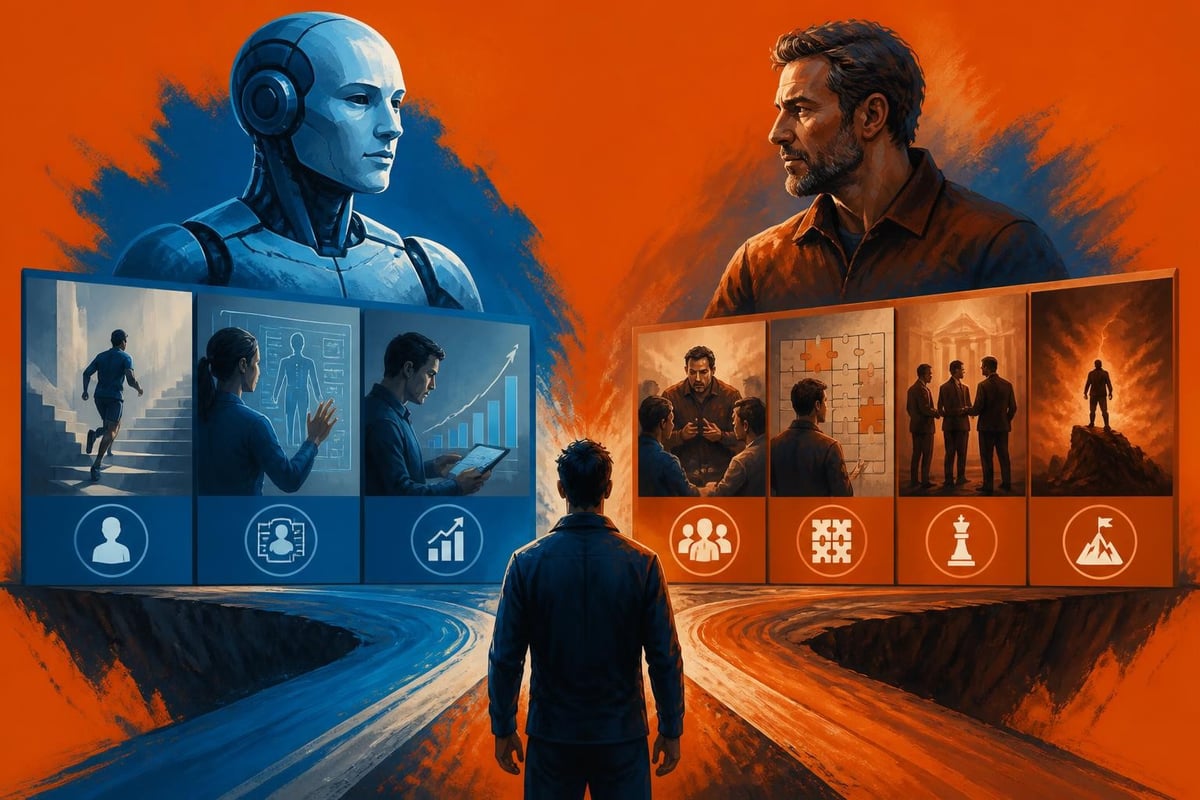
Can coaching change your life in 2026 when AI tools claim to deliver similar outcomes at 1/10th the cost? This question separates thoughtful buyers from credential worshippers. AI excels at pattern recognition, personalized content, and 24/7 availability. It fails spectacularly at reading room dynamics, diagnosing hidden team dysfunction, and coaching through organizational politics.
Where AI coaching adds value:
- Individual skill practice and feedback loops
- Content personalization at scale
- Progress tracking and pattern analysis
Where human expertise remains irreplaceable:
- Facilitating difficult team conversations
- Diagnosing systemic organizational dysfunction
- Navigating power dynamics and politics
- Building trust during disruption
Smart buyers combine both. They use AI tools for business coaching to handle routine development, freeing human coaches to address complex, high-stakes situations. This hybrid model accelerates transformation while controlling costs.
Why Certification Worship Blocks Transformation
The uncomfortable truth: certification obsession often predicts coaching failure. Can coaching change your life when your coach prioritizes credential display over business pattern recognition? Rarely.
Certifications signal:
- Completed coursework
- Passed assessments
- Paid membership fees
Certifications don't guarantee:
- Business acumen
- Industry expertise
- Proven track record
- Ability to drive measurable outcomes
| What Buyers Should Evaluate | Why It Matters More Than Credentials |
|---|---|
| Years coaching similar companies | Industry pattern recognition |
| Client outcome examples | Proof of capability |
| Willingness to tie to KPIs | Confidence in approach |
| Operating model flexibility | Adaptability to your context |
This perspective challenges industry orthodoxy, but evidence supports it. Client success stories consistently highlight business results and capability growth, not coach credentials.
The Month-to-Month Transformation Model
Can coaching change your life when you're locked into year-long contracts with vague deliverables? The question answers itself. Transformation requires continuous proof of value, forcing both coach and client toward measurable progress.
Why month-to-month terms accelerate change:
- Coaches stay focused on visible outcomes
- Companies maintain flexibility as priorities shift
- Trust builds through demonstrated results, not contractual obligations
- Poor fit relationships end quickly without penalty
This model terrifies coaches who rely on long contracts to compensate for weak outcomes. It empowers coaches confident in their ability to deliver measurable value monthly. The difference reveals everything about coaching effectiveness.
Building Transformation Into Operating Rhythm
Sustainable change requires embedding coaching into how work already happens. One-off workshops create temporary enthusiasm. Integrated operating cadence creates lasting capability.
Practical integration approach:
- Weekly KPI scorecard reviews where coaches facilitate problem-solving
- Monthly 360 feedback sessions tracking behavioral progress
- Quarterly strategy meetings coached live to improve decision quality
- Manager coaching conversations practiced during actual team interactions
Organizations seeking leadership development that sticks should question any model divorced from operational rhythm. Transformation happens through repetition in context, not inspiration in isolation.
FAQ
What evidence exists that coaching creates lasting change?
Research published by the National Center for Biotechnology Information shows coaching participants achieve goals at 70% higher rates than self-directed efforts, with behavioral changes persisting when tied to accountability systems and real-world application.
How long does it take for coaching to produce measurable results?
Visible progress typically emerges within 60-90 days when coaching ties to specific KPIs and occurs in operational contexts. Isolated monthly sessions without measurement often show minimal impact even after six months.
Can coaching work for entire teams or just individuals?
Team coaching often drives faster organizational transformation because it addresses systemic interaction patterns, not just individual behaviors. Companies see stronger ROI when coaching integrates across leadership teams rather than isolated executives.
What's the difference between life coaching and corporate coaching outcomes?
Life coaching typically focuses on personal goals and individual fulfillment. Corporate coaching ties directly to business metrics: decision velocity, team performance, retention rates, execution quality, and measurable KPI improvements.
Do coach certifications predict coaching effectiveness?
Certifications confirm completed coursework but don't guarantee business acumen, industry expertise, or proven track records. Buyers should evaluate years of relevant experience, client outcomes, and willingness to tie coaching to measurable results.
How does AI coaching compare to human coaching in 2026?
AI excels at personalized content, 24/7 availability, and progress tracking. Human coaches remain essential for team dynamics, organizational politics, systemic diagnosis, and high-stakes situations requiring trust and judgment.
Why do month-to-month coaching terms work better than long contracts?
Month-to-month arrangements force continuous value delivery, maintain client flexibility, and end poor-fit relationships quickly. They benefit confident coaches while exposing those relying on contracts to compensate for weak outcomes.
What makes coaching stick versus creating only temporary change?
Coaching sticks when it occurs in real operational contexts, ties to visible metrics, embeds into regular operating rhythm, and addresses systemic patterns rather than isolated individual behaviors.
How can companies measure coaching ROI?
Track specific metrics before and after coaching: decision cycle time, quarterly goal achievement rates, employee engagement scores, manager coaching behavior frequency, retention rates, and execution against strategic priorities.
Coaching transforms lives and organizations when structured around measurable outcomes, embedded in operational reality, and divorced from credential worship. The evidence is clear: real change requires coaches who work inside your business challenges, tie progress to KPIs, and prove value continuously. Noomii delivers exactly this approach for mid-market companies and Fortune 500 divisions seeking faster decisions, stronger execution, and visible ROI through practical corporate coaching that rolls up its sleeves and shares the risk.



Leave a Reply
Want to join the discussion?Feel free to contribute!