
Why Trust Matters More Than Ever in Leadership
When executives ask what separates high-performing teams from stagnant ones, the answer usually isn't strategy, technology, or even talent. It's trust. In 2026, as AI tools reshape work, hybrid models persist, and employee expectations evolve, why trust matters more than ever becomes the central question for leaders who want sustainable results rather than temporary fixes.
The Hard Evidence Behind Trust and Performance
Research consistently shows trust drives measurable business outcomes. PwC’s 2024 Trust Survey found that 93% of executives believe building and maintaining trust improves the bottom line. Yet the gap between belief and execution remains wide.
I've watched mid-market companies lose top performers not because of compensation, but because managers said one thing in meetings and did another in practice. That gap erodes trust faster than any market downturn.
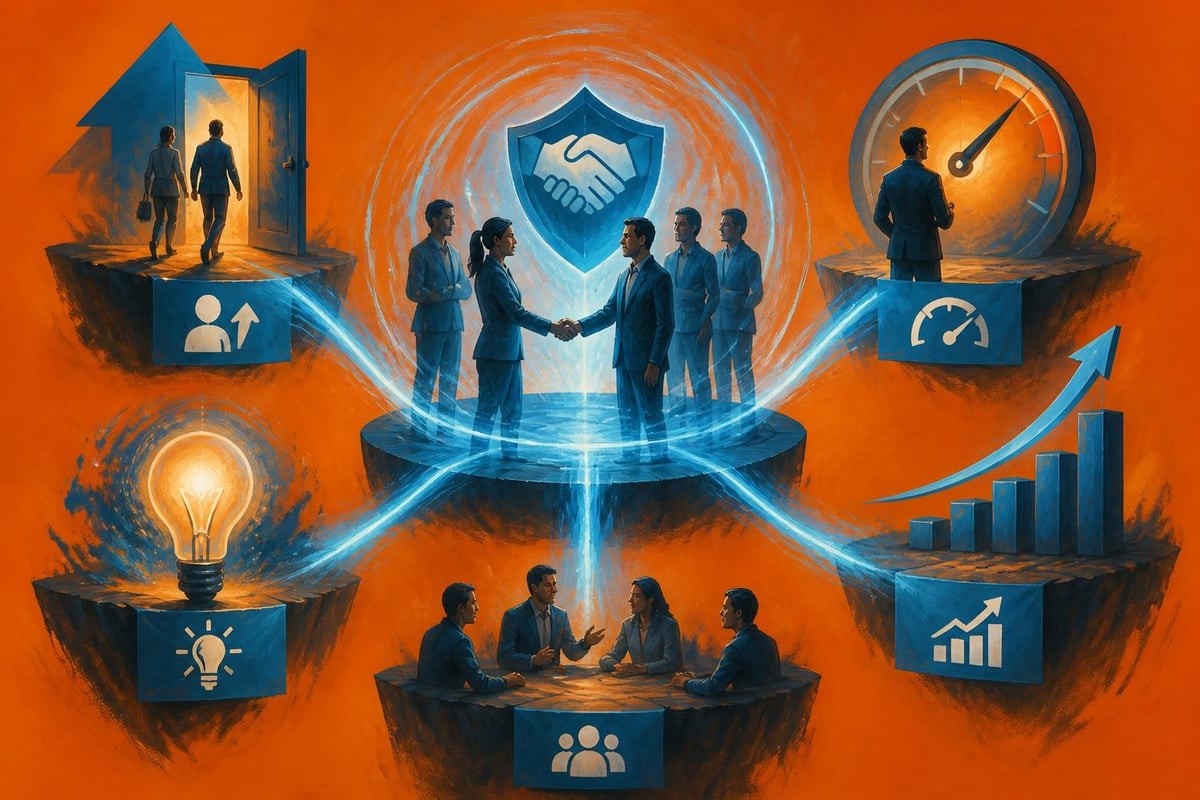
Trust influences these critical areas:
- Employee retention and turnover costs
- Speed of decision-making across departments
- Sales cycle length and customer loyalty
- Innovation and willingness to take calculated risks
- Cross-functional collaboration quality
Why Credentials Don't Build Trust
The coaching industry sells a dangerous myth: certifications create credibility. I've seen dozens of certified coaches struggle to land corporate clients while experienced practitioners with track records close deals consistently.
Buyers don't trust letters after your name. They trust evidence. When you claim to improve manager effectiveness, can you show before-and-after KPIs? When you promise better team dynamics, do you have retention data? This matters because effective leadership starts with trust, not credentials.
The shift toward results-based trust explains why month-to-month coaching engagements are replacing multi-year contracts. Companies want to see progress, not pay for promises.
What Breaks Trust in Corporate Coaching
Problem: A Fortune 500 division hired a leadership development firm promising transformational results through a proprietary assessment and six-month program.
Diagnosis: Three months in, managers reported the coaching felt generic, disconnected from daily operations, and focused more on theory than application. Attendance dropped. Engagement scores didn't move.
Solution: The division switched to executive coaching embedded in actual team meetings, with coaches addressing real-time challenges and tying interventions to existing KPIs.
Result: Within 90 days, manager one-on-ones increased by 40%, cross-department project delays decreased by 25%, and employee engagement scores rose 12 points.
Lesson: Trust erodes when coaching stays theoretical. It builds when coaches share risk by working inside your operations and measuring what matters.
The Five Trust Killers Leaders Miss
| Trust Killer | What It Looks Like | Real Cost |
|---|---|---|
| Inconsistent follow-through | Leaders commit in meetings but don't execute | Teams stop surfacing problems |
| Hidden agendas | Coaching tied to undisclosed performance management | Employees disengage completely |
| Credential worship | Hiring based on certifications instead of track record | Poor ROI, no behavior change |
| Generic solutions | One-size-fits-all programs ignoring company context | Wasted budget, cynical workforce |
| Long-term lock-in | Multi-year contracts with no exit flexibility | Trapped in underperforming relationships |
This pattern appears repeatedly. Organizations fixate on impressive credentials while ignoring the question that predicts success: has this coach delivered measurable results in situations like ours?
Why Trust Matters More Than Ever in 2026
Three forces make trust non-negotiable right now.
First, AI is changing employee expectations. Workers know automation can replace routine tasks, so they judge leaders on whether they create meaningful work and demonstrate care. Understanding how AI reshapes career coaching reveals that human judgment, empathy, and accountability matter more as technical tasks get automated.
Second, hybrid work requires trust at distance. When you can't see your team daily, you need systems that create accountability without micromanagement. That demands trust in both directions.
Third, talent retention trumps talent acquisition. Replacing a mid-level manager costs six to nine months of salary when you factor in lost productivity, recruiting, and training. High-trust cultures keep people longer.

The Trust-Building Framework That Actually Works
Most trust advice stays vague: "Be authentic." "Communicate clearly." "Show vulnerability." These platitudes don't help managers facing real challenges.
Here's what builds trust in practice:
-
Tie commitments to observable outcomes. Don't promise "better leadership." Promise specific behaviors tracked through 360 assessments and measured against engagement data.
-
Coach live in real situations. Theory sessions don't build trust. Helping a manager navigate a difficult conversation in the moment does.
-
Share risk through aligned incentives. If you're confident in your methods, offer month-to-month terms or performance-based fees.
-
Report progress against KPIs monthly. Trust grows when people see evidence, not anecdotes.
-
Address breakdowns immediately. When trust fractures, speed matters more than perfection in response.
Building psychological safety at work starts with leaders demonstrating these behaviors consistently, not occasionally.
Trust Through Leadership Disruption
Problem: A manufacturing company with 180 employees faced a leadership transition when their CEO retired and internal candidates competed for the role.
Diagnosis: Department heads formed alliances, information flow slowed, and mid-level managers felt caught between competing factions. Trust across silos collapsed.
Solution: We implemented weekly cross-functional standups with shared KPI visibility, coached leaders individually on transparent communication, and created escalation paths that bypassed political dynamics.
Result: The new CEO was selected within six weeks instead of the projected four months. Employee confidence scores recovered to pre-transition levels within 60 days.
Lesson: Leading through organizational disruption requires structural changes that make trust visible, not just aspirational workshops.
Comparing Trust Approaches
| Approach | Time to Impact | Sustainability | Measurability | Risk Level |
|---|---|---|---|---|
| Certification-based coaching | 6-12 months | Low (generic methods) | Difficult | High (long contracts) |
| Theory-focused programs | 3-6 months | Low (disconnected) | Survey-only | Medium |
| Embedded operational coaching | 4-8 weeks | High (integrated) | KPI-driven | Low (month-to-month) |
| One-time workshops | Minimal | Very low | None | Low (small investment) |
The data shows why trust matters more than ever: approaches that build it through evidence and shared risk outperform credential-heavy alternatives by every meaningful measure.
The Certification Trap and Trust
Why certified coaches still cannot get clients reveals an uncomfortable truth: buyers don't care about your training pedigree when they're trying to fix actual problems.
A coach with 500 hours of certification but no corporate experience struggles because companies trust track records over transcripts. Meanwhile, a former executive who's managed teams through market disruptions gets hired despite having zero formal coaching credentials.
This isn't anti-education. It's pro-evidence. Certifications might teach models and frameworks, but trust comes from demonstrating you've solved problems similar to what your client faces.

The shift explains why corporate coaching moved toward fractional engagements, trial periods, and outcome-based pricing. Organizations learned that long contracts with certified providers often delivered mediocre results because the relationship lacked accountability built on mutual risk.
FAQ
What makes trust more critical in 2026 than previous years?
AI automation, hybrid work models, and talent retention economics create environments where trust drives business outcomes more directly. Leaders can't rely on proximity or routine oversight, making trust-based accountability systems essential for performance.
How do you measure trust in a corporate coaching engagement?
Track observable behaviors: frequency of manager one-on-ones, speed of cross-department decisions, employee engagement scores, retention rates, and project execution velocity. Trust shows up in metrics, not sentiment alone.
Why do certified coaches struggle to build trust with corporate buyers?
Certifications demonstrate training completion, not results delivery. Buyers trust evidence of solving similar problems with measurable outcomes, which certifications don't provide. Experience trumps credentials in purchase decisions.
What's the fastest way to rebuild trust after it breaks down?
Address the breakdown immediately with specific acknowledgment, concrete corrective actions tied to observable outcomes, and transparent progress reporting. Speed and specificity matter more than perfect responses.
How does month-to-month coaching build more trust than long contracts?
Short-term agreements force coaches to deliver visible results continuously rather than relying on contractual lock-in. Clients stay because progress is clear, not because exit costs are high.
What role does psychological safety play in organizational trust?
Psychological safety enables the candid feedback loops that make coaching effective. Without it, people hide problems, coaching addresses symptoms instead of causes, and trust never develops.
Can trust exist without shared risk between coach and client?
Theoretically yes, practically no. When coaches take guaranteed fees regardless of outcomes, incentives misalign. Shared risk through performance elements or easy exit terms demonstrates commitment to results.
How do you maintain trust during leadership transitions?
Increase communication frequency, create transparent decision processes with visible criteria, establish cross-functional accountability systems, and coach leaders to follow through consistently on stated commitments.
What distinguishes trust-building from trust performance theater?
Real trust-building ties to measurable behavior changes and business outcomes tracked over time. Theater focuses on surveys, aspirational statements, and workshops without operational integration or KPI movement.
Trust drives retention, accelerates decisions, and determines whether your leadership investments deliver returns or just consume budget. When companies want coaching that builds trust through embedded work, clear KPIs, and shared risk rather than impressive credentials and lengthy contracts, Noomii connects them with practitioners who've delivered measurable results in similar environments. We work month-to-month because trust should be earned continuously, not assumed contractually.



Leave a Reply
Want to join the discussion?Feel free to contribute!