
Developing Leaders During Uncertainty: What Works
Most organizations approach developing leaders during uncertainty with the same playbook they use during stable times. That's the first mistake. When volatility hits, the qualities that matter shift from strategic vision to emotional regulation, from long-term planning to adaptive decision-making, and from confidence to humility. Leaders who thrive in stable environments often struggle when ambiguity replaces certainty, yet few organizations adjust their development approaches accordingly. The cost shows up in delayed decisions, deteriorating team morale, and departures of high-potential talent who lose faith in leadership's ability to navigate complexity.
Why Traditional Leadership Development Fails Under Pressure
Standard leadership programs focus on competencies that matter when conditions are predictable. They emphasize strategic thinking, communication skills, and inspirational vision. Those capabilities remain important, but they're insufficient when the path forward is unclear.
Research from IIMB Management Review reveals that emerging leaders manage uncertainties through distinct developmental processes that differ significantly from traditional executive training. The study found leaders who successfully navigate ambiguity demonstrate three specific behaviors that conventional programs rarely address:
- Tolerance for incomplete information when making consequential decisions
- Comfort with revising direction as new data emerges without appearing indecisive
- Ability to maintain team psychological safety while acknowledging they don't have all the answers
The gap between what programs teach and what uncertainty demands creates a dangerous vulnerability. Organizations invest heavily in developing leaders who perform well during calm periods but lack the behavioral flexibility required when disruption arrives.
The Behavioral Patterns That Predict Success
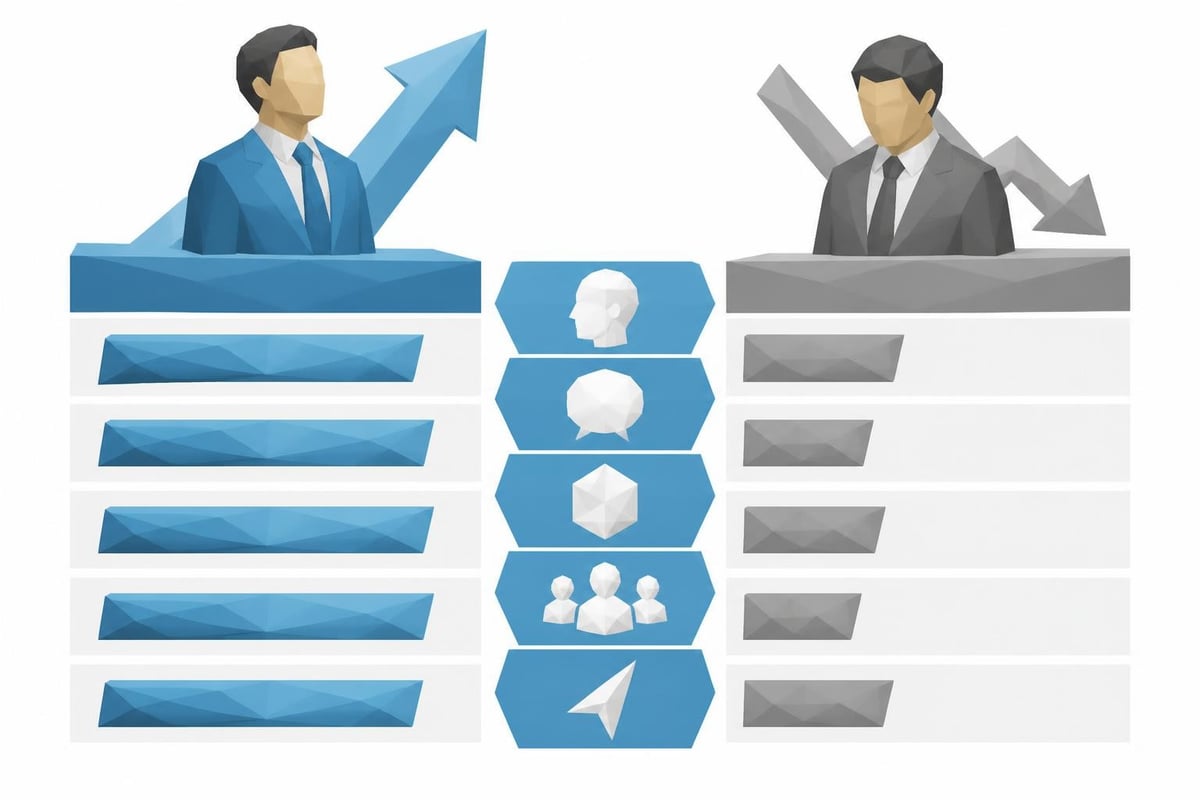
Over the past three years, we've analyzed leadership assessments from organizations navigating major uncertainty: restructuring, regulatory changes, market disruption, and rapid technology shifts. A clear pattern emerged. Leaders who maintained team performance and retention during turbulent periods scored differently on behavioral assessments than those who struggled.
High-performing leaders during uncertainty:
- Regulated their own anxiety before team meetings
- Communicated transparently about what they knew and didn't know
- Made reversible decisions quickly and irreversible decisions carefully
- Increased communication frequency while reducing meeting duration
- Sought input broadly but decided clearly
Struggling leaders during uncertainty:
- Projected false confidence to maintain control
- Delayed decisions waiting for perfect information
- Reduced communication to avoid difficult conversations
- Made unilateral decisions to demonstrate decisiveness
- Focused on preserving existing strategies despite changed conditions
The difference isn't personality or experience. It's specific, learnable behaviors that can be developed through targeted intervention. But most leadership programs don't diagnose these patterns or design interventions around them.
Evidence-Based Diagnostics That Reveal What Matters
Generic 360 assessments miss the behaviors that predict performance under pressure. Developing leaders during uncertainty requires precision diagnostics that identify specific gaps in stress response, cognitive flexibility, and interpersonal regulation.
The assessment process should measure three distinct capability areas:
| Capability Area | What to Measure | Why It Matters |
|---|---|---|
| Emotional Regulation | Anxiety response patterns, stress triggers, recovery time | Leaders who can't manage their own emotions create cascading anxiety in teams |
| Cognitive Flexibility | Willingness to update beliefs, comfort with ambiguity, decision revision patterns | Rigid thinking leads to poor choices when conditions change rapidly |
| Relational Trust | Communication frequency, transparency level, vulnerability comfort | Teams need honest updates, not false reassurance, to maintain confidence |
One government agency we worked with discovered through behavioral diagnostics that their senior leaders scored high on strategic thinking but low on emotional regulation under stress. Their leadership development had focused entirely on policy expertise and stakeholder management, ignoring the behavioral skills needed during budget crises and political transitions. When faced with uncertainty, these leaders became withdrawn, reduced communication, and made unilateral decisions that eroded team trust.
After implementing targeted interventions focused on stress response and transparent communication, the agency saw measurable improvements. Team engagement scores increased 23% within six months, and decision velocity improved without sacrificing quality. The key wasn't teaching these leaders more about policy. It was developing their capacity to function effectively when the policy environment became unpredictable.
Precision Matching Solves the Expertise Problem
Not every executive coach understands how to develop leaders for uncertainty. Many coaches excel at career transitions, communication skills, or strategic thinking. Fewer have specific expertise in behavioral adaptation under stress or leading through ambiguity.
This creates a matching problem most organizations miss. They assign coaches based on availability or general credentials rather than specialized capability. The result is well-intentioned coaching that doesn't address the specific behaviors leaders need during volatile periods.
Effective matching requires three criteria:
- Sector expertise in the leader's industry and organizational context
- Specialized skills in stress resilience, adaptive decision-making, or crisis leadership
- Proven track record developing leaders who successfully navigated uncertainty
A Fortune 500 manufacturing company learned this after their first attempt at developing leaders during uncertainty produced disappointing results. They engaged coaches with impressive credentials but no direct experience helping leaders manage supply chain disruption, workforce volatility, and technology transformation simultaneously. The coaching focused on general leadership principles rather than the specific behavioral adaptations their environment demanded.
When they switched to precision matching based on specialized expertise, outcomes changed dramatically. Leaders received coaching from practitioners who had guided others through similar complexity. The interventions became practical, contextual, and immediately applicable. Executive retention improved, and the organization successfully navigated a major restructuring without losing key talent.
What Specialized Coaching Actually Addresses
Developing leaders during uncertainty requires interventions that go beyond standard executive coaching topics. The focus shifts to behavioral patterns that surface specifically under stress.
Core intervention areas:
- Anxiety recognition and regulation before it affects team dynamics
- Decision-making frameworks for incomplete information scenarios
- Communication strategies that build trust without false certainty
- Team psychological safety maintenance during instability
- Personal resilience practices that prevent burnout
These aren't theoretical concepts. They're practical skills with observable behaviors and measurable outcomes. A leader either demonstrates the ability to regulate their stress response before meetings or they don't. They either communicate transparently about uncertainty or they project false confidence. These behaviors can be diagnosed, developed, and tracked.
Targeted Interventions That Change Behavior
Generic leadership development uses a standard curriculum applied broadly. That approach doesn't work for developing leaders during uncertainty because the specific behaviors that need development vary based on individual patterns and organizational context.
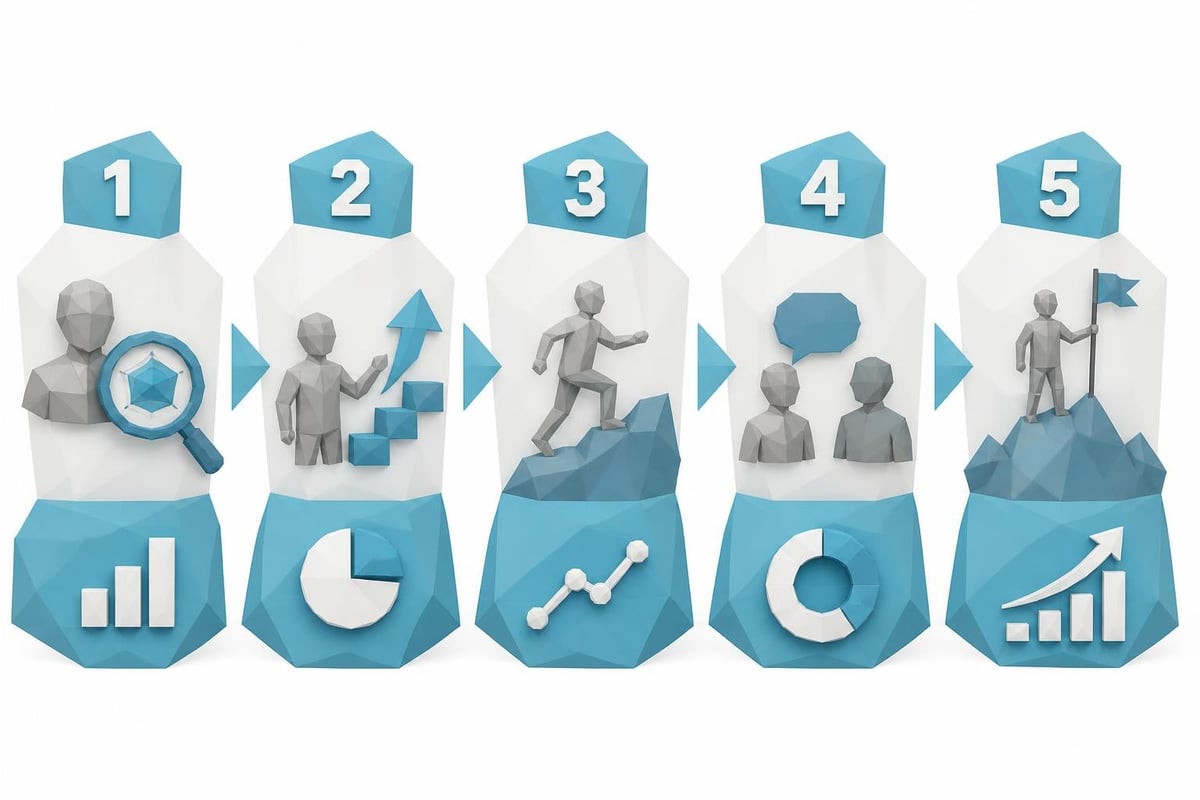
Effective interventions follow a diagnostic-driven model:
- Identify specific behavioral gaps through evidence-based assessment
- Design customized development plans targeting those exact patterns
- Practice new behaviors in low-stakes scenarios before high-stakes application
- Integrate feedback loops to reinforce positive changes
- Measure behavioral shifts through team observations and performance data
One technology company used this approach with a senior leader who struggled during a major platform migration. Diagnostics revealed he delayed decisions when faced with conflicting technical recommendations, created bottlenecks that frustrated his team, and experienced visible stress that undermined confidence.
The intervention didn't focus on technical skills. He had deep expertise. It addressed his decision-making paralysis under uncertainty and stress manifestation that affected team dynamics. Through targeted coaching, he developed a framework for making decisions with incomplete information and practices for regulating his stress response before team interactions.
Within eight weeks, his team reported significant improvements. Decision velocity increased, project momentum recovered, and team members felt more confident bringing forward problems rather than hiding them. The behavioral change created measurable organizational impact.
The Metrics That Demonstrate Real Impact
Most leadership development programs struggle to demonstrate ROI because they measure the wrong outcomes. Participant satisfaction, completion rates, and self-reported confidence don't predict whether leaders will actually perform better during uncertainty.
Meaningful metrics connect leadership behavior to organizational outcomes:
| Metric Category | What to Track | Expected Change |
|---|---|---|
| Team Performance | Project velocity, quality metrics, deadline achievement | Maintained or improved despite uncertainty |
| Team Engagement | Pulse survey scores, turnover rates, internal mobility | Higher scores, lower unplanned departures |
| Decision Quality | Decision revision rate, outcome accuracy, implementation success | Faster decisions without quality decline |
| Cultural Health | Psychological safety scores, communication frequency, conflict resolution time | Improved safety, increased transparency |
A financial services firm tracked these metrics during a major regulatory transition that created significant uncertainty across the organization. Leaders who completed targeted uncertainty development maintained team performance and engagement at pre-transition levels. Leaders who didn't participate saw team engagement drop 31% and experienced 18% higher turnover among high performers.
The data was clear. Developing leaders during uncertainty wasn't a nice-to-have cultural investment. It directly protected organizational capability and talent retention during a critical period. The program paid for itself through reduced turnover costs alone, not counting the performance preservation that enabled the organization to execute its regulatory response successfully.
Tracking Behavioral Change Over Time
Leadership development isn't an event. It's a sustained behavioral shift that takes time to solidify. Effective measurement tracks progress across defined intervals rather than assuming a single program creates permanent change.
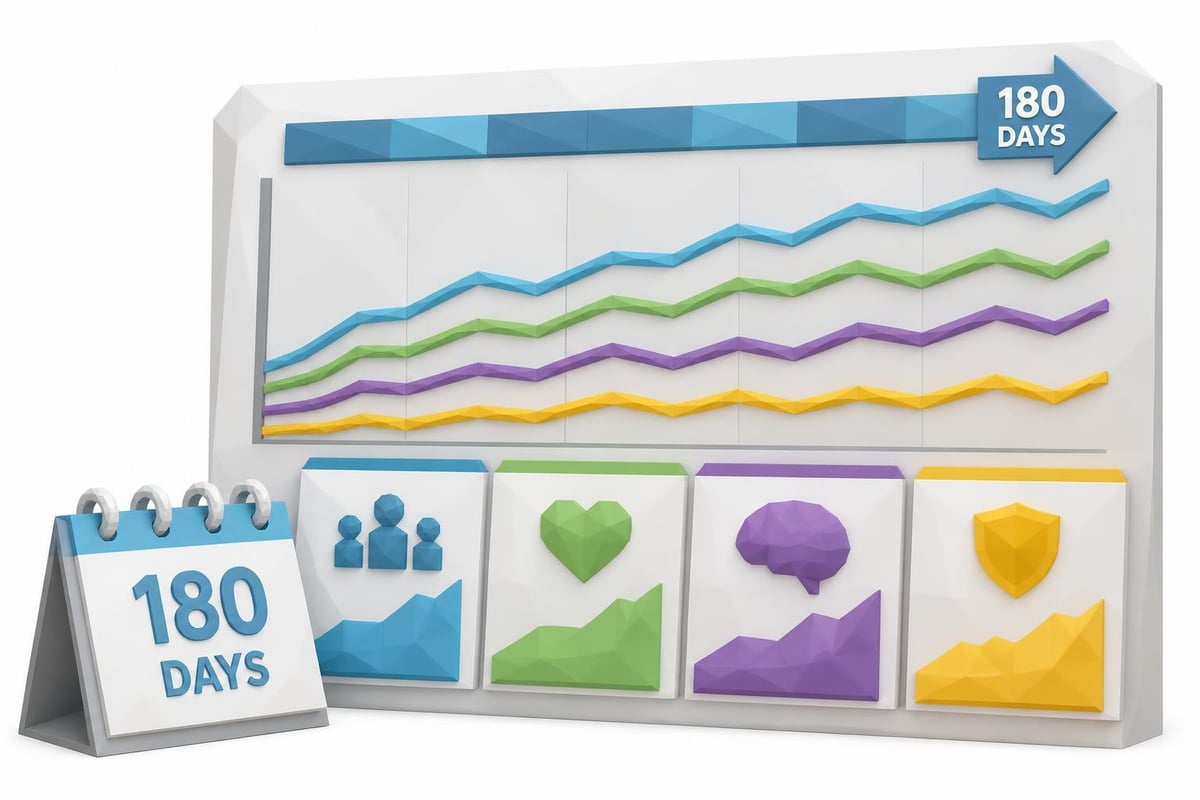
Measurement cadence that works:
- Baseline assessment before intervention begins
- 30-day check for initial behavior adoption
- 90-day evaluation for sustained pattern change
- 180-day confirmation for behavioral integration
- Annual review for continued development needs
This approach reveals whether leaders are actually changing behavior or simply demonstrating temporary compliance. It also identifies when leaders need additional support or when interventions aren't working and require adjustment.
One government agency discovered through 90-day tracking that initial behavioral improvements weren't sustaining because workplace conditions actively undermined the new patterns leaders were trying to adopt. The agency needed to address structural issues, not just individual development. Without sustained measurement, they would have assumed the program failed when the real problem was organizational friction working against positive change.
What Organizations Get Wrong About Timing
Most organizations wait too long to focus on developing leaders during uncertainty. They treat leadership development as a proactive investment during stable times and cut it during volatility to preserve resources. That's exactly backward.
The time to develop uncertainty capabilities is before crisis hits and during it, not after. Leaders can't effectively learn stress regulation while actively experiencing acute stress. They can't practice transparent communication about uncertainty when they're facing it for the first time with high stakes attached.
Organizations that succeed understand this timing principle. They build uncertainty capabilities during moderate volatility so leaders have practiced behaviors ready when major disruption arrives. They continue development during uncertainty rather than suspending it, recognizing that learning is most valuable when immediately applicable.
The Center for Creative Leadership emphasizes that developing skills to manage ambiguity and create alignment requires dedicated training solutions, not just experience. Waiting for uncertainty to arrive before developing these capabilities leaves leaders unprepared when they need these skills most.
Building Tolerance Before You Need It
Harvard Business Review research demonstrates that leaders can develop tolerance for uncertainty by anchoring in clear values and enduring priorities. This isn't something that happens naturally. It requires intentional practice and guided reflection.
Organizations should integrate uncertainty tolerance development into standard leadership programs rather than treating it as a separate crisis response capability. This includes:
- Scenario planning exercises that expose leaders to ambiguous situations
- Stress inoculation training that gradually increases pressure tolerance
- Reflection practices that help leaders identify their uncertainty triggers
- Peer learning groups where leaders share how they've navigated ambiguity
- Real-time application opportunities during moderate organizational changes
A manufacturing company implemented this approach by using minor operational disruptions as training opportunities. Rather than having senior leaders step in to resolve small crises, they coached mid-level leaders through the decision-making process, provided feedback on communication approach, and helped them reflect on their stress response patterns.
When a major supply chain disruption hit two years later, those mid-level leaders demonstrated significantly better performance than their peers who hadn't received that developmental experience. They made faster decisions, maintained team confidence, and adapted strategies as conditions evolved. The organization had built capability before it became critical.
Integration With Existing Development Frameworks
Developing leaders during uncertainty shouldn't replace your existing leadership framework. It should enhance it by adding capabilities most standard programs miss. The question is how to integrate uncertainty-specific development without creating a separate, disconnected initiative.
Effective integration follows three principles:
- Add uncertainty scenarios to existing case studies and simulations
- Incorporate stress response assessment into standard leadership evaluations
- Train existing coaches on uncertainty-specific intervention techniques
Organizations often create parallel programs that compete for time and resources rather than enhancing what already exists. That creates confusion and reduces effectiveness. Better to evolve your current approach than build something entirely separate.
One Fortune 500 retailer integrated uncertainty development by modifying their existing executive program. They kept the same structure, timeline, and format but changed the scenarios to reflect ambiguous situations rather than clear-cut decisions. They added stress response measurement to their assessment battery. They trained their coaching team on interventions specific to decision-making under uncertainty.
The result was a seamless evolution that preserved what worked while addressing a critical gap. Leaders experienced the development as an enhancement rather than another program competing for their attention. Adoption was high, and outcomes improved without requiring additional time investment from participants.
The Role of Psychological Safety During Volatility
Psychological safety becomes critical during uncertainty because leaders need honest input from teams to make good decisions with incomplete information. When people don't feel safe raising concerns, sharing bad news, or questioning assumptions, leaders make decisions based on filtered information that doesn't reflect reality.
Yet psychological safety often deteriorates during uncertain times because stress increases sensitivity to criticism and reduces tolerance for dissent. Leaders who normally welcome input become defensive when their decisions are questioned during high-stakes situations. This creates exactly the moment when they need honest feedback most but are least likely to receive it.
Developing leaders during uncertainty must explicitly address psychological safety preservation under stress. This requires teaching leaders to:
- Separate their stress response from their reaction to team input
- Actively invite dissenting opinions during decision processes
- Thank people for raising concerns rather than defending positions
- Acknowledge their own uncertainty rather than projecting false confidence
- Create explicit permission for team members to question approaches
A technology company discovered their psychological safety scores dropped 40% during a major platform transition despite having strong safety metrics during stable periods. Investigation revealed leaders were unconsciously punishing people who raised concerns by becoming visibly frustrated or dismissive. The leaders weren't aware they were doing this. The stress of uncertainty changed their behavior in ways that undermined team trust.
Targeted coaching helped these leaders recognize their stress-driven reactions and develop alternative response patterns. Psychological safety scores recovered within 12 weeks, and the platform transition success improved measurably as teams began surfacing problems earlier rather than hiding them until they became crises.
When Boards Need Different Capability Development
Boardroom leadership during uncertainty requires different capabilities than executive leadership. Board members provide oversight and governance rather than operational execution. During volatility, their role shifts from monitoring progress against strategic plans to helping executives navigate ambiguity and manage risk when plans become obsolete.
Most board development focuses on fiduciary responsibility, regulatory compliance, and strategic oversight. Those remain important, but boards also need development in:
- Adaptive governance when standard procedures don't fit unprecedented situations
- CEO support that provides challenge without undermining executive authority
- Risk tolerance calibration during periods when all options carry significant uncertainty
- Stakeholder communication about strategic changes and operational challenges
One government board faced criticism for decision delays during a major policy transition. Board members were accustomed to thorough analysis and deliberate consensus-building. When uncertainty demanded faster decisions with incomplete information, their standard approach created bottlenecks that frustrated agency leaders trying to respond to rapidly changing conditions.
Targeted board development focused on decision-making frameworks for high-uncertainty scenarios, communication approaches that built stakeholder confidence despite ambiguity, and governance processes that maintained oversight without slowing necessary adaptation. The board developed new capabilities that served them well not just during that transition but in subsequent periods of volatility.
FAQ
What makes developing leaders during uncertainty different from standard leadership development?
Developing leaders during uncertainty focuses on specific behavioral capabilities that matter when conditions are ambiguous and volatile: stress regulation, decision-making with incomplete information, transparent communication about unknowns, and maintaining team psychological safety under pressure. Standard leadership development emphasizes strategic thinking, vision setting, and communication skills that assume relatively stable conditions. The behavioral patterns that predict success differ significantly between stable and uncertain environments.
How long does it take to develop uncertainty leadership capabilities?
Initial behavioral change typically appears within 30 days of targeted intervention, but sustained pattern change requires 90 to 180 days of practice and reinforcement. Leaders need time to try new behaviors in real situations, receive feedback, adjust their approach, and integrate changes into automatic patterns. Organizations that expect immediate transformation usually see temporary compliance that doesn't persist once the intervention ends.
Can you develop these capabilities before uncertainty hits?
Yes, and that's the optimal approach. Leaders develop uncertainty tolerance most effectively when they're not experiencing acute stress. Moderate volatility provides excellent practice opportunities where stakes are meaningful but not catastrophic. Organizations should build these capabilities during stable times and moderate disruption so leaders have practiced behaviors ready when major uncertainty arrives.
What assessment tools actually measure uncertainty leadership capability?
Effective assessments measure behavioral patterns under stress rather than general leadership competencies. Look for tools that evaluate emotional regulation under pressure, cognitive flexibility when facing ambiguous information, decision-making approaches with incomplete data, and communication patterns during volatility. Generic 360 assessments and personality inventories miss the specific behaviors that predict performance during uncertainty.
How do you know if a coach has genuine uncertainty leadership expertise?
Ask about specific situations where they've coached leaders through major disruption, what behavioral interventions they used, and what measurable outcomes resulted. Coaches with genuine expertise will describe concrete behavioral patterns they addressed, specific techniques they employed, and observable changes in leader performance. General statements about resilience or change management without specific examples indicate surface-level understanding rather than deep capability.
Developing leaders during uncertainty requires precision diagnostics, specialized coaching expertise, and targeted behavioral interventions that standard programs don't provide. Organizations that wait until crisis hits to address these capabilities face unnecessary performance deterioration and talent loss that could be prevented. The Noomii Leadership Coaching Corporate Leadership Program delivers evidence-based assessment, expert coach matching, and measurable interventions specifically designed for leaders navigating complexity and ambiguity.



Leave a Reply
Want to join the discussion?Feel free to contribute!