

Most Coaching Schools Overpromise Outcomes
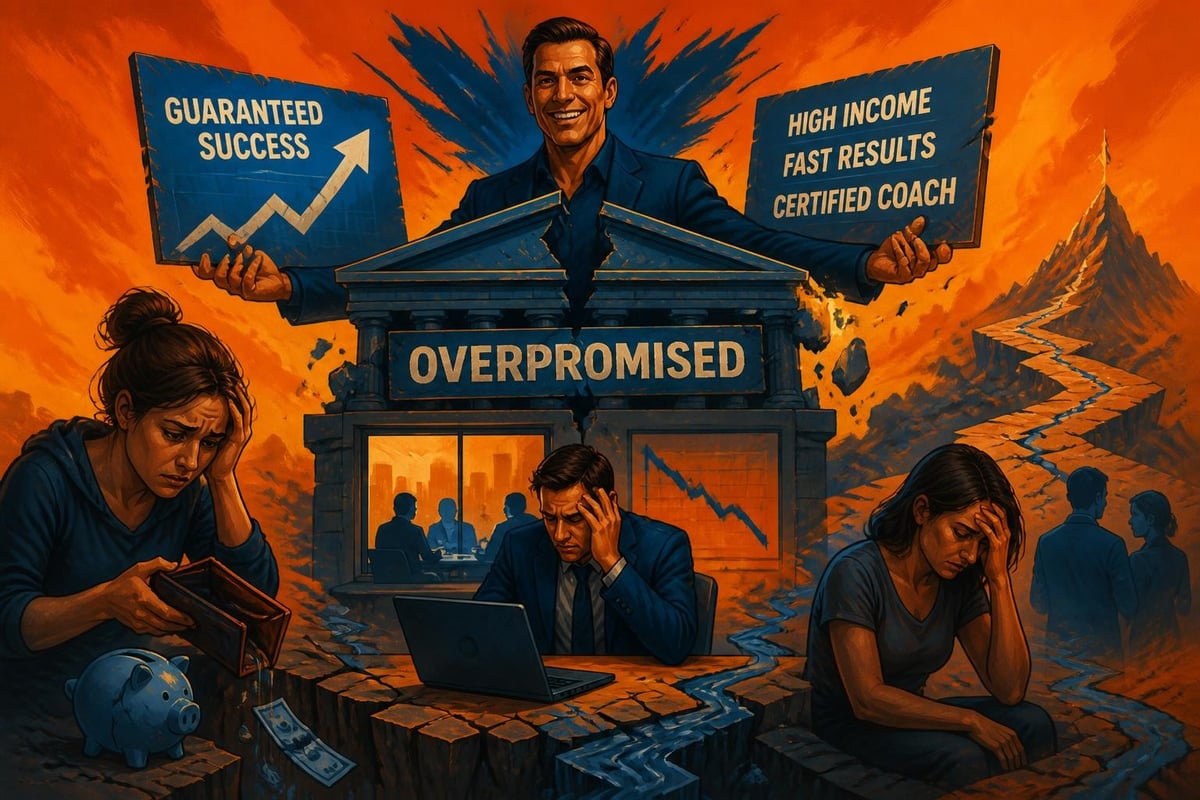
The coaching certification industry has perfected a playbook: promise transformation, charge premium tuition, issue credentials, then disappear when graduates struggle to build practices or deliver results. This pattern repeats across thousands of programs annually, leaving aspiring coaches buried in debt and corporate buyers questioning the value of certified practitioners who cannot demonstrate measurable outcomes. The reality? Most coaching schools overpromise outcomes by focusing on credentials over competence, theory over application, and marketing claims over evidence.
The Certification Promise Gap
Coaching schools routinely advertise six-figure incomes, guaranteed client transformation, and instant credibility through credential acquisition. The FTC has taken action against business coaching schemes that made false income promises, resulting in $1.9 million in settlements and permanent bans on offering coaching services.
Yet the pattern continues. Browse any coaching certification site and you will find testimonials from recent graduates earning $10,000 monthly, transforming Fortune 500 leaders, or building six-figure practices within months. These claims share three characteristics:
- No verification of actual client results or business outcomes
- Cherry-picked success stories representing less than 2% of graduates
- Conflation of certification completion with coaching competence
The gap between promise and reality creates two problems. First, it floods the market with certified coaches who cannot demonstrate expertise beyond passing exams. Second, it trains corporate buyers to distrust credentials altogether, pushing them toward business coaches for entrepreneurs who prioritize proven results over alphabet soup after their names.

What Schools Teach Versus What Clients Need
Most coaching schools overpromise outcomes because their curriculum prioritizes theory, models, and internal community validation over practical application in real business contexts. A typical 60-hour certification program allocates:
| Training Component | Hours Allocated | Business Application |
|---|---|---|
| Coaching models and theory | 25-30 | Low |
| Practice coaching with peers | 15-20 | Medium |
| Ethics and credentialing | 8-10 | Low |
| Business building | 5-8 | Medium |
| Live client work with supervision | 0-2 | High |
The problem is obvious. Schools teach frameworks, not problem diagnosis. They certify practitioners who can explain GROW model steps but cannot identify why a leadership team misses quarterly targets or why retention drops after performance reviews.
Corporate buyers purchasing executive coaching do not care whether their coach completed 100 or 500 hours of training. They want faster decisions, managers who coach their teams, and measurable improvements in engagement scores. When coaching schools promise transformation but deliver process facilitators who cannot tie interventions to business KPIs, the outcome gap becomes inevitable.
The Income Illusion
Warnings about misleading income claims from the Better Business Bureau highlight how coaching schools exploit aspirational marketing. The typical pitch shows a graduate working from beaches, choosing their hours, and earning $15,000 monthly after six months.
The reality most graduates experience:
- Months of unpaid marketing and business development
- Initial clients paying $100-200 per session, not $500-1,000
- Difficulty articulating value beyond "I am certified"
- Inability to demonstrate measurable client outcomes
- Realization that certification does not equal expertise
Schools profit whether graduates succeed or fail. Their business model depends on enrollment volume, not graduate outcomes. This creates zero incentive to accurately represent income timelines, client acquisition difficulty, or the competence gap between certification and market-ready practice.
The Regulatory Void Enabling Overpromising
Unlike professions with licensing boards and outcome accountability, coaching operates in a regulatory void. The FTC issued warnings to over 1,100 companies about deceptive earnings claims, yet enforcement remains sporadic and penalties rarely match the scale of misleading advertising.
Other countries recognize this problem. The Indian government introduced guidelines prohibiting false claims like guaranteed job placements and 100% selection rates by coaching centers. The U.K.'s Advertising Standards Authority investigated money-making courses, emphasizing substantiated and realistic earnings claims.
American coaching schools face minimal consequences for overpromising. They hide behind disclaimers, attribute graduate failures to insufficient effort, and continue marketing transformation guarantees to the next cohort.

What Actually Predicts Coaching Outcomes
After observing thousands of coaching engagements, the factors that predict measurable client outcomes have nothing to do with certification hours or credential letters. They include:
Domain expertise in the client's industry or function
A coach who has built sales teams, managed P&L, or led turnarounds brings pattern recognition that theory cannot replicate.
Ability to diagnose root causes, not symptoms
Most performance issues stem from unclear priorities, accountability gaps, or misaligned incentives. Coaches who identify these patterns quickly deliver faster results than those applying generic frameworks.
Willingness to tie interventions to measurable KPIs
Engagements structured around retention rates, decision velocity, or revenue targets create clarity. Vague goals like "leadership development" enable both parties to avoid accountability.
Experience coaching in live business contexts
Observing leadership teams in actual meetings, reviewing scorecards, and providing real-time feedback builds competence faster than peer practice sessions in certification programs.
Corporate buyers increasingly recognize these patterns. When researching options through platforms like Noomii, they filter for demonstrated experience over certification status. The question shifts from "What credentials do you have?" to "What results have you delivered for clients similar to us?"
The Cost of Overpromising
When most coaching schools overpromise outcomes, three groups pay the price:
| Stakeholder | Impact |
|---|---|
| Aspiring coaches | Debt, credential dependency, difficulty building sustainable practices |
| Corporate buyers | Wasted budgets on ineffective engagements, distrust of certified coaches |
| Clients | Missed opportunities for genuine performance improvement and business results |
The pattern also creates market saturation. With minimal barriers to entry and schools graduating thousands annually, differentiation becomes impossible for coaches who only have credentials to offer. This commoditization drives down rates, increases competition for entry-level engagements, and makes it harder for experienced practitioners to command fees reflecting their expertise.
Choosing Evidence Over Marketing
Smart buyers and serious practitioners apply the same standard: outcomes over credentials. Before engaging a coach or enrolling in a program, ask:
- Can you share specific client results with quantified improvements?
- What percentage of your graduates build sustainable full-time practices within two years?
- How do you measure coaching effectiveness beyond client satisfaction surveys?
- What happens if results do not materialize within agreed timeframes?
Programs and practitioners who cannot answer these questions with specifics default to credential worship and vague transformation promises. Those who can demonstrate measurable outcomes, share case studies with actual business metrics, and tie their work to client KPIs operate in a different market entirely.
The shift toward evidence-based coaching aligns with broader trends in psychological safety at work and outcome-driven leadership development. Organizations want coaches who roll up their sleeves, participate in real business challenges, and share accountability for results. Certification alone signals neither capability nor commitment to measurable impact.
Frequently Asked Questions
Why do coaching schools continue to overpromise outcomes?
Their business model depends on enrollment volume, not graduate success. Schools profit from tuition regardless of whether graduates build sustainable practices or deliver client results, creating zero incentive for accurate income claims or outcome transparency.
Are coaching certifications worthless?
Certifications demonstrate commitment to professional development and provide foundational frameworks, but they do not guarantee coaching competence or business success. Domain expertise, client results, and diagnostic ability matter more than credential hours.
How can I identify coaching schools that overpromise?
Look for unsubstantiated income claims, testimonials without verified outcomes, guarantees of client transformation, and curriculum focused on theory over supervised client work. Schools that refuse to share graduate outcome data or employment statistics typically overpromise.
What regulations protect consumers from misleading coaching claims?
The FTC prohibits deceptive earnings claims and has taken action against coaching schemes making false income promises. However, enforcement remains limited and many schools operate in regulatory gray areas by using disclaimers and attribution tactics.
Do corporate buyers care about coaching certifications?
Increasingly, no. Mid-market companies and Fortune 500 divisions prioritize demonstrated results, industry expertise, and measurable KPIs over certification status. Credentials may open initial conversations but outcomes determine engagement continuation.
What percentage of certified coaches build full-time practices?
Most certification programs do not track or publish this data. Independent estimates suggest 10-15% of graduates build sustainable full-time coaching practices within two years, with most supplementing through other income sources.
How much should executive coaching cost?
Rates vary based on coach expertise, engagement scope, and client size. Expect $250-500 per hour for experienced practitioners or $2,000-10,000 monthly for retainer-based work. Understanding executive coaching cost helps buyers evaluate value beyond hourly rates.
Can I take legal action against a coaching school that made false promises?
Yes. Consumers can pursue legal recourse for fraudulent coaching programs that make false promises about income, job placement, or guaranteed results. Documentation of specific claims and damages strengthens cases.
What alternatives exist to traditional coaching certification?
Apprenticeships with experienced practitioners, industry-specific training in leadership or sales, supervised client work, and outcome-based learning provide practical alternatives. Some coaches build expertise through corporate roles before transitioning to independent practice.
Most coaching schools overpromise outcomes because their business model rewards enrollment over graduate success, creating a market flooded with certified practitioners who cannot demonstrate measurable client results. Corporate buyers increasingly recognize that credentials alone do not predict coaching effectiveness, shifting focus to evidence-based outcomes and business impact. Noomii connects mid-market companies with coaches who prioritize measurable KPIs, live engagement in your business context, and month-to-month accountability, ensuring you invest in results rather than credentials.



Leave a Reply
Want to join the discussion?Feel free to contribute!