

Executive Strategy and Influence Training in Dundee 2026
Dundee's business landscape demands leadership excellence that extends beyond traditional management approaches. Executive strategy and influence training in Dundee has evolved into a critical investment for organizations seeking measurable improvements in stakeholder engagement, decision-making authority, and strategic impact. The Scottish city's growing corporate sector, ranging from life sciences to digital technology firms, requires executives who master both strategic thinking and the nuanced art of organizational influence. This comprehensive examination reveals how evidence-based training programs transform leadership capabilities while delivering quantifiable returns for organizations operating in competitive markets.
The Strategic Imperative for Influence Training
Modern executives face unprecedented complexity in stakeholder management, cross-functional alignment, and strategic execution. Executive strategy and influence training in Dundee addresses these challenges through structured interventions that build demonstrable competencies.
Leadership influence extends far beyond positional authority. Research demonstrates that executives who develop strategic influence capabilities achieve 34% higher team engagement scores and deliver measurable improvements in project success rates. These outcomes stem from mastering persuasion frameworks, stakeholder mapping techniques, and communication strategies that resonate across organizational hierarchies.
The Skills Office Network supports organizations in developing comprehensive training frameworks that meet compliance standards while building practical leadership capabilities. Their expertise in quality assurance ensures training initiatives align with regulatory requirements and organizational objectives.
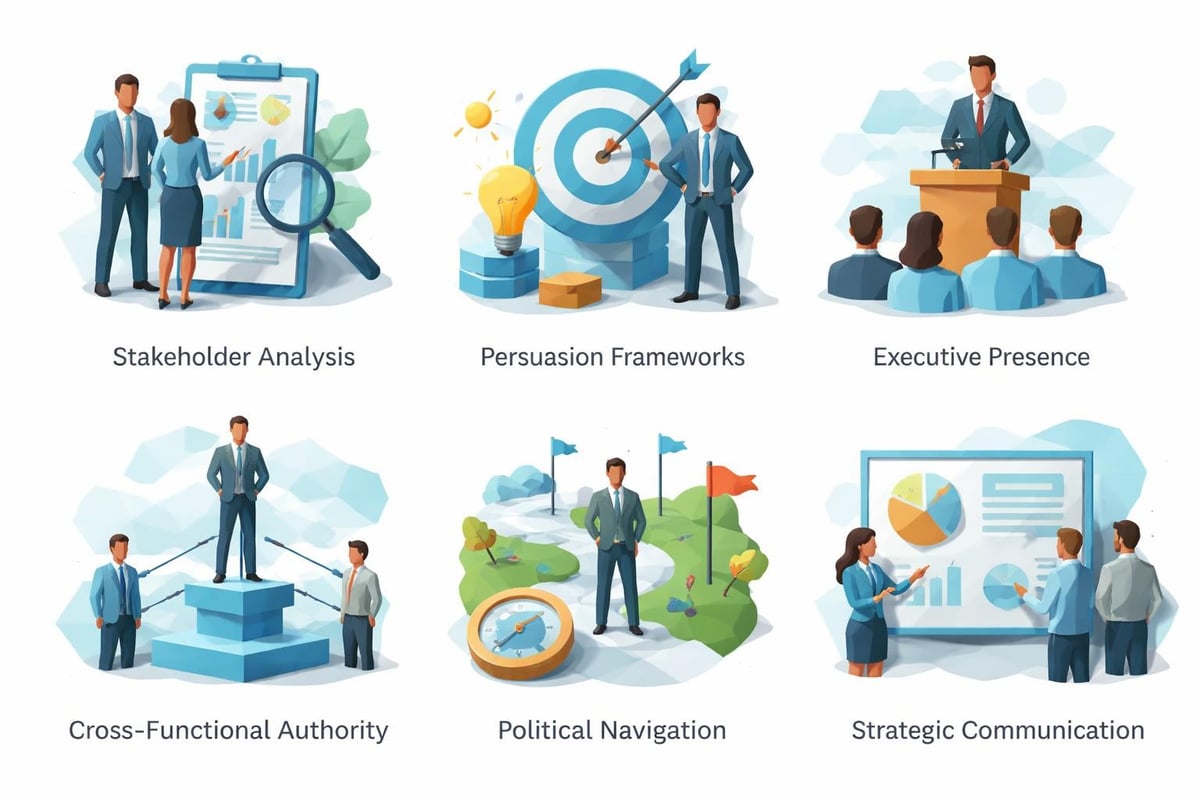
Core competencies developed through influence training include:
- Strategic stakeholder analysis and engagement planning
- Evidence-based persuasion and negotiation frameworks
- Executive presence development and authoritative communication
- Cross-functional influence without direct authority
- Political navigation and organizational dynamics mastery
- Data-driven decision advocacy and strategic storytelling
Programs like those offered through Cambridge Judge Business School’s executive presence and leadership for influence demonstrate how structured curricula build these capabilities systematically.
Measuring Training Impact
Organizations investing in executive strategy and influence training in Dundee require clear metrics that justify program expenditure. Effective measurement frameworks track behavioral changes, stakeholder feedback, and business outcomes.
| Metric Category | Key Performance Indicators | Measurement Frequency |
|---|---|---|
| Behavioral Competency | Stakeholder engagement scores, communication effectiveness ratings | Quarterly |
| Business Outcomes | Project approval rates, cross-functional collaboration metrics | Bi-annually |
| Strategic Impact | Decision velocity, strategic initiative success rates | Annually |
| Organizational Influence | Peer influence scores, leadership brand strength | Semi-annually |
Leadership coaching services integrate these measurement frameworks to demonstrate tangible value. Data collection begins with baseline assessments, continues through intervention periods, and extends twelve months post-training to capture sustained behavioral change.
Forward-thinking organizations recognize that influence training delivers compounding returns. Executives who master strategic influence create multiplier effects throughout their teams, establishing behavioral norms that enhance organizational effectiveness across departments.
Dundee's Unique Leadership Development Landscape
Dundee presents distinctive characteristics that shape executive development needs. The city's concentration of biomedical research institutions, gaming industry leaders, and renewable energy companies creates demand for executives who navigate technical complexity while driving strategic alignment.
Local organizations increasingly recognize that generic leadership programs fail to address sector-specific influence challenges. Executive strategy and influence training in Dundee must account for stakeholder ecosystems unique to Scotland's regulatory environment, funding landscapes, and collaborative research models.
The Andrew J. Pyle platform provides valuable resources for executives seeking to understand how artificial intelligence reshapes strategic decision-making and influence patterns in modern organizations. AI-driven insights help leaders identify influence opportunities and optimize stakeholder engagement strategies.
Industry-Specific Training Applications
Different sectors require tailored influence approaches. Life sciences executives navigate regulatory stakeholders, research collaborators, and commercialization partners. Technology leaders influence investment committees, development teams, and market ecosystems. Understanding these distinctions proves essential for training effectiveness.
Life Sciences Sector:
Executive strategy and influence training emphasizes regulatory communication, research partnership development, and translational research advocacy. Leaders learn to influence funding decisions, navigate intellectual property discussions, and build collaborative frameworks across academic and commercial boundaries.
Technology and Digital Innovation:
Training focuses on investor relations, technical team alignment, and market positioning influence. Executives develop capabilities in articulating technical value to non-technical stakeholders, securing development resources, and positioning innovations within competitive landscapes.
Energy and Sustainability:
Influence training addresses policy advocacy, community stakeholder engagement, and regulatory navigation. Leaders master communicating complex environmental and economic impacts while building coalitions across public and private sector interests.
Programs through Wharton Executive Education on executive influence provide frameworks applicable across these sectors while requiring customization for specific organizational contexts.
Evidence-Based Training Methodologies
Effective executive strategy and influence training in Dundee employs validated methodologies that produce measurable behavioral change. The distinction between impactful programs and superficial interventions lies in pedagogical rigor and practical application frameworks.
Behavioral science research identifies specific mechanisms that drive influence capability development. Training programs incorporating deliberate practice, real-time feedback, and contextual application achieve superior outcomes compared to traditional lecture-based approaches.
The Precision Matching Advantage
Generic training cohorts dilute effectiveness by failing to account for individual leadership contexts, developmental readiness, and specific influence challenges. Precision matching pairs executives with coaches and training methodologies aligned to their unique requirements.
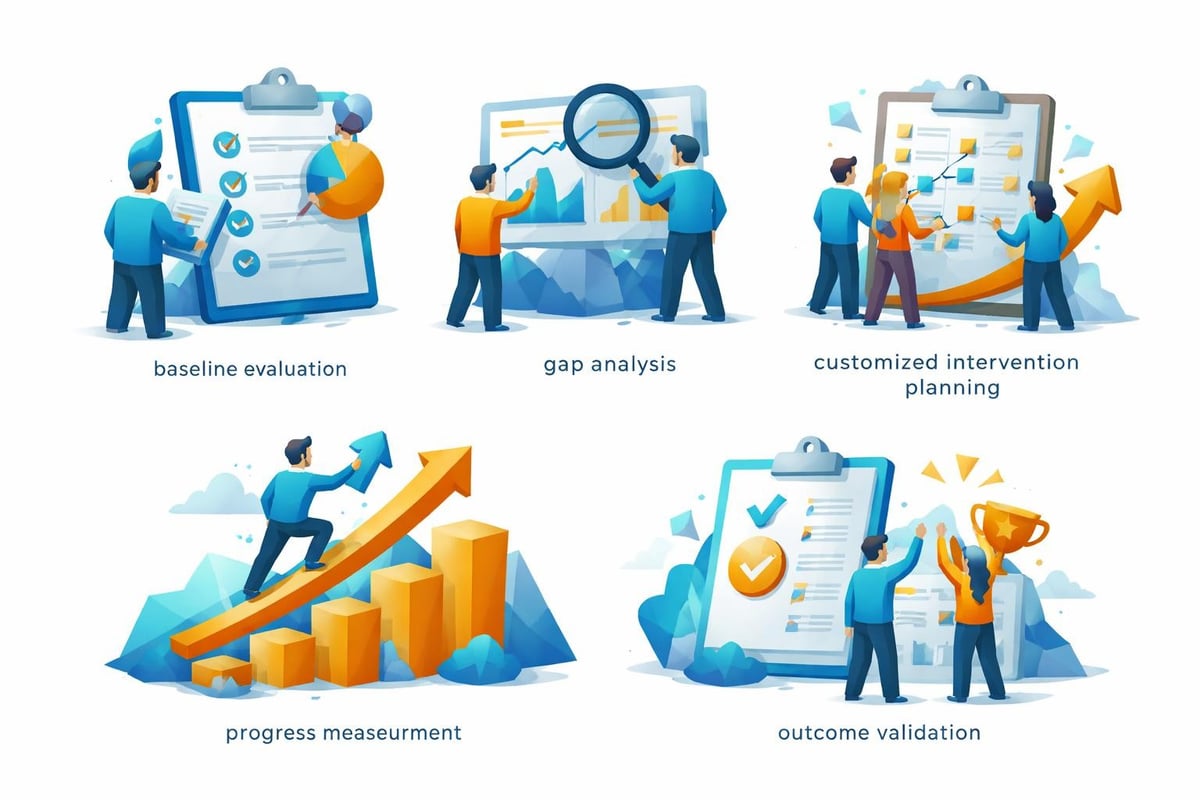
This approach examines executive baseline competencies, organizational influence dynamics, stakeholder complexity, and specific development goals. Executive coaching for C-suite professionals demonstrates how personalized development accelerates capability building compared to standardized programs.
Assessment tools identify specific influence gaps:
- Strategic Thinking Assessment – Evaluates ability to connect tactical actions with organizational strategy
- Stakeholder Intelligence Quotient – Measures stakeholder mapping sophistication and engagement effectiveness
- Communication Impact Analysis – Quantifies message clarity, persuasiveness, and audience adaptation
- Political Acuity Evaluation – Assesses organizational dynamics navigation and coalition building capability
- Executive Presence Inventory – Measures confidence projection, credibility establishment, and authority demonstration
Data from these assessments informs customized training pathways that address specific developmental priorities rather than applying one-size-fits-all curricula.
Neuroscience-Informed Practice Design
Modern executive strategy and influence training in Dundee incorporates neuroscience research on behavioral change, persuasion processing, and habit formation. Understanding how the brain processes influence attempts and forms new behavioral patterns enhances training effectiveness.
Spaced repetition techniques ensure skill retention beyond initial training interventions. Research demonstrates that executives participating in distributed practice sessions retain 58% more content six months post-training compared to concentrated workshop formats.
Contextual learning environments that simulate actual influence scenarios activate neural pathways more effectively than abstract discussions. Role-playing stakeholder negotiations, practicing difficult conversations, and rehearsing strategic presentations build neural connections that support real-world performance.
Building Sustainable Influence Capabilities
Short-term training interventions produce temporary skill improvements that decay without reinforcement systems. Sustainable executive development requires ongoing practice structures, peer accountability, and environmental supports.
Organizations implementing executive strategy and influence training in Dundee must design ecosystems that support continuous capability building. This includes establishing peer coaching networks, creating practice opportunities, and reinforcing desired behaviors through recognition systems.
Key ecosystem components:
- Monthly peer coaching circles for skill reinforcement
- Quarterly influence challenges with executive sponsorship
- Real-time feedback systems during strategic initiatives
- Mentorship pairings with high-influence executives
- Digital learning platforms providing on-demand resources
Research from FIU’s executive presence and influence program confirms that ongoing reinforcement systems increase training ROI by 340% compared to standalone interventions.
The Role of Organizational Culture
Training effectiveness correlates directly with organizational culture alignment. Companies that value transparent communication, reward collaborative influence, and model strategic thinking from senior leadership achieve superior training outcomes.
Addressing toxic leadership patterns becomes essential before implementing influence training. Executives developing influence capabilities within dysfunctional cultures face contradictory signals that undermine skill application.
Cultural assessment precedes effective training design. Organizations must evaluate whether their environments support the influence behaviors training aims to develop. This includes examining decision-making processes, meeting norms, communication patterns, and reward systems.
Strategic Implementation Frameworks
Deploying executive strategy and influence training in Dundee requires thoughtful implementation planning that sequences interventions, manages stakeholder expectations, and builds organizational readiness.
Successful implementations follow structured phases:
| Implementation Phase | Duration | Key Activities | Success Metrics |
|---|---|---|---|
| Assessment & Design | 4-6 weeks | Stakeholder interviews, competency assessment, curriculum customization | Training plan approval, stakeholder alignment |
| Pilot Program | 8-12 weeks | Small cohort training, feedback collection, methodology refinement | Participant satisfaction, initial skill gains |
| Scaled Deployment | 6-12 months | Full executive population training, peer learning networks, coaching support | Competency improvements, behavioral changes |
| Sustainment | Ongoing | Refresher sessions, advanced modules, community of practice | Long-term retention, business impact metrics |
The GLOMACS executive influence and strategic stakeholder leadership course provides structured frameworks that can be adapted for organizational-specific implementation plans.
Governance and Compliance Considerations
Organizations subject to regulatory oversight or public accountability standards require training programs that meet compliance requirements while building practical capabilities. Executive strategy and influence training in Dundee must align with governance frameworks specific to regulated industries.
Documentation standards, assessment validation, and outcome reporting follow regulatory requirements applicable to professional development investments. This proves particularly relevant for public sector organizations, healthcare institutions, and financial services firms operating in Dundee's business ecosystem.
Compliance-aligned training includes:
- Documented learning objectives tied to competency frameworks
- Validated assessment instruments with established reliability
- Transparent evaluation criteria and progression standards
- Audit trails demonstrating training completion and skill development
- Alignment with professional development requirements
Executive coaching packages designed for regulated industries incorporate these governance elements while maintaining development effectiveness.

Return on Investment Calculation
Finance leaders and boards require clear ROI justification for executive strategy and influence training in Dundee investments. Quantifying returns requires tracking both direct financial impacts and indirect organizational benefits.
Direct financial impacts include:
- Reduced project failure rates due to improved stakeholder alignment
- Faster decision cycles resulting from enhanced executive influence
- Increased strategic initiative success rates
- Higher talent retention among high-potential leaders
- Reduced conflict resolution costs
Indirect organizational benefits encompass:
- Enhanced cross-functional collaboration effectiveness
- Improved organizational agility and strategic responsiveness
- Stronger leadership pipeline and succession readiness
- Elevated employer brand and talent attraction capability
- Increased innovation adoption rates
Conservative ROI calculations focus exclusively on quantifiable impacts. Organizations tracking project success rates before and after training interventions document average improvements of 23-31% in strategic initiative outcomes. When these projects represent multi-million pound investments, influence training ROI becomes compelling.
Cost Structure Analysis
Understanding executive strategy and influence training in Dundee cost structures enables effective budgeting and vendor comparison. Pricing models vary significantly based on customization depth, delivery format, and measurement sophistication.
Typical cost components include initial assessment fees, curriculum design expenses, facilitation costs, coaching support, measurement systems, and ongoing reinforcement activities. Organizations should evaluate total program costs rather than per-participant training fees to ensure comprehensive budget planning.
Understanding executive coaching costs provides frameworks for evaluating different investment levels and expected outcome differentials. Higher investment programs incorporating personalized coaching, sophisticated assessments, and extended reinforcement periods deliver superior outcomes justifying premium pricing.
Future Trends Shaping Influence Development
Executive strategy and influence training in Dundee continues evolving as organizational complexity increases and stakeholder ecosystems become more diverse. Emerging trends reshape how organizations approach influence capability development.
Artificial intelligence integration transforms influence training through personalized learning pathways, real-time performance feedback, and simulation-based practice environments. AI-powered platforms analyze communication patterns, identify influence opportunities, and recommend strategic intervention approaches tailored to specific stakeholder profiles.
Virtual reality applications create immersive practice environments where executives rehearse high-stakes influence scenarios without real-world consequences. VR-based stakeholder simulations build muscle memory for challenging conversations, negotiation tactics, and executive presence projection.
Neurofeedback technologies provide objective data on stress responses, confidence levels, and emotional regulation during influence attempts. Biometric monitoring helps executives understand physiological patterns that undermine influence effectiveness and develop self-regulation strategies.
Microlearning architectures deliver just-in-time influence strategies immediately before critical stakeholder interactions. Mobile-accessible content provides quick refreshers on persuasion frameworks, stakeholder analysis templates, and communication tactics precisely when executives need them.
These technological advances complement rather than replace human coaching relationships. The most effective executive strategy and influence training in Dundee programs blend technological innovation with expert guidance, peer learning, and real-world application.
Organizations exploring how AI impacts coaching effectiveness gain insights into optimal technology-human coaching integration models that maximize developmental impact while maintaining the relational depth essential for behavioral transformation.
Selecting the Right Training Partner
Organizations evaluating executive strategy and influence training in Dundee providers must assess multiple capability dimensions beyond marketing claims and pricing structures. Partner selection significantly impacts program effectiveness and organizational outcomes.
Critical evaluation criteria include:
- Evidence-based methodology – Training approaches grounded in behavioral science research and validated through outcome studies
- Sector expertise – Deep understanding of industry-specific influence dynamics and stakeholder ecosystems
- Assessment sophistication – Validated diagnostic tools that accurately identify developmental needs and measure progress
- Coaching network quality – Access to experienced executive coaches with relevant sector backgrounds and proven track records
- Customization capability – Willingness and ability to tailor programs to organizational contexts rather than delivering standardized curricula
- Measurement rigor – Robust systems for tracking behavioral change, business impact, and return on investment
- Ongoing support infrastructure – Resources beyond initial training interventions that sustain skill development
Exploring top executive coaching firms provides comparative frameworks for evaluating different providers against these criteria. Due diligence processes should include reference checks with similar organizations, review of actual assessment instruments, and examination of measurement methodologies.
Vendor partnerships function most effectively when organizations clearly articulate success criteria, provide transparent access to organizational dynamics, and commit resources necessary for effective implementation. Training providers cannot overcome organizational resistance, cultural misalignment, or inadequate executive sponsorship through superior methodology alone.
Executive strategy and influence training in Dundee represents a strategic investment that transforms organizational capability when implemented with precision and rigor. Organizations that approach this development systematically, measure outcomes rigorously, and create sustainable practice environments achieve measurable improvements in strategic execution and stakeholder engagement. Whether you're developing C-suite executives, building influence capabilities across leadership teams, or addressing specific strategic challenges, Noomii Leadership Coaching delivers evidence-based solutions matched precisely to your organizational needs. Our precision matching approach connects your leaders with certified coaches who possess the sector expertise and specialized capabilities necessary for transformative development, while our comprehensive measurement frameworks ensure accountability and demonstrate tangible ROI through every stage of the leadership journey, supported by proven methodologies from AccountabilityNow that reinforce sustainable behavioral change and strategic impact.



Leave a Reply
Want to join the discussion?Feel free to contribute!