
Certified Relationship Coach: Building Better Connections
Relationships form the foundation of every successful organization. Whether between managers and direct reports, cross-functional teams, or executive partners, the quality of these connections directly impacts business outcomes. A certified relationship coach brings specialized training and proven methodologies to help individuals and teams navigate complex interpersonal dynamics, build trust, and create accountability structures that drive measurable results.
What Makes a Certified Relationship Coach Different
The certification process for relationship coaches establishes credibility and demonstrates commitment to professional standards. Programs like those offered by the Relationship Coaching Institute and the Institute of Mental Health’s training program provide comprehensive frameworks covering communication techniques, conflict resolution, and behavioral psychology.
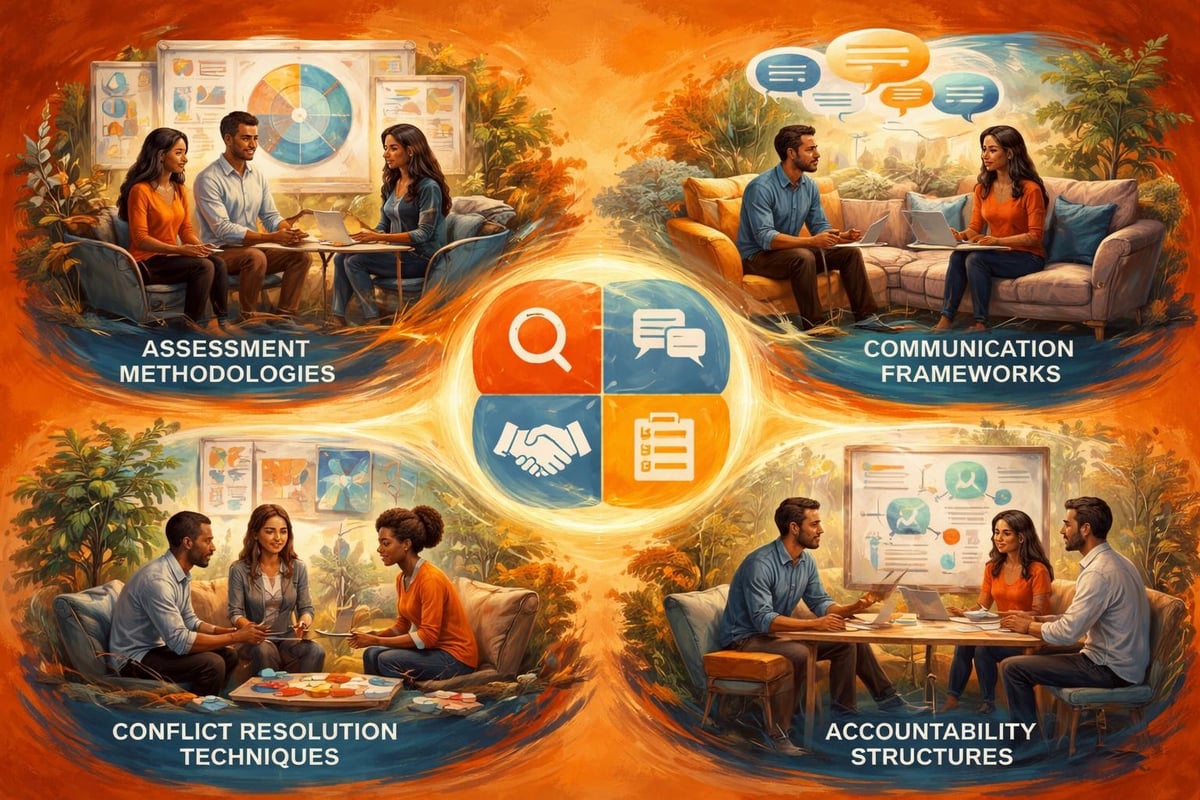
Unlike unlicensed practitioners, a certified relationship coach has completed rigorous training in evidence-based methodologies. These professionals understand how to assess relationship patterns, identify underlying issues, and create actionable improvement plans tied to specific outcomes.
Key differentiators include:
- Structured assessment tools for diagnosing communication breakdowns
- Proven frameworks for rebuilding trust after conflict
- Accountability systems that track progress toward relationship goals
- Ethical guidelines that protect client confidentiality and wellbeing
The certification also signals to organizations that the coach maintains ongoing professional development and adheres to industry best practices.
How Relationship Coaching Applies in Corporate Settings
Corporate environments present unique relationship challenges that require specialized coaching approaches. When leadership coaches integrate relationship coaching principles, they address the interpersonal dynamics that either accelerate or derail business execution.
Manager-Employee Relationships
The most common application involves improving how managers relate to their direct reports. A certified relationship coach helps managers move beyond transactional interactions to build genuine trust and psychological safety. This shift enables honest feedback, creative problem-solving, and higher employee engagement.
| Traditional Management | Relationship-Coached Approach |
|---|---|
| Annual performance reviews | Continuous coaching conversations |
| One-way directives | Collaborative goal-setting |
| Conflict avoidance | Constructive disagreement |
| Generic feedback | Personalized development plans |
Cross-Functional Team Dynamics
When teams from different departments must collaborate, relationship friction often emerges. The Universal Coaching Federation’s program emphasizes the LADDER Framework, which equips coaches to guide teams through establishing shared language, aligned incentives, and clear escalation paths.
Executive Partnerships
C-suite relationships carry enormous organizational weight. A certified relationship coach working with executive teams addresses power dynamics, decision-making processes, and how disagreements get resolved when stakes are highest.
Training Pathways and Specializations
Multiple certification routes exist, each emphasizing different aspects of relationship coaching. Transformation Academy’s Master Relationship Coach Certification offers comprehensive training in workshop facilitation and conflict management, while FIA Coaching’s self-directed course provides flexibility for working professionals.
Corporate-Focused Certifications
For coaches working primarily with businesses, specialized training should cover:
- Organizational psychology fundamentals
- Change management principles
- Performance metrics and KPI development
- ROI measurement for coaching interventions
- Group facilitation in business contexts
Dr. Eric Maisel’s training program prepares coaches to work across individual, couple, family, and business relationship contexts through accessible webinar formats.
The best corporate relationship coaches combine certification credentials with business acumen. They understand P&L statements, recognize how relationships impact customer retention, and can tie coaching outcomes to revenue and efficiency metrics.

Measuring Success in Relationship Coaching
Accountability separates effective relationship coaching from feel-good conversations. Professional coaches establish clear success metrics before beginning any engagement. In corporate settings, these might include:
- Employee engagement scores
- Manager effectiveness ratings
- Team velocity and decision-making speed
- Voluntary turnover reduction
- Cross-departmental project success rates
Many organizations still rely on vague outcomes like "better communication" without defining what that means operationally. A certified relationship coach structures engagements around quantifiable improvements, often using tools like 360 assessments to establish baselines and track progress.
The Role of Ongoing Accountability
Unlike one-time training sessions, effective relationship coaching involves sustained accountability. Monthly check-ins, progress reviews, and adjustment periods ensure that new communication patterns become habitual rather than temporary. This approach aligns with platforms like AccountabilityNow, which emphasize consistent follow-through as essential to lasting change.
Selecting the Right Relationship Coach for Your Organization
The abundance of coaching options makes selection challenging. Organizations should evaluate potential coaches based on:
Certification and credentials – Verify completion of recognized programs like those from Certified Excellence or Jessica Yaffa’s institute, which emphasizes trauma-informed approaches.
Business experience – Ask whether the coach has worked inside organizations similar to yours. Understanding your industry's relationship challenges matters.
Methodology transparency – Request detailed explanations of coaching frameworks, assessment tools, and success metrics. Avoid coaches who rely on proprietary "secret methods."
Flexibility in engagement terms – Look for month-to-month arrangements rather than long-term contracts that lock you in regardless of results.
| Evaluation Criteria | Questions to Ask |
|---|---|
| Track Record | What measurable outcomes have you achieved with similar clients? |
| Approach | How do you handle resistance or setbacks in coaching relationships? |
| Integration | How do you coordinate with existing leadership development initiatives? |
| Follow-up | What accountability structures continue after formal coaching ends? |

The Business Case for Relationship Coaching
Investing in relationship coaching delivers ROI through multiple channels. Improved manager-employee relationships reduce costly turnover. Stronger executive partnerships accelerate strategic decisions. More cohesive teams execute faster and with fewer errors.
Consider these financial impacts:
- Replacing a mid-level manager costs 150-200% of their annual salary
- Poor communication between departments delays projects by an average of 30%
- Disengaged employees produce 18% less revenue than engaged peers
- High-trust organizations outperform low-trust organizations by 286% in total return to shareholders
A certified relationship coach helps organizations capture these gains systematically rather than leaving relationship quality to chance.
The most effective coaches don't just work on relationships in isolation. They integrate relationship development into existing business rhythms through live meeting facilitation, real-time coaching during difficult conversations, and embedding accountability into operating cadences and scorecards.
This practical approach ensures coaching creates business value rather than existing as a separate HR initiative. When relationship improvements connect directly to KPIs, executives can justify the investment and employees see tangible benefits in their daily work experience.
Strong relationships drive business performance, and a certified relationship coach provides the expertise and accountability to make those connections measurable and sustainable. Whether you're addressing manager effectiveness, team collaboration, or executive alignment, professional coaching delivers results when tied to clear outcomes. Noomii Corporate Coaching brings this relationship-focused approach directly into your operations, coaching live in meetings and linking progress to your KPIs. With month-to-month terms and alignment around measurable results, you invest in coaching that delivers visible business impact.



Leave a Reply
Want to join the discussion?Feel free to contribute!